mirror of
https://github.com/mofeng-git/One-KVM.git
synced 2026-10-28 00:10:50 +08:00
Compare commits
260 Commits
| Author | SHA1 | Date | |
|---|---|---|---|

|
b5d13ee16e | ||
|
|
66a13d3d8c | ||
|
|
8b4ca6d080 | ||
|
|
9a1f4ff4b5 | ||
|
|
3b8a4a6f34 | ||
|
|
4f59e78179 | ||
|
|
2f60e61dd5 | ||
|
|
318b58b26a | ||
|
|
48cd06c7a4 | ||
|
|
99da8a3c61 | ||
|
|
1e0b0407d3 | ||
|
|
7e6dc91095 | ||
|
|
d854b6a220 | ||
|
|
f8fb64ad8c | ||
|
|
0e8c323659 | ||
|
|
0956da4ae2 | ||
|
|
03cff9d9a8 | ||
|
|
0a041c2caa | ||
|
|
83cbfb6924 | ||
|
|
6010c39cd8 | ||
|
|
4cf3f4e252 | ||
|
|
3d3110c3d7 | ||
|
|
22912707b5 | ||
|
|
e85f0a9bfe | ||
|
|
9ef5011760 | ||
|
|
d71112380c | ||
|
|
491bfbecb5 | ||
|
|
8a6cc98806 | ||
|
|
728373b067 | ||
|
|
c62ff2da87 | ||
|
|
572bf859ba | ||
|
|
aef136241a | ||
|
|
78af9f67de | ||
|
|
9f34b4109b | ||
|
|
1967d22dff | ||
|
|
0cba8ab127 | ||
|
|
d002226acb | ||
|
|
1db572e020 | ||
|
|
5de5ee42c2 | ||
|
|
2c19208094 | ||
|
|
3014edffbb | ||
|
|
ece4f303ce | ||
|
|
db9d79554a | ||
|
|
620fe0be54 | ||
|
|
79a4dcf2b0 | ||
|
|
a8ee9552a0 | ||
|
|
3749bafae0 | ||
|
|
b573f478fc | ||
|
|
d67a3ab7f8 | ||
|
|
dbe5672df4 | ||
|
|
48fd64319e | ||
|
|
ccf821ab22 | ||
|
|
b074aa5779 | ||
|
|
95a1fdf42d | ||
|
|
e678ec394d | ||
|
|
628909a192 | ||
|
|
5cab585115 | ||
|
|
dcfa3eadaf | ||
|
|
1647e70243 | ||
|
|
9c6d8a614c | ||
|
|
db7a845d3b | ||
|
|
1d48d45592 | ||
|
|
d613739b06 | ||
|
|
6e1194fe4c | ||
|
|
f101ddb918 | ||
|
|
0054100414 | ||
|
|
486f3887c2 | ||
|
|
37af369b43 | ||
|
|
827d24fde4 | ||
|
|
b8ea38b5f3 | ||
|
|
4530d8663d | ||
|
|
a4073d64cb | ||
|
|
16400df182 | ||
|
|
47af17bebc | ||
|
|
814f23a27c | ||
|
|
6bbe137f09 | ||
|
|
6fdcf5c7c9 | ||
|
|
ce1712ff2e | ||
|
|
8b09824e04 | ||
|
|
9fb23476ac | ||
|
|
971c263bf8 | ||
|
|
cb3fd3e646 | ||
|
|
d414557d74 | ||
|
|
fbcd95b617 | ||
|
|
887f29096f | ||
|
|
e0bddc2faa | ||
|
|
4f770a1eea | ||
|
|
376dc97134 | ||
|
|
27c8da9a75 | ||
|
|
5963dfa01a | ||
|
|
f86cba6ce5 | ||
|
|
e1b82519b9 | ||
|
|
32d8a62fec | ||
|
|
4cd622ff07 | ||
|
|
6ec4361f43 | ||
|
|
e9bed3688f | ||
|
|
8d5366444b | ||
|
|
4e32b05124 | ||
|
|
e0055bf491 | ||
|
|
d60ddb21dc | ||
|
|
219d1ccd08 | ||
|
|
6f697e56c8 | ||
|
|
05535b9bb2 | ||
|
|
5ce2cb658c | ||
|
|
a86df52d9a | ||
|
|
275c2ca343 | ||
|
|
5d871e8b21 | ||
|
|
694afdd07f | ||
|
|
d31e70515a | ||
|
|
701b141347 | ||
|
|
eaa114f40c | ||
|
|
563c808836 | ||
|
|
79b6683817 | ||
|
|
8bd16df6f8 | ||
|
|
fdea52d59d | ||
|
|
4031abd8d6 | ||
|
|
cf2bfaf6a7 | ||
|
|
d35021ee5d | ||
|
|
57d1597264 | ||
|
|
aca847e76c | ||
|
|
8036c164b4 | ||
|
|
0482987bf1 | ||
|
|
50dd419e5a | ||
|
|
213359b6c8 | ||
|
|
63c2bb4ca2 | ||
|
|
6693020e6d | ||
|
|
05c5f45995 | ||
|
|
1ded7a8a66 | ||
|
|
809d0ca65c | ||
|
|
139064de35 | ||
|
|
54e0cbc84e | ||
|
|
7c9166a8cf | ||
|
|
a9a16f2218 | ||
|
|
c9ae9dd893 | ||
|
|
010d50b727 | ||
|
|
c88fb03243 | ||
|
|
7bae9b633c | ||
|
|
fc3f1d6aac | ||
|
|
b719be3e38 | ||
|
|
db2410cc7f | ||
|
|
d9c2854911 | ||
|
|
99c051a874 | ||
|
|
a0ad151fbc | ||
|
|
4806a5e0a9 | ||
|
|
e60152d38b | ||
|
|
f6e97a06f5 | ||
|
|
618599266e | ||
|
|
696c1b4bb2 | ||
|
|
b346af35d3 | ||
|
|
16a65289f2 | ||
|
|
bb2691fe8f | ||
|
|
7753c83e27 | ||
|
|
1d6fb2e3c5 | ||
|
|
6c1bff5d0c | ||
|
|
f1e362a820 | ||
|
|
e2c19d550c | ||
|
|
c101ef1c80 | ||
|
|
4b7be20fe0 | ||
|
|
5c98aea7e3 | ||
|
|
da61644dbc | ||
|
|
5de7ecd4c5 | ||
|
|
3fc6b055a0 | ||
|
|
4b65eebd5d | ||
|
|
921c00c472 | ||
|
|
b6bd76534f | ||
|
|
780cfb4cca | ||
|
|
8f9272d985 | ||
|
|
f679647ec9 | ||
|
|
198552014b | ||
|
|
3e3937605e | ||
|
|
4a85fbfab8 | ||
|
|
87d1110a87 | ||
|
|
b31aae284d | ||
|
|
dc6475776e | ||
|
|
3de72677e6 | ||
|
|
6a1616c32a | ||
|
|
032f47a891 | ||
|
|
2e0ca89943 | ||
|
|
1f7cfb373c | ||
|
|
da05656a89 | ||
|
|
265852b312 | ||
|
|
02bf04ed7f | ||
|
|
8915d36bcf | ||
|
|
3ea15e37a4 | ||
|
|
cb0c66af96 | ||
|
|
a3ebcded34 | ||
|
|
f7c2cd1b90 | ||
|
|
e774210ae3 | ||
|
|
935fa823f2 | ||
|
|
dd3f73ae54 | ||
|
|
0b9d94f53f | ||
|
|
e5d6279a54 | ||
|
|
57d4091497 | ||
|
|
4e8c342905 | ||
|
|
17cd74f64c | ||
|
|
9923670426 | ||
|
|
3ee3df77b8 | ||
|
|
8ec2f25e82 | ||
|
|
c27d3a6703 | ||
|
|
6723f432a3 | ||
|
|
12a3f1c947 | ||
|
|
52754c862b | ||
|
|
e51d243324 | ||
|
|
a1ebd34083 | ||
|
|
89b19ea7dd | ||
|
|
0d47d8395d | ||
|
|
d82c863f40 | ||
|
|
d8e7de74a6 | ||
|
|
74035f8e12 | ||
|
|
8d45186eba | ||
|
|
c484580b8f | ||
|
|
56bce7937c | ||
|
|
07b982d1d2 | ||
|
|
9065e01225 | ||
|
|
cc3cc15774 | ||
|
|
fcb39c73fc | ||
|
|
7c703b8b4b | ||
|
|
8eac31f69f | ||
|
|
9653e16a68 | ||
|
|
d0c0852fbb | ||
|
|
c0a0c90cbd | ||
|
|
9e3483b836 | ||
|
|
132f445c29 | ||
|
|
4952cbaf19 | ||
|
|
099f0b1ca2 | ||
|
|
eecbc0fc13 | ||
|
|
2d81a071e5 | ||
|
|
3e35181583 | ||
|
|
c3a3f41a2c | ||
|
|
2b2b471cfb | ||
|
|
abb319068b | ||
|
|
51d7d8b8be | ||
|
|
f95714d9f0 | ||
|
|
7d52b2e2ea | ||
|
|
a2a8b3802d | ||
|
|
f4283f45a4 | ||
|
|
4784cb75e4 | ||
|
|
abc6bd1677 | ||
|
|
1c5288d783 | ||
|
|
6bcb54bd22 | ||
|
|
e20136a5ab | ||
|
|
c8fd3648ad | ||
|
|
6ef2d394d9 | ||
|
|
762a3b037d | ||
|
|
e09a906f93 | ||
|
|
95bf1a852e | ||
|
|
200f947b5d | ||
|
|
46ae0c81e2 | ||
|
|
779aa180ad | ||
|
|
ae26e3c863 | ||
|
|
eeb41159b7 | ||
|
|
24a10aa222 | ||
|
|
c119db4908 | ||
|
|
0db287bf55 | ||
|
|
e229f35777 | ||
|
|
df647b45cd | ||
|
|
b74659dcd4 | ||
|
|
4f2fb534a4 | ||
|
|
bd17f8d0f8 | ||
|
|
cee43795f8 |
189
.github/workflows/build.yml
vendored
Normal file
189
.github/workflows/build.yml
vendored
Normal file
@@ -0,0 +1,189 @@
|
||||
name: Build
|
||||
|
||||
on:
|
||||
pull_request:
|
||||
workflow_dispatch:
|
||||
inputs:
|
||||
publish_release:
|
||||
description: Publish GitHub Release
|
||||
required: false
|
||||
default: false
|
||||
type: boolean
|
||||
release_tag:
|
||||
description: Release tag name when publishing
|
||||
required: false
|
||||
default: ""
|
||||
|
||||
permissions:
|
||||
contents: read
|
||||
|
||||
concurrency:
|
||||
group: ${{ github.workflow }}-${{ github.ref }}
|
||||
cancel-in-progress: true
|
||||
|
||||
env:
|
||||
CARGO_TERM_COLOR: always
|
||||
|
||||
jobs:
|
||||
frontend:
|
||||
runs-on: ubuntu-22.04
|
||||
timeout-minutes: 30
|
||||
steps:
|
||||
- uses: actions/checkout@v4
|
||||
|
||||
- uses: actions/setup-node@v4
|
||||
with:
|
||||
node-version: 24
|
||||
|
||||
- name: Build frontend
|
||||
working-directory: web
|
||||
run: |
|
||||
npm install
|
||||
npm run build
|
||||
|
||||
- name: Upload frontend dist
|
||||
uses: actions/upload-artifact@v4
|
||||
with:
|
||||
name: web-dist
|
||||
path: web/dist
|
||||
if-no-files-found: error
|
||||
retention-days: 7
|
||||
|
||||
deb:
|
||||
runs-on: ubuntu-22.04
|
||||
needs: frontend
|
||||
timeout-minutes: 120
|
||||
steps:
|
||||
- uses: actions/checkout@v4
|
||||
|
||||
- name: Download frontend dist
|
||||
uses: actions/download-artifact@v4
|
||||
with:
|
||||
name: web-dist
|
||||
path: web/dist
|
||||
|
||||
- uses: dtolnay/rust-toolchain@stable
|
||||
|
||||
- name: Cache Rust dependencies
|
||||
uses: Swatinem/rust-cache@v2
|
||||
with:
|
||||
# The Docker workflow builds the same targets with the same Cross images.
|
||||
shared-key: linux-cross-release
|
||||
key: ${{ hashFiles('Cross.toml', 'build/cross/Dockerfile.*') }}
|
||||
cache-all-crates: true
|
||||
|
||||
- name: Install cross
|
||||
run: cargo install cross --version 0.2.5 --locked
|
||||
|
||||
- name: Build linux binary
|
||||
run: bash build/build-images.sh
|
||||
|
||||
- name: Package deb
|
||||
run: bash build/package-deb.sh
|
||||
|
||||
- name: Upload deb
|
||||
uses: actions/upload-artifact@v4
|
||||
with:
|
||||
name: one-kvm-deb
|
||||
path: target/debian/*.deb
|
||||
if-no-files-found: error
|
||||
retention-days: 7
|
||||
|
||||
windows:
|
||||
runs-on: windows-2022
|
||||
needs: frontend
|
||||
timeout-minutes: 120
|
||||
steps:
|
||||
- uses: actions/checkout@v4
|
||||
|
||||
- name: Download frontend dist
|
||||
uses: actions/download-artifact@v4
|
||||
with:
|
||||
name: web-dist
|
||||
path: web/dist
|
||||
|
||||
- uses: dtolnay/rust-toolchain@stable
|
||||
|
||||
- name: Set up MSVC
|
||||
uses: ilammy/msvc-dev-cmd@v1
|
||||
|
||||
- name: Prepare vcpkg and dependencies
|
||||
shell: pwsh
|
||||
run: |
|
||||
$env:VCPKG_ROOT = "C:\vcpkg"
|
||||
$env:VCPKG_DEFAULT_TRIPLET = "x64-windows-static"
|
||||
$env:VCPKG_INSTALLED_DIR = Join-Path $pwd "vcpkg_installed"
|
||||
|
||||
if (-not (Test-Path $env:VCPKG_ROOT)) {
|
||||
git clone https://github.com/microsoft/vcpkg $env:VCPKG_ROOT
|
||||
}
|
||||
|
||||
& "$env:VCPKG_ROOT\bootstrap-vcpkg.bat" -disableMetrics
|
||||
& "$env:VCPKG_ROOT\vcpkg.exe" install --triplet $env:VCPKG_DEFAULT_TRIPLET --x-install-root="$env:VCPKG_INSTALLED_DIR"
|
||||
|
||||
$tripletRoot = Join-Path $env:VCPKG_INSTALLED_DIR $env:VCPKG_DEFAULT_TRIPLET
|
||||
$env:TURBOJPEG_SOURCE = "explicit"
|
||||
$env:TURBOJPEG_LIB_DIR = Join-Path $tripletRoot "lib"
|
||||
$env:TURBOJPEG_INCLUDE_DIR = Join-Path $tripletRoot "include"
|
||||
|
||||
"VCPKG_ROOT=$env:VCPKG_ROOT" | Out-File -FilePath $env:GITHUB_ENV -Append
|
||||
"VCPKG_DEFAULT_TRIPLET=$env:VCPKG_DEFAULT_TRIPLET" | Out-File -FilePath $env:GITHUB_ENV -Append
|
||||
"VCPKG_INSTALLED_DIR=$env:VCPKG_INSTALLED_DIR" | Out-File -FilePath $env:GITHUB_ENV -Append
|
||||
"TURBOJPEG_SOURCE=$env:TURBOJPEG_SOURCE" | Out-File -FilePath $env:GITHUB_ENV -Append
|
||||
"TURBOJPEG_LIB_DIR=$env:TURBOJPEG_LIB_DIR" | Out-File -FilePath $env:GITHUB_ENV -Append
|
||||
"TURBOJPEG_INCLUDE_DIR=$env:TURBOJPEG_INCLUDE_DIR" | Out-File -FilePath $env:GITHUB_ENV -Append
|
||||
|
||||
- name: Cache Rust dependencies
|
||||
uses: Swatinem/rust-cache@v2
|
||||
with:
|
||||
shared-key: windows-msvc-release
|
||||
key: ${{ hashFiles('vcpkg.json', 'vcpkg-configuration.json') }}
|
||||
|
||||
- name: Build Windows exe
|
||||
shell: pwsh
|
||||
run: .\build\windows\build.ps1 -Configuration release -Package
|
||||
|
||||
- name: Upload exe
|
||||
uses: actions/upload-artifact@v4
|
||||
with:
|
||||
name: one-kvm-windows-exe
|
||||
path: target/x86_64-pc-windows-msvc/release/one-kvm_*.exe
|
||||
if-no-files-found: error
|
||||
retention-days: 7
|
||||
|
||||
release:
|
||||
runs-on: ubuntu-22.04
|
||||
needs: [deb, windows]
|
||||
if: ${{ github.event_name == 'workflow_dispatch' && inputs.publish_release }}
|
||||
timeout-minutes: 30
|
||||
permissions:
|
||||
contents: write
|
||||
steps:
|
||||
- name: Validate release tag
|
||||
run: |
|
||||
if [ -z "${{ inputs.release_tag }}" ]; then
|
||||
echo "release_tag is required when publish_release is true"
|
||||
exit 1
|
||||
fi
|
||||
|
||||
- name: Download deb artifact
|
||||
uses: actions/download-artifact@v4
|
||||
with:
|
||||
name: one-kvm-deb
|
||||
path: release-artifacts/deb
|
||||
|
||||
- name: Download exe artifact
|
||||
uses: actions/download-artifact@v4
|
||||
with:
|
||||
name: one-kvm-windows-exe
|
||||
path: release-artifacts/windows
|
||||
|
||||
- name: Publish GitHub Release
|
||||
uses: softprops/action-gh-release@v2
|
||||
with:
|
||||
tag_name: ${{ inputs.release_tag }}
|
||||
prerelease: true
|
||||
generate_release_notes: true
|
||||
files: |
|
||||
release-artifacts/deb/*.deb
|
||||
release-artifacts/windows/*.exe
|
||||
91
.github/workflows/docker.yml
vendored
Normal file
91
.github/workflows/docker.yml
vendored
Normal file
@@ -0,0 +1,91 @@
|
||||
name: Docker
|
||||
|
||||
on:
|
||||
workflow_dispatch:
|
||||
inputs:
|
||||
tag:
|
||||
description: Docker image tag
|
||||
required: false
|
||||
default: latest
|
||||
platforms:
|
||||
description: Docker platforms
|
||||
required: false
|
||||
default: linux/amd64,linux/arm64,linux/arm/v7
|
||||
push:
|
||||
tags:
|
||||
- "v*"
|
||||
|
||||
permissions:
|
||||
contents: read
|
||||
|
||||
concurrency:
|
||||
group: ${{ github.workflow }}-${{ github.ref }}
|
||||
cancel-in-progress: false
|
||||
|
||||
env:
|
||||
CARGO_TERM_COLOR: always
|
||||
DOCKER_PLATFORMS: ${{ github.event_name == 'workflow_dispatch' && inputs.platforms || 'linux/amd64,linux/arm64,linux/arm/v7' }}
|
||||
DOCKER_TAG: ${{ github.event_name == 'workflow_dispatch' && inputs.tag || github.ref_name }}
|
||||
|
||||
jobs:
|
||||
docker:
|
||||
runs-on: ubuntu-22.04
|
||||
timeout-minutes: 360
|
||||
steps:
|
||||
- uses: actions/checkout@v4
|
||||
|
||||
- uses: actions/setup-node@v4
|
||||
with:
|
||||
node-version: 24
|
||||
|
||||
- uses: dtolnay/rust-toolchain@stable
|
||||
|
||||
- name: Cache Rust dependencies
|
||||
uses: Swatinem/rust-cache@v2
|
||||
with:
|
||||
# Reuse dependency artifacts produced by the deb job and vice versa.
|
||||
shared-key: linux-cross-release
|
||||
key: ${{ hashFiles('Cross.toml', 'build/cross/Dockerfile.*') }}
|
||||
cache-all-crates: true
|
||||
|
||||
- name: Install build dependencies
|
||||
run: |
|
||||
sudo apt-get update
|
||||
sudo apt-get install -y unzip xz-utils
|
||||
cargo install cross --version 0.2.5 --locked
|
||||
|
||||
- name: Build frontend
|
||||
working-directory: web
|
||||
run: |
|
||||
npm install
|
||||
npm run build
|
||||
|
||||
- name: Set up QEMU
|
||||
uses: docker/setup-qemu-action@v3
|
||||
|
||||
- name: Set up Docker Buildx
|
||||
uses: docker/setup-buildx-action@v3
|
||||
|
||||
- name: Build linux binaries
|
||||
run: bash build/build-images.sh
|
||||
|
||||
- name: Log in to Docker Hub
|
||||
uses: docker/login-action@v3
|
||||
with:
|
||||
registry: docker.io
|
||||
username: ${{ secrets.DOCKERHUB_USERNAME }}
|
||||
password: ${{ secrets.DOCKERHUB_TOKEN }}
|
||||
|
||||
- name: Log in to Aliyun Container Registry
|
||||
uses: docker/login-action@v3
|
||||
with:
|
||||
registry: registry.cn-hangzhou.aliyuncs.com
|
||||
username: ${{ secrets.ALIYUN_USERNAME }}
|
||||
password: ${{ secrets.ALIYUN_PASSWORD }}
|
||||
|
||||
- name: Publish Docker images
|
||||
run: |
|
||||
./build/package-docker.sh --platform "$DOCKER_PLATFORMS" --registry docker.io/silentwind0 --tag "$DOCKER_TAG" --push
|
||||
./build/package-docker.sh --platform "$DOCKER_PLATFORMS" --registry registry.cn-hangzhou.aliyuncs.com/silentwind --tag "$DOCKER_TAG" --push
|
||||
./build/package-docker.sh --platform "$DOCKER_PLATFORMS" --registry docker.io/silentwind0 --variant full --tag "$DOCKER_TAG" --push
|
||||
./build/package-docker.sh --platform "$DOCKER_PLATFORMS" --registry registry.cn-hangzhou.aliyuncs.com/silentwind --variant full --tag "$DOCKER_TAG" --push
|
||||
6
.gitignore
vendored
6
.gitignore
vendored
@@ -1,6 +1,5 @@
|
||||
# Rust
|
||||
/target/
|
||||
Cargo.lock
|
||||
target/
|
||||
|
||||
# IDE
|
||||
.idea/
|
||||
@@ -30,6 +29,8 @@ Thumbs.db
|
||||
|
||||
# Build artifacts
|
||||
/dist/
|
||||
/build-staging
|
||||
/.tmp/
|
||||
|
||||
# Frontend (built files)
|
||||
/web/node_modules/
|
||||
@@ -41,3 +42,4 @@ CLAUDE.md
|
||||
secrets.toml
|
||||
.env
|
||||
/docs/
|
||||
web/package-lock.json
|
||||
|
||||
5652
Cargo.lock
generated
Normal file
5652
Cargo.lock
generated
Normal file
File diff suppressed because it is too large
Load Diff
229
Cargo.toml
229
Cargo.toml
@@ -1,137 +1,212 @@
|
||||
[package]
|
||||
name = "one-kvm"
|
||||
version = "0.1.5"
|
||||
version = "0.2.8"
|
||||
edition = "2021"
|
||||
authors = ["SilentWind"]
|
||||
description = "A open and lightweight IP-KVM solution written in Rust"
|
||||
license = "GPL-2.0"
|
||||
license = "AGPL-3.0-only"
|
||||
repository = "https://github.com/mofeng-git/One-KVM"
|
||||
keywords = ["kvm", "ipkvm", "remote-management", "embedded"]
|
||||
categories = ["embedded", "network-programming"]
|
||||
|
||||
[features]
|
||||
default = ["desktop"]
|
||||
desktop = [
|
||||
"dep:tokio",
|
||||
"dep:tokio-util",
|
||||
"dep:axum",
|
||||
"dep:axum-extra",
|
||||
"dep:tower-http",
|
||||
"dep:sqlx",
|
||||
"dep:serde",
|
||||
"dep:serde_json",
|
||||
"dep:toml_edit",
|
||||
"dep:tracing",
|
||||
"dep:tracing-subscriber",
|
||||
"dep:thiserror",
|
||||
"dep:anyhow",
|
||||
"dep:argon2",
|
||||
"dep:rand",
|
||||
"dep:totp-rs",
|
||||
"dep:uuid",
|
||||
"dep:base64",
|
||||
"dep:nix",
|
||||
"dep:reqwest",
|
||||
"dep:urlencoding",
|
||||
"dep:rust-embed",
|
||||
"dep:mime_guess",
|
||||
"dep:openssl",
|
||||
"dep:rcgen",
|
||||
"dep:axum-server",
|
||||
"dep:clap",
|
||||
"dep:time",
|
||||
"dep:tempfile",
|
||||
"dep:bytes",
|
||||
"dep:bytemuck",
|
||||
"dep:xxhash-rust",
|
||||
"dep:async-stream",
|
||||
"dep:futures",
|
||||
"dep:tokio-tungstenite",
|
||||
"dep:parking_lot",
|
||||
"dep:arc-swap",
|
||||
"dep:webrtc",
|
||||
"dep:rtp",
|
||||
"dep:rtsp-types",
|
||||
"dep:sdp-types",
|
||||
"dep:serialport",
|
||||
"dep:async-trait",
|
||||
"dep:libc",
|
||||
"dep:ventoy-img",
|
||||
"dep:protobuf",
|
||||
"dep:sodiumoxide",
|
||||
"dep:des",
|
||||
"dep:sha2",
|
||||
"dep:typeshare",
|
||||
"dep:hwcodec",
|
||||
"dep:libyuv",
|
||||
"dep:turbojpeg",
|
||||
"dep:audiopus",
|
||||
"dep:v4l2r",
|
||||
"dep:alsa",
|
||||
"dep:gpio-cdev",
|
||||
"dep:one-kvm-bluetooth-hid",
|
||||
"dep:cpal",
|
||||
"dep:windows-sys",
|
||||
]
|
||||
[dependencies]
|
||||
# Async runtime
|
||||
tokio = { version = "1", features = ["full"] }
|
||||
tokio-util = { version = "0.7", features = ["rt"] }
|
||||
tokio = { version = "1", features = ["fs", "io-util", "macros", "net", "process", "rt-multi-thread", "signal", "sync", "time"], optional = true }
|
||||
tokio-util = { version = "0.7", features = ["rt"], optional = true }
|
||||
|
||||
# Web framework
|
||||
axum = { version = "0.8", features = ["ws", "multipart", "tokio"] }
|
||||
axum-extra = { version = "0.12", features = ["typed-header", "cookie"] }
|
||||
tower-http = { version = "0.6", features = ["fs", "cors", "trace", "compression-gzip"] }
|
||||
axum = { version = "0.8", features = ["ws", "multipart", "tokio"], optional = true }
|
||||
axum-extra = { version = "0.12", features = ["cookie"], optional = true }
|
||||
tower-http = { version = "0.6", features = ["cors", "trace", "set-header"], optional = true }
|
||||
|
||||
# Database - Use bundled SQLite for static linking
|
||||
sqlx = { version = "0.8", features = ["runtime-tokio", "sqlite"] }
|
||||
sqlx = { version = "0.9", default-features = false, features = ["runtime-tokio", "sqlite-bundled"], optional = true }
|
||||
|
||||
# Serialization
|
||||
serde = { version = "1", features = ["derive"] }
|
||||
serde_json = "1"
|
||||
serde = { version = "1", features = ["derive"], optional = true }
|
||||
serde_json = { version = "1", optional = true }
|
||||
toml_edit = { version = "0.25", optional = true }
|
||||
|
||||
# Logging
|
||||
tracing = "0.1"
|
||||
tracing-subscriber = { version = "0.3", features = ["env-filter", "json", "tracing-log"] }
|
||||
tracing-log = "0.2"
|
||||
tracing = { version = "0.1", optional = true }
|
||||
tracing-subscriber = { version = "0.3", features = ["env-filter", "json", "tracing-log"], optional = true }
|
||||
|
||||
# Error handling
|
||||
thiserror = "2"
|
||||
anyhow = "1"
|
||||
thiserror = { version = "2", optional = true }
|
||||
anyhow = { version = "1", optional = true }
|
||||
|
||||
# Authentication
|
||||
argon2 = "0.5"
|
||||
rand = "0.9"
|
||||
argon2 = { version = "0.5", optional = true }
|
||||
rand = { version = "0.10", optional = true }
|
||||
totp-rs = { version = "5.7", features = ["gen_secret", "otpauth", "zeroize"], optional = true }
|
||||
|
||||
# Utilities
|
||||
uuid = { version = "1", features = ["v4", "serde"] }
|
||||
chrono = { version = "0.4", features = ["serde"] }
|
||||
base64 = "0.22"
|
||||
nix = { version = "0.30", features = ["fs", "net", "hostname", "poll"] }
|
||||
uuid = { version = "1", features = ["v4", "serde"], optional = true }
|
||||
base64 = { version = "0.22", optional = true }
|
||||
tempfile = { version = "3", optional = true }
|
||||
|
||||
# HTTP client (for URL downloads)
|
||||
# Use rustls by default, but allow native-tls for systems with older GLIBC
|
||||
reqwest = { version = "0.13", features = ["stream", "rustls", "json"], default-features = false }
|
||||
urlencoding = "2"
|
||||
reqwest = { version = "0.13", features = ["stream", "native-tls-vendored", "json"], default-features = false, optional = true }
|
||||
urlencoding = { version = "2", optional = true }
|
||||
|
||||
# Static file embedding
|
||||
rust-embed = { version = "8", features = ["compression"] }
|
||||
mime_guess = "2"
|
||||
rust-embed = { version = "8", features = ["compression", "debug-embed"], optional = true }
|
||||
mime_guess = { version = "2", optional = true }
|
||||
|
||||
# TLS/HTTPS
|
||||
rustls = { version = "0.23", features = ["ring"] }
|
||||
rcgen = "0.14"
|
||||
axum-server = { version = "0.8", features = ["tls-rustls"] }
|
||||
openssl = { version = "0.10", features = ["vendored"], optional = true }
|
||||
rcgen = { version = "0.14", optional = true }
|
||||
axum-server = { version = "0.8", features = ["tls-openssl"], optional = true }
|
||||
|
||||
# CLI argument parsing
|
||||
clap = { version = "4", features = ["derive"] }
|
||||
clap = { version = "4", features = ["derive"], optional = true }
|
||||
|
||||
# Time
|
||||
time = "0.3"
|
||||
|
||||
# Video capture (V4L2)
|
||||
v4l2r = "0.0.7"
|
||||
|
||||
# JPEG encoding (libjpeg-turbo, SIMD accelerated)
|
||||
turbojpeg = "1.3"
|
||||
# Time (cookie max_age + RFC3339 timestamps)
|
||||
time = { version = "0.3", features = ["serde", "formatting", "parsing"], optional = true }
|
||||
|
||||
# Bytes handling
|
||||
bytes = "1"
|
||||
bytemuck = { version = "1.24", features = ["derive"] }
|
||||
bytes = { version = "1", optional = true }
|
||||
bytemuck = { version = "1.24", features = ["derive"], optional = true }
|
||||
|
||||
# Frame deduplication (hash-based comparison)
|
||||
xxhash-rust = { version = "0.8", features = ["xxh64"] }
|
||||
xxhash-rust = { version = "0.8", features = ["xxh64"], optional = true }
|
||||
|
||||
# Async channels
|
||||
async-stream = "0.3"
|
||||
futures = "0.3"
|
||||
async-stream = { version = "0.3", optional = true }
|
||||
futures = { version = "0.3", optional = true }
|
||||
|
||||
# WebSocket client (for ttyd proxy)
|
||||
tokio-tungstenite = "0.28"
|
||||
tokio-tungstenite = { version = "0.29", optional = true }
|
||||
|
||||
# High-performance synchronization
|
||||
parking_lot = "0.12"
|
||||
arc-swap = "1.8"
|
||||
parking_lot = { version = "0.12", optional = true }
|
||||
arc-swap = { version = "1.8", optional = true }
|
||||
|
||||
# WebRTC
|
||||
webrtc = "0.14"
|
||||
rtp = "0.14"
|
||||
rtsp-types = "0.1"
|
||||
sdp-types = "0.1"
|
||||
|
||||
# Audio (ALSA capture + Opus encoding)
|
||||
# Note: audiopus links to libopus.so (unavoidable for audio support)
|
||||
alsa = "0.11"
|
||||
audiopus = "0.2"
|
||||
webrtc = { version = "0.17", features = ["vendored-openssl"], optional = true }
|
||||
rtp = { version = "0.17", optional = true }
|
||||
rtsp-types = { version = "0.1", optional = true }
|
||||
sdp-types = { version = "0.1", optional = true }
|
||||
|
||||
# HID (serial port for CH9329)
|
||||
serialport = "4"
|
||||
async-trait = "0.1"
|
||||
libc = "0.2"
|
||||
serialport = { version = "4", optional = true }
|
||||
async-trait = { version = "0.1", optional = true }
|
||||
libc = { version = "0.2", optional = true }
|
||||
|
||||
# Ventoy bootable image support
|
||||
ventoy-img = { path = "libs/ventoy-img-rs" }
|
||||
|
||||
# ATX (GPIO control)
|
||||
gpio-cdev = "0.6"
|
||||
|
||||
# H264 hardware/software encoding (hwcodec from rustdesk)
|
||||
hwcodec = { path = "libs/hwcodec" }
|
||||
ventoy-img = { path = "libs/ventoy-img-rs", optional = true }
|
||||
|
||||
# RustDesk protocol support
|
||||
protobuf = { version = "3.7", features = ["with-bytes"] }
|
||||
sodiumoxide = "0.2"
|
||||
sha2 = "0.10"
|
||||
# High-performance pixel format conversion (libyuv)
|
||||
libyuv = { path = "res/vcpkg/libyuv" }
|
||||
|
||||
protobuf = { version = "3.7", features = ["with-bytes"], optional = true }
|
||||
sodiumoxide = { version = "0.2", optional = true }
|
||||
des = { version = "0.9", optional = true }
|
||||
sha2 = { version = "0.11", optional = true }
|
||||
# TypeScript type generation
|
||||
typeshare = "1.0"
|
||||
typeshare = { version = "1.0", optional = true }
|
||||
|
||||
[dev-dependencies]
|
||||
tokio-test = "0.4"
|
||||
tempfile = "3"
|
||||
[target.'cfg(any(target_os = "linux", windows))'.dependencies]
|
||||
# Video encoding/decoding (FFmpeg/libjpeg-turbo/libyuv; available on Windows and Linux)
|
||||
hwcodec = { path = "libs/hwcodec", features = ["bytes"], optional = true }
|
||||
libyuv = { path = "res/vcpkg/libyuv", optional = true }
|
||||
turbojpeg = { version = "1.3", optional = true }
|
||||
# Note: audiopus links to libopus.so (unavoidable for audio support)
|
||||
audiopus = { version = "0.2", optional = true }
|
||||
|
||||
[target.'cfg(target_os = "linux")'.dependencies]
|
||||
one-kvm-bluetooth-hid = { path = "libs/bluetooth-hid", optional = true }
|
||||
|
||||
# Utilities
|
||||
nix = { version = "0.31", default-features = false, features = ["fs", "socket", "net", "hostname", "poll"], optional = true }
|
||||
|
||||
# Video capture (V4L2)
|
||||
v4l2r = { path = "libs/v4l2r", optional = true }
|
||||
|
||||
# Audio (ALSA capture)
|
||||
alsa = { version = "0.11", optional = true }
|
||||
|
||||
# ATX (GPIO control)
|
||||
gpio-cdev = { version = "0.6", optional = true }
|
||||
|
||||
[target.'cfg(windows)'.dependencies]
|
||||
cpal = { version = "0.18", default-features = false, optional = true }
|
||||
windows-sys = { version = "0.61", features = [
|
||||
"Win32_Foundation",
|
||||
"Win32_NetworkManagement_IpHelper",
|
||||
"Win32_NetworkManagement_Ndis",
|
||||
"Win32_Networking_WinSock",
|
||||
"Win32_System_SystemInformation",
|
||||
"Win32_System_Threading",
|
||||
], optional = true }
|
||||
|
||||
[build-dependencies]
|
||||
protobuf-codegen = "3.7"
|
||||
toml = "0.9"
|
||||
cc = "1"
|
||||
|
||||
[patch.crates-io]
|
||||
dtls = { path = "libs/dtls" }
|
||||
|
||||
[profile.release]
|
||||
opt-level = 3
|
||||
|
||||
@@ -1,5 +1,5 @@
|
||||
# Cross-compilation configuration for One-KVM
|
||||
# Uses pre-built custom Debian 11 based images for consistent build/runtime environment
|
||||
# Uses pre-built custom Debian 12 based images for consistent build/runtime environment
|
||||
# See: https://github.com/cross-rs/cross
|
||||
|
||||
[build]
|
||||
|
||||
661
LICENSE
Normal file
661
LICENSE
Normal file
@@ -0,0 +1,661 @@
|
||||
GNU AFFERO GENERAL PUBLIC LICENSE
|
||||
Version 3, 19 November 2007
|
||||
|
||||
Copyright (C) 2007 Free Software Foundation, Inc. <https://fsf.org/>
|
||||
Everyone is permitted to copy and distribute verbatim copies
|
||||
of this license document, but changing it is not allowed.
|
||||
|
||||
Preamble
|
||||
|
||||
The GNU Affero General Public License is a free, copyleft license for
|
||||
software and other kinds of works, specifically designed to ensure
|
||||
cooperation with the community in the case of network server software.
|
||||
|
||||
The licenses for most software and other practical works are designed
|
||||
to take away your freedom to share and change the works. By contrast,
|
||||
our General Public Licenses are intended to guarantee your freedom to
|
||||
share and change all versions of a program--to make sure it remains free
|
||||
software for all its users.
|
||||
|
||||
When we speak of free software, we are referring to freedom, not
|
||||
price. Our General Public Licenses are designed to make sure that you
|
||||
have the freedom to distribute copies of free software (and charge for
|
||||
them if you wish), that you receive source code or can get it if you
|
||||
want it, that you can change the software or use pieces of it in new
|
||||
free programs, and that you know you can do these things.
|
||||
|
||||
Developers that use our General Public Licenses protect your rights
|
||||
with two steps: (1) assert copyright on the software, and (2) offer
|
||||
you this License which gives you legal permission to copy, distribute
|
||||
and/or modify the software.
|
||||
|
||||
A secondary benefit of defending all users' freedom is that
|
||||
improvements made in alternate versions of the program, if they
|
||||
receive widespread use, become available for other developers to
|
||||
incorporate. Many developers of free software are heartened and
|
||||
encouraged by the resulting cooperation. However, in the case of
|
||||
software used on network servers, this result may fail to come about.
|
||||
The GNU General Public License permits making a modified version and
|
||||
letting the public access it on a server without ever releasing its
|
||||
source code to the public.
|
||||
|
||||
The GNU Affero General Public License is designed specifically to
|
||||
ensure that, in such cases, the modified source code becomes available
|
||||
to the community. It requires the operator of a network server to
|
||||
provide the source code of the modified version running there to the
|
||||
users of that server. Therefore, public use of a modified version, on
|
||||
a publicly accessible server, gives the public access to the source
|
||||
code of the modified version.
|
||||
|
||||
An older license, called the Affero General Public License and
|
||||
published by Affero, was designed to accomplish similar goals. This is
|
||||
a different license, not a version of the Affero GPL, but Affero has
|
||||
released a new version of the Affero GPL which permits relicensing under
|
||||
this license.
|
||||
|
||||
The precise terms and conditions for copying, distribution and
|
||||
modification follow.
|
||||
|
||||
TERMS AND CONDITIONS
|
||||
|
||||
0. Definitions.
|
||||
|
||||
"This License" refers to version 3 of the GNU Affero General Public License.
|
||||
|
||||
"Copyright" also means copyright-like laws that apply to other kinds of
|
||||
works, such as semiconductor masks.
|
||||
|
||||
"The Program" refers to any copyrightable work licensed under this
|
||||
License. Each licensee is addressed as "you". "Licensees" and
|
||||
"recipients" may be individuals or organizations.
|
||||
|
||||
To "modify" a work means to copy from or adapt all or part of the work
|
||||
in a fashion requiring copyright permission, other than the making of an
|
||||
exact copy. The resulting work is called a "modified version" of the
|
||||
earlier work or a work "based on" the earlier work.
|
||||
|
||||
A "covered work" means either the unmodified Program or a work based
|
||||
on the Program.
|
||||
|
||||
To "propagate" a work means to do anything with it that, without
|
||||
permission, would make you directly or secondarily liable for
|
||||
infringement under applicable copyright law, except executing it on a
|
||||
computer or modifying a private copy. Propagation includes copying,
|
||||
distribution (with or without modification), making available to the
|
||||
public, and in some countries other activities as well.
|
||||
|
||||
To "convey" a work means any kind of propagation that enables other
|
||||
parties to make or receive copies. Mere interaction with a user through
|
||||
a computer network, with no transfer of a copy, is not conveying.
|
||||
|
||||
An interactive user interface displays "Appropriate Legal Notices"
|
||||
to the extent that it includes a convenient and prominently visible
|
||||
feature that (1) displays an appropriate copyright notice, and (2)
|
||||
tells the user that there is no warranty for the work (except to the
|
||||
extent that warranties are provided), that licensees may convey the
|
||||
work under this License, and how to view a copy of this License. If
|
||||
the interface presents a list of user commands or options, such as a
|
||||
menu, a prominent item in the list meets this criterion.
|
||||
|
||||
1. Source Code.
|
||||
|
||||
The "source code" for a work means the preferred form of the work
|
||||
for making modifications to it. "Object code" means any non-source
|
||||
form of a work.
|
||||
|
||||
A "Standard Interface" means an interface that either is an official
|
||||
standard defined by a recognized standards body, or, in the case of
|
||||
interfaces specified for a particular programming language, one that
|
||||
is widely used among developers working in that language.
|
||||
|
||||
The "System Libraries" of an executable work include anything, other
|
||||
than the work as a whole, that (a) is included in the normal form of
|
||||
packaging a Major Component, but which is not part of that Major
|
||||
Component, and (b) serves only to enable use of the work with that
|
||||
Major Component, or to implement a Standard Interface for which an
|
||||
implementation is available to the public in source code form. A
|
||||
"Major Component", in this context, means a major essential component
|
||||
(kernel, window system, and so on) of the specific operating system
|
||||
(if any) on which the executable work runs, or a compiler used to
|
||||
produce the work, or an object code interpreter used to run it.
|
||||
|
||||
The "Corresponding Source" for a work in object code form means all
|
||||
the source code needed to generate, install, and (for an executable
|
||||
work) run the object code and to modify the work, including scripts to
|
||||
control those activities. However, it does not include the work's
|
||||
System Libraries, or general-purpose tools or generally available free
|
||||
programs which are used unmodified in performing those activities but
|
||||
which are not part of the work. For example, Corresponding Source
|
||||
includes interface definition files associated with source files for
|
||||
the work, and the source code for shared libraries and dynamically
|
||||
linked subprograms that the work is specifically designed to require,
|
||||
such as by intimate data communication or control flow between those
|
||||
subprograms and other parts of the work.
|
||||
|
||||
The Corresponding Source need not include anything that users
|
||||
can regenerate automatically from other parts of the Corresponding
|
||||
Source.
|
||||
|
||||
The Corresponding Source for a work in source code form is that
|
||||
same work.
|
||||
|
||||
2. Basic Permissions.
|
||||
|
||||
All rights granted under this License are granted for the term of
|
||||
copyright on the Program, and are irrevocable provided the stated
|
||||
conditions are met. This License explicitly affirms your unlimited
|
||||
permission to run the unmodified Program. The output from running a
|
||||
covered work is covered by this License only if the output, given its
|
||||
content, constitutes a covered work. This License acknowledges your
|
||||
rights of fair use or other equivalent, as provided by copyright law.
|
||||
|
||||
You may make, run and propagate covered works that you do not
|
||||
convey, without conditions so long as your license otherwise remains
|
||||
in force. You may convey covered works to others for the sole purpose
|
||||
of having them make modifications exclusively for you, or provide you
|
||||
with facilities for running those works, provided that you comply with
|
||||
the terms of this License in conveying all material for which you do
|
||||
not control copyright. Those thus making or running the covered works
|
||||
for you must do so exclusively on your behalf, under your direction
|
||||
and control, on terms that prohibit them from making any copies of
|
||||
your copyrighted material outside their relationship with you.
|
||||
|
||||
Conveying under any other circumstances is permitted solely under
|
||||
the conditions stated below. Sublicensing is not allowed; section 10
|
||||
makes it unnecessary.
|
||||
|
||||
3. Protecting Users' Legal Rights From Anti-Circumvention Law.
|
||||
|
||||
No covered work shall be deemed part of an effective technological
|
||||
measure under any applicable law fulfilling obligations under article
|
||||
11 of the WIPO copyright treaty adopted on 20 December 1996, or
|
||||
similar laws prohibiting or restricting circumvention of such
|
||||
measures.
|
||||
|
||||
When you convey a covered work, you waive any legal power to forbid
|
||||
circumvention of technological measures to the extent such circumvention
|
||||
is effected by exercising rights under this License with respect to
|
||||
the covered work, and you disclaim any intention to limit operation or
|
||||
modification of the work as a means of enforcing, against the work's
|
||||
users, your or third parties' legal rights to forbid circumvention of
|
||||
technological measures.
|
||||
|
||||
4. Conveying Verbatim Copies.
|
||||
|
||||
You may convey verbatim copies of the Program's source code as you
|
||||
receive it, in any medium, provided that you conspicuously and
|
||||
appropriately publish on each copy an appropriate copyright notice;
|
||||
keep intact all notices stating that this License and any
|
||||
non-permissive terms added in accord with section 7 apply to the code;
|
||||
keep intact all notices of the absence of any warranty; and give all
|
||||
recipients a copy of this License along with the Program.
|
||||
|
||||
You may charge any price or no price for each copy that you convey,
|
||||
and you may offer support or warranty protection for a fee.
|
||||
|
||||
5. Conveying Modified Source Versions.
|
||||
|
||||
You may convey a work based on the Program, or the modifications to
|
||||
produce it from the Program, in the form of source code under the
|
||||
terms of section 4, provided that you also meet all of these conditions:
|
||||
|
||||
a) The work must carry prominent notices stating that you modified
|
||||
it, and giving a relevant date.
|
||||
|
||||
b) The work must carry prominent notices stating that it is
|
||||
released under this License and any conditions added under section
|
||||
7. This requirement modifies the requirement in section 4 to
|
||||
"keep intact all notices".
|
||||
|
||||
c) You must license the entire work, as a whole, under this
|
||||
License to anyone who comes into possession of a copy. This
|
||||
License will therefore apply, along with any applicable section 7
|
||||
additional terms, to the whole of the work, and all its parts,
|
||||
regardless of how they are packaged. This License gives no
|
||||
permission to license the work in any other way, but it does not
|
||||
invalidate such permission if you have separately received it.
|
||||
|
||||
d) If the work has interactive user interfaces, each must display
|
||||
Appropriate Legal Notices; however, if the Program has interactive
|
||||
interfaces that do not display Appropriate Legal Notices, your
|
||||
work need not make them do so.
|
||||
|
||||
A compilation of a covered work with other separate and independent
|
||||
works, which are not by their nature extensions of the covered work,
|
||||
and which are not combined with it such as to form a larger program,
|
||||
in or on a volume of a storage or distribution medium, is called an
|
||||
"aggregate" if the compilation and its resulting copyright are not
|
||||
used to limit the access or legal rights of the compilation's users
|
||||
beyond what the individual works permit. Inclusion of a covered work
|
||||
in an aggregate does not cause this License to apply to the other
|
||||
parts of the aggregate.
|
||||
|
||||
6. Conveying Non-Source Forms.
|
||||
|
||||
You may convey a covered work in object code form under the terms
|
||||
of sections 4 and 5, provided that you also convey the
|
||||
machine-readable Corresponding Source under the terms of this License,
|
||||
in one of these ways:
|
||||
|
||||
a) Convey the object code in, or embodied in, a physical product
|
||||
(including a physical distribution medium), accompanied by the
|
||||
Corresponding Source fixed on a durable physical medium
|
||||
customarily used for software interchange.
|
||||
|
||||
b) Convey the object code in, or embodied in, a physical product
|
||||
(including a physical distribution medium), accompanied by a
|
||||
written offer, valid for at least three years and valid for as
|
||||
long as you offer spare parts or customer support for that product
|
||||
model, to give anyone who possesses the object code either (1) a
|
||||
copy of the Corresponding Source for all the software in the
|
||||
product that is covered by this License, on a durable physical
|
||||
medium customarily used for software interchange, for a price no
|
||||
more than your reasonable cost of physically performing this
|
||||
conveying of source, or (2) access to copy the
|
||||
Corresponding Source from a network server at no charge.
|
||||
|
||||
c) Convey individual copies of the object code with a copy of the
|
||||
written offer to provide the Corresponding Source. This
|
||||
alternative is allowed only occasionally and noncommercially, and
|
||||
only if you received the object code with such an offer, in accord
|
||||
with subsection 6b.
|
||||
|
||||
d) Convey the object code by offering access from a designated
|
||||
place (gratis or for a charge), and offer equivalent access to the
|
||||
Corresponding Source in the same way through the same place at no
|
||||
further charge. You need not require recipients to copy the
|
||||
Corresponding Source along with the object code. If the place to
|
||||
copy the object code is a network server, the Corresponding Source
|
||||
may be on a different server (operated by you or a third party)
|
||||
that supports equivalent copying facilities, provided you maintain
|
||||
clear directions next to the object code saying where to find the
|
||||
Corresponding Source. Regardless of what server hosts the
|
||||
Corresponding Source, you remain obligated to ensure that it is
|
||||
available for as long as needed to satisfy these requirements.
|
||||
|
||||
e) Convey the object code using peer-to-peer transmission, provided
|
||||
you inform other peers where the object code and Corresponding
|
||||
Source of the work are being offered to the general public at no
|
||||
charge under subsection 6d.
|
||||
|
||||
A separable portion of the object code, whose source code is excluded
|
||||
from the Corresponding Source as a System Library, need not be
|
||||
included in conveying the object code work.
|
||||
|
||||
A "User Product" is either (1) a "consumer product", which means any
|
||||
tangible personal property which is normally used for personal, family,
|
||||
or household purposes, or (2) anything designed or sold for incorporation
|
||||
into a dwelling. In determining whether a product is a consumer product,
|
||||
doubtful cases shall be resolved in favor of coverage. For a particular
|
||||
product received by a particular user, "normally used" refers to a
|
||||
typical or common use of that class of product, regardless of the status
|
||||
of the particular user or of the way in which the particular user
|
||||
actually uses, or expects or is expected to use, the product. A product
|
||||
is a consumer product regardless of whether the product has substantial
|
||||
commercial, industrial or non-consumer uses, unless such uses represent
|
||||
the only significant mode of use of the product.
|
||||
|
||||
"Installation Information" for a User Product means any methods,
|
||||
procedures, authorization keys, or other information required to install
|
||||
and execute modified versions of a covered work in that User Product from
|
||||
a modified version of its Corresponding Source. The information must
|
||||
suffice to ensure that the continued functioning of the modified object
|
||||
code is in no case prevented or interfered with solely because
|
||||
modification has been made.
|
||||
|
||||
If you convey an object code work under this section in, or with, or
|
||||
specifically for use in, a User Product, and the conveying occurs as
|
||||
part of a transaction in which the right of possession and use of the
|
||||
User Product is transferred to the recipient in perpetuity or for a
|
||||
fixed term (regardless of how the transaction is characterized), the
|
||||
Corresponding Source conveyed under this section must be accompanied
|
||||
by the Installation Information. But this requirement does not apply
|
||||
if neither you nor any third party retains the ability to install
|
||||
modified object code on the User Product (for example, the work has
|
||||
been installed in ROM).
|
||||
|
||||
The requirement to provide Installation Information does not include a
|
||||
requirement to continue to provide support service, warranty, or updates
|
||||
for a work that has been modified or installed by the recipient, or for
|
||||
the User Product in which it has been modified or installed. Access to a
|
||||
network may be denied when the modification itself materially and
|
||||
adversely affects the operation of the network or violates the rules and
|
||||
protocols for communication across the network.
|
||||
|
||||
Corresponding Source conveyed, and Installation Information provided,
|
||||
in accord with this section must be in a format that is publicly
|
||||
documented (and with an implementation available to the public in
|
||||
source code form), and must require no special password or key for
|
||||
unpacking, reading or copying.
|
||||
|
||||
7. Additional Terms.
|
||||
|
||||
"Additional permissions" are terms that supplement the terms of this
|
||||
License by making exceptions from one or more of its conditions.
|
||||
Additional permissions that are applicable to the entire Program shall
|
||||
be treated as though they were included in this License, to the extent
|
||||
that they are valid under applicable law. If additional permissions
|
||||
apply only to part of the Program, that part may be used separately
|
||||
under those permissions, but the entire Program remains governed by
|
||||
this License without regard to the additional permissions.
|
||||
|
||||
When you convey a copy of a covered work, you may at your option
|
||||
remove any additional permissions from that copy, or from any part of
|
||||
it. (Additional permissions may be written to require their own
|
||||
removal in certain cases when you modify the work.) You may place
|
||||
additional permissions on material, added by you to a covered work,
|
||||
for which you have or can give appropriate copyright permission.
|
||||
|
||||
Notwithstanding any other provision of this License, for material you
|
||||
add to a covered work, you may (if authorized by the copyright holders of
|
||||
that material) supplement the terms of this License with terms:
|
||||
|
||||
a) Disclaiming warranty or limiting liability differently from the
|
||||
terms of sections 15 and 16 of this License; or
|
||||
|
||||
b) Requiring preservation of specified reasonable legal notices or
|
||||
author attributions in that material or in the Appropriate Legal
|
||||
Notices displayed by works containing it; or
|
||||
|
||||
c) Prohibiting misrepresentation of the origin of that material, or
|
||||
requiring that modified versions of such material be marked in
|
||||
reasonable ways as different from the original version; or
|
||||
|
||||
d) Limiting the use for publicity purposes of names of licensors or
|
||||
authors of the material; or
|
||||
|
||||
e) Declining to grant rights under trademark law for use of some
|
||||
trade names, trademarks, or service marks; or
|
||||
|
||||
f) Requiring indemnification of licensors and authors of that
|
||||
material by anyone who conveys the material (or modified versions of
|
||||
it) with contractual assumptions of liability to the recipient, for
|
||||
any liability that these contractual assumptions directly impose on
|
||||
those licensors and authors.
|
||||
|
||||
All other non-permissive additional terms are considered "further
|
||||
restrictions" within the meaning of section 10. If the Program as you
|
||||
received it, or any part of it, contains a notice stating that it is
|
||||
governed by this License along with a term that is a further
|
||||
restriction, you may remove that term. If a license document contains
|
||||
a further restriction but permits relicensing or conveying under this
|
||||
License, you may add to a covered work material governed by the terms
|
||||
of that license document, provided that the further restriction does
|
||||
not survive such relicensing or conveying.
|
||||
|
||||
If you add terms to a covered work in accord with this section, you
|
||||
must place, in the relevant source files, a statement of the
|
||||
additional terms that apply to those files, or a notice indicating
|
||||
where to find the applicable terms.
|
||||
|
||||
Additional terms, permissive or non-permissive, may be stated in the
|
||||
form of a separately written license, or stated as exceptions;
|
||||
the above requirements apply either way.
|
||||
|
||||
8. Termination.
|
||||
|
||||
You may not propagate or modify a covered work except as expressly
|
||||
provided under this License. Any attempt otherwise to propagate or
|
||||
modify it is void, and will automatically terminate your rights under
|
||||
this License (including any patent licenses granted under the third
|
||||
paragraph of section 11).
|
||||
|
||||
However, if you cease all violation of this License, then your
|
||||
license from a particular copyright holder is reinstated (a)
|
||||
provisionally, unless and until the copyright holder explicitly and
|
||||
finally terminates your license, and (b) permanently, if the copyright
|
||||
holder fails to notify you of the violation by some reasonable means
|
||||
prior to 60 days after the cessation.
|
||||
|
||||
Moreover, your license from a particular copyright holder is
|
||||
reinstated permanently if the copyright holder notifies you of the
|
||||
violation by some reasonable means, this is the first time you have
|
||||
received notice of violation of this License (for any work) from that
|
||||
copyright holder, and you cure the violation prior to 30 days after
|
||||
your receipt of the notice.
|
||||
|
||||
Termination of your rights under this section does not terminate the
|
||||
licenses of parties who have received copies or rights from you under
|
||||
this License. If your rights have been terminated and not permanently
|
||||
reinstated, you do not qualify to receive new licenses for the same
|
||||
material under section 10.
|
||||
|
||||
9. Acceptance Not Required for Having Copies.
|
||||
|
||||
You are not required to accept this License in order to receive or
|
||||
run a copy of the Program. Ancillary propagation of a covered work
|
||||
occurring solely as a consequence of using peer-to-peer transmission
|
||||
to receive a copy likewise does not require acceptance. However,
|
||||
nothing other than this License grants you permission to propagate or
|
||||
modify any covered work. These actions infringe copyright if you do
|
||||
not accept this License. Therefore, by modifying or propagating a
|
||||
covered work, you indicate your acceptance of this License to do so.
|
||||
|
||||
10. Automatic Licensing of Downstream Recipients.
|
||||
|
||||
Each time you convey a covered work, the recipient automatically
|
||||
receives a license from the original licensors, to run, modify and
|
||||
propagate that work, subject to this License. You are not responsible
|
||||
for enforcing compliance by third parties with this License.
|
||||
|
||||
An "entity transaction" is a transaction transferring control of an
|
||||
organization, or substantially all assets of one, or subdividing an
|
||||
organization, or merging organizations. If propagation of a covered
|
||||
work results from an entity transaction, each party to that
|
||||
transaction who receives a copy of the work also receives whatever
|
||||
licenses to the work the party's predecessor in interest had or could
|
||||
give under the previous paragraph, plus a right to possession of the
|
||||
Corresponding Source of the work from the predecessor in interest, if
|
||||
the predecessor has it or can get it with reasonable efforts.
|
||||
|
||||
You may not impose any further restrictions on the exercise of the
|
||||
rights granted or affirmed under this License. For example, you may
|
||||
not impose a license fee, royalty, or other charge for exercise of
|
||||
rights granted under this License, and you may not initiate litigation
|
||||
(including a cross-claim or counterclaim in a lawsuit) alleging that
|
||||
any patent claim is infringed by making, using, selling, offering for
|
||||
sale, or importing the Program or any portion of it.
|
||||
|
||||
11. Patents.
|
||||
|
||||
A "contributor" is a copyright holder who authorizes use under this
|
||||
License of the Program or a work on which the Program is based. The
|
||||
work thus licensed is called the contributor's "contributor version".
|
||||
|
||||
A contributor's "essential patent claims" are all patent claims
|
||||
owned or controlled by the contributor, whether already acquired or
|
||||
hereafter acquired, that would be infringed by some manner, permitted
|
||||
by this License, of making, using, or selling its contributor version,
|
||||
but do not include claims that would be infringed only as a
|
||||
consequence of further modification of the contributor version. For
|
||||
purposes of this definition, "control" includes the right to grant
|
||||
patent sublicenses in a manner consistent with the requirements of
|
||||
this License.
|
||||
|
||||
Each contributor grants you a non-exclusive, worldwide, royalty-free
|
||||
patent license under the contributor's essential patent claims, to
|
||||
make, use, sell, offer for sale, import and otherwise run, modify and
|
||||
propagate the contents of its contributor version.
|
||||
|
||||
In the following three paragraphs, a "patent license" is any express
|
||||
agreement or commitment, however denominated, not to enforce a patent
|
||||
(such as an express permission to practice a patent or covenant not to
|
||||
sue for patent infringement). To "grant" such a patent license to a
|
||||
party means to make such an agreement or commitment not to enforce a
|
||||
patent against the party.
|
||||
|
||||
If you convey a covered work, knowingly relying on a patent license,
|
||||
and the Corresponding Source of the work is not available for anyone
|
||||
to copy, free of charge and under the terms of this License, through a
|
||||
publicly available network server or other readily accessible means,
|
||||
then you must either (1) cause the Corresponding Source to be so
|
||||
available, or (2) arrange to deprive yourself of the benefit of the
|
||||
patent license for this particular work, or (3) arrange, in a manner
|
||||
consistent with the requirements of this License, to extend the patent
|
||||
license to downstream recipients. "Knowingly relying" means you have
|
||||
actual knowledge that, but for the patent license, your conveying the
|
||||
covered work in a country, or your recipient's use of the covered work
|
||||
in a country, would infringe one or more identifiable patents in that
|
||||
country that you have reason to believe are valid.
|
||||
|
||||
If, pursuant to or in connection with a single transaction or
|
||||
arrangement, you convey, or propagate by procuring conveyance of, a
|
||||
covered work, and grant a patent license to some of the parties
|
||||
receiving the covered work authorizing them to use, propagate, modify
|
||||
or convey a specific copy of the covered work, then the patent license
|
||||
you grant is automatically extended to all recipients of the covered
|
||||
work and works based on it.
|
||||
|
||||
A patent license is "discriminatory" if it does not include within
|
||||
the scope of its coverage, prohibits the exercise of, or is
|
||||
conditioned on the non-exercise of one or more of the rights that are
|
||||
specifically granted under this License. You may not convey a covered
|
||||
work if you are a party to an arrangement with a third party that is
|
||||
in the business of distributing software, under which you make payment
|
||||
to the third party based on the extent of your activity of conveying
|
||||
the work, and under which the third party grants, to any of the
|
||||
parties who would receive the covered work from you, a discriminatory
|
||||
patent license (a) in connection with copies of the covered work
|
||||
conveyed by you (or copies made from those copies), or (b) primarily
|
||||
for and in connection with specific products or compilations that
|
||||
contain the covered work, unless you entered into that arrangement,
|
||||
or that patent license was granted, prior to 28 March 2007.
|
||||
|
||||
Nothing in this License shall be construed as excluding or limiting
|
||||
any implied license or other defenses to infringement that may
|
||||
otherwise be available to you under applicable patent law.
|
||||
|
||||
12. No Surrender of Others' Freedom.
|
||||
|
||||
If conditions are imposed on you (whether by court order, agreement or
|
||||
otherwise) that contradict the conditions of this License, they do not
|
||||
excuse you from the conditions of this License. If you cannot convey a
|
||||
covered work so as to satisfy simultaneously your obligations under this
|
||||
License and any other pertinent obligations, then as a consequence you may
|
||||
not convey it at all. For example, if you agree to terms that obligate you
|
||||
to collect a royalty for further conveying from those to whom you convey
|
||||
the Program, the only way you could satisfy both those terms and this
|
||||
License would be to refrain entirely from conveying the Program.
|
||||
|
||||
13. Remote Network Interaction; Use with the GNU General Public License.
|
||||
|
||||
Notwithstanding any other provision of this License, if you modify the
|
||||
Program, your modified version must prominently offer all users
|
||||
interacting with it remotely through a computer network (if your version
|
||||
supports such interaction) an opportunity to receive the Corresponding
|
||||
Source of your version by providing access to the Corresponding Source
|
||||
from a network server at no charge, through some standard or customary
|
||||
means of facilitating copying of software. This Corresponding Source
|
||||
shall include the Corresponding Source for any work covered by version 3
|
||||
of the GNU General Public License that is incorporated pursuant to the
|
||||
following paragraph.
|
||||
|
||||
Notwithstanding any other provision of this License, you have
|
||||
permission to link or combine any covered work with a work licensed
|
||||
under version 3 of the GNU General Public License into a single
|
||||
combined work, and to convey the resulting work. The terms of this
|
||||
License will continue to apply to the part which is the covered work,
|
||||
but the work with which it is combined will remain governed by version
|
||||
3 of the GNU General Public License.
|
||||
|
||||
14. Revised Versions of this License.
|
||||
|
||||
The Free Software Foundation may publish revised and/or new versions of
|
||||
the GNU Affero General Public License from time to time. Such new versions
|
||||
will be similar in spirit to the present version, but may differ in detail to
|
||||
address new problems or concerns.
|
||||
|
||||
Each version is given a distinguishing version number. If the
|
||||
Program specifies that a certain numbered version of the GNU Affero General
|
||||
Public License "or any later version" applies to it, you have the
|
||||
option of following the terms and conditions either of that numbered
|
||||
version or of any later version published by the Free Software
|
||||
Foundation. If the Program does not specify a version number of the
|
||||
GNU Affero General Public License, you may choose any version ever published
|
||||
by the Free Software Foundation.
|
||||
|
||||
If the Program specifies that a proxy can decide which future
|
||||
versions of the GNU Affero General Public License can be used, that proxy's
|
||||
public statement of acceptance of a version permanently authorizes you
|
||||
to choose that version for the Program.
|
||||
|
||||
Later license versions may give you additional or different
|
||||
permissions. However, no additional obligations are imposed on any
|
||||
author or copyright holder as a result of your choosing to follow a
|
||||
later version.
|
||||
|
||||
15. Disclaimer of Warranty.
|
||||
|
||||
THERE IS NO WARRANTY FOR THE PROGRAM, TO THE EXTENT PERMITTED BY
|
||||
APPLICABLE LAW. EXCEPT WHEN OTHERWISE STATED IN WRITING THE COPYRIGHT
|
||||
HOLDERS AND/OR OTHER PARTIES PROVIDE THE PROGRAM "AS IS" WITHOUT WARRANTY
|
||||
OF ANY KIND, EITHER EXPRESSED OR IMPLIED, INCLUDING, BUT NOT LIMITED TO,
|
||||
THE IMPLIED WARRANTIES OF MERCHANTABILITY AND FITNESS FOR A PARTICULAR
|
||||
PURPOSE. THE ENTIRE RISK AS TO THE QUALITY AND PERFORMANCE OF THE PROGRAM
|
||||
IS WITH YOU. SHOULD THE PROGRAM PROVE DEFECTIVE, YOU ASSUME THE COST OF
|
||||
ALL NECESSARY SERVICING, REPAIR OR CORRECTION.
|
||||
|
||||
16. Limitation of Liability.
|
||||
|
||||
IN NO EVENT UNLESS REQUIRED BY APPLICABLE LAW OR AGREED TO IN WRITING
|
||||
WILL ANY COPYRIGHT HOLDER, OR ANY OTHER PARTY WHO MODIFIES AND/OR CONVEYS
|
||||
THE PROGRAM AS PERMITTED ABOVE, BE LIABLE TO YOU FOR DAMAGES, INCLUDING ANY
|
||||
GENERAL, SPECIAL, INCIDENTAL OR CONSEQUENTIAL DAMAGES ARISING OUT OF THE
|
||||
USE OR INABILITY TO USE THE PROGRAM (INCLUDING BUT NOT LIMITED TO LOSS OF
|
||||
DATA OR DATA BEING RENDERED INACCURATE OR LOSSES SUSTAINED BY YOU OR THIRD
|
||||
PARTIES OR A FAILURE OF THE PROGRAM TO OPERATE WITH ANY OTHER PROGRAMS),
|
||||
EVEN IF SUCH HOLDER OR OTHER PARTY HAS BEEN ADVISED OF THE POSSIBILITY OF
|
||||
SUCH DAMAGES.
|
||||
|
||||
17. Interpretation of Sections 15 and 16.
|
||||
|
||||
If the disclaimer of warranty and limitation of liability provided
|
||||
above cannot be given local legal effect according to their terms,
|
||||
reviewing courts shall apply local law that most closely approximates
|
||||
an absolute waiver of all civil liability in connection with the
|
||||
Program, unless a warranty or assumption of liability accompanies a
|
||||
copy of the Program in return for a fee.
|
||||
|
||||
END OF TERMS AND CONDITIONS
|
||||
|
||||
How to Apply These Terms to Your New Programs
|
||||
|
||||
If you develop a new program, and you want it to be of the greatest
|
||||
possible use to the public, the best way to achieve this is to make it
|
||||
free software which everyone can redistribute and change under these terms.
|
||||
|
||||
To do so, attach the following notices to the program. It is safest
|
||||
to attach them to the start of each source file to most effectively
|
||||
state the exclusion of warranty; and each file should have at least
|
||||
the "copyright" line and a pointer to where the full notice is found.
|
||||
|
||||
<one line to give the program's name and a brief idea of what it does.>
|
||||
Copyright (C) <year> <name of author>
|
||||
|
||||
This program is free software: you can redistribute it and/or modify
|
||||
it under the terms of the GNU Affero General Public License as published by
|
||||
the Free Software Foundation, either version 3 of the License, or
|
||||
(at your option) any later version.
|
||||
|
||||
This program is distributed in the hope that it will be useful,
|
||||
but WITHOUT ANY WARRANTY; without even the implied warranty of
|
||||
MERCHANTABILITY or FITNESS FOR A PARTICULAR PURPOSE. See the
|
||||
GNU Affero General Public License for more details.
|
||||
|
||||
You should have received a copy of the GNU Affero General Public License
|
||||
along with this program. If not, see <https://www.gnu.org/licenses/>.
|
||||
|
||||
Also add information on how to contact you by electronic and paper mail.
|
||||
|
||||
If your software can interact with users remotely through a computer
|
||||
network, you should also make sure that it provides a way for users to
|
||||
get its source. For example, if your program is a web application, its
|
||||
interface could display a "Source" link that leads users to an archive
|
||||
of the code. There are many ways you could offer source, and different
|
||||
solutions will be better for different programs; see section 13 for the
|
||||
specific requirements.
|
||||
|
||||
You should also get your employer (if you work as a programmer) or school,
|
||||
if any, to sign a "copyright disclaimer" for the program, if necessary.
|
||||
For more information on this, and how to apply and follow the GNU AGPL, see
|
||||
<https://www.gnu.org/licenses/>.
|
||||
251
README.en.md
Normal file
251
README.en.md
Normal file
@@ -0,0 +1,251 @@
|
||||
<div align="center">
|
||||
<h1>One-KVM</h1>
|
||||
<p><strong>An open, lightweight IP-KVM stack in Rust — remote management down to BIOS level</strong></p>
|
||||
|
||||
<p><a href="README.md">简体中文</a> · <a href="README.en.md">English</a></p>
|
||||
|
||||
[](https://github.com/mofeng-git/One-KVM/releases)
|
||||
[](https://github.com/mofeng-git/One-KVM/stargazers)
|
||||
[](https://github.com/mofeng-git/One-KVM/network/members)
|
||||
[](https://github.com/mofeng-git/One-KVM/issues)
|
||||
</div>
|
||||
|
||||
---
|
||||
|
||||
## Overview
|
||||
|
||||
**One-KVM (Rust)** is a lightweight IP-KVM solution written in Rust. It lets you manage servers and workstations over the network, including at BIOS level.
|
||||
|
||||
Goals: an open, lightweight, easy-to-use IP-KVM stack.
|
||||
|
||||
- **Open**: not tied to one hardware recipe; runs across many setups.
|
||||
- **Lightweight**: shipped as a binary with minimal moving parts for deployment.
|
||||
- **Easy to use**: no hand-edited config files required; settings are done in the web UI.
|
||||
|
||||
For more information, see the [One-KVM Rust documentation](https://docs.one-kvm.cn/).
|
||||
|
||||
> **One-KVM (Python)** is no longer maintained. If you still need it, see <https://github.com/mofeng-git/One-KVM/tree/python>.
|
||||
|
||||
<div align="center">
|
||||
|
||||
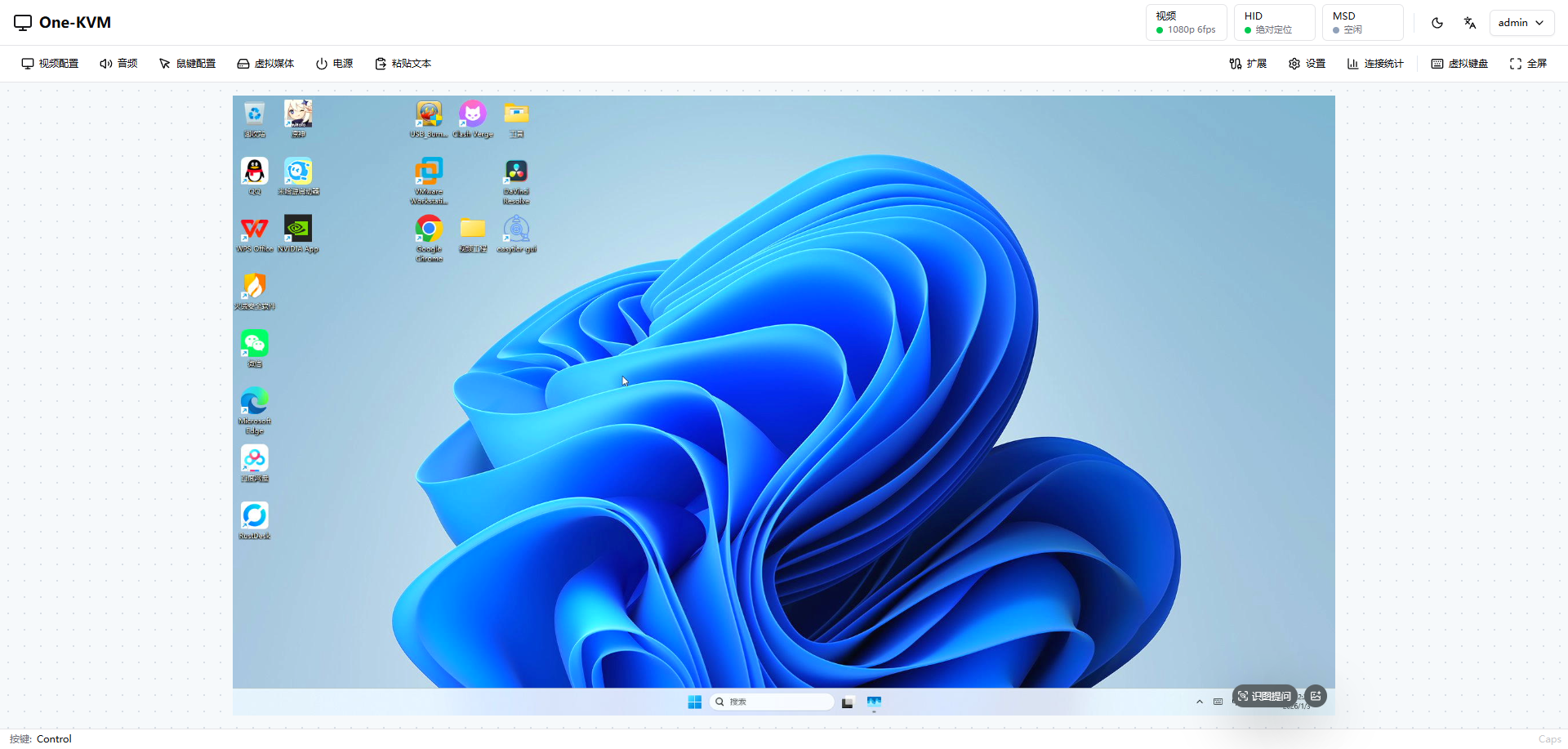
|
||||
|
||||
</div>
|
||||
|
||||
## Features
|
||||
|
||||
**Core**
|
||||
|
||||
| Area | Capabilities |
|
||||
|------|----------------|
|
||||
| Video capture | HDMI USB / MIPI CSI / RK3588 HDMI IN; MJPEG and WebRTC (H.264 / H.265 / VP8 / VP9) |
|
||||
| Video encoding | VAAPI / QSV / RKMPP / V4L2 M2M hardware paths, with software fallback |
|
||||
| Keyboard & mouse | USB OTG HID or CH340 + CH9329 HID; absolute / relative mouse |
|
||||
| Virtual media | USB mass storage; ISO/IMG mount and Ventoy-style virtual USB |
|
||||
| ATX power | GPIO or USB relay; power control |
|
||||
| Audio | ALSA capture + Opus (HTTP / WebRTC) |
|
||||
|
||||
## Installation
|
||||
|
||||
Release artifacts are on [GitHub Releases](https://github.com/mofeng-git/One-KVM/releases). Below are short paths for common setups. For **system requirements, hardware, Docker env vars, USB OTG**, and full troubleshooting, see the [One-KVM documentation](https://docs.one-kvm.cn/) (Chinese; use a translator if needed).
|
||||
|
||||
### Debian / Ubuntu (.deb)
|
||||
|
||||
Download a `one-kvm_*.deb` matching your CPU architecture from Releases, then from the directory containing the package:
|
||||
|
||||
```bash
|
||||
sudo apt update
|
||||
sudo apt install ./one-kvm_0.x.x_<arch>.deb
|
||||
```
|
||||
|
||||
Replace the version and architecture in the filename with your actual file name.
|
||||
|
||||
### Docker
|
||||
|
||||
Images:
|
||||
|
||||
- **one-kvm** — main app + ttyd
|
||||
- **one-kvm-full** — same plus optional extras (e.g. gostc, easytier-core)
|
||||
|
||||
Example:
|
||||
|
||||
```bash
|
||||
docker run --name one-kvm -itd \
|
||||
--privileged=true --restart unless-stopped \
|
||||
-v /dev:/dev -v /sys:/sys \
|
||||
--net=host \
|
||||
silentwind0/one-kvm-full
|
||||
```
|
||||
|
||||
If pulls are slow, use the Aliyun mirror, e.g. `registry.cn-hangzhou.aliyuncs.com/silentwind/one-kvm-full` (and `registry.cn-hangzhou.aliyuncs.com/silentwind/one-kvm` for the slim image).
|
||||
|
||||
### fnOS NAS (Feiniu / 飞牛)
|
||||
|
||||
One-KVM is listed in the fnOS **app store**; search and install on your NAS.
|
||||
|
||||
### Web UI and first run
|
||||
|
||||
Open `http://<device-ip>:8080` in a browser (**8420** after fnOS install). The first visit runs initial setup.
|
||||
|
||||
## Reporting issues
|
||||
|
||||
If something breaks:
|
||||
|
||||
1. Open [GitHub Issues](https://github.com/mofeng-git/One-KVM/issues) or report in the project QQ group.
|
||||
2. Include **useful** error messages and steps to reproduce.
|
||||
3. Mention software version, hardware, and OS details.
|
||||
|
||||
## Sponsorship
|
||||
|
||||
One-KVM builds on many great open-source projects; a lot of time goes into testing and maintenance. If you find it useful, you can support development on **[Afdian (为爱发电)](https://afdian.com/a/silentwind)**.
|
||||
|
||||
### Thanks
|
||||
|
||||
<details>
|
||||
<summary><strong>Supporter list</strong></summary>
|
||||
|
||||
- 浩龙的电子嵌入式之路
|
||||
|
||||
- Tsuki
|
||||
|
||||
- H_xiaoming
|
||||
|
||||
- 0蓝蓝0
|
||||
|
||||
- fairybl
|
||||
|
||||
- Will
|
||||
|
||||
- 自.知
|
||||
|
||||
- 观棋不语٩ ི۶
|
||||
|
||||
- 爱发电用户_a57a4
|
||||
|
||||
- 爱发电用户_2c769
|
||||
|
||||
- 霜序
|
||||
|
||||
- 远方(闲鱼用户名:小远技术店铺)
|
||||
|
||||
- 爱发电用户_399fc
|
||||
|
||||
- 斐斐の
|
||||
|
||||
- 爱发电用户_09451
|
||||
|
||||
- 超高校级的錆鱼
|
||||
|
||||
- 爱发电用户_08cff
|
||||
|
||||
- guoke
|
||||
|
||||
- mgt
|
||||
|
||||
- 姜沢掵
|
||||
|
||||
- ui_beam
|
||||
|
||||
- 爱发电用户_c0dd7
|
||||
|
||||
- 爱发电用户_dnjK
|
||||
|
||||
- 忍者胖猪
|
||||
|
||||
- 永遠の願い
|
||||
|
||||
- 爱发电用户_GBrF
|
||||
|
||||
- 爱发电用户_fd65c
|
||||
|
||||
- 爱发电用户_vhNa
|
||||
|
||||
- 爱发电用户_Xu6S
|
||||
|
||||
- moss
|
||||
|
||||
- woshididi
|
||||
|
||||
- 爱发电用户_a0fd1
|
||||
|
||||
- 爱发电用户_f6bH
|
||||
|
||||
- 码农
|
||||
|
||||
- 爱发电用户_6639f
|
||||
|
||||
- jeron
|
||||
|
||||
- 爱发电用户_CN7y
|
||||
|
||||
- 爱发电用户_Up6w
|
||||
|
||||
- 爱发电用户_e3202
|
||||
|
||||
- 一语念白
|
||||
|
||||
- 云边
|
||||
|
||||
- 爱发电用户_5a711
|
||||
|
||||
- 爱发电用户_9a706
|
||||
|
||||
- T0m9ir1SUKI
|
||||
|
||||
- 爱发电用户_56d52
|
||||
|
||||
- 爱发电用户_3N6F
|
||||
|
||||
- DUSK
|
||||
|
||||
- 飘零
|
||||
|
||||
- .
|
||||
|
||||
- 饭太稀
|
||||
|
||||
- 葱
|
||||
|
||||
- MaxZ
|
||||
|
||||
- 爱发电用户_c5f33
|
||||
|
||||
- 爱发电用户_09386
|
||||
|
||||
- 爱发电用户_JT6c
|
||||
|
||||
- 爱发电用户_d3d9c
|
||||
|
||||
- 爱发电用户_97b41
|
||||
|
||||
- 偶然
|
||||
|
||||
- 爱发电用户_dba45
|
||||
|
||||
- 爱发电用户_d4f8b
|
||||
|
||||
- 故人。
|
||||
|
||||
- ......
|
||||
|
||||
</details>
|
||||
|
||||
### Sponsors
|
||||
|
||||
**File hosting**
|
||||
|
||||
- **[Huang1111 public-interest program](https://pan.huang1111.cn/s/mxkx3T1)** — login-free downloads
|
||||
|
||||
**Cloud**
|
||||
|
||||
- **[林枫云](https://www.dkdun.cn)** — project server sponsorship
|
||||
|
||||
|
||||
|
||||
林枫云 offers premium network routes, high-frequency game servers, and high-bandwidth servers in China and abroad.
|
||||
|
||||
- **[Beta Network](https://my.beita.cc/?ref=github_onekvm)** — project server sponsorship
|
||||
|
||||

|
||||
|
||||
Remote computers, consumer GPU servers, and dedicated physical machines with fully automated online delivery.
|
||||
106
README.md
106
README.md
@@ -2,8 +2,9 @@
|
||||
<h1>One-KVM</h1>
|
||||
<p><strong>Rust 编写的开放轻量 IP-KVM 解决方案,实现 BIOS 级远程管理</strong></p>
|
||||
|
||||
<p><a href="README.md">简体中文</a></p>
|
||||
<p><a href="README.md">简体中文</a> · <a href="README.en.md">English</a></p>
|
||||
|
||||
[](https://github.com/mofeng-git/One-KVM/releases)
|
||||
[](https://github.com/mofeng-git/One-KVM/stargazers)
|
||||
[](https://github.com/mofeng-git/One-KVM/network/members)
|
||||
[](https://github.com/mofeng-git/One-KVM/issues)
|
||||
@@ -11,61 +12,82 @@
|
||||
|
||||
---
|
||||
|
||||
## 📖 项目概述
|
||||
## 项目概述
|
||||
|
||||
**One-KVM Rust** 是一个用 Rust 编写的轻量级 IP-KVM 解决方案,可通过网络远程管理服务器和工作站,实现 BIOS 级远程控制。
|
||||
|
||||
项目目标:
|
||||
项目目标:提供一个开放、轻量、易用的 IPKVM 解决方案。
|
||||
|
||||
- **开放**:不绑定特定硬件配置,尽量适配常见 Linux 设备
|
||||
- **轻量**:单二进制分发,部署过程更简单
|
||||
- **易用**:网页界面完成设备与参数配置,无需手动改配置文件
|
||||
- **开放**:不绑定特定硬件配置,可在各类硬件环境中稳定运行。
|
||||
- **轻量**:以二进制文件形式分发,无繁杂的依赖项,部署过程简单。
|
||||
- **易用**:无需手动编辑配置文件,参数设置均可通过网页界面完成。
|
||||
|
||||
> **注意:** One-KVM Rust 目前仍处于开发早期阶段,功能与细节会快速迭代,欢迎体验与反馈。
|
||||
更多内容可访问 [One-KVM Rust 文档站点](https://docs.one-kvm.cn/)。
|
||||
|
||||
## 🔁 迁移说明
|
||||
> **One-KVM Python** 已停止开发,如有需要可访问 <https://github.com/mofeng-git/One-KVM/tree/python>。
|
||||
|
||||
开发重心正在从 **One-KVM Python** 逐步转向 **One-KVM Rust**。
|
||||
<div align="center">
|
||||
|
||||
- 如果你在使用 **One-KVM Python(基于 PiKVM)**,请查看 [One-KVM Python 文档](https://docs.one-kvm.cn/python/)
|
||||
- One-KVM Rust 相较于 One-KVM Python:**尚未完全适配 CSI HDMI 采集卡**、**不支持 VNC 访问**,仍处于开发早期阶段
|
||||

|
||||
|
||||
## 📊 功能介绍
|
||||
</div>
|
||||
|
||||
### 核心功能
|
||||
## 功能介绍
|
||||
|
||||
| 功能 | 说明 |
|
||||
**核心功能**
|
||||
|
||||
| 功能 | 能力说明 |
|
||||
|------|------|
|
||||
| 视频采集 | HDMI USB 采集卡支持,提供 MJPEG / WebRTC(H.264/H.265/VP8/VP9) |
|
||||
| 视频采集 | HDMI USB /MIPI CSI/RK3588 HDMI IN 采集支持,提供 MJPEG / WebRTC(H.264/H.265/VP8/VP9) 视频流|
|
||||
| 视频编码 | VAAPI/QSV/RKMPP/V4L2M2M 硬件编码支持,以及软件编码兜底 |
|
||||
| 键鼠控制 | USB OTG HID 或 CH340 + CH9329 HID,支持绝对/相对鼠标模式 |
|
||||
| 虚拟媒体 | USB Mass Storage,支持 ISO/IMG 镜像挂载和 Ventoy 虚拟U盘模式 |
|
||||
| ATX 电源控制 | GPIO 控制电源/重启按钮 |
|
||||
| ATX 电源控制 | GPIO/USB 继电器,支持电源控制 |
|
||||
| 音频传输 | ALSA 采集 + Opus 编码(HTTP/WebRTC) |
|
||||
|
||||
### 硬件编码
|
||||
## 安装使用
|
||||
|
||||
支持自动检测和选择硬件加速:
|
||||
构建产物见 [GitHub Releases](https://github.com/mofeng-git/One-KVM/releases)。以下为常见安装方式的简要步骤;**系统要求、硬件准备、Docker 环境变量与 USB OTG 等完整说明**请查阅 [One-KVM Rust 文档站点](https://docs.one-kvm.cn/)。
|
||||
|
||||
- **VAAPI**:Intel/AMD GPU
|
||||
- **RKMPP**:Rockchip SoC
|
||||
- **V4L2 M2M**:通用硬件编码器
|
||||
- **软件编码**:CPU 编码
|
||||
### 使用 deb 安装(Debian / Ubuntu)
|
||||
|
||||
### 扩展能力
|
||||
从 Releases 下载与本机架构匹配的 `one-kvm_*.deb`,在包所在目录执行:
|
||||
|
||||
- Web UI 配置,多语言支持(中文/英文)
|
||||
- 内置 Web 终端(ttyd)、内网穿透支持(gostc)、P2P 组网支持(EasyTier)、RustDesk 协议集成(用于跨平台远程访问能力扩展)和 RTSP 视频流(用于视频推流)
|
||||
```bash
|
||||
sudo apt update
|
||||
sudo apt install ./one-kvm_0.x.x_<arch>.deb
|
||||
```
|
||||
|
||||
## ⚡ 安装使用
|
||||
将文件名中的版本号与架构替换为实际下载的包名。
|
||||
|
||||
可以访问 [One-KVM Rust 文档站点](https://docs.one-kvm.cn/) 获取详细信息。
|
||||
### 使用 Docker
|
||||
|
||||
镜像分为 **one-kvm**(One-KVM 主程序 + ttyd)与 **one-kvm-full**(另含 gostc、easytier-core 等可选扩展),按需选用。
|
||||
|
||||
```bash
|
||||
docker run --name one-kvm -itd \
|
||||
--privileged=true --restart unless-stopped \
|
||||
-v /dev:/dev -v /sys:/sys \
|
||||
--net=host \
|
||||
silentwind0/one-kvm-full
|
||||
```
|
||||
|
||||
拉取较慢时,可将镜像名替换为阿里云加速,例如 `registry.cn-hangzhou.aliyuncs.com/silentwind/one-kvm-full`(`one-kvm` 镜像同理,将 `silentwind0/one-kvm` 换为 `registry.cn-hangzhou.aliyuncs.com/silentwind/one-kvm`)。
|
||||
|
||||
### 飞牛 NAS
|
||||
|
||||
One-KVM 已上架飞牛 **应用市场**,在 NAS 上直接搜索安装即可。
|
||||
|
||||
### 访问 Web 与首次配置
|
||||
|
||||
浏览器访问 `http://<设备 IP>:8080`(飞牛 NAS 安装后为 8420 端口)。首次访问将引导完成初始配置。
|
||||
|
||||
## 报告问题
|
||||
|
||||
如果您发现了问题,请:
|
||||
1. 使用 [GitHub Issues](https://github.com/mofeng-git/One-KVM/issues) 报告,或加入 QQ 群聊反馈。
|
||||
2. 提供详细的错误信息和复现步骤
|
||||
3. 包含您的硬件配置和系统信息
|
||||
2. 提供有帮助的错误信息和复现步骤
|
||||
3. 包含您使用的软件版本、硬件配置和系统信息
|
||||
|
||||
## 赞助支持
|
||||
|
||||
@@ -88,8 +110,6 @@
|
||||
|
||||
- Will
|
||||
|
||||
- 浩龙的电子嵌入式之路
|
||||
|
||||
- 自.知
|
||||
|
||||
- 观棋不语٩ ི۶
|
||||
@@ -188,10 +208,18 @@
|
||||
|
||||
- 爱发电用户_JT6c
|
||||
|
||||
- MaxZ
|
||||
|
||||
- 爱发电用户_d3d9c
|
||||
|
||||
- 爱发电用户_97b41
|
||||
|
||||
- 偶然
|
||||
|
||||
- 爱发电用户_dba45
|
||||
|
||||
- 爱发电用户_d4f8b
|
||||
|
||||
- 故人。
|
||||
|
||||
- ......
|
||||
|
||||
</details>
|
||||
@@ -205,8 +233,14 @@
|
||||
|
||||
**云服务商**
|
||||
|
||||
- **[林枫云](https://www.dkdun.cn)** - 赞助了本项目宁波大带宽服务器
|
||||
- **[林枫云](https://www.dkdun.cn)** - 赞助了本项目服务器
|
||||
|
||||

|
||||
<img height="128" alt="林枫云" src="https://docs.one-kvm.cn/img/36076FEFF0898A80EBD5756D28F4076C.png" />
|
||||
|
||||
林枫云主营国内外地域的精品线路业务服务器、高主频游戏服务器和大带宽服务器。
|
||||
林枫云主营国内外地域的精品线路业务服务器、高主频游戏服务器和大带宽服务器。
|
||||
|
||||
- **[贝塔网络](https://my.beita.cc/?ref=github_onekvm)** - 赞助了本项目服务器
|
||||
|
||||
<img height="128" alt="BTBT" src="https://github.com/user-attachments/assets/c442d5f5-d72f-4a07-b9f4-400a6a0c3f1e" />
|
||||
|
||||
远程电脑、消费级GPU服务器、独服物理机,全自动在线交付。
|
||||
|
||||
50
build.rs
50
build.rs
@@ -2,21 +2,6 @@ use std::fs;
|
||||
use std::path::Path;
|
||||
|
||||
fn main() {
|
||||
// Set BUILD_DATE environment variable for compile-time access
|
||||
// Use system time to avoid adding chrono as a build dependency
|
||||
let now = std::time::SystemTime::now();
|
||||
let duration = now.duration_since(std::time::UNIX_EPOCH).unwrap();
|
||||
let secs = duration.as_secs();
|
||||
|
||||
// Convert Unix timestamp to date (simplified calculation)
|
||||
// Days since epoch
|
||||
let days = secs / 86400;
|
||||
// Calculate year, month, day from days since 1970-01-01
|
||||
let (year, month, day) = days_to_ymd(days as i64);
|
||||
let build_date = format!("{:04}-{:02}-{:02}", year, month, day);
|
||||
|
||||
println!("cargo:rustc-env=BUILD_DATE={}", build_date);
|
||||
|
||||
// Compile protobuf files for RustDesk protocol
|
||||
compile_protos();
|
||||
|
||||
@@ -64,25 +49,6 @@ fn generate_secrets() {
|
||||
pub mod ice {
|
||||
/// Google public STUN server URL (hardcoded)
|
||||
pub const STUN_SERVER: &str = "stun:stun.l.google.com:19302";
|
||||
|
||||
/// TURN server URLs - not provided, users must configure their own
|
||||
pub const TURN_URLS: &str = "";
|
||||
|
||||
/// TURN authentication username
|
||||
pub const TURN_USERNAME: &str = "";
|
||||
|
||||
/// TURN authentication password
|
||||
pub const TURN_PASSWORD: &str = "";
|
||||
|
||||
/// Always returns true since we have STUN
|
||||
pub const fn is_configured() -> bool {
|
||||
true
|
||||
}
|
||||
|
||||
/// Always returns false since TURN is not provided
|
||||
pub const fn has_turn() -> bool {
|
||||
false
|
||||
}
|
||||
}
|
||||
|
||||
/// RustDesk public server configuration - NOT PROVIDED
|
||||
@@ -105,19 +71,3 @@ pub mod rustdesk {
|
||||
|
||||
fs::write(&dest_path, code).expect("Failed to write secrets_generated.rs");
|
||||
}
|
||||
|
||||
/// Convert days since Unix epoch to year-month-day
|
||||
fn days_to_ymd(days: i64) -> (i32, u32, u32) {
|
||||
// Algorithm from http://howardhinnant.github.io/date_algorithms.html
|
||||
let z = days + 719468;
|
||||
let era = if z >= 0 { z } else { z - 146096 } / 146097;
|
||||
let doe = (z - era * 146097) as u32;
|
||||
let yoe = (doe - doe / 1460 + doe / 36524 - doe / 146096) / 365;
|
||||
let y = yoe as i64 + era * 400;
|
||||
let doy = doe - (365 * yoe + yoe / 4 - yoe / 100);
|
||||
let mp = (5 * doy + 2) / 153;
|
||||
let d = doy - (153 * mp + 2) / 5 + 1;
|
||||
let m = if mp < 10 { mp + 3 } else { mp - 9 };
|
||||
let year = if m <= 2 { y + 1 } else { y };
|
||||
(year as i32, m, d)
|
||||
}
|
||||
|
||||
@@ -1,30 +1,43 @@
|
||||
# One-KVM Runtime Image
|
||||
# This Dockerfile only packages pre-compiled binaries (no compilation)
|
||||
# Used after cross-compiling with `cross build`
|
||||
# Using Debian 11 for maximum compatibility (GLIBC 2.31)
|
||||
# Using Debian 12 to match the build images (GLIBC 2.36)
|
||||
|
||||
ARG TARGETPLATFORM=linux/amd64
|
||||
|
||||
FROM debian:11-slim
|
||||
FROM debian:12-slim
|
||||
|
||||
ARG TARGETPLATFORM
|
||||
ARG APT_MIRROR=
|
||||
|
||||
# Install runtime dependencies in a single layer
|
||||
# All codec libraries (libx264, libx265, libopus) are now statically linked
|
||||
# Only hardware acceleration drivers and core system libraries remain dynamic
|
||||
RUN apt-get update && \
|
||||
# Set APT_MIRROR=mirrors.tuna.tsinghua.edu.cn to speed up builds in China
|
||||
RUN if [ -n "$APT_MIRROR" ]; then \
|
||||
sed -i "s@deb.debian.org@${APT_MIRROR}@g" /etc/apt/sources.list.d/debian.sources; \
|
||||
fi \
|
||||
&& sed -i 's/^Components: main$/Components: main contrib non-free non-free-firmware/' /etc/apt/sources.list.d/debian.sources && \
|
||||
apt-get update && \
|
||||
apt-get install -y --no-install-recommends \
|
||||
# Core runtime (all platforms) - no codec libs needed
|
||||
ca-certificates \
|
||||
# Bluetooth HID uses the host BlueZ system bus; btmgmt manages a dedicated adapter.
|
||||
bluez \
|
||||
libudev1 \
|
||||
libasound2 \
|
||||
# OTG Ethernet bridge control (nmcli talks to the host NetworkManager over D-Bus)
|
||||
network-manager \
|
||||
iproute2 \
|
||||
iputils-ping \
|
||||
# v4l2 is handled by kernel, minimal userspace needed
|
||||
libv4l-0 \
|
||||
&& \
|
||||
# Platform-specific hardware acceleration
|
||||
if [ "$TARGETPLATFORM" = "linux/amd64" ]; then \
|
||||
apt-get install -y --no-install-recommends \
|
||||
libva2 libva-drm2 libva-x11-2 libx11-6 libxcb1 libxau6 libxdmcp6 libmfx1; \
|
||||
libva2 libva-drm2 libva-x11-2 libx11-6 libxcb1 libxau6 libxdmcp6 libmfx1 \
|
||||
i965-va-driver-shaders intel-media-va-driver-non-free vainfo; \
|
||||
elif [ "$TARGETPLATFORM" = "linux/arm64" ]; then \
|
||||
apt-get install -y --no-install-recommends \
|
||||
libdrm2 libva2; \
|
||||
|
||||
@@ -1,30 +1,43 @@
|
||||
# One-KVM Runtime Image (full)
|
||||
# This Dockerfile only packages pre-compiled binaries (no compilation)
|
||||
# Used after cross-compiling with `cross build`
|
||||
# Using Debian 11 for maximum compatibility (GLIBC 2.31)
|
||||
# Using Debian 12 to match the build images (GLIBC 2.36)
|
||||
|
||||
ARG TARGETPLATFORM=linux/amd64
|
||||
|
||||
FROM debian:11-slim
|
||||
FROM debian:12-slim
|
||||
|
||||
ARG TARGETPLATFORM
|
||||
ARG APT_MIRROR=
|
||||
|
||||
# Install runtime dependencies in a single layer
|
||||
# All codec libraries (libx264, libx265, libopus) are now statically linked
|
||||
# Only hardware acceleration drivers and core system libraries remain dynamic
|
||||
RUN apt-get update && \
|
||||
# Set APT_MIRROR=mirrors.tuna.tsinghua.edu.cn to speed up builds in China
|
||||
RUN if [ -n "$APT_MIRROR" ]; then \
|
||||
sed -i "s@deb.debian.org@${APT_MIRROR}@g" /etc/apt/sources.list.d/debian.sources; \
|
||||
fi \
|
||||
&& sed -i 's/^Components: main$/Components: main contrib non-free non-free-firmware/' /etc/apt/sources.list.d/debian.sources && \
|
||||
apt-get update && \
|
||||
apt-get install -y --no-install-recommends \
|
||||
# Core runtime (all platforms) - no codec libs needed
|
||||
ca-certificates \
|
||||
# Bluetooth HID uses the host BlueZ system bus; btmgmt manages a dedicated adapter.
|
||||
bluez \
|
||||
libudev1 \
|
||||
libasound2 \
|
||||
# OTG Ethernet bridge control (nmcli talks to the host NetworkManager over D-Bus)
|
||||
network-manager \
|
||||
iproute2 \
|
||||
iputils-ping \
|
||||
# v4l2 is handled by kernel, minimal userspace needed
|
||||
libv4l-0 \
|
||||
&& \
|
||||
# Platform-specific hardware acceleration
|
||||
if [ "$TARGETPLATFORM" = "linux/amd64" ]; then \
|
||||
apt-get install -y --no-install-recommends \
|
||||
libva2 libva-drm2 libva-x11-2 libx11-6 libxcb1 libxau6 libxdmcp6 libmfx1; \
|
||||
libva2 libva-drm2 libva-x11-2 libx11-6 libxcb1 libxau6 libxdmcp6 libmfx1 \
|
||||
i965-va-driver-shaders intel-media-va-driver-non-free vainfo; \
|
||||
elif [ "$TARGETPLATFORM" = "linux/arm64" ]; then \
|
||||
apt-get install -y --no-install-recommends \
|
||||
libdrm2 libva2; \
|
||||
|
||||
@@ -19,6 +19,32 @@ ARCH_MAP=(
|
||||
build_arch() {
|
||||
local rust_target="$1"
|
||||
|
||||
case "${CHINAMIRRO:-}" in
|
||||
1|true|TRUE|yes|YES|on|ON)
|
||||
# Default Rust toolchain mirror is USTC (rsproxy.cn is unreachable via the
|
||||
# Docker bridge on some networks because its CDN blocks the SNAT source IP).
|
||||
local rust_dist="${RUSTUP_DIST_SERVER_MIRROR:-https://mirrors.ustc.edu.cn/rust-static}"
|
||||
local rust_root="${RUSTUP_UPDATE_ROOT_MIRROR:-https://mirrors.ustc.edu.cn/rust-static/rustup}"
|
||||
local crates_sparse="${CARGO_SPARSE_MIRROR:-sparse+https://mirrors.ustc.edu.cn/crates.io-index/}"
|
||||
local crates_git="${CARGO_GIT_MIRROR:-https://mirrors.ustc.edu.cn/crates.io-index}"
|
||||
local cross_build_opts="${CROSS_BUILD_OPTS:+$CROSS_BUILD_OPTS }--progress=plain --build-arg CHINAMIRRO=1 --build-arg GH_PROXY=${GH_PROXY:-https://ghfast.top/} --build-arg DEBIAN_IMAGE=${DEBIAN_IMAGE:-dockerproxy.net/library/debian:12}"
|
||||
cross_build_opts="$cross_build_opts --build-arg HTTP_PROXY= --build-arg HTTPS_PROXY= --build-arg ALL_PROXY= --build-arg NO_PROXY="
|
||||
cross_build_opts="$cross_build_opts --build-arg http_proxy= --build-arg https_proxy= --build-arg all_proxy= --build-arg no_proxy="
|
||||
echo "=== China mirror acceleration: enabled ==="
|
||||
echo "=== Building: $rust_target (via cross with custom Dockerfile) ==="
|
||||
env \
|
||||
CROSS_BUILD_OPTS="$cross_build_opts" \
|
||||
CARGO_SOURCE_CRATES_IO_REPLACE_WITH=cn-mirror \
|
||||
CARGO_SOURCE_CN-MIRROR_REGISTRY="$crates_sparse" \
|
||||
CARGO_REGISTRIES_CRATES_IO_PROTOCOL=sparse \
|
||||
CARGO_NET_GIT_FETCH_WITH_CLI=true \
|
||||
RUSTUP_DIST_SERVER="$rust_dist" \
|
||||
RUSTUP_UPDATE_ROOT="$rust_root" \
|
||||
cross build --release --target "$rust_target"
|
||||
return
|
||||
;;
|
||||
esac
|
||||
|
||||
echo "=== Building: $rust_target (via cross with custom Dockerfile) ==="
|
||||
cross build --release --target "$rust_target"
|
||||
}
|
||||
@@ -49,6 +75,7 @@ case "${1:-all}" in
|
||||
echo "Examples:"
|
||||
echo " $0 # Build all"
|
||||
echo " $0 x86_64 # Build x86_64 only"
|
||||
echo " CHINAMIRRO=1 $0 arm64 # Build with China mirrors"
|
||||
exit 0
|
||||
;;
|
||||
*)
|
||||
@@ -65,16 +92,4 @@ for target in "${ARCH_MAP[@]}"; do
|
||||
fi
|
||||
done
|
||||
echo ""
|
||||
echo "Static libraries:"
|
||||
for target in "${ARCH_MAP[@]}"; do
|
||||
case "$target" in
|
||||
x86_64-unknown-linux-gnu) gnu_target="x86_64-linux-gnu" ;;
|
||||
aarch64-unknown-linux-gnu) gnu_target="aarch64-linux-gnu" ;;
|
||||
armv7-unknown-linux-gnueabihf) gnu_target="armv7-linux-gnueabihf" ;;
|
||||
esac
|
||||
if [ -d "$PROJECT_DIR/target/one-kvm-libs/$gnu_target/lib" ]; then
|
||||
echo " $gnu_target: OK"
|
||||
fi
|
||||
done
|
||||
echo ""
|
||||
echo "Next step: ./build/package-docker.sh or ./build/package-deb.sh"
|
||||
|
||||
@@ -1,21 +1,55 @@
|
||||
# Cross-compilation image for ARM64 based on Debian 11
|
||||
# Build on Debian 11 (GLIBC 2.31) for maximum runtime compatibility
|
||||
# Cross-compilation image for ARM64 based on Debian 12
|
||||
# Build on Debian 12 (GLIBC 2.36) to match the runtime images
|
||||
|
||||
FROM debian:11
|
||||
ARG DEBIAN_IMAGE=debian:12
|
||||
FROM ${DEBIAN_IMAGE}
|
||||
|
||||
# Linux headers used by v4l2r bindgen
|
||||
ARG LINUX_HEADERS_VERSION=6.6
|
||||
ARG LINUX_HEADERS_SHA256=
|
||||
ARG CHINAMIRRO=0
|
||||
ARG GH_PROXY=https://gh-proxy.com/
|
||||
ARG RUSTUP_DIST_SERVER_CN=https://mirrors.ustc.edu.cn/rust-static
|
||||
ARG RUSTUP_UPDATE_ROOT_CN=https://mirrors.ustc.edu.cn/rust-static/rustup
|
||||
ARG CARGO_INDEX_CN=https://mirrors.ustc.edu.cn/crates.io-index
|
||||
ARG CARGO_REGISTRY_CN=sparse+https://mirrors.ustc.edu.cn/crates.io-index/
|
||||
ARG LIBJPEG_TURBO_VERSION=3.1.4.1
|
||||
ARG LIBYUV_REV=957f295ea946cbbd13fcfc46e7066f2efa801233
|
||||
ARG LIBVPX_VERSION=1.16.0
|
||||
ARG X265_VERSION=3.4
|
||||
ARG OPUS_VERSION=1.5.2
|
||||
ARG RKMPP_BRANCH=jellyfin-mpp
|
||||
ARG RKRGA_BRANCH=jellyfin-rga
|
||||
ARG FFMPEG_ROCKCHIP_REV=40c412daccf08164493da0de990eb99a8948116b
|
||||
|
||||
# Set Rustup mirrors (Aliyun)
|
||||
#ENV RUSTUP_UPDATE_ROOT=https://mirrors.aliyun.com/rustup/rustup \
|
||||
# RUSTUP_DIST_SERVER=https://mirrors.aliyun.com/rustup
|
||||
# Optionally use China mirrors for builds in China.
|
||||
RUN if [ "$CHINAMIRRO" = "1" ]; then \
|
||||
sed -i -E \
|
||||
-e 's@http://deb.debian.org/debian([[:space:]]|$)@http://mirrors.tuna.tsinghua.edu.cn/debian\1@g' \
|
||||
/etc/apt/sources.list.d/debian.sources; \
|
||||
fi
|
||||
|
||||
# Install Rust toolchain
|
||||
RUN apt-get update && apt-get install -y --no-install-recommends \
|
||||
curl \
|
||||
ca-certificates \
|
||||
&& if [ "$CHINAMIRRO" = "1" ]; then \
|
||||
export RUSTUP_DIST_SERVER=${RUSTUP_DIST_SERVER_CN}; \
|
||||
export RUSTUP_UPDATE_ROOT=${RUSTUP_UPDATE_ROOT_CN}; \
|
||||
fi \
|
||||
&& curl --proto '=https' --tlsv1.2 -sSf https://sh.rustup.rs | sh -s -- -y --default-toolchain stable \
|
||||
&& if [ "$CHINAMIRRO" = "1" ]; then \
|
||||
mkdir -p /root/.cargo; \
|
||||
printf '%s\n' \
|
||||
'[source.crates-io]' \
|
||||
"replace-with = 'cn-mirror-sparse'" \
|
||||
'[source.cn-mirror]' \
|
||||
"registry = '${CARGO_INDEX_CN}'" \
|
||||
'[source.cn-mirror-sparse]' \
|
||||
"registry = '${CARGO_REGISTRY_CN}'" \
|
||||
'[registries.cn-mirror]' \
|
||||
"index = '${CARGO_INDEX_CN}'" \
|
||||
'[net]' \
|
||||
'git-fetch-with-cli = true' \
|
||||
> /root/.cargo/config.toml; \
|
||||
fi \
|
||||
&& rm -rf /var/lib/apt/lists/*
|
||||
|
||||
ENV PATH="/root/.cargo/bin:${PATH}"
|
||||
@@ -26,6 +60,7 @@ RUN dpkg --add-architecture arm64
|
||||
# Install cross-compiler and native build tools
|
||||
RUN apt-get update && apt-get install -y --no-install-recommends \
|
||||
build-essential \
|
||||
patch \
|
||||
pkg-config \
|
||||
cmake \
|
||||
nasm \
|
||||
@@ -49,6 +84,8 @@ RUN apt-get update && apt-get install -y --no-install-recommends \
|
||||
|
||||
# Install ARM64 development libraries (without VAAPI/X11 for ARM)
|
||||
RUN apt-get update && apt-get install -y --no-install-recommends \
|
||||
libssl3 \
|
||||
libssl3:arm64 \
|
||||
libasound2-dev:arm64 \
|
||||
libv4l-dev:arm64 \
|
||||
libudev-dev:arm64 \
|
||||
@@ -58,23 +95,18 @@ RUN apt-get update && apt-get install -y --no-install-recommends \
|
||||
libdrm-dev:arm64 \
|
||||
&& rm -rf /var/lib/apt/lists/*
|
||||
|
||||
# Install newer V4L2 headers for v4l2r bindgen
|
||||
RUN mkdir -p /opt/v4l2-headers \
|
||||
&& wget -q https://cdn.kernel.org/pub/linux/kernel/v6.x/linux-${LINUX_HEADERS_VERSION}.tar.xz -O /tmp/linux-headers.tar.xz \
|
||||
&& if [ -n "$LINUX_HEADERS_SHA256" ]; then echo "$LINUX_HEADERS_SHA256 /tmp/linux-headers.tar.xz" | sha256sum -c -; fi \
|
||||
&& tar -xf /tmp/linux-headers.tar.xz -C /tmp \
|
||||
&& cd /tmp/linux-${LINUX_HEADERS_VERSION} \
|
||||
&& make ARCH=arm64 headers_install INSTALL_HDR_PATH=/opt/v4l2-headers \
|
||||
&& rm -rf /tmp/linux-${LINUX_HEADERS_VERSION} /tmp/linux-headers.tar.xz
|
||||
|
||||
ENV V4L2R_VIDEODEV2_H_PATH=/opt/v4l2-headers/include
|
||||
|
||||
# Build static libjpeg-turbo from source (cross-compile for ARM64)
|
||||
RUN git clone --depth 1 https://github.com/libjpeg-turbo/libjpeg-turbo /tmp/libjpeg-turbo \
|
||||
RUN github_prefix="" \
|
||||
&& if [ "$CHINAMIRRO" = "1" ]; then github_prefix="${GH_PROXY%/}/"; fi \
|
||||
&& git init /tmp/libjpeg-turbo \
|
||||
&& cd /tmp/libjpeg-turbo \
|
||||
&& git remote add origin "${github_prefix}https://github.com/libjpeg-turbo/libjpeg-turbo.git" \
|
||||
&& git fetch --depth 1 origin "refs/tags/${LIBJPEG_TURBO_VERSION}" \
|
||||
&& git checkout --detach FETCH_HEAD \
|
||||
&& mkdir build && cd build \
|
||||
&& cmake .. -DCMAKE_BUILD_TYPE=Release -DCMAKE_POSITION_INDEPENDENT_CODE=ON \
|
||||
-DCMAKE_INSTALL_PREFIX=/usr/aarch64-linux-gnu \
|
||||
-DCMAKE_INSTALL_LIBDIR=lib \
|
||||
-DCMAKE_SYSTEM_NAME=Linux \
|
||||
-DCMAKE_SYSTEM_PROCESSOR=aarch64 \
|
||||
-DCMAKE_C_COMPILER=aarch64-linux-gnu-gcc \
|
||||
@@ -84,8 +116,13 @@ RUN git clone --depth 1 https://github.com/libjpeg-turbo/libjpeg-turbo /tmp/libj
|
||||
&& rm -rf /tmp/libjpeg-turbo
|
||||
|
||||
# Build static libyuv from source (cross-compile for ARM64)
|
||||
RUN git clone --depth 1 https://github.com/lemenkov/libyuv /tmp/libyuv \
|
||||
RUN git init /tmp/libyuv \
|
||||
&& cd /tmp/libyuv \
|
||||
&& github_prefix="" \
|
||||
&& if [ "$CHINAMIRRO" = "1" ]; then github_prefix="${GH_PROXY%/}/"; fi \
|
||||
&& git remote add origin "${github_prefix}https://github.com/lemenkov/libyuv" \
|
||||
&& git fetch --depth 1 origin ${LIBYUV_REV} \
|
||||
&& git checkout --detach FETCH_HEAD \
|
||||
&& mkdir build && cd build \
|
||||
&& cmake .. -DCMAKE_BUILD_TYPE=Release -DCMAKE_POSITION_INDEPENDENT_CODE=ON \
|
||||
-DCMAKE_INSTALL_PREFIX=/usr/aarch64-linux-gnu \
|
||||
@@ -93,14 +130,24 @@ RUN git clone --depth 1 https://github.com/lemenkov/libyuv /tmp/libyuv \
|
||||
-DCMAKE_SYSTEM_PROCESSOR=aarch64 \
|
||||
-DCMAKE_C_COMPILER=aarch64-linux-gnu-gcc \
|
||||
-DCMAKE_CXX_COMPILER=aarch64-linux-gnu-g++ \
|
||||
-DJPEG_FOUND=TRUE \
|
||||
-DJPEG_INCLUDE_DIR=/usr/aarch64-linux-gnu/include \
|
||||
-DJPEG_LIBRARY=/usr/aarch64-linux-gnu/lib/libjpeg.a \
|
||||
-DCMAKE_C_FLAGS="-DHAVE_JPEG -I/usr/aarch64-linux-gnu/include" \
|
||||
-DCMAKE_CXX_FLAGS="-DHAVE_JPEG -I/usr/aarch64-linux-gnu/include" \
|
||||
&& make -j$(nproc) \
|
||||
&& make install \
|
||||
&& rm -rf /tmp/libyuv
|
||||
|
||||
# Build static libvpx from source (cross-compile for ARM64)
|
||||
# CC/CXX/LD/AR must be environment variables, not configure arguments
|
||||
RUN git clone --depth 1 https://github.com/webmproject/libvpx /tmp/libvpx \
|
||||
RUN github_prefix="" \
|
||||
&& if [ "$CHINAMIRRO" = "1" ]; then github_prefix="${GH_PROXY%/}/"; fi \
|
||||
&& git init /tmp/libvpx \
|
||||
&& cd /tmp/libvpx \
|
||||
&& git remote add origin "${github_prefix}https://github.com/webmproject/libvpx.git" \
|
||||
&& git fetch --depth 1 origin "refs/tags/v${LIBVPX_VERSION}" \
|
||||
&& git checkout --detach FETCH_HEAD \
|
||||
&& echo "=== libvpx: Configuring for ARM64 ===" \
|
||||
&& export CC=aarch64-linux-gnu-gcc \
|
||||
&& export CXX=aarch64-linux-gnu-g++ \
|
||||
@@ -123,7 +170,9 @@ RUN git clone --depth 1 https://github.com/webmproject/libvpx /tmp/libvpx \
|
||||
&& rm -rf /tmp/libvpx
|
||||
|
||||
# Build static libx264 from source (cross-compile for ARM64)
|
||||
RUN git clone --depth 1 https://code.videolan.org/videolan/x264.git /tmp/x264 \
|
||||
RUN github_prefix="" \
|
||||
&& if [ "$CHINAMIRRO" = "1" ]; then github_prefix="${GH_PROXY%/}/"; fi \
|
||||
&& git clone --depth 1 "${github_prefix}https://github.com/mirror/x264.git" /tmp/x264 \
|
||||
&& cd /tmp/x264 \
|
||||
&& export CC=aarch64-linux-gnu-gcc \
|
||||
&& export AR=aarch64-linux-gnu-ar \
|
||||
@@ -139,12 +188,18 @@ RUN git clone --depth 1 https://code.videolan.org/videolan/x264.git /tmp/x264 \
|
||||
&& rm -rf /tmp/x264
|
||||
|
||||
# Build static libx265 from source (cross-compile for ARM64)
|
||||
RUN git clone --depth 1 https://bitbucket.org/multicoreware/x265_git /tmp/x265 \
|
||||
RUN github_prefix="" \
|
||||
&& if [ "$CHINAMIRRO" = "1" ]; then github_prefix="${GH_PROXY%/}/"; fi \
|
||||
&& git init /tmp/x265 \
|
||||
&& cd /tmp/x265 \
|
||||
&& git remote add origin "${github_prefix}https://github.com/videolan/x265.git" \
|
||||
&& git fetch --depth 1 origin "refs/tags/${X265_VERSION}" \
|
||||
&& git checkout --detach FETCH_HEAD \
|
||||
&& cd source \
|
||||
&& mkdir -p build \
|
||||
&& cd build \
|
||||
&& cmake .. -DCMAKE_BUILD_TYPE=Release \
|
||||
-DCMAKE_ASM_NASM_FLAGS="-w-macro-params-legacy" \
|
||||
-DCMAKE_INSTALL_PREFIX=/usr/aarch64-linux-gnu \
|
||||
-DCMAKE_SYSTEM_NAME=Linux \
|
||||
-DCMAKE_SYSTEM_PROCESSOR=aarch64 \
|
||||
@@ -178,12 +233,15 @@ Cflags: -I\${includedir}
|
||||
EOF
|
||||
|
||||
# Build static libopus from source (cross-compile for ARM64)
|
||||
RUN git clone --depth 1 https://github.com/xiph/opus /tmp/opus \
|
||||
RUN github_prefix="" \
|
||||
&& if [ "$CHINAMIRRO" = "1" ]; then github_prefix="${GH_PROXY%/}/"; fi \
|
||||
&& wget -O /tmp/opus.tar.gz "${github_prefix}https://github.com/xiph/opus/releases/download/v${OPUS_VERSION}/opus-${OPUS_VERSION}.tar.gz" \
|
||||
&& tar -xzf /tmp/opus.tar.gz -C /tmp \
|
||||
&& mv "/tmp/opus-${OPUS_VERSION}" /tmp/opus \
|
||||
&& cd /tmp/opus \
|
||||
&& export CC=aarch64-linux-gnu-gcc \
|
||||
&& export AR=aarch64-linux-gnu-ar \
|
||||
&& export RANLIB=aarch64-linux-gnu-ranlib \
|
||||
&& ./autogen.sh \
|
||||
&& ./configure \
|
||||
--prefix=/usr/aarch64-linux-gnu \
|
||||
--host=aarch64-linux-gnu \
|
||||
@@ -191,13 +249,24 @@ RUN git clone --depth 1 https://github.com/xiph/opus /tmp/opus \
|
||||
--disable-doc \
|
||||
&& make -j$(nproc) \
|
||||
&& make install \
|
||||
&& rm -rf /tmp/opus
|
||||
&& rm -rf /tmp/opus /tmp/opus.tar.gz
|
||||
|
||||
# Reject raw formats smaller than the requested frame before any V4L2 upload.
|
||||
COPY build/cross/patches/0001-v4l2-m2m-reject-undersized-encoder-format.patch /tmp/ffmpeg-v4l2-size.patch
|
||||
|
||||
# Download and build FFmpeg with RKMPP support
|
||||
RUN mkdir -p /tmp/ffmpeg-build && cd /tmp/ffmpeg-build \
|
||||
&& wget -q https://files.mofeng.run/src/image/other/ffmpeg.tar.gz \
|
||||
&& tar -xzf ffmpeg.tar.gz \
|
||||
&& cd ffmpeg \
|
||||
&& github_prefix="" \
|
||||
&& if [ "$CHINAMIRRO" = "1" ]; then github_prefix="${GH_PROXY%/}/"; fi \
|
||||
&& git clone --depth 1 --branch ${RKMPP_BRANCH} "${github_prefix}https://github.com/nyanmisaka/mpp.git" rkmpp \
|
||||
&& git clone --depth 1 --branch ${RKRGA_BRANCH} "${github_prefix}https://github.com/nyanmisaka/rk-mirrors.git" rkrga \
|
||||
&& git init ffmpeg-rockchip \
|
||||
&& cd ffmpeg-rockchip \
|
||||
&& git remote add origin "${github_prefix}https://github.com/nyanmisaka/ffmpeg-rockchip.git" \
|
||||
&& git fetch --depth 1 origin ${FFMPEG_ROCKCHIP_REV} \
|
||||
&& git checkout --detach FETCH_HEAD \
|
||||
&& patch -p1 < /tmp/ffmpeg-v4l2-size.patch \
|
||||
&& cd .. \
|
||||
# Build RKMPP
|
||||
&& mkdir -p rkmpp/build && cd rkmpp/build \
|
||||
&& cmake .. \
|
||||
@@ -212,6 +281,7 @@ RUN mkdir -p /tmp/ffmpeg-build && cd /tmp/ffmpeg-build \
|
||||
&& make -j$(nproc) \
|
||||
&& make install \
|
||||
&& sed -i 's/^Libs:.*$/& -lstdc++ -lm -lpthread/' /usr/aarch64-linux-gnu/lib/pkgconfig/rockchip_mpp.pc \
|
||||
&& rm -f /usr/aarch64-linux-gnu/lib/librockchip_mpp.so* \
|
||||
&& cd ../.. \
|
||||
# Build RKRGA - create cross file for meson
|
||||
&& echo '[binaries]' > /tmp/aarch64-cross.txt \
|
||||
@@ -239,6 +309,7 @@ RUN mkdir -p /tmp/ffmpeg-build && cd /tmp/ffmpeg-build \
|
||||
&& ar rcs /usr/aarch64-linux-gnu/lib/librga.a $(find build -name '*.o') \
|
||||
&& ranlib /usr/aarch64-linux-gnu/lib/librga.a \
|
||||
&& sed -i 's/^Libs:.*$/& -lstdc++ -lm -lpthread/' /usr/aarch64-linux-gnu/lib/pkgconfig/librga.pc \
|
||||
&& rm -f /usr/aarch64-linux-gnu/lib/librga.so* \
|
||||
&& cd .. \
|
||||
# Create pkg-config wrapper for cross-compilation
|
||||
&& echo '#!/bin/sh' > /tmp/aarch64-pkg-config \
|
||||
@@ -327,7 +398,11 @@ RUN mkdir -p /tmp/ffmpeg-build && cd /tmp/ffmpeg-build \
|
||||
&& rm -rf /tmp/ffmpeg-build /tmp/aarch64-cross.txt /tmp/aarch64-pkg-config
|
||||
|
||||
# Add Rust target
|
||||
RUN rustup target add aarch64-unknown-linux-gnu
|
||||
RUN if [ "$CHINAMIRRO" = "1" ]; then \
|
||||
export RUSTUP_DIST_SERVER=${RUSTUP_DIST_SERVER_CN}; \
|
||||
export RUSTUP_UPDATE_ROOT=${RUSTUP_UPDATE_ROOT_CN}; \
|
||||
fi \
|
||||
&& rustup target add aarch64-unknown-linux-gnu
|
||||
|
||||
# Configure environment for cross-compilation
|
||||
ENV CARGO_TARGET_AARCH64_UNKNOWN_LINUX_GNU_LINKER=aarch64-linux-gnu-gcc \
|
||||
@@ -341,4 +416,4 @@ ENV CARGO_TARGET_AARCH64_UNKNOWN_LINUX_GNU_LINKER=aarch64-linux-gnu-gcc \
|
||||
LIBYUV_STATIC=1 \
|
||||
OPUS_STATIC=1 \
|
||||
PKG_CONFIG_ALL_STATIC=1 \
|
||||
RUSTFLAGS="-C linker=aarch64-linux-gnu-gcc"
|
||||
RUSTFLAGS="-C linker=aarch64-linux-gnu-gcc -C link-arg=-Wl,--allow-multiple-definition"
|
||||
|
||||
@@ -1,21 +1,55 @@
|
||||
# Cross-compilation image for ARMv7 based on Debian 11
|
||||
# Build on Debian 11 (GLIBC 2.31) for maximum runtime compatibility
|
||||
# Cross-compilation image for ARMv7 based on Debian 12
|
||||
# Build on Debian 12 (GLIBC 2.36) to match the runtime images
|
||||
|
||||
FROM debian:11
|
||||
ARG DEBIAN_IMAGE=debian:12
|
||||
FROM ${DEBIAN_IMAGE}
|
||||
|
||||
# Linux headers used by v4l2r bindgen
|
||||
ARG LINUX_HEADERS_VERSION=6.6
|
||||
ARG LINUX_HEADERS_SHA256=
|
||||
ARG CHINAMIRRO=0
|
||||
ARG GH_PROXY=https://gh-proxy.com/
|
||||
ARG RUSTUP_DIST_SERVER_CN=https://mirrors.ustc.edu.cn/rust-static
|
||||
ARG RUSTUP_UPDATE_ROOT_CN=https://mirrors.ustc.edu.cn/rust-static/rustup
|
||||
ARG CARGO_INDEX_CN=https://mirrors.ustc.edu.cn/crates.io-index
|
||||
ARG CARGO_REGISTRY_CN=sparse+https://mirrors.ustc.edu.cn/crates.io-index/
|
||||
ARG LIBJPEG_TURBO_VERSION=3.1.4.1
|
||||
ARG LIBYUV_REV=957f295ea946cbbd13fcfc46e7066f2efa801233
|
||||
ARG LIBVPX_VERSION=1.16.0
|
||||
ARG X265_VERSION=3.4
|
||||
ARG OPUS_VERSION=1.5.2
|
||||
ARG RKMPP_BRANCH=jellyfin-mpp
|
||||
ARG RKRGA_BRANCH=jellyfin-rga
|
||||
ARG FFMPEG_ROCKCHIP_REV=40c412daccf08164493da0de990eb99a8948116b
|
||||
|
||||
# Set Rustup mirrors (Aliyun)
|
||||
#ENV RUSTUP_UPDATE_ROOT=https://mirrors.aliyun.com/rustup/rustup \
|
||||
# RUSTUP_DIST_SERVER=https://mirrors.aliyun.com/rustup
|
||||
# Optionally use China mirrors for builds in China.
|
||||
RUN if [ "$CHINAMIRRO" = "1" ]; then \
|
||||
sed -i -E \
|
||||
-e 's@http://deb.debian.org/debian([[:space:]]|$)@http://mirrors.tuna.tsinghua.edu.cn/debian\1@g' \
|
||||
/etc/apt/sources.list.d/debian.sources; \
|
||||
fi
|
||||
|
||||
# Install Rust toolchain
|
||||
RUN apt-get update && apt-get install -y --no-install-recommends \
|
||||
curl \
|
||||
ca-certificates \
|
||||
&& if [ "$CHINAMIRRO" = "1" ]; then \
|
||||
export RUSTUP_DIST_SERVER=${RUSTUP_DIST_SERVER_CN}; \
|
||||
export RUSTUP_UPDATE_ROOT=${RUSTUP_UPDATE_ROOT_CN}; \
|
||||
fi \
|
||||
&& curl --proto '=https' --tlsv1.2 -sSf https://sh.rustup.rs | sh -s -- -y --default-toolchain stable \
|
||||
&& if [ "$CHINAMIRRO" = "1" ]; then \
|
||||
mkdir -p /root/.cargo; \
|
||||
printf '%s\n' \
|
||||
'[source.crates-io]' \
|
||||
"replace-with = 'cn-mirror-sparse'" \
|
||||
'[source.cn-mirror]' \
|
||||
"registry = '${CARGO_INDEX_CN}'" \
|
||||
'[source.cn-mirror-sparse]' \
|
||||
"registry = '${CARGO_REGISTRY_CN}'" \
|
||||
'[registries.cn-mirror]' \
|
||||
"index = '${CARGO_INDEX_CN}'" \
|
||||
'[net]' \
|
||||
'git-fetch-with-cli = true' \
|
||||
> /root/.cargo/config.toml; \
|
||||
fi \
|
||||
&& rm -rf /var/lib/apt/lists/*
|
||||
|
||||
ENV PATH="/root/.cargo/bin:${PATH}"
|
||||
@@ -26,6 +60,7 @@ RUN dpkg --add-architecture armhf
|
||||
# Install cross-compiler and native build tools
|
||||
RUN apt-get update && apt-get install -y --no-install-recommends \
|
||||
build-essential \
|
||||
patch \
|
||||
pkg-config \
|
||||
cmake \
|
||||
nasm \
|
||||
@@ -49,6 +84,8 @@ RUN apt-get update && apt-get install -y --no-install-recommends \
|
||||
|
||||
# Install ARMv7 development libraries (without VAAPI/X11 for ARM)
|
||||
RUN apt-get update && apt-get install -y --no-install-recommends \
|
||||
libssl3 \
|
||||
libssl3:armhf \
|
||||
libasound2-dev:armhf \
|
||||
libv4l-dev:armhf \
|
||||
libudev-dev:armhf \
|
||||
@@ -57,23 +94,18 @@ RUN apt-get update && apt-get install -y --no-install-recommends \
|
||||
libdrm-dev:armhf \
|
||||
&& rm -rf /var/lib/apt/lists/*
|
||||
|
||||
# Install newer V4L2 headers for v4l2r bindgen
|
||||
RUN mkdir -p /opt/v4l2-headers \
|
||||
&& wget -q https://cdn.kernel.org/pub/linux/kernel/v6.x/linux-${LINUX_HEADERS_VERSION}.tar.xz -O /tmp/linux-headers.tar.xz \
|
||||
&& if [ -n "$LINUX_HEADERS_SHA256" ]; then echo "$LINUX_HEADERS_SHA256 /tmp/linux-headers.tar.xz" | sha256sum -c -; fi \
|
||||
&& tar -xf /tmp/linux-headers.tar.xz -C /tmp \
|
||||
&& cd /tmp/linux-${LINUX_HEADERS_VERSION} \
|
||||
&& make ARCH=arm headers_install INSTALL_HDR_PATH=/opt/v4l2-headers \
|
||||
&& rm -rf /tmp/linux-${LINUX_HEADERS_VERSION} /tmp/linux-headers.tar.xz
|
||||
|
||||
ENV V4L2R_VIDEODEV2_H_PATH=/opt/v4l2-headers/include
|
||||
|
||||
# Build static libjpeg-turbo from source (cross-compile for ARMv7)
|
||||
RUN git clone --depth 1 https://github.com/libjpeg-turbo/libjpeg-turbo /tmp/libjpeg-turbo \
|
||||
RUN github_prefix="" \
|
||||
&& if [ "$CHINAMIRRO" = "1" ]; then github_prefix="${GH_PROXY%/}/"; fi \
|
||||
&& git init /tmp/libjpeg-turbo \
|
||||
&& cd /tmp/libjpeg-turbo \
|
||||
&& git remote add origin "${github_prefix}https://github.com/libjpeg-turbo/libjpeg-turbo.git" \
|
||||
&& git fetch --depth 1 origin "refs/tags/${LIBJPEG_TURBO_VERSION}" \
|
||||
&& git checkout --detach FETCH_HEAD \
|
||||
&& mkdir build && cd build \
|
||||
&& cmake .. -DCMAKE_BUILD_TYPE=Release -DCMAKE_POSITION_INDEPENDENT_CODE=ON \
|
||||
-DCMAKE_INSTALL_PREFIX=/usr/arm-linux-gnueabihf \
|
||||
-DCMAKE_INSTALL_LIBDIR=lib \
|
||||
-DCMAKE_SYSTEM_NAME=Linux \
|
||||
-DCMAKE_SYSTEM_PROCESSOR=arm \
|
||||
-DCMAKE_C_COMPILER=arm-linux-gnueabihf-gcc \
|
||||
@@ -83,8 +115,13 @@ RUN git clone --depth 1 https://github.com/libjpeg-turbo/libjpeg-turbo /tmp/libj
|
||||
&& rm -rf /tmp/libjpeg-turbo
|
||||
|
||||
# Build static libyuv from source (cross-compile for ARMv7)
|
||||
RUN git clone --depth 1 https://github.com/lemenkov/libyuv /tmp/libyuv \
|
||||
RUN git init /tmp/libyuv \
|
||||
&& cd /tmp/libyuv \
|
||||
&& github_prefix="" \
|
||||
&& if [ "$CHINAMIRRO" = "1" ]; then github_prefix="${GH_PROXY%/}/"; fi \
|
||||
&& git remote add origin "${github_prefix}https://github.com/lemenkov/libyuv" \
|
||||
&& git fetch --depth 1 origin ${LIBYUV_REV} \
|
||||
&& git checkout --detach FETCH_HEAD \
|
||||
&& mkdir build && cd build \
|
||||
&& cmake .. -DCMAKE_BUILD_TYPE=Release -DCMAKE_POSITION_INDEPENDENT_CODE=ON \
|
||||
-DCMAKE_INSTALL_PREFIX=/usr/arm-linux-gnueabihf \
|
||||
@@ -92,13 +129,23 @@ RUN git clone --depth 1 https://github.com/lemenkov/libyuv /tmp/libyuv \
|
||||
-DCMAKE_SYSTEM_PROCESSOR=arm \
|
||||
-DCMAKE_C_COMPILER=arm-linux-gnueabihf-gcc \
|
||||
-DCMAKE_CXX_COMPILER=arm-linux-gnueabihf-g++ \
|
||||
-DJPEG_FOUND=TRUE \
|
||||
-DJPEG_INCLUDE_DIR=/usr/arm-linux-gnueabihf/include \
|
||||
-DJPEG_LIBRARY=/usr/arm-linux-gnueabihf/lib/libjpeg.a \
|
||||
-DCMAKE_C_FLAGS="-DHAVE_JPEG -I/usr/arm-linux-gnueabihf/include" \
|
||||
-DCMAKE_CXX_FLAGS="-DHAVE_JPEG -I/usr/arm-linux-gnueabihf/include" \
|
||||
&& make -j$(nproc) \
|
||||
&& make install \
|
||||
&& rm -rf /tmp/libyuv
|
||||
|
||||
# Build static libvpx from source (cross-compile for ARMv7)
|
||||
RUN git clone --depth 1 https://github.com/webmproject/libvpx /tmp/libvpx \
|
||||
RUN github_prefix="" \
|
||||
&& if [ "$CHINAMIRRO" = "1" ]; then github_prefix="${GH_PROXY%/}/"; fi \
|
||||
&& git init /tmp/libvpx \
|
||||
&& cd /tmp/libvpx \
|
||||
&& git remote add origin "${github_prefix}https://github.com/webmproject/libvpx.git" \
|
||||
&& git fetch --depth 1 origin "refs/tags/v${LIBVPX_VERSION}" \
|
||||
&& git checkout --detach FETCH_HEAD \
|
||||
&& export CC=arm-linux-gnueabihf-gcc \
|
||||
&& export CXX=arm-linux-gnueabihf-g++ \
|
||||
&& export LD=arm-linux-gnueabihf-ld \
|
||||
@@ -115,7 +162,9 @@ RUN git clone --depth 1 https://github.com/webmproject/libvpx /tmp/libvpx \
|
||||
&& rm -rf /tmp/libvpx
|
||||
|
||||
# Build static libx264 from source (cross-compile for ARMv7)
|
||||
RUN git clone --depth 1 https://code.videolan.org/videolan/x264.git /tmp/x264 \
|
||||
RUN github_prefix="" \
|
||||
&& if [ "$CHINAMIRRO" = "1" ]; then github_prefix="${GH_PROXY%/}/"; fi \
|
||||
&& git clone --depth 1 "${github_prefix}https://github.com/mirror/x264.git" /tmp/x264 \
|
||||
&& cd /tmp/x264 \
|
||||
&& export CC=arm-linux-gnueabihf-gcc \
|
||||
&& export AR=arm-linux-gnueabihf-ar \
|
||||
@@ -132,12 +181,18 @@ RUN git clone --depth 1 https://code.videolan.org/videolan/x264.git /tmp/x264 \
|
||||
&& rm -rf /tmp/x264
|
||||
|
||||
# Build static libx265 from source (cross-compile for ARMv7)
|
||||
RUN git clone --depth 1 https://bitbucket.org/multicoreware/x265_git /tmp/x265 \
|
||||
RUN github_prefix="" \
|
||||
&& if [ "$CHINAMIRRO" = "1" ]; then github_prefix="${GH_PROXY%/}/"; fi \
|
||||
&& git init /tmp/x265 \
|
||||
&& cd /tmp/x265 \
|
||||
&& git remote add origin "${github_prefix}https://github.com/videolan/x265.git" \
|
||||
&& git fetch --depth 1 origin "refs/tags/${X265_VERSION}" \
|
||||
&& git checkout --detach FETCH_HEAD \
|
||||
&& cd source \
|
||||
&& mkdir -p build \
|
||||
&& cd build \
|
||||
&& cmake .. -DCMAKE_BUILD_TYPE=Release \
|
||||
-DCMAKE_ASM_NASM_FLAGS="-w-macro-params-legacy" \
|
||||
-DCMAKE_INSTALL_PREFIX=/usr/arm-linux-gnueabihf \
|
||||
-DCMAKE_SYSTEM_NAME=Linux \
|
||||
-DCMAKE_SYSTEM_PROCESSOR=arm \
|
||||
@@ -167,12 +222,15 @@ Cflags: -I\${includedir}
|
||||
EOF
|
||||
|
||||
# Build static libopus from source (cross-compile for ARMv7)
|
||||
RUN git clone --depth 1 https://github.com/xiph/opus /tmp/opus \
|
||||
RUN github_prefix="" \
|
||||
&& if [ "$CHINAMIRRO" = "1" ]; then github_prefix="${GH_PROXY%/}/"; fi \
|
||||
&& wget -O /tmp/opus.tar.gz "${github_prefix}https://github.com/xiph/opus/releases/download/v${OPUS_VERSION}/opus-${OPUS_VERSION}.tar.gz" \
|
||||
&& tar -xzf /tmp/opus.tar.gz -C /tmp \
|
||||
&& mv "/tmp/opus-${OPUS_VERSION}" /tmp/opus \
|
||||
&& cd /tmp/opus \
|
||||
&& export CC=arm-linux-gnueabihf-gcc \
|
||||
&& export AR=arm-linux-gnueabihf-ar \
|
||||
&& export RANLIB=arm-linux-gnueabihf-ranlib \
|
||||
&& ./autogen.sh \
|
||||
&& ./configure \
|
||||
--prefix=/usr/arm-linux-gnueabihf \
|
||||
--host=arm-linux-gnueabihf \
|
||||
@@ -180,13 +238,24 @@ RUN git clone --depth 1 https://github.com/xiph/opus /tmp/opus \
|
||||
--disable-doc \
|
||||
&& make -j$(nproc) \
|
||||
&& make install \
|
||||
&& rm -rf /tmp/opus
|
||||
&& rm -rf /tmp/opus /tmp/opus.tar.gz
|
||||
|
||||
# Reject raw formats smaller than the requested frame before any V4L2 upload.
|
||||
COPY build/cross/patches/0001-v4l2-m2m-reject-undersized-encoder-format.patch /tmp/ffmpeg-v4l2-size.patch
|
||||
|
||||
# Download and build FFmpeg with RKMPP support
|
||||
RUN mkdir -p /tmp/ffmpeg-build && cd /tmp/ffmpeg-build \
|
||||
&& wget -q https://files.mofeng.run/src/image/other/ffmpeg.tar.gz \
|
||||
&& tar -xzf ffmpeg.tar.gz \
|
||||
&& cd ffmpeg \
|
||||
&& github_prefix="" \
|
||||
&& if [ "$CHINAMIRRO" = "1" ]; then github_prefix="${GH_PROXY%/}/"; fi \
|
||||
&& git clone --depth 1 --branch ${RKMPP_BRANCH} "${github_prefix}https://github.com/nyanmisaka/mpp.git" rkmpp \
|
||||
&& git clone --depth 1 --branch ${RKRGA_BRANCH} "${github_prefix}https://github.com/nyanmisaka/rk-mirrors.git" rkrga \
|
||||
&& git init ffmpeg-rockchip \
|
||||
&& cd ffmpeg-rockchip \
|
||||
&& git remote add origin "${github_prefix}https://github.com/nyanmisaka/ffmpeg-rockchip.git" \
|
||||
&& git fetch --depth 1 origin ${FFMPEG_ROCKCHIP_REV} \
|
||||
&& git checkout --detach FETCH_HEAD \
|
||||
&& patch -p1 < /tmp/ffmpeg-v4l2-size.patch \
|
||||
&& cd .. \
|
||||
# Build RKMPP
|
||||
&& mkdir -p rkmpp/build && cd rkmpp/build \
|
||||
&& cmake .. \
|
||||
@@ -201,6 +270,7 @@ RUN mkdir -p /tmp/ffmpeg-build && cd /tmp/ffmpeg-build \
|
||||
&& make -j$(nproc) \
|
||||
&& make install \
|
||||
&& sed -i 's/^Libs:.*$/& -lstdc++ -lm -lpthread/' /usr/arm-linux-gnueabihf/lib/pkgconfig/rockchip_mpp.pc \
|
||||
&& rm -f /usr/arm-linux-gnueabihf/lib/librockchip_mpp.so* \
|
||||
&& cd ../.. \
|
||||
# Build RKRGA - create cross file for meson
|
||||
&& echo '[binaries]' > /tmp/armhf-cross.txt \
|
||||
@@ -228,6 +298,7 @@ RUN mkdir -p /tmp/ffmpeg-build && cd /tmp/ffmpeg-build \
|
||||
&& ar rcs /usr/arm-linux-gnueabihf/lib/librga.a $(find build -name '*.o') \
|
||||
&& ranlib /usr/arm-linux-gnueabihf/lib/librga.a \
|
||||
&& sed -i 's/^Libs:.*$/& -lstdc++ -lm -lpthread/' /usr/arm-linux-gnueabihf/lib/pkgconfig/librga.pc \
|
||||
&& rm -f /usr/arm-linux-gnueabihf/lib/librga.so* \
|
||||
&& cd .. \
|
||||
# Create pkg-config wrapper for cross-compilation
|
||||
&& echo '#!/bin/sh' > /tmp/armhf-pkg-config \
|
||||
@@ -316,7 +387,11 @@ RUN mkdir -p /tmp/ffmpeg-build && cd /tmp/ffmpeg-build \
|
||||
&& rm -rf /tmp/ffmpeg-build /tmp/armhf-cross.txt /tmp/armhf-pkg-config
|
||||
|
||||
# Add Rust target
|
||||
RUN rustup target add armv7-unknown-linux-gnueabihf
|
||||
RUN if [ "$CHINAMIRRO" = "1" ]; then \
|
||||
export RUSTUP_DIST_SERVER=${RUSTUP_DIST_SERVER_CN}; \
|
||||
export RUSTUP_UPDATE_ROOT=${RUSTUP_UPDATE_ROOT_CN}; \
|
||||
fi \
|
||||
&& rustup target add armv7-unknown-linux-gnueabihf
|
||||
|
||||
# Configure environment for cross-compilation
|
||||
ENV CARGO_TARGET_ARMV7_UNKNOWN_LINUX_GNUEABIHF_LINKER=arm-linux-gnueabihf-gcc \
|
||||
@@ -330,7 +405,7 @@ ENV CARGO_TARGET_ARMV7_UNKNOWN_LINUX_GNUEABIHF_LINKER=arm-linux-gnueabihf-gcc \
|
||||
LIBYUV_STATIC=1 \
|
||||
OPUS_STATIC=1 \
|
||||
PKG_CONFIG_ALL_STATIC=1 \
|
||||
RUSTFLAGS="-C linker=arm-linux-gnueabihf-gcc"
|
||||
RUSTFLAGS="-C linker=arm-linux-gnueabihf-gcc -C link-arg=-Wl,--allow-multiple-definition"
|
||||
|
||||
# Default command
|
||||
CMD ["bash"]
|
||||
|
||||
@@ -1,21 +1,53 @@
|
||||
# Cross-compilation image for x86_64 based on Debian 11
|
||||
# Build on Debian 11 (GLIBC 2.31) for maximum runtime compatibility
|
||||
# Cross-compilation image for x86_64 based on Debian 12
|
||||
# Build on Debian 12 (GLIBC 2.36) to match the runtime images
|
||||
|
||||
FROM debian:11
|
||||
ARG DEBIAN_IMAGE=debian:12
|
||||
FROM ${DEBIAN_IMAGE}
|
||||
|
||||
# Linux headers used by v4l2r bindgen
|
||||
ARG LINUX_HEADERS_VERSION=6.6
|
||||
ARG LINUX_HEADERS_SHA256=
|
||||
ARG CHINAMIRRO=0
|
||||
ARG GH_PROXY=https://gh-proxy.com/
|
||||
ARG RUSTUP_DIST_SERVER_CN=https://mirrors.ustc.edu.cn/rust-static
|
||||
ARG RUSTUP_UPDATE_ROOT_CN=https://mirrors.ustc.edu.cn/rust-static/rustup
|
||||
ARG CARGO_INDEX_CN=https://mirrors.ustc.edu.cn/crates.io-index
|
||||
ARG CARGO_REGISTRY_CN=sparse+https://mirrors.ustc.edu.cn/crates.io-index/
|
||||
ARG LIBJPEG_TURBO_VERSION=3.1.4.1
|
||||
ARG LIBYUV_REV=957f295ea946cbbd13fcfc46e7066f2efa801233
|
||||
ARG LIBVPX_VERSION=1.16.0
|
||||
ARG X265_VERSION=3.4
|
||||
ARG OPUS_VERSION=1.5.2
|
||||
ARG FFMPEG_ROCKCHIP_REV=40c412daccf08164493da0de990eb99a8948116b
|
||||
|
||||
# Set Rustup mirrors (Aliyun)
|
||||
#ENV RUSTUP_UPDATE_ROOT=https://mirrors.aliyun.com/rustup/rustup \
|
||||
# RUSTUP_DIST_SERVER=https://mirrors.aliyun.com/rustup
|
||||
# Optionally use China mirrors for builds in China.
|
||||
RUN if [ "$CHINAMIRRO" = "1" ]; then \
|
||||
sed -i -E \
|
||||
-e 's@http://deb.debian.org/debian([[:space:]]|$)@http://mirrors.tuna.tsinghua.edu.cn/debian\1@g' \
|
||||
/etc/apt/sources.list.d/debian.sources; \
|
||||
fi
|
||||
|
||||
# Install Rust toolchain
|
||||
RUN apt-get update && apt-get install -y --no-install-recommends \
|
||||
curl \
|
||||
ca-certificates \
|
||||
&& if [ "$CHINAMIRRO" = "1" ]; then \
|
||||
export RUSTUP_DIST_SERVER=${RUSTUP_DIST_SERVER_CN}; \
|
||||
export RUSTUP_UPDATE_ROOT=${RUSTUP_UPDATE_ROOT_CN}; \
|
||||
fi \
|
||||
&& curl --proto '=https' --tlsv1.2 -sSf https://sh.rustup.rs | sh -s -- -y --default-toolchain stable \
|
||||
&& if [ "$CHINAMIRRO" = "1" ]; then \
|
||||
mkdir -p /root/.cargo; \
|
||||
printf '%s\n' \
|
||||
'[source.crates-io]' \
|
||||
"replace-with = 'cn-mirror-sparse'" \
|
||||
'[source.cn-mirror]' \
|
||||
"registry = '${CARGO_INDEX_CN}'" \
|
||||
'[source.cn-mirror-sparse]' \
|
||||
"registry = '${CARGO_REGISTRY_CN}'" \
|
||||
'[registries.cn-mirror]' \
|
||||
"index = '${CARGO_INDEX_CN}'" \
|
||||
'[net]' \
|
||||
'git-fetch-with-cli = true' \
|
||||
> /root/.cargo/config.toml; \
|
||||
fi \
|
||||
&& rm -rf /var/lib/apt/lists/*
|
||||
|
||||
ENV PATH="/root/.cargo/bin:${PATH}"
|
||||
@@ -56,48 +88,62 @@ RUN apt-get update && apt-get install -y --no-install-recommends \
|
||||
libxdmcp-dev \
|
||||
&& rm -rf /var/lib/apt/lists/*
|
||||
|
||||
# Install newer V4L2 headers for v4l2r bindgen
|
||||
RUN mkdir -p /opt/v4l2-headers \
|
||||
&& wget -q https://cdn.kernel.org/pub/linux/kernel/v6.x/linux-${LINUX_HEADERS_VERSION}.tar.xz -O /tmp/linux-headers.tar.xz \
|
||||
&& if [ -n "$LINUX_HEADERS_SHA256" ]; then echo "$LINUX_HEADERS_SHA256 /tmp/linux-headers.tar.xz" | sha256sum -c -; fi \
|
||||
&& tar -xf /tmp/linux-headers.tar.xz -C /tmp \
|
||||
&& cd /tmp/linux-${LINUX_HEADERS_VERSION} \
|
||||
&& make ARCH=x86 headers_install INSTALL_HDR_PATH=/opt/v4l2-headers \
|
||||
&& rm -rf /tmp/linux-${LINUX_HEADERS_VERSION} /tmp/linux-headers.tar.xz
|
||||
|
||||
ENV V4L2R_VIDEODEV2_H_PATH=/opt/v4l2-headers/include
|
||||
|
||||
# Build static libjpeg-turbo from source (needed by libyuv)
|
||||
RUN git clone --depth 1 https://github.com/libjpeg-turbo/libjpeg-turbo /tmp/libjpeg-turbo \
|
||||
RUN github_prefix="" \
|
||||
&& if [ "$CHINAMIRRO" = "1" ]; then github_prefix="${GH_PROXY%/}/"; fi \
|
||||
&& git init /tmp/libjpeg-turbo \
|
||||
&& cd /tmp/libjpeg-turbo \
|
||||
&& git remote add origin "${github_prefix}https://github.com/libjpeg-turbo/libjpeg-turbo.git" \
|
||||
&& git fetch --depth 1 origin "refs/tags/${LIBJPEG_TURBO_VERSION}" \
|
||||
&& git checkout --detach FETCH_HEAD \
|
||||
&& mkdir build && cd build \
|
||||
&& cmake .. -DCMAKE_BUILD_TYPE=Release -DCMAKE_POSITION_INDEPENDENT_CODE=ON \
|
||||
-DCMAKE_INSTALL_PREFIX=/usr/local \
|
||||
-DCMAKE_INSTALL_LIBDIR=lib \
|
||||
-DENABLE_SHARED=OFF -DENABLE_STATIC=ON \
|
||||
&& make -j$(nproc) \
|
||||
&& make install \
|
||||
&& rm -rf /tmp/libjpeg-turbo
|
||||
|
||||
# Build static libyuv from source (uses libjpeg-turbo headers)
|
||||
RUN git clone --depth 1 https://github.com/lemenkov/libyuv /tmp/libyuv \
|
||||
RUN git init /tmp/libyuv \
|
||||
&& cd /tmp/libyuv \
|
||||
&& github_prefix="" \
|
||||
&& if [ "$CHINAMIRRO" = "1" ]; then github_prefix="${GH_PROXY%/}/"; fi \
|
||||
&& git remote add origin "${github_prefix}https://github.com/lemenkov/libyuv" \
|
||||
&& git fetch --depth 1 origin ${LIBYUV_REV} \
|
||||
&& git checkout --detach FETCH_HEAD \
|
||||
&& mkdir build && cd build \
|
||||
&& cmake .. -DCMAKE_BUILD_TYPE=Release -DCMAKE_POSITION_INDEPENDENT_CODE=ON \
|
||||
-DJPEG_FOUND=TRUE \
|
||||
-DJPEG_INCLUDE_DIR=/usr/local/include \
|
||||
-DJPEG_LIBRARY=/usr/local/lib/libjpeg.a \
|
||||
-DCMAKE_C_FLAGS="-DHAVE_JPEG -I/usr/local/include" \
|
||||
-DCMAKE_CXX_FLAGS="-DHAVE_JPEG -I/usr/local/include" \
|
||||
&& make -j$(nproc) \
|
||||
&& make install \
|
||||
&& rm -rf /tmp/libyuv
|
||||
|
||||
# Build static libvpx from source
|
||||
RUN git clone --depth 1 https://github.com/webmproject/libvpx /tmp/libvpx \
|
||||
RUN github_prefix="" \
|
||||
&& if [ "$CHINAMIRRO" = "1" ]; then github_prefix="${GH_PROXY%/}/"; fi \
|
||||
&& git init /tmp/libvpx \
|
||||
&& cd /tmp/libvpx \
|
||||
&& git remote add origin "${github_prefix}https://github.com/webmproject/libvpx.git" \
|
||||
&& git fetch --depth 1 origin "refs/tags/v${LIBVPX_VERSION}" \
|
||||
&& git checkout --detach FETCH_HEAD \
|
||||
&& ./configure \
|
||||
--enable-static --disable-shared --enable-pic \
|
||||
--disable-examples --disable-tools --disable-docs \
|
||||
--disable-unit-tests \
|
||||
&& make -j$(nproc) \
|
||||
&& make install \
|
||||
&& rm -rf /tmp/libvpx
|
||||
|
||||
# Build static libx264 from source
|
||||
RUN git clone --depth 1 https://code.videolan.org/videolan/x264.git /tmp/x264 \
|
||||
RUN github_prefix="" \
|
||||
&& if [ "$CHINAMIRRO" = "1" ]; then github_prefix="${GH_PROXY%/}/"; fi \
|
||||
&& git clone --depth 1 "${github_prefix}https://github.com/mirror/x264.git" /tmp/x264 \
|
||||
&& cd /tmp/x264 \
|
||||
&& ./configure --enable-static --disable-cli \
|
||||
&& make -j$(nproc) \
|
||||
@@ -105,12 +151,18 @@ RUN git clone --depth 1 https://code.videolan.org/videolan/x264.git /tmp/x264 \
|
||||
&& rm -rf /tmp/x264
|
||||
|
||||
# Build static libx265 from source
|
||||
RUN git clone --depth 1 https://bitbucket.org/multicoreware/x265_git /tmp/x265 \
|
||||
RUN github_prefix="" \
|
||||
&& if [ "$CHINAMIRRO" = "1" ]; then github_prefix="${GH_PROXY%/}/"; fi \
|
||||
&& git init /tmp/x265 \
|
||||
&& cd /tmp/x265 \
|
||||
&& git remote add origin "${github_prefix}https://github.com/videolan/x265.git" \
|
||||
&& git fetch --depth 1 origin "refs/tags/${X265_VERSION}" \
|
||||
&& git checkout --detach FETCH_HEAD \
|
||||
&& cd source \
|
||||
&& mkdir -p build \
|
||||
&& cd build \
|
||||
&& cmake .. -DCMAKE_BUILD_TYPE=Release \
|
||||
-DCMAKE_ASM_NASM_FLAGS="-w-macro-params-legacy" \
|
||||
-DENABLE_SHARED=OFF \
|
||||
-DENABLE_CLI=OFF \
|
||||
-DBUILD_SHARED_LIBS=OFF \
|
||||
@@ -135,21 +187,28 @@ Cflags: -I\${includedir}
|
||||
EOF
|
||||
|
||||
# Build static libopus from source
|
||||
RUN git clone --depth 1 https://github.com/xiph/opus /tmp/opus \
|
||||
RUN github_prefix="" \
|
||||
&& if [ "$CHINAMIRRO" = "1" ]; then github_prefix="${GH_PROXY%/}/"; fi \
|
||||
&& wget -O /tmp/opus.tar.gz "${github_prefix}https://github.com/xiph/opus/releases/download/v${OPUS_VERSION}/opus-${OPUS_VERSION}.tar.gz" \
|
||||
&& tar -xzf /tmp/opus.tar.gz -C /tmp \
|
||||
&& mv "/tmp/opus-${OPUS_VERSION}" /tmp/opus \
|
||||
&& cd /tmp/opus \
|
||||
&& ./autogen.sh \
|
||||
&& ./configure \
|
||||
--enable-static --disable-shared \
|
||||
--disable-doc \
|
||||
&& make -j$(nproc) \
|
||||
&& make install \
|
||||
&& rm -rf /tmp/opus
|
||||
&& rm -rf /tmp/opus /tmp/opus.tar.gz
|
||||
|
||||
# Download and build FFmpeg with minimal configuration for encoding only
|
||||
RUN mkdir -p /tmp/ffmpeg-build && cd /tmp/ffmpeg-build \
|
||||
&& wget -q https://files.mofeng.run/src/image/other/ffmpeg.tar.gz \
|
||||
&& tar -xzf ffmpeg.tar.gz \
|
||||
&& cd ffmpeg/ffmpeg-rockchip \
|
||||
&& github_prefix="" \
|
||||
&& if [ "$CHINAMIRRO" = "1" ]; then github_prefix="${GH_PROXY%/}/"; fi \
|
||||
&& git init ffmpeg-rockchip \
|
||||
&& cd ffmpeg-rockchip \
|
||||
&& git remote add origin "${github_prefix}https://github.com/nyanmisaka/ffmpeg-rockchip.git" \
|
||||
&& git fetch --depth 1 origin ${FFMPEG_ROCKCHIP_REV} \
|
||||
&& git checkout --detach FETCH_HEAD \
|
||||
&& ./configure \
|
||||
--enable-gpl \
|
||||
--enable-version3 \
|
||||
@@ -221,7 +280,11 @@ RUN mkdir -p /tmp/ffmpeg-build && cd /tmp/ffmpeg-build \
|
||||
&& rm -rf /tmp/ffmpeg-build
|
||||
|
||||
# Add Rust target
|
||||
RUN rustup target add x86_64-unknown-linux-gnu
|
||||
RUN if [ "$CHINAMIRRO" = "1" ]; then \
|
||||
export RUSTUP_DIST_SERVER=${RUSTUP_DIST_SERVER_CN}; \
|
||||
export RUSTUP_UPDATE_ROOT=${RUSTUP_UPDATE_ROOT_CN}; \
|
||||
fi \
|
||||
&& rustup target add x86_64-unknown-linux-gnu
|
||||
|
||||
# Configure environment for static linking
|
||||
ENV PKG_CONFIG_ALLOW_CROSS=1\
|
||||
|
||||
@@ -0,0 +1,36 @@
|
||||
--- a/libavcodec/v4l2_m2m_enc.c
|
||||
+++ b/libavcodec/v4l2_m2m_enc.c
|
||||
@@ -338,6 +338,7 @@
|
||||
V4L2m2mPriv *priv = avctx->priv_data;
|
||||
enum AVPixelFormat pix_fmt_output;
|
||||
uint32_t v4l2_fmt_output;
|
||||
+ unsigned int output_width, output_height;
|
||||
int ret;
|
||||
|
||||
ret = ff_v4l2_m2m_create_context(priv, &s);
|
||||
@@ -370,6 +371,25 @@
|
||||
v4l2_fmt_output = output->format.fmt.pix_mp.pixelformat;
|
||||
else
|
||||
v4l2_fmt_output = output->format.fmt.pix.pixelformat;
|
||||
+
|
||||
+ /* Drivers may clamp the requested raw format to their supported size.
|
||||
+ * The software-frame upload still uses avctx/frame dimensions, so a
|
||||
+ * smaller negotiated format would overrun the mapped output buffers.
|
||||
+ * Allow upward alignment, but reject frames that do not fit.
|
||||
+ */
|
||||
+ if (V4L2_TYPE_IS_MULTIPLANAR(output->type)) {
|
||||
+ output_width = output->format.fmt.pix_mp.width;
|
||||
+ output_height = output->format.fmt.pix_mp.height;
|
||||
+ } else {
|
||||
+ output_width = output->format.fmt.pix.width;
|
||||
+ output_height = output->format.fmt.pix.height;
|
||||
+ }
|
||||
+ if (output_width < avctx->width || output_height < avctx->height) {
|
||||
+ av_log(avctx, AV_LOG_ERROR,
|
||||
+ "Encoder cannot fit requested %dx%d frame in negotiated %ux%u format\n",
|
||||
+ avctx->width, avctx->height, output_width, output_height);
|
||||
+ return AVERROR(EINVAL);
|
||||
+ }
|
||||
|
||||
pix_fmt_output = ff_v4l2_format_v4l2_to_avfmt(v4l2_fmt_output, AV_CODEC_ID_RAWVIDEO);
|
||||
if (pix_fmt_output != avctx->pix_fmt) {
|
||||
@@ -6,6 +6,7 @@ Maintainer: SilentWind <admin@mofeng.run>
|
||||
Package: one-kvm
|
||||
Architecture: {arch}
|
||||
Depends: ${{auto}}, ca-certificates{distsuffix}
|
||||
Recommends: bluez
|
||||
Description: A open and lightweight IP-KVM solution written in Rust
|
||||
Enables BIOS-level remote management of servers and workstations.
|
||||
.
|
||||
@@ -17,6 +18,7 @@ Description: A open and lightweight IP-KVM solution written in Rust
|
||||
* Hardware-accelerated video encoding (VAAPI, QSV, RKMPP)
|
||||
* WebRTC and MJPEG streaming with low latency
|
||||
* USB HID emulation via OTG gadget
|
||||
* Classic Bluetooth keyboard and mouse via BlueZ
|
||||
* Mass storage device for ISO/IMG mounting
|
||||
* ATX power control via GPIO or USB relay
|
||||
Homepage: https://github.com/mofeng-git/One-KVM
|
||||
|
||||
@@ -1,16 +1,130 @@
|
||||
Format: https://www.debian.org/doc/packaging-manuals/copyright-format/1.0/
|
||||
Upstream-Name: one-kvm
|
||||
Source: https://github.com/mofeng-git/one-KVM
|
||||
Upstream-Contact: https://github.com/mofeng-git/One-KVM/issues
|
||||
Source: https://github.com/mofeng-git/One-KVM
|
||||
|
||||
Files: *
|
||||
Copyright: 2025 One-KVM contributors
|
||||
License: GPL-2.0
|
||||
License: AGPL-3.0-only
|
||||
|
||||
Files: protos/*
|
||||
Copyright: the RustDesk contributors
|
||||
2025 One-KVM contributors
|
||||
License: AGPL-3.0-only
|
||||
Comment:
|
||||
Protocol definition files derived from RustDesk
|
||||
(https://github.com/rustdesk/rustdesk). Modified for One-KVM.
|
||||
See protos/NOTICE for the full attribution.
|
||||
|
||||
Files: src/rustdesk/*
|
||||
Copyright: the RustDesk contributors
|
||||
2025 One-KVM contributors
|
||||
License: AGPL-3.0-only
|
||||
Comment:
|
||||
Code derived from the RustDesk project, modified for One-KVM.
|
||||
See src/rustdesk/NOTICE for the full attribution.
|
||||
|
||||
Files: libs/hwcodec/*
|
||||
Copyright: the RustDesk contributors
|
||||
2025 One-KVM contributors
|
||||
License: AGPL-3.0-only
|
||||
Comment:
|
||||
Derived from the RustDesk hwcodec component. See libs/hwcodec/NOTICE.
|
||||
|
||||
Files: libs/v4l2r/*
|
||||
Copyright: 2023-2024 Andrei Lytkin, Daniel Almeida, Collabora Ltd. and other v4l2r contributors
|
||||
License: Expat
|
||||
|
||||
Files: libs/ventoy-img-rs/resources/*
|
||||
Copyright: Ventoy contributors
|
||||
License: GPL-2.0
|
||||
License: GPL-3.0+
|
||||
Comment:
|
||||
Pre-built Ventoy boot files (boot.img, core.img.xz, ventoy.disk.img.xz).
|
||||
Ventoy upstream: https://github.com/ventoy/Ventoy, licensed GPL-3.0-or-later.
|
||||
|
||||
License: GPL-2.0
|
||||
Files: res/vcpkg/libyuv/*
|
||||
Copyright: The LibYuv Project Authors
|
||||
License: BSD-3-Clause
|
||||
|
||||
Files: third-party/ffmpeg
|
||||
Copyright: FFmpeg developers and contributors
|
||||
License: GPL-2.0+
|
||||
Comment:
|
||||
FFmpeg is built with --enable-gpl --enable-version3 and linked against
|
||||
x264/x265; the resulting build is GPL-compatible with the AGPL-3.0 main
|
||||
program. Upstream: https://ffmpeg.org/
|
||||
The Linux builds use nyanmisaka/ffmpeg-rockchip at the commit pinned by
|
||||
FFMPEG_ROCKCHIP_REV in build/cross/Dockerfile.*.
|
||||
|
||||
Files: third-party/x264
|
||||
Copyright: x264 LLC and x264 contributors
|
||||
License: GPL-2.0+
|
||||
Comment: Upstream: https://www.videolan.org/developers/x264.html
|
||||
|
||||
Files: third-party/x265
|
||||
Copyright: MulticoreWare, Inc. and x265 contributors
|
||||
License: GPL-2.0+
|
||||
Comment: Upstream: https://www.x265.org/
|
||||
|
||||
Files: third-party/libvpx
|
||||
Copyright: The WebM Project authors
|
||||
License: BSD-3-Clause
|
||||
Comment: Upstream: https://www.webmproject.org/code/
|
||||
|
||||
Files: third-party/libopus
|
||||
Copyright: Opus contributors
|
||||
License: BSD-3-Clause
|
||||
Comment: Upstream: https://opus-codec.org/
|
||||
|
||||
Files: third-party/libjpeg-turbo
|
||||
Copyright: D. R. Commander and other libjpeg-turbo contributors
|
||||
License: BSD-3-Clause
|
||||
Comment: Upstream: https://libjpeg-turbo.org/
|
||||
|
||||
Files: third-party/libsodium
|
||||
Copyright: 2013-2025 Frank Denis
|
||||
License: Expat
|
||||
Comment: Upstream: https://libsodium.gitbook.io/
|
||||
|
||||
Files: third-party/sqlite
|
||||
Copyright: 1994-2010 Hipp, Wyrick & Company, Inc.
|
||||
License: SQLite-public-domain
|
||||
Comment: Upstream: https://www.sqlite.org/
|
||||
|
||||
License: AGPL-3.0-only
|
||||
This program is free software: you can redistribute it and/or modify
|
||||
it under the terms of the GNU Affero General Public License as published by
|
||||
the Free Software Foundation, either version 3 of the License.
|
||||
.
|
||||
This program is distributed in the hope that it will be useful,
|
||||
but WITHOUT ANY WARRANTY; without even the implied warranty of
|
||||
MERCHANTABILITY or FITNESS FOR A PARTICULAR PURPOSE. See the
|
||||
GNU Affero General Public License for more details.
|
||||
.
|
||||
You should have received a copy of the GNU Affero General Public License
|
||||
along with this program. If not, see <https://www.gnu.org/licenses/>.
|
||||
.
|
||||
On Debian systems, the full text of the GNU Affero General Public License
|
||||
version 3 can be found in the file `/usr/share/common-licenses/AGPL-3'.
|
||||
|
||||
License: GPL-3.0+
|
||||
This program is free software: you can redistribute it and/or modify
|
||||
it under the terms of the GNU General Public License as published by
|
||||
the Free Software Foundation, either version 3 of the License, or
|
||||
(at your option) any later version.
|
||||
.
|
||||
This program is distributed in the hope that it will be useful,
|
||||
but WITHOUT ANY WARRANTY; without even the implied warranty of
|
||||
MERCHANTABILITY or FITNESS FOR A PARTICULAR PURPOSE. See the
|
||||
GNU General Public License for more details.
|
||||
.
|
||||
You should have received a copy of the GNU General Public License
|
||||
along with this program. If not, see <https://www.gnu.org/licenses/>.
|
||||
.
|
||||
On Debian systems, the full text of the GNU General Public License
|
||||
version 3 can be found in the file `/usr/share/common-licenses/GPL-3'.
|
||||
|
||||
License: GPL-2.0+
|
||||
This program is free software: you can redistribute it and/or modify
|
||||
it under the terms of the GNU General Public License as published by
|
||||
the Free Software Foundation, either version 2 of the License, or
|
||||
@@ -22,8 +136,61 @@ License: GPL-2.0
|
||||
GNU General Public License for more details.
|
||||
.
|
||||
You should have received a copy of the GNU General Public License
|
||||
along with this program. If not, write to the Free Software
|
||||
Foundation, Inc., 51 Franklin Street, Fifth Floor, Boston, MA 02110-1301 USA
|
||||
along with this program. If not, see <https://www.gnu.org/licenses/>.
|
||||
.
|
||||
On Debian systems, the full text of the GNU General Public License
|
||||
version 2 can be found in the file `/usr/share/common-licenses/GPL-2'.
|
||||
|
||||
On Debian systems, the full text of the GNU General Public License
|
||||
version 2 can be found in the file `/usr/share/common-licenses/GPL-2'.
|
||||
License: Expat
|
||||
Permission is hereby granted, free of charge, to any person obtaining a
|
||||
copy of this software and associated documentation files (the "Software"),
|
||||
to deal in the Software without restriction, including without limitation
|
||||
the rights to use, copy, modify, merge, publish, distribute, sublicense,
|
||||
and/or sell copies of the Software, and to permit persons to whom the
|
||||
Software is furnished to do so, subject to the following conditions:
|
||||
.
|
||||
The above copyright notice and this permission notice shall be included
|
||||
in all copies or substantial portions of the Software.
|
||||
.
|
||||
THE SOFTWARE IS PROVIDED "AS IS", WITHOUT WARRANTY OF ANY KIND, EXPRESS OR
|
||||
IMPLIED, INCLUDING BUT NOT LIMITED TO THE WARRANTIES OF MERCHANTABILITY,
|
||||
FITNESS FOR A PARTICULAR PURPOSE AND NONINFRINGEMENT. IN NO EVENT SHALL
|
||||
THE AUTHORS OR COPYRIGHT HOLDERS BE LIABLE FOR ANY CLAIM, DAMAGES OR OTHER
|
||||
LIABILITY, WHETHER IN AN ACTION OF CONTRACT, TORT OR OTHERWISE, ARISING
|
||||
FROM, OUT OF OR IN CONNECTION WITH THE SOFTWARE OR THE USE OR OTHER
|
||||
DEALINGS IN THE SOFTWARE.
|
||||
|
||||
License: BSD-3-Clause
|
||||
Redistribution and use in source and binary forms, with or without
|
||||
modification, are permitted provided that the following conditions are met:
|
||||
.
|
||||
1. Redistributions of source code must retain the above copyright notice,
|
||||
this list of conditions and the following disclaimer.
|
||||
.
|
||||
2. Redistributions in binary form must reproduce the above copyright notice,
|
||||
this list of conditions and the following disclaimer in the documentation
|
||||
and/or other materials provided with the distribution.
|
||||
.
|
||||
3. Neither the name of the copyright holder nor the names of its contributors
|
||||
may be used to endorse or promote products derived from this software
|
||||
without specific prior written permission.
|
||||
.
|
||||
THIS SOFTWARE IS PROVIDED BY THE COPYRIGHT HOLDERS AND CONTRIBUTORS "AS IS"
|
||||
AND ANY EXPRESS OR IMPLIED WARRANTIES, INCLUDING, BUT NOT LIMITED TO, THE
|
||||
IMPLIED WARRANTIES OF MERCHANTABILITY AND FITNESS FOR A PARTICULAR PURPOSE
|
||||
ARE DISCLAIMED. IN NO EVENT SHALL THE COPYRIGHT HOLDER OR CONTRIBUTORS BE
|
||||
LIABLE FOR ANY DIRECT, INDIRECT, INCIDENTAL, SPECIAL, EXEMPLARY, OR
|
||||
CONSEQUENTIAL DAMAGES (INCLUDING, BUT NOT LIMITED TO, PROCUREMENT OF
|
||||
SUBSTITUTE GOODS OR SERVICES; LOSS OF USE, DATA, OR PROFITS; OR BUSINESS
|
||||
INTERRUPTION) HOWEVER CAUSED AND ON ANY THEORY OF LIABILITY, WHETHER IN
|
||||
CONTRACT, STRICT LIABILITY, OR TORT (INCLUDING NEGLIGENCE OR OTHERWISE)
|
||||
ARISING IN ANY WAY OUT OF THE USE OF THIS SOFTWARE, EVEN IF ADVISED OF THE
|
||||
POSSIBILITY OF SUCH DAMAGE.
|
||||
|
||||
License: SQLite-public-domain
|
||||
The author disclaims copyright to this source code. In place of a legal
|
||||
notice, here is a blessing:
|
||||
.
|
||||
May you do good and not evil.
|
||||
May you find forgiveness for yourself and understand yourself.
|
||||
May you share freely, never taking more than you give.
|
||||
|
||||
@@ -4,6 +4,68 @@
|
||||
|
||||
set -e
|
||||
|
||||
detect_intel_libva_driver() {
|
||||
if [ -n "${LIBVA_DRIVER_NAME:-}" ]; then
|
||||
echo "[INFO] Using preconfigured LIBVA_DRIVER_NAME=$LIBVA_DRIVER_NAME"
|
||||
return
|
||||
fi
|
||||
|
||||
if [ "$(uname -m)" != "x86_64" ]; then
|
||||
return
|
||||
fi
|
||||
|
||||
local devices=()
|
||||
if [ -n "${LIBVA_DEVICE:-}" ]; then
|
||||
devices=("$LIBVA_DEVICE")
|
||||
else
|
||||
shopt -s nullglob
|
||||
devices=(/dev/dri/renderD*)
|
||||
shopt -u nullglob
|
||||
fi
|
||||
|
||||
if [ ${#devices[@]} -eq 0 ]; then
|
||||
return
|
||||
fi
|
||||
|
||||
local device=""
|
||||
local node=""
|
||||
local vendor=""
|
||||
local driver=""
|
||||
|
||||
for device in "${devices[@]}"; do
|
||||
if [ ! -e "$device" ]; then
|
||||
continue
|
||||
fi
|
||||
|
||||
node="$(basename "$device")"
|
||||
vendor=""
|
||||
if [ -r "/sys/class/drm/$node/device/vendor" ]; then
|
||||
vendor="$(cat "/sys/class/drm/$node/device/vendor")"
|
||||
fi
|
||||
|
||||
if [ -n "$vendor" ] && [ "$vendor" != "0x8086" ]; then
|
||||
echo "[INFO] Skipping VA-API probe for $device (vendor=$vendor)"
|
||||
continue
|
||||
fi
|
||||
|
||||
for driver in iHD i965; do
|
||||
if LIBVA_DRIVER_NAME="$driver" vainfo --display drm --device "$device" >/dev/null 2>&1; then
|
||||
export LIBVA_DRIVER_NAME="$driver"
|
||||
if [ -n "$vendor" ]; then
|
||||
echo "[INFO] Detected Intel VA-API driver '$driver' on $device (vendor=$vendor)"
|
||||
else
|
||||
echo "[INFO] Detected Intel VA-API driver '$driver' on $device"
|
||||
fi
|
||||
return
|
||||
fi
|
||||
done
|
||||
done
|
||||
|
||||
echo "[WARN] Unable to auto-detect an Intel VA-API driver; leaving LIBVA_DRIVER_NAME unset"
|
||||
}
|
||||
|
||||
detect_intel_libva_driver
|
||||
|
||||
# Start one-kvm with default options.
|
||||
# Additional options can be passed via environment variables.
|
||||
|
||||
|
||||
@@ -1,12 +1,14 @@
|
||||
[Unit]
|
||||
Description=One-KVM IP-KVM Service
|
||||
Documentation=https://github.com/mofeng-git/One-KVM
|
||||
After=network.target
|
||||
After=network-online.target bluetooth.service
|
||||
Wants=network-online.target
|
||||
|
||||
[Service]
|
||||
Type=simple
|
||||
User=root
|
||||
# Example for older Intel GPUs:
|
||||
# Environment=LIBVA_DRIVER_NAME=i965
|
||||
ExecStart=/usr/bin/one-kvm
|
||||
Restart=on-failure
|
||||
RestartSec=5
|
||||
|
||||
@@ -1,6 +1,6 @@
|
||||
#!/bin/bash
|
||||
# Build deb packages from pre-compiled binaries
|
||||
# Binaries are compiled once on Debian 11 (GLIBC 2.31) via build-images.sh
|
||||
# Binaries are compiled once on Debian 12 (GLIBC 2.36) via build-images.sh
|
||||
# This script packages them directly on the host using dpkg-deb
|
||||
# Usage: ./build/build-deb.sh [arch]
|
||||
# Example: ./build/build-deb.sh aarch64
|
||||
@@ -125,8 +125,8 @@ EOF
|
||||
chmod 755 "$PKG_DIR/DEBIAN/prerm"
|
||||
|
||||
# Create control file
|
||||
BASE_DEPS="libc6 (>= 2.31), libgcc-s1, libstdc++6, libasound2 (>= 1.1), libdrm2 (>= 2.4)"
|
||||
AMD64_DEPS="libva2 (>= 2.0), libva-drm2 (>= 2.10), libva-x11-2 (>= 2.10), libmfx1 (>= 21.1), libx11-6 (>= 1.6), libxcb1 (>= 1.14)"
|
||||
BASE_DEPS="libc6 (>= 2.36), libgcc-s1, libstdc++6, libasound2t64 (>= 1.1) | libasound2 (>= 1.1), libdrm2 (>= 2.4)"
|
||||
AMD64_DEPS="libva2 (>= 2.0), libva-drm2 (>= 2.10), libva-x11-2 (>= 2.10), libmfx-gen1.2 (>= 22.0) | libmfx1 (>= 21.1), libx11-6 (>= 1.6), libxcb1 (>= 1.14), i965-va-driver-shaders (>= 2.4), intel-media-va-driver-non-free (>= 21.1)"
|
||||
DEPS="$BASE_DEPS"
|
||||
if [ "$DEB_ARCH" = "amd64" ]; then
|
||||
DEPS="$DEPS, $AMD64_DEPS"
|
||||
@@ -139,10 +139,11 @@ Section: admin
|
||||
Priority: optional
|
||||
Architecture: $DEB_ARCH
|
||||
Depends: $DEPS
|
||||
Recommends: bluez
|
||||
Maintainer: SilentWind <admin@mofeng.run>
|
||||
Description: A open and lightweight IP-KVM solution
|
||||
Enables BIOS-level remote management of servers and workstations.
|
||||
Built on Debian 11, compatible with Debian 11+, Ubuntu 20.04+.
|
||||
Built on Debian 12, compatible with Debian 12+, Ubuntu 24.04+.
|
||||
EOF
|
||||
|
||||
# Build deb directly on host
|
||||
|
||||
@@ -204,9 +204,21 @@ get_tool_urls() {
|
||||
}
|
||||
|
||||
# Download tools for a platform
|
||||
# Set CURL_PROXY=http://host:port to route GitHub downloads through an HTTP proxy
|
||||
# Set GHPROXY_PREFIX=https://ghfast.top/ to prefix GitHub URLs instead
|
||||
download_tools() {
|
||||
local platform="$1"
|
||||
local staging="$2"
|
||||
local curl_proxy=()
|
||||
if [ -n "${CURL_PROXY:-}" ]; then
|
||||
curl_proxy=(-x "$CURL_PROXY")
|
||||
fi
|
||||
dl() {
|
||||
# dl <url> <output>
|
||||
local url="$1"
|
||||
[ -n "${GHPROXY_PREFIX:-}" ] && url="${GHPROXY_PREFIX%/}/$url"
|
||||
curl -fsSL "${curl_proxy[@]}" "$url" -o "$2"
|
||||
}
|
||||
|
||||
get_tool_urls "$platform"
|
||||
|
||||
@@ -214,14 +226,14 @@ download_tools() {
|
||||
|
||||
# ttyd
|
||||
if [ ! -f "$staging/ttyd" ]; then
|
||||
curl -fsSL "$TTYD_URL" -o "$staging/ttyd"
|
||||
dl "$TTYD_URL" "$staging/ttyd"
|
||||
chmod +x "$staging/ttyd"
|
||||
fi
|
||||
|
||||
if [ "$INCLUDE_THIRD_PARTY" = true ]; then
|
||||
# gostc
|
||||
if [ ! -f "$staging/gostc" ]; then
|
||||
curl -fsSL "$GOSTC_URL" -o /tmp/gostc.tar.gz
|
||||
dl "$GOSTC_URL" /tmp/gostc.tar.gz
|
||||
tar -xzf /tmp/gostc.tar.gz -C "$staging"
|
||||
chmod +x "$staging/gostc"
|
||||
rm /tmp/gostc.tar.gz
|
||||
@@ -229,7 +241,7 @@ download_tools() {
|
||||
|
||||
# easytier
|
||||
if [ ! -f "$staging/easytier-core" ]; then
|
||||
curl -fsSL "$EASYTIER_URL" -o /tmp/easytier.zip
|
||||
dl "$EASYTIER_URL" /tmp/easytier.zip
|
||||
unzip -o /tmp/easytier.zip -d /tmp/easytier
|
||||
cp "/tmp/easytier/$EASYTIER_DIR/easytier-core" "$staging/easytier-core"
|
||||
chmod +x "$staging/easytier-core"
|
||||
@@ -311,9 +323,16 @@ build_for_platform() {
|
||||
|
||||
local build_cmd="docker buildx build --platform $platform"
|
||||
build_cmd="$build_cmd --build-arg TARGETPLATFORM=$platform"
|
||||
if [ -n "${APT_MIRROR:-}" ]; then
|
||||
build_cmd="$build_cmd --build-arg APT_MIRROR=$APT_MIRROR"
|
||||
fi
|
||||
|
||||
if [ "$PUSH" = true ]; then
|
||||
build_cmd="$build_cmd --push"
|
||||
# Aliyun ACR rejects the OCI artifact manifests used by BuildKit attestations.
|
||||
if [[ "$REGISTRY" == registry.cn-*.aliyuncs.com/* ]]; then
|
||||
build_cmd="$build_cmd --provenance=false --sbom=false"
|
||||
fi
|
||||
elif [ "$LOAD" = true ]; then
|
||||
build_cmd="$build_cmd --load"
|
||||
fi
|
||||
|
||||
87
build/windows/build.ps1
Normal file
87
build/windows/build.ps1
Normal file
@@ -0,0 +1,87 @@
|
||||
param(
|
||||
[string]$Configuration = "debug",
|
||||
[string]$Target = "x86_64-pc-windows-msvc",
|
||||
[string]$Triplet = "x64-windows-static",
|
||||
[string]$VcpkgRoot = $env:VCPKG_ROOT,
|
||||
[string]$VcpkgInstalledRoot = $env:VCPKG_INSTALLED_DIR,
|
||||
[switch]$NoDefaultFeatures,
|
||||
[string[]]$Features = @(),
|
||||
[switch]$Package,
|
||||
[Parameter(ValueFromRemainingArguments = $true)]
|
||||
[string[]]$CargoArgs = @()
|
||||
)
|
||||
|
||||
$ErrorActionPreference = "Stop"
|
||||
|
||||
$repoRoot = Resolve-Path (Join-Path $PSScriptRoot "..\..")
|
||||
Set-Location $repoRoot
|
||||
|
||||
if ([string]::IsNullOrWhiteSpace($VcpkgRoot)) {
|
||||
$VcpkgRoot = Join-Path (Split-Path $repoRoot -Parent) "vcpkg"
|
||||
}
|
||||
|
||||
$VcpkgRoot = [System.IO.Path]::GetFullPath($VcpkgRoot)
|
||||
if ([string]::IsNullOrWhiteSpace($VcpkgInstalledRoot)) {
|
||||
$VcpkgInstalledRoot = Join-Path $VcpkgRoot "installed"
|
||||
}
|
||||
|
||||
$VcpkgInstalledRoot = [System.IO.Path]::GetFullPath($VcpkgInstalledRoot)
|
||||
$vcpkgTripletRoot = Join-Path $VcpkgInstalledRoot $Triplet
|
||||
$turbojpegLibDir = Join-Path $vcpkgTripletRoot "lib"
|
||||
$turbojpegIncludeDir = Join-Path $vcpkgTripletRoot "include"
|
||||
|
||||
if (-not (Test-Path $VcpkgRoot)) {
|
||||
throw "VCPKG_ROOT does not exist: $VcpkgRoot. Run build/windows/bootstrap-vcpkg.ps1 first."
|
||||
}
|
||||
|
||||
if (-not (Test-Path $turbojpegLibDir) -or -not (Test-Path $turbojpegIncludeDir)) {
|
||||
throw "vcpkg triplet is not installed at $vcpkgTripletRoot. Run build/windows/bootstrap-vcpkg.ps1 first."
|
||||
}
|
||||
|
||||
$env:VCPKG_ROOT = $VcpkgRoot
|
||||
$env:VCPKG_DEFAULT_TRIPLET = $Triplet
|
||||
$env:VCPKG_INSTALLED_DIR = $VcpkgInstalledRoot
|
||||
$env:TURBOJPEG_SOURCE = "explicit"
|
||||
$env:TURBOJPEG_LIB_DIR = $turbojpegLibDir
|
||||
$env:TURBOJPEG_INCLUDE_DIR = $turbojpegIncludeDir
|
||||
|
||||
$cargoCommand = @("build", "--target", $Target)
|
||||
|
||||
if ($Configuration -eq "release") {
|
||||
$cargoCommand += "--release"
|
||||
} elseif ($Configuration -ne "debug") {
|
||||
throw "Unsupported configuration '$Configuration'. Use 'debug' or 'release'."
|
||||
}
|
||||
|
||||
if ($NoDefaultFeatures) {
|
||||
$cargoCommand += "--no-default-features"
|
||||
}
|
||||
|
||||
if ($Features.Count -gt 0) {
|
||||
$cargoCommand += "--features"
|
||||
$cargoCommand += ($Features -join ",")
|
||||
}
|
||||
|
||||
$cargoCommand += $CargoArgs
|
||||
|
||||
cargo @cargoCommand
|
||||
|
||||
if ($Package) {
|
||||
$metadata = cargo metadata --no-deps --format-version 1 | ConvertFrom-Json
|
||||
$packageInfo = $metadata.packages | Where-Object { $_.name -eq "one-kvm" } | Select-Object -First 1
|
||||
|
||||
if ($null -eq $packageInfo -or [string]::IsNullOrWhiteSpace($packageInfo.version)) {
|
||||
throw "Failed to resolve version from Cargo metadata"
|
||||
}
|
||||
|
||||
$sourcePath = Join-Path $repoRoot "target/$Target/release/one-kvm.exe"
|
||||
$targetName = "one-kvm_{0}_amd64.exe" -f $packageInfo.version
|
||||
$targetPath = Join-Path $repoRoot "target/$Target/release/$targetName"
|
||||
|
||||
if (-not (Test-Path $sourcePath)) {
|
||||
throw "Windows binary not found: $sourcePath"
|
||||
}
|
||||
|
||||
Copy-Item $sourcePath $targetPath
|
||||
Write-Host $targetPath
|
||||
}
|
||||
24
docs/macos-drag-compatibility.md
Normal file
24
docs/macos-drag-compatibility.md
Normal file
@@ -0,0 +1,24 @@
|
||||
# macOS 拖拽兼容模式(实验性)
|
||||
|
||||
适用于 OTG 和 CH9329 后端的绝对鼠标输入。遇到目标 Mac 上拖拽只能移动一小段便停止时,可在设置页的 HID 配置中开启「macOS 拖拽兼容模式」。默认关闭。
|
||||
|
||||
配置字段为 `hid.mouse_macos_drag`,旧 PR 的 `ch9329_macos_drag` 字段仍可作为读取别名。OTG 必须同时启用相对鼠标和绝对鼠标接口,否则配置保存会被拒绝。CH9329 同时启用 Linux 兼容开关时,此模式优先。
|
||||
|
||||
## 报告行为
|
||||
|
||||
- 未按键时仍使用绝对坐标定位。
|
||||
- 从绝对输入开始的拖拽:按下使用绝对报告,移动和滚轮使用相对报告,释放时先更新相对按钮状态,再发送绝对按钮释放。
|
||||
- 按键报告的通道保持到所有按钮释放,不随拖拽期间的输入模式切换而改变。
|
||||
- 从相对输入开始的点击、拖拽继续使用相对按钮报告;此选项不修复原生相对模式的点击兼容问题。
|
||||
- 位移从原始 15 位输入坐标换算,累计小数余量,大位移按单包范围分包并保留总量及方向。
|
||||
- 运行时使用当前视频采集尺寸,并在 HID 重载后恢复尺寸;视频尚未提供尺寸时使用配置尺寸。
|
||||
|
||||
## 验证范围与限制
|
||||
|
||||
本次 OTG 扩展及位移换算修改没有 macOS 实机验证。原 PR 作者对旧 CH9329 实现的实机反馈不能视为本版本已经验证。
|
||||
|
||||
本地自动化覆盖位移累计/分包、1080p/4K 换算、往返移动、滚轮、输入模式切换、复位、CH9329 命令队列、OTG 临时文件模拟端点及配置校验。临时文件测试仅验证写出的字节,不验证 USB 枚举或目标系统的事件解释。
|
||||
|
||||
相对位移受 macOS 鼠标速度、加速、显示缩放及多屏布局影响,无法保证与绝对定位逐像素一致。松手报告携带最后的客户端绝对坐标,仍可能出现落点偏移或光标跳位;大位移分包也可能增加低波特率串口延迟。
|
||||
|
||||
后续实机验证应分别覆盖两个后端:窗口/文件/文本拖拽,快速及慢速移动,滚轮和多按钮组合,1080p/4K 与缩放显示,输入模式切换、断开重连、精确落点。异常时关闭此选项恢复默认行为。
|
||||
16
libs/bluetooth-hid/Cargo.toml
Normal file
16
libs/bluetooth-hid/Cargo.toml
Normal file
@@ -0,0 +1,16 @@
|
||||
[package]
|
||||
name = "one-kvm-bluetooth-hid"
|
||||
version = "0.1.0"
|
||||
edition = "2021"
|
||||
license = "AGPL-3.0-only"
|
||||
|
||||
[dependencies]
|
||||
bluer = { version = "0.17", features = ["bluetoothd", "l2cap"] }
|
||||
dbus = { version = "0.9", features = ["vendored"] }
|
||||
tokio = { version = "1", features = ["rt-multi-thread", "macros", "sync", "time", "process"] }
|
||||
serde = { version = "1", features = ["derive"] }
|
||||
serde_json = "1"
|
||||
dbus-crossroads = "0.5"
|
||||
dbus-tokio = "0.7"
|
||||
libc = "0.2"
|
||||
tracing = "0.1"
|
||||
49
libs/bluetooth-hid/examples/pairing_probe.rs
Normal file
49
libs/bluetooth-hid/examples/pairing_probe.rs
Normal file
@@ -0,0 +1,49 @@
|
||||
//! Explicit hardware regression: opens a 10-second pairing window without
|
||||
//! removing existing bonds or sending input. Stop the production HID first.
|
||||
use one_kvm_bluetooth_hid::{Action, Config, Peripheral};
|
||||
use std::time::Duration;
|
||||
|
||||
#[tokio::main]
|
||||
async fn main() -> Result<(), String> {
|
||||
let peripheral = Peripheral::start(Config {
|
||||
adapter: "hci0".into(),
|
||||
name: "One-KVM HID".into(),
|
||||
peer: None,
|
||||
})?;
|
||||
let result = async {
|
||||
for _ in 0..50 {
|
||||
if peripheral.status().initialized {
|
||||
break;
|
||||
}
|
||||
tokio::time::sleep(Duration::from_millis(100)).await;
|
||||
}
|
||||
let before = peripheral.status();
|
||||
if !before.initialized {
|
||||
return Err(format!("Initialization failed: {:?}", before.error));
|
||||
}
|
||||
if !before
|
||||
.devices
|
||||
.iter()
|
||||
.any(|d| Some(&d.address) == before.peer.as_ref() && d.paired)
|
||||
{
|
||||
return Err("This regression needs an existing bonded computer".into());
|
||||
}
|
||||
peripheral.action(Action::Pair(10)).await?;
|
||||
tokio::time::sleep(Duration::from_secs(1)).await;
|
||||
let open = peripheral.status();
|
||||
println!("open: {}", serde_json::to_string(&open).unwrap());
|
||||
if open.pairing_seconds == 0 {
|
||||
return Err("Existing bond prematurely closed pairing".into());
|
||||
}
|
||||
tokio::time::sleep(Duration::from_secs(10)).await;
|
||||
let expired = peripheral.status();
|
||||
println!("expired: {}", serde_json::to_string(&expired).unwrap());
|
||||
if expired.pairing_seconds != 0 || expired.peer != before.peer {
|
||||
return Err("Window did not expire while preserving the bonded peer".into());
|
||||
}
|
||||
Ok(())
|
||||
}
|
||||
.await;
|
||||
let cleanup = peripheral.shutdown().await;
|
||||
result.and(cleanup)
|
||||
}
|
||||
24
libs/bluetooth-hid/examples/probe.rs
Normal file
24
libs/bluetooth-hid/examples/probe.rs
Normal file
@@ -0,0 +1,24 @@
|
||||
//! Native hardware smoke check. Registers for 12 seconds, sends no input,
|
||||
//! opens no pairing window, then restores the adapter configuration.
|
||||
use one_kvm_bluetooth_hid::{Config, Peripheral};
|
||||
use std::time::Duration;
|
||||
#[tokio::main]
|
||||
async fn main() -> Result<(), String> {
|
||||
let peripheral = Peripheral::start(Config {
|
||||
adapter: "hci0".into(),
|
||||
name: "One-KVM HID".into(),
|
||||
peer: None,
|
||||
})?;
|
||||
let mut initialized = false;
|
||||
for _ in 0..12 {
|
||||
tokio::time::sleep(Duration::from_secs(1)).await;
|
||||
let status = peripheral.status();
|
||||
initialized |= status.initialized;
|
||||
println!("{}", serde_json::to_string(&status).unwrap());
|
||||
}
|
||||
peripheral.shutdown().await?;
|
||||
if !initialized {
|
||||
return Err("Native BlueZ peripheral never initialized".into());
|
||||
}
|
||||
Ok(())
|
||||
}
|
||||
236
libs/bluetooth-hid/src/agent.rs
Normal file
236
libs/bluetooth-hid/src/agent.rs
Normal file
@@ -0,0 +1,236 @@
|
||||
use crate::Shared;
|
||||
use dbus::{channel::MatchingReceiver, message::MatchRule, nonblock::Proxy, Path};
|
||||
use dbus_crossroads::Crossroads;
|
||||
use std::{
|
||||
sync::Arc,
|
||||
time::{Duration, Instant},
|
||||
};
|
||||
|
||||
const PATH: &str = "/org/onekvm/bluetooth/agent";
|
||||
pub struct Agent {
|
||||
connection: Arc<dbus::nonblock::SyncConnection>,
|
||||
task: tokio::task::JoinHandle<()>,
|
||||
}
|
||||
impl Agent {
|
||||
pub async fn register(shared: Arc<Shared>, adapter: String) -> Result<Self, String> {
|
||||
let (resource, connection) =
|
||||
dbus_tokio::connection::new_system_sync().map_err(|e| e.to_string())?;
|
||||
let task = tokio::spawn(async move {
|
||||
let _ = resource.await;
|
||||
});
|
||||
let mut cr = Crossroads::new();
|
||||
let iface = cr.register("org.bluez.Agent1", |b| {
|
||||
b.method("Release", (), (), |_, _: &mut (), ()| Ok(()));
|
||||
b.method("Cancel", (), (), |_, _: &mut (), ()| Ok(()));
|
||||
let state = shared.clone();
|
||||
let name = adapter.clone();
|
||||
b.method(
|
||||
"RequestAuthorization",
|
||||
("device",),
|
||||
(),
|
||||
move |_, _: &mut (), (path,): (Path<'static>,)| {
|
||||
authorize(&state, &name, &path, true)
|
||||
},
|
||||
);
|
||||
let state = shared.clone();
|
||||
let name = adapter.clone();
|
||||
b.method(
|
||||
"RequestConfirmation",
|
||||
("device", "passkey"),
|
||||
(),
|
||||
move |_, _: &mut (), (path, _): (Path<'static>, u32)| {
|
||||
authorize(&state, &name, &path, true)
|
||||
},
|
||||
);
|
||||
b.method(
|
||||
"AuthorizeService",
|
||||
("device", "uuid"),
|
||||
(),
|
||||
move |_, _: &mut (), (path, uuid): (Path<'static>, String)| {
|
||||
if !matches!(uuid.as_str(), "00001124-0000-1000-8000-00805f9b34fb") {
|
||||
return Err(dbus::MethodErr::from((
|
||||
"org.bluez.Error.Rejected",
|
||||
"Not an HID service",
|
||||
)));
|
||||
}
|
||||
authorize(&shared, &adapter, &path, false)
|
||||
},
|
||||
);
|
||||
});
|
||||
cr.insert(PATH, &[iface], ());
|
||||
let profile = cr.register("org.bluez.Profile1", |b| {
|
||||
b.method("Release", (), (), |_, _: &mut (), ()| Ok(()));
|
||||
b.method(
|
||||
"RequestDisconnection",
|
||||
("device",),
|
||||
(),
|
||||
|_, _: &mut (), (_device,): (Path<'static>,)| Ok(()),
|
||||
);
|
||||
b.method(
|
||||
"NewConnection",
|
||||
("device", "fd", "properties"),
|
||||
(),
|
||||
|_,
|
||||
_: &mut (),
|
||||
(_device, _fd, _props): (
|
||||
Path<'static>,
|
||||
dbus::arg::OwnedFd,
|
||||
dbus::arg::PropMap,
|
||||
)| {
|
||||
// This profile only publishes SDP. Our L2CAP sockets own both HID channels.
|
||||
Err::<(), _>(dbus::MethodErr::from((
|
||||
"org.bluez.Error.Rejected",
|
||||
"Unexpected profile connection",
|
||||
)))
|
||||
},
|
||||
);
|
||||
});
|
||||
cr.insert("/org/onekvm/bluetooth/profile", &[profile], ());
|
||||
connection.start_receive(
|
||||
MatchRule::new_method_call(),
|
||||
Box::new(move |msg, conn| {
|
||||
let _ = cr.handle_message(msg, conn);
|
||||
true
|
||||
}),
|
||||
);
|
||||
let agent = Self { connection, task };
|
||||
let proxy = Proxy::new(
|
||||
"org.bluez",
|
||||
"/org/bluez",
|
||||
Duration::from_secs(5),
|
||||
agent.connection.clone(),
|
||||
);
|
||||
let result: Result<(), dbus::Error> = proxy
|
||||
.method_call(
|
||||
"org.bluez.AgentManager1",
|
||||
"RegisterAgent",
|
||||
(Path::from(PATH), "NoInputNoOutput"),
|
||||
)
|
||||
.await;
|
||||
if let Err(error) = result {
|
||||
return Err(error.to_string());
|
||||
}
|
||||
let result: Result<(), dbus::Error> = proxy
|
||||
.method_call(
|
||||
"org.bluez.AgentManager1",
|
||||
"RequestDefaultAgent",
|
||||
(Path::from(PATH),),
|
||||
)
|
||||
.await;
|
||||
result.map_err(|e| e.to_string())?;
|
||||
let mut options: dbus::arg::PropMap = std::collections::HashMap::new();
|
||||
options.insert(
|
||||
"ServiceRecord".into(),
|
||||
dbus::arg::Variant(Box::new(crate::protocol::sdp())),
|
||||
);
|
||||
options.insert(
|
||||
"Role".into(),
|
||||
dbus::arg::Variant(Box::new("server".to_string())),
|
||||
);
|
||||
options.insert(
|
||||
"RequireAuthentication".into(),
|
||||
dbus::arg::Variant(Box::new(true)),
|
||||
);
|
||||
options.insert(
|
||||
"RequireAuthorization".into(),
|
||||
dbus::arg::Variant(Box::new(false)),
|
||||
);
|
||||
let result: Result<(), dbus::Error> = proxy
|
||||
.method_call(
|
||||
"org.bluez.ProfileManager1",
|
||||
"RegisterProfile",
|
||||
(
|
||||
Path::from("/org/onekvm/bluetooth/profile"),
|
||||
crate::protocol::HID_UUID,
|
||||
options,
|
||||
),
|
||||
)
|
||||
.await;
|
||||
result.map_err(|e| format!("Register HID SDP: {e}"))?;
|
||||
Ok(agent)
|
||||
}
|
||||
}
|
||||
impl Drop for Agent {
|
||||
fn drop(&mut self) {
|
||||
self.task.abort();
|
||||
}
|
||||
}
|
||||
fn authorize(
|
||||
shared: &Shared,
|
||||
adapter: &str,
|
||||
path: &str,
|
||||
pairing: bool,
|
||||
) -> Result<(), dbus::MethodErr> {
|
||||
let rejected = || {
|
||||
dbus::MethodErr::from((
|
||||
"org.bluez.Error.Rejected",
|
||||
"Open pairing in One-KVM or select the paired computer",
|
||||
))
|
||||
};
|
||||
let prefix = format!("/org/bluez/{adapter}/dev_");
|
||||
let address = path
|
||||
.strip_prefix(&prefix)
|
||||
.ok_or_else(rejected)?
|
||||
.replace('_', ":");
|
||||
let mut state = shared.state.lock().unwrap();
|
||||
if pairing
|
||||
&& !state
|
||||
.pairing_until
|
||||
.is_some_and(|until| until > Instant::now())
|
||||
{
|
||||
return Err(rejected());
|
||||
}
|
||||
if state.peer.as_ref().is_some_and(|peer| peer != &address) {
|
||||
return Err(rejected());
|
||||
}
|
||||
if state.peer.is_none() {
|
||||
if !pairing || state.bonded_before_pairing.contains(&address) {
|
||||
return Err(rejected());
|
||||
}
|
||||
state.peer = Some(address);
|
||||
}
|
||||
Ok(())
|
||||
}
|
||||
|
||||
#[cfg(test)]
|
||||
mod tests {
|
||||
use super::*;
|
||||
#[test]
|
||||
fn existing_unrelated_bond_cannot_be_adopted_by_agent_callback() {
|
||||
let shared = Shared::new(None);
|
||||
{
|
||||
let mut state = shared.state.lock().unwrap();
|
||||
state.pairing_until = Some(Instant::now() + Duration::from_secs(120));
|
||||
state
|
||||
.bonded_before_pairing
|
||||
.insert("10:6F:D9:66:97:88".into());
|
||||
}
|
||||
assert!(authorize(
|
||||
&shared,
|
||||
"hci0",
|
||||
"/org/bluez/hci0/dev_10_6F_D9_66_97_88",
|
||||
true
|
||||
)
|
||||
.is_err());
|
||||
assert!(shared.state.lock().unwrap().peer.is_none());
|
||||
}
|
||||
#[test]
|
||||
fn only_pair_during_window_and_pin_first_peer() {
|
||||
let state = Shared::new(None);
|
||||
let first = "/org/bluez/hci0/dev_10_6F_D9_66_97_88";
|
||||
assert!(authorize(&state, "hci0", first, true).is_err());
|
||||
state.state.lock().unwrap().pairing_until = Some(Instant::now() + Duration::from_secs(60));
|
||||
assert!(authorize(&state, "hci0", first, true).is_ok());
|
||||
assert!(authorize(
|
||||
&state,
|
||||
"hci0",
|
||||
"/org/bluez/hci0/dev_10_6F_D9_66_97_89",
|
||||
true
|
||||
)
|
||||
.is_err());
|
||||
assert!(authorize(&state, "hci1", first, true).is_err());
|
||||
state.state.lock().unwrap().pairing_until = None;
|
||||
assert!(authorize(&state, "hci0", first, false).is_ok());
|
||||
assert!(authorize(&state, "hci0", first, true).is_err());
|
||||
}
|
||||
}
|
||||
145
libs/bluetooth-hid/src/bonds.rs
Normal file
145
libs/bluetooth-hid/src/bonds.rs
Normal file
@@ -0,0 +1,145 @@
|
||||
//! Only bonds explicitly owned by this HID peripheral may be removed.
|
||||
use bluer::{Adapter, Session};
|
||||
use std::{future::Future, pin::Pin};
|
||||
|
||||
#[derive(Debug, Clone, PartialEq, Eq)]
|
||||
pub struct Bond {
|
||||
pub adapter: String,
|
||||
pub peer: String,
|
||||
pub pending: bool,
|
||||
}
|
||||
pub type Operation<'a, T> = Pin<Box<dyn Future<Output = Result<T, String>> + Send + 'a>>;
|
||||
pub trait BondStore: Send + Sync {
|
||||
fn list(&self) -> Operation<'_, Vec<Bond>>;
|
||||
fn save(&self, bond: Bond) -> Operation<'_, ()>;
|
||||
fn remove(&self, bond: Bond) -> Operation<'_, ()>;
|
||||
}
|
||||
|
||||
pub async fn clean_adapter(store: &dyn BondStore, adapter: &Adapter) -> Result<(), String> {
|
||||
let address = adapter
|
||||
.address()
|
||||
.await
|
||||
.map_err(|e| e.to_string())?
|
||||
.to_string();
|
||||
clean_owned(store, &address, |peer| async move {
|
||||
let peer = peer.parse().map_err(|_| "Invalid stored HID peer")?;
|
||||
if adapter
|
||||
.device_addresses()
|
||||
.await
|
||||
.map_err(|e| e.to_string())?
|
||||
.contains(&peer)
|
||||
{
|
||||
adapter
|
||||
.remove_device(peer)
|
||||
.await
|
||||
.map_err(|e| e.to_string())?;
|
||||
}
|
||||
Ok(())
|
||||
})
|
||||
.await
|
||||
}
|
||||
|
||||
async fn clean_owned<F, Fut>(
|
||||
store: &dyn BondStore,
|
||||
address: &str,
|
||||
mut remove: F,
|
||||
) -> Result<(), String>
|
||||
where
|
||||
F: FnMut(String) -> Fut,
|
||||
Fut: Future<Output = Result<(), String>>,
|
||||
{
|
||||
for bond in store
|
||||
.list()
|
||||
.await?
|
||||
.into_iter()
|
||||
.filter(|b| b.pending && b.adapter == address)
|
||||
{
|
||||
remove(bond.peer.clone()).await?;
|
||||
// Keep the tombstone until BlueZ confirms removal; retry safely after interruption.
|
||||
store.remove(bond).await?;
|
||||
}
|
||||
Ok(())
|
||||
}
|
||||
|
||||
pub async fn reset(store: &dyn BondStore, explicit: Vec<Bond>) -> Result<(), String> {
|
||||
let session = Session::new().await.map_err(|e| e.to_string())?;
|
||||
let mut owned = store.list().await?;
|
||||
owned.extend(explicit);
|
||||
for mut bond in owned {
|
||||
bond.pending = true;
|
||||
store.save(bond).await?;
|
||||
}
|
||||
for name in session.adapter_names().await.map_err(|e| e.to_string())? {
|
||||
clean_adapter(store, &session.adapter(&name).map_err(|e| e.to_string())?).await?;
|
||||
}
|
||||
// Records for absent adapters remain pending and are cleaned before their next use.
|
||||
Ok(())
|
||||
}
|
||||
|
||||
#[cfg(test)]
|
||||
mod tests {
|
||||
use super::*;
|
||||
use std::sync::Mutex;
|
||||
#[derive(Default)]
|
||||
struct Memory(Mutex<Vec<Bond>>);
|
||||
impl BondStore for Memory {
|
||||
fn list(&self) -> Operation<'_, Vec<Bond>> {
|
||||
Box::pin(async { Ok(self.0.lock().unwrap().clone()) })
|
||||
}
|
||||
fn save(&self, bond: Bond) -> Operation<'_, ()> {
|
||||
Box::pin(async move {
|
||||
let mut rows = self.0.lock().unwrap();
|
||||
rows.retain(|b| b.adapter != bond.adapter || b.peer != bond.peer);
|
||||
rows.push(bond);
|
||||
Ok(())
|
||||
})
|
||||
}
|
||||
fn remove(&self, bond: Bond) -> Operation<'_, ()> {
|
||||
Box::pin(async move {
|
||||
self.0.lock().unwrap().retain(|b| b != &bond);
|
||||
Ok(())
|
||||
})
|
||||
}
|
||||
}
|
||||
fn bond(adapter: &str, peer: &str, pending: bool) -> Bond {
|
||||
Bond {
|
||||
adapter: adapter.into(),
|
||||
peer: peer.into(),
|
||||
pending,
|
||||
}
|
||||
}
|
||||
#[tokio::test]
|
||||
async fn cleanup_only_removes_owned_pending_bonds_on_the_selected_hardware() {
|
||||
let current = bond("adapter-A", "host-1", true);
|
||||
let absent = bond("adapter-B", "host-2", true);
|
||||
let retained = bond("adapter-A", "host-3", false);
|
||||
let store = Memory(Mutex::new(vec![current, absent.clone(), retained.clone()]));
|
||||
let removed = Mutex::new(Vec::new());
|
||||
clean_owned(&store, "adapter-A", |peer| {
|
||||
removed.lock().unwrap().push(peer);
|
||||
async { Ok(()) }
|
||||
})
|
||||
.await
|
||||
.unwrap();
|
||||
assert_eq!(*removed.lock().unwrap(), vec!["host-1"]);
|
||||
assert_eq!(store.list().await.unwrap(), vec![absent, retained]);
|
||||
}
|
||||
#[tokio::test]
|
||||
async fn cleanup_failure_keeps_tombstone_and_is_reported() {
|
||||
let record = bond("adapter-A", "host-1", true);
|
||||
let store = Memory(Mutex::new(vec![record.clone()]));
|
||||
assert_eq!(
|
||||
clean_owned(&store, "adapter-A", |_| async {
|
||||
Err("BlueZ denied removal".into())
|
||||
})
|
||||
.await
|
||||
.unwrap_err(),
|
||||
"BlueZ denied removal"
|
||||
);
|
||||
assert_eq!(store.list().await.unwrap(), vec![record]);
|
||||
clean_owned(&store, "adapter-A", |_| async { Ok(()) })
|
||||
.await
|
||||
.unwrap();
|
||||
assert!(store.list().await.unwrap().is_empty());
|
||||
}
|
||||
}
|
||||
135
libs/bluetooth-hid/src/controller.rs
Normal file
135
libs/bluetooth-hid/src/controller.rs
Normal file
@@ -0,0 +1,135 @@
|
||||
//! Exclusive controller ownership. No BLE switching or power cycling.
|
||||
use std::{
|
||||
fs::{File, OpenOptions},
|
||||
os::{fd::AsRawFd, unix::fs::OpenOptionsExt},
|
||||
process::Stdio,
|
||||
time::Duration,
|
||||
};
|
||||
use tokio::process::Command;
|
||||
pub struct Controller {
|
||||
_lock: File,
|
||||
adapter: String,
|
||||
old_class: (u8, u8),
|
||||
old_connectable: bool,
|
||||
}
|
||||
async fn run_once(adapter: &str, args: &[&str]) -> Result<String, String> {
|
||||
let mut cmd = Command::new("btmgmt");
|
||||
cmd.arg("--index")
|
||||
.arg(adapter.trim_start_matches("hci"))
|
||||
.args(args)
|
||||
.stdin(Stdio::piped())
|
||||
.stdout(Stdio::piped())
|
||||
.stderr(Stdio::piped())
|
||||
.kill_on_drop(true);
|
||||
let mut child = cmd
|
||||
.spawn()
|
||||
.map_err(|e| format!("Install bluez/btmgmt: {e}"))?;
|
||||
// BlueZ 5.55's btmgmt exits on stdin EOF, even with a command argument.
|
||||
// Keep a pipe open until it finishes; systemd normally supplies /dev/null.
|
||||
let stdin = child.stdin.take();
|
||||
let result = tokio::time::timeout(Duration::from_secs(5), child.wait_with_output())
|
||||
.await
|
||||
.map_err(|_| "btmgmt timeout")?
|
||||
.map_err(|e| format!("Install bluez/btmgmt: {e}"))?;
|
||||
drop(stdin);
|
||||
let text = String::from_utf8_lossy(&result.stdout).into_owned();
|
||||
if !result.status.success()
|
||||
|| !result.stderr.is_empty()
|
||||
|| text.to_lowercase().contains("failed")
|
||||
{
|
||||
return Err(format!(
|
||||
"btmgmt {}: {text} {}",
|
||||
args.join(" "),
|
||||
String::from_utf8_lossy(&result.stderr)
|
||||
));
|
||||
}
|
||||
Ok(text)
|
||||
}
|
||||
async fn run(adapter: &str, args: &[&str]) -> Result<String, String> {
|
||||
// BlueZ updates the EIR/class asynchronously after registering SDP.
|
||||
// Kernel management rejects a simultaneous class change with Busy.
|
||||
for attempt in 0..5 {
|
||||
match run_once(adapter, args).await {
|
||||
Err(error) if error.contains("(Busy)") && attempt < 4 => {
|
||||
tokio::time::sleep(Duration::from_millis(200)).await;
|
||||
}
|
||||
result => return result,
|
||||
}
|
||||
}
|
||||
unreachable!()
|
||||
}
|
||||
impl Controller {
|
||||
pub async fn acquire(adapter: &str) -> Result<Self, String> {
|
||||
let lock = OpenOptions::new()
|
||||
.read(true)
|
||||
.write(true)
|
||||
.create(true)
|
||||
.truncate(false)
|
||||
.mode(0o600)
|
||||
.custom_flags(libc::O_NOFOLLOW)
|
||||
.open(format!("/run/one-kvm-bluetooth-{adapter}.lock"))
|
||||
.map_err(|e| e.to_string())?;
|
||||
if unsafe { libc::flock(lock.as_raw_fd(), libc::LOCK_EX | libc::LOCK_NB) } != 0 {
|
||||
return Err("Bluetooth adapter already owned by One-KVM".into());
|
||||
}
|
||||
let info = run(adapter, &["info"]).await?;
|
||||
let settings = info
|
||||
.lines()
|
||||
.find_map(|l| l.trim().strip_prefix("current settings:"))
|
||||
.ok_or("Cannot read Bluetooth settings")?;
|
||||
if !settings.split_whitespace().any(|s| s == "br/edr") {
|
||||
return Err(
|
||||
"Classic Bluetooth disabled; enable BR/EDR with btmgmt before using HID".into(),
|
||||
);
|
||||
}
|
||||
let class = info
|
||||
.split_whitespace()
|
||||
.skip_while(|s| *s != "class")
|
||||
.nth(1)
|
||||
.ok_or("Missing Bluetooth class")?;
|
||||
let class =
|
||||
u32::from_str_radix(class.trim_start_matches("0x"), 16).map_err(|e| e.to_string())?;
|
||||
Ok(Self {
|
||||
_lock: lock,
|
||||
adapter: adapter.into(),
|
||||
old_class: (((class >> 8) & 0x1f) as u8, (class & 0xfc) as u8),
|
||||
old_connectable: settings.split_whitespace().any(|s| s == "connectable"),
|
||||
})
|
||||
}
|
||||
pub async fn configure(&self) -> Result<(), String> {
|
||||
run(&self.adapter, &["class", "5", "192"]).await?;
|
||||
run(&self.adapter, &["connectable", "on"]).await?;
|
||||
Ok(())
|
||||
}
|
||||
pub async fn restore(&self) -> Result<(), String> {
|
||||
let mut errors = vec![];
|
||||
if let Err(e) = run(
|
||||
&self.adapter,
|
||||
&[
|
||||
"class",
|
||||
&self.old_class.0.to_string(),
|
||||
&self.old_class.1.to_string(),
|
||||
],
|
||||
)
|
||||
.await
|
||||
{
|
||||
errors.push(e);
|
||||
}
|
||||
if let Err(e) = run(
|
||||
&self.adapter,
|
||||
&[
|
||||
"connectable",
|
||||
if self.old_connectable { "on" } else { "off" },
|
||||
],
|
||||
)
|
||||
.await
|
||||
{
|
||||
errors.push(e);
|
||||
}
|
||||
if errors.is_empty() {
|
||||
Ok(())
|
||||
} else {
|
||||
Err(errors.join("; "))
|
||||
}
|
||||
}
|
||||
}
|
||||
964
libs/bluetooth-hid/src/lib.rs
Normal file
964
libs/bluetooth-hid/src/lib.rs
Normal file
@@ -0,0 +1,964 @@
|
||||
//! Classic Bluetooth HID peripheral: SDP + L2CAP. Linux/BlueZ only.
|
||||
mod agent;
|
||||
pub mod bonds;
|
||||
mod controller;
|
||||
mod protocol;
|
||||
|
||||
use bluer::{
|
||||
l2cap::{Security, SecurityLevel, SeqPacket, SeqPacketListener, Socket, SocketAddr},
|
||||
Adapter, Address, AddressType, Session,
|
||||
};
|
||||
use serde::{Deserialize, Serialize};
|
||||
use std::{
|
||||
collections::HashSet,
|
||||
sync::{Arc, Mutex},
|
||||
time::{Duration, Instant},
|
||||
};
|
||||
use tokio::sync::{mpsc, oneshot, watch, Mutex as AsyncMutex};
|
||||
|
||||
#[derive(Debug, Clone)]
|
||||
pub struct Config {
|
||||
pub adapter: String,
|
||||
pub name: String,
|
||||
pub peer: Option<String>,
|
||||
}
|
||||
impl Config {
|
||||
pub fn validate(&self) -> Result<(), String> {
|
||||
if !self
|
||||
.adapter
|
||||
.strip_prefix("hci")
|
||||
.is_some_and(|n| !n.is_empty() && n.bytes().all(|c| c.is_ascii_digit()))
|
||||
{
|
||||
return Err("Bluetooth adapter must be hci followed by an index".into());
|
||||
}
|
||||
if self.name.is_empty() || self.name.len() > 64 || self.name.chars().any(char::is_control) {
|
||||
return Err(
|
||||
"Bluetooth name must contain 1–64 UTF-8 bytes without control characters".into(),
|
||||
);
|
||||
}
|
||||
if let Some(peer) = &self.peer {
|
||||
peer.parse::<Address>()
|
||||
.map_err(|_| "Invalid Bluetooth peer address")?;
|
||||
}
|
||||
Ok(())
|
||||
}
|
||||
}
|
||||
#[derive(Debug, Default, Clone, PartialEq, Eq, Serialize, Deserialize)]
|
||||
pub struct Status {
|
||||
pub initialized: bool,
|
||||
pub connected: bool,
|
||||
pub ready: bool,
|
||||
pub adapter: String,
|
||||
pub adapter_address: String,
|
||||
pub peer: Option<String>,
|
||||
pub pairing_seconds: u32,
|
||||
pub control_connected: bool,
|
||||
pub interrupt_connected: bool,
|
||||
pub leds: u8,
|
||||
pub generation: u64,
|
||||
pub error: Option<String>,
|
||||
pub devices: Vec<Device>,
|
||||
}
|
||||
#[derive(Debug, Clone, PartialEq, Eq, Serialize, Deserialize)]
|
||||
pub struct Device {
|
||||
pub address: String,
|
||||
pub name: String,
|
||||
pub paired: bool,
|
||||
pub connected: bool,
|
||||
}
|
||||
#[derive(Debug, Clone, Copy)]
|
||||
pub enum Report {
|
||||
Keyboard,
|
||||
Mouse,
|
||||
Consumer,
|
||||
}
|
||||
impl Report {
|
||||
fn len(self) -> usize {
|
||||
match self {
|
||||
Self::Keyboard => 8,
|
||||
Self::Mouse => 4,
|
||||
Self::Consumer => 2,
|
||||
}
|
||||
}
|
||||
fn id(self) -> u8 {
|
||||
match self {
|
||||
Self::Keyboard => 1,
|
||||
Self::Mouse => 2,
|
||||
Self::Consumer => 3,
|
||||
}
|
||||
}
|
||||
}
|
||||
struct State {
|
||||
peer: Option<String>,
|
||||
pairing_until: Option<Instant>,
|
||||
bonded_before_pairing: HashSet<String>,
|
||||
}
|
||||
impl State {
|
||||
fn observe_bond(&mut self, address: &str, paired: bool) {
|
||||
// Just Works may complete without an Agent1 authorization callback.
|
||||
// Adopt only a new bond from our explicit window, respecting a pinned peer.
|
||||
if paired
|
||||
&& self.peer.is_none()
|
||||
&& self
|
||||
.pairing_until
|
||||
.is_some_and(|until| until > Instant::now())
|
||||
&& !self.bonded_before_pairing.contains(address)
|
||||
{
|
||||
self.peer = Some(address.to_owned());
|
||||
tracing::info!(
|
||||
peer = address,
|
||||
"Bluetooth HID selected newly bonded computer"
|
||||
);
|
||||
}
|
||||
}
|
||||
fn close_pairing(&mut self, paired: bool, fallback: Option<String>) {
|
||||
self.pairing_until = None;
|
||||
if !paired {
|
||||
self.peer = fallback;
|
||||
}
|
||||
}
|
||||
fn pairing_completed(&self, selected_paired: bool) -> bool {
|
||||
selected_paired
|
||||
&& self
|
||||
.peer
|
||||
.as_ref()
|
||||
.is_some_and(|peer| !self.bonded_before_pairing.contains(peer))
|
||||
}
|
||||
}
|
||||
struct Shared {
|
||||
state: Mutex<State>,
|
||||
}
|
||||
impl Shared {
|
||||
fn new(peer: Option<String>) -> Self {
|
||||
Self {
|
||||
state: Mutex::new(State {
|
||||
peer,
|
||||
pairing_until: None,
|
||||
bonded_before_pairing: HashSet::new(),
|
||||
}),
|
||||
}
|
||||
}
|
||||
fn allowed(&self, address: Address) -> bool {
|
||||
self.state.lock().unwrap().peer.as_deref() == Some(address.to_string().as_str())
|
||||
}
|
||||
}
|
||||
pub enum Action {
|
||||
Pair(u32),
|
||||
ClosePairing,
|
||||
Forget,
|
||||
Disconnect,
|
||||
Reset,
|
||||
}
|
||||
enum Command {
|
||||
Report(Report, Vec<u8>),
|
||||
Action(Action),
|
||||
Stop,
|
||||
}
|
||||
struct Request {
|
||||
command: Command,
|
||||
result: oneshot::Sender<Result<(), String>>,
|
||||
expires: Instant,
|
||||
}
|
||||
pub struct Peripheral {
|
||||
tx: mpsc::Sender<Request>,
|
||||
status: watch::Receiver<Status>,
|
||||
task: AsyncMutex<Option<tokio::task::JoinHandle<()>>>,
|
||||
}
|
||||
impl Peripheral {
|
||||
pub fn start(config: Config) -> Result<Self, String> {
|
||||
Self::start_with_store(config, None)
|
||||
}
|
||||
pub fn start_with_store(
|
||||
config: Config,
|
||||
bonds: Option<Arc<dyn bonds::BondStore>>,
|
||||
) -> Result<Self, String> {
|
||||
config.validate()?;
|
||||
let (tx, rx) = mpsc::channel(64);
|
||||
let (state_tx, status) = watch::channel(Status {
|
||||
adapter: config.adapter.clone(),
|
||||
..Default::default()
|
||||
});
|
||||
let task = tokio::spawn(supervise(config, bonds, rx, state_tx));
|
||||
Ok(Self {
|
||||
tx,
|
||||
status,
|
||||
task: AsyncMutex::new(Some(task)),
|
||||
})
|
||||
}
|
||||
pub fn status(&self) -> Status {
|
||||
self.status.borrow().clone()
|
||||
}
|
||||
pub fn subscribe(&self) -> watch::Receiver<Status> {
|
||||
self.status.clone()
|
||||
}
|
||||
async fn request(&self, command: Command, duration: Duration) -> Result<(), String> {
|
||||
let (result, rx) = oneshot::channel();
|
||||
let request = Request {
|
||||
command,
|
||||
result,
|
||||
expires: Instant::now() + duration,
|
||||
};
|
||||
self.tx
|
||||
.try_send(request)
|
||||
.map_err(|_| "Bluetooth input queue unavailable or full".to_string())?;
|
||||
tokio::time::timeout(duration, rx)
|
||||
.await
|
||||
.map_err(|_| "Bluetooth operation timed out".to_string())?
|
||||
.map_err(|_| "Bluetooth worker stopped".to_string())?
|
||||
}
|
||||
pub async fn send(&self, report: Report, value: Vec<u8>) -> Result<(), String> {
|
||||
if value.len() != report.len() {
|
||||
return Err("Invalid HID report size".into());
|
||||
}
|
||||
self.request(Command::Report(report, value), Duration::from_millis(500))
|
||||
.await
|
||||
}
|
||||
pub async fn action(&self, action: Action) -> Result<(), String> {
|
||||
self.request(Command::Action(action), Duration::from_secs(15))
|
||||
.await
|
||||
}
|
||||
pub async fn shutdown(&self) -> Result<(), String> {
|
||||
if let Some(task) = self.task.lock().await.take() {
|
||||
let result = self.request(Command::Stop, Duration::from_secs(45)).await;
|
||||
// Do not abort: the worker must restore the radio before a backend switch.
|
||||
task.await.map_err(|e| e.to_string())?;
|
||||
result
|
||||
} else {
|
||||
Ok(())
|
||||
}
|
||||
}
|
||||
}
|
||||
|
||||
fn listen(address: Address, psm: u16) -> Result<SeqPacketListener, String> {
|
||||
let socket = Socket::<SeqPacket>::new_seq_packet().map_err(|e| e.to_string())?;
|
||||
socket
|
||||
.set_security(Security {
|
||||
level: SecurityLevel::Medium,
|
||||
key_size: 0,
|
||||
})
|
||||
.map_err(|e| e.to_string())?;
|
||||
socket.bind(SocketAddr::new(address,AddressType::BrEdr,psm))
|
||||
.map_err(|e|format!("Cannot bind classic HID PSM 0x{psm:02x}: {e}. Disable BlueZ input plugin; see Bluetooth HID setup."))?;
|
||||
socket.listen(2).map_err(|e| e.to_string())
|
||||
}
|
||||
struct Runtime {
|
||||
adapter: Adapter,
|
||||
_session: Session,
|
||||
shared: Arc<Shared>,
|
||||
agent: Option<agent::Agent>,
|
||||
controller: controller::Controller,
|
||||
listeners: [SeqPacketListener; 2],
|
||||
channels: [Option<Arc<SeqPacket>>; 2],
|
||||
channel_peer: Option<Address>,
|
||||
partial_since: Option<Instant>,
|
||||
hid: protocol::HidProtocol,
|
||||
generation: u64,
|
||||
old_pairable: bool,
|
||||
old_powered: bool,
|
||||
old_alias: String,
|
||||
old_discoverable: bool,
|
||||
old_discoverable_timeout: u32,
|
||||
old_pairable_timeout: u32,
|
||||
config: Config,
|
||||
bonds: Option<Arc<dyn bonds::BondStore>>,
|
||||
recorded_peer: Option<String>,
|
||||
}
|
||||
impl Runtime {
|
||||
async fn open(
|
||||
config: &Config,
|
||||
bonds: Option<Arc<dyn bonds::BondStore>>,
|
||||
) -> Result<Self, String> {
|
||||
let controller = controller::Controller::acquire(&config.adapter).await?;
|
||||
let session = Session::new().await.map_err(|e| e.to_string())?;
|
||||
let adapter = session
|
||||
.adapter(&config.adapter)
|
||||
.map_err(|e| e.to_string())?;
|
||||
let address = adapter.address().await.map_err(|e| e.to_string())?;
|
||||
let mut config = config.clone();
|
||||
if let Some(store) = &bonds {
|
||||
bonds::clean_adapter(store.as_ref(), &adapter).await?;
|
||||
if config.peer.is_none() {
|
||||
config.peer = store
|
||||
.list()
|
||||
.await?
|
||||
.into_iter()
|
||||
.find(|bond| bond.adapter == address.to_string() && !bond.pending)
|
||||
.map(|bond| bond.peer);
|
||||
}
|
||||
}
|
||||
// Acquire BOTH channels before changing adapter state. Conflict is a startup error.
|
||||
let listeners = [listen(address, 0x11)?, listen(address, 0x13)?];
|
||||
let old_powered = adapter.is_powered().await.map_err(|e| e.to_string())?;
|
||||
let old_pairable = adapter.is_pairable().await.map_err(|e| e.to_string())?;
|
||||
let old_alias = adapter.alias().await.map_err(|e| e.to_string())?;
|
||||
let old_discoverable = adapter.is_discoverable().await.map_err(|e| e.to_string())?;
|
||||
let old_discoverable_timeout = adapter
|
||||
.discoverable_timeout()
|
||||
.await
|
||||
.map_err(|e| e.to_string())?;
|
||||
let old_pairable_timeout = adapter
|
||||
.pairable_timeout()
|
||||
.await
|
||||
.map_err(|e| e.to_string())?;
|
||||
let shared = Arc::new(Shared::new(
|
||||
config.peer.as_ref().map(|p| p.to_ascii_uppercase()),
|
||||
));
|
||||
let mut runtime = Self {
|
||||
adapter,
|
||||
_session: session,
|
||||
shared,
|
||||
agent: None,
|
||||
controller,
|
||||
listeners,
|
||||
channels: [None, None],
|
||||
channel_peer: None,
|
||||
partial_since: None,
|
||||
hid: Default::default(),
|
||||
generation: 0,
|
||||
old_pairable,
|
||||
old_powered,
|
||||
old_alias,
|
||||
old_discoverable,
|
||||
old_discoverable_timeout,
|
||||
old_pairable_timeout,
|
||||
config: config.clone(),
|
||||
bonds,
|
||||
recorded_peer: None,
|
||||
};
|
||||
if let Err(e) = runtime.setup().await {
|
||||
let restore = runtime.close().await;
|
||||
return Err(format!("{e}; cleanup: {restore:?}"));
|
||||
}
|
||||
Ok(runtime)
|
||||
}
|
||||
async fn setup(&mut self) -> Result<(), String> {
|
||||
self.adapter
|
||||
.set_powered(true)
|
||||
.await
|
||||
.map_err(|e| e.to_string())?;
|
||||
self.adapter
|
||||
.set_discoverable(false)
|
||||
.await
|
||||
.map_err(|e| e.to_string())?;
|
||||
self.adapter
|
||||
.set_pairable(false)
|
||||
.await
|
||||
.map_err(|e| e.to_string())?;
|
||||
self.adapter
|
||||
.set_alias(self.config.name.clone())
|
||||
.await
|
||||
.map_err(|e| e.to_string())?;
|
||||
self.agent =
|
||||
Some(agent::Agent::register(self.shared.clone(), self.config.adapter.clone()).await?);
|
||||
self.controller.configure().await?;
|
||||
self.public(None).await?;
|
||||
Ok(())
|
||||
}
|
||||
async fn public(&self, seconds: Option<u32>) -> Result<(), String> {
|
||||
if let Some(seconds) = seconds {
|
||||
self.adapter
|
||||
.set_pairable_timeout(seconds)
|
||||
.await
|
||||
.map_err(|e| e.to_string())?;
|
||||
self.adapter
|
||||
.set_discoverable_timeout(seconds)
|
||||
.await
|
||||
.map_err(|e| e.to_string())?;
|
||||
self.adapter
|
||||
.set_pairable(true)
|
||||
.await
|
||||
.map_err(|e| e.to_string())?;
|
||||
if let Err(e) = self.adapter.set_discoverable(true).await {
|
||||
let _ = self.adapter.set_pairable(false).await;
|
||||
return Err(e.to_string());
|
||||
}
|
||||
} else {
|
||||
self.adapter
|
||||
.set_discoverable(false)
|
||||
.await
|
||||
.map_err(|e| e.to_string())?;
|
||||
self.adapter
|
||||
.set_pairable(false)
|
||||
.await
|
||||
.map_err(|e| e.to_string())?;
|
||||
}
|
||||
Ok(())
|
||||
}
|
||||
fn drop_channels(&mut self) {
|
||||
for socket in self.channels.iter_mut().filter_map(Option::take) {
|
||||
let _ = socket.shutdown(std::net::Shutdown::Both);
|
||||
}
|
||||
self.channel_peer = None;
|
||||
self.partial_since = None;
|
||||
self.hid = Default::default();
|
||||
self.generation = self.generation.wrapping_add(1);
|
||||
}
|
||||
async fn packet(&self, index: usize, data: &[u8]) -> Result<(), String> {
|
||||
let socket = self.channels[index]
|
||||
.as_ref()
|
||||
.ok_or("Classic HID channel not connected")?;
|
||||
let sent = tokio::time::timeout(Duration::from_millis(250), socket.send(data))
|
||||
.await
|
||||
.map_err(|_| "HID send timeout")?
|
||||
.map_err(|e| e.to_string())?;
|
||||
if sent != data.len() {
|
||||
return Err("Short HID packet write".into());
|
||||
}
|
||||
Ok(())
|
||||
}
|
||||
async fn release(&mut self) {
|
||||
for packet in self.hid.release() {
|
||||
if self.channels[1].is_some() && self.packet(1, &packet).await.is_err() {
|
||||
self.drop_channels();
|
||||
break;
|
||||
}
|
||||
}
|
||||
self.generation = self.generation.wrapping_add(1);
|
||||
}
|
||||
async fn accept(
|
||||
&mut self,
|
||||
index: usize,
|
||||
socket: SeqPacket,
|
||||
peer: SocketAddr,
|
||||
) -> Result<(), String> {
|
||||
if peer.addr_type != AddressType::BrEdr {
|
||||
return Ok(());
|
||||
}
|
||||
// A host can open HID channels before the next status poll.
|
||||
let paired = self
|
||||
.adapter
|
||||
.device(peer.addr)
|
||||
.map_err(|e| e.to_string())?
|
||||
.is_paired()
|
||||
.await
|
||||
.map_err(|e| e.to_string())?;
|
||||
self.shared
|
||||
.state
|
||||
.lock()
|
||||
.unwrap()
|
||||
.observe_bond(&peer.addr.to_string(), paired);
|
||||
if !self.shared.allowed(peer.addr) {
|
||||
return Ok(());
|
||||
}
|
||||
if self.channel_peer.is_some_and(|p| p != peer.addr) || self.channels[index].is_some() {
|
||||
return Ok(());
|
||||
}
|
||||
// Kernel BT_SECURITY_MEDIUM negotiates encryption before accept completes.
|
||||
if socket
|
||||
.as_ref()
|
||||
.security()
|
||||
.map_err(|e| e.to_string())?
|
||||
.key_size
|
||||
< 7
|
||||
{
|
||||
return Ok(());
|
||||
}
|
||||
self.channel_peer = Some(peer.addr);
|
||||
self.channels[index] = Some(Arc::new(socket));
|
||||
if self.channels.iter().all(Option::is_some) {
|
||||
self.partial_since = None;
|
||||
self.release().await;
|
||||
} else {
|
||||
self.partial_since = Some(Instant::now());
|
||||
}
|
||||
Ok(())
|
||||
}
|
||||
async fn status(&mut self) -> Result<Status, String> {
|
||||
if !self.adapter.is_powered().await.map_err(|e| e.to_string())? {
|
||||
return Err("Bluetooth adapter powered off".into());
|
||||
}
|
||||
// A daemon restart loses the SDP registration even if the adapter comes back powered.
|
||||
if !self
|
||||
.adapter
|
||||
.uuids()
|
||||
.await
|
||||
.map_err(|e| e.to_string())?
|
||||
.unwrap_or_default()
|
||||
.iter()
|
||||
.any(|id| id.to_string() == protocol::HID_UUID)
|
||||
{
|
||||
return Err("Classic HID SDP registration lost; restarting Bluetooth backend".into());
|
||||
}
|
||||
let mut status = Status {
|
||||
initialized: true,
|
||||
adapter: self.config.adapter.clone(),
|
||||
adapter_address: self
|
||||
.adapter
|
||||
.address()
|
||||
.await
|
||||
.map_err(|e| e.to_string())?
|
||||
.to_string(),
|
||||
..Default::default()
|
||||
};
|
||||
for address in self
|
||||
.adapter
|
||||
.device_addresses()
|
||||
.await
|
||||
.map_err(|e| e.to_string())?
|
||||
{
|
||||
let device = self.adapter.device(address).map_err(|e| e.to_string())?;
|
||||
let connected = device.is_connected().await.unwrap_or(false);
|
||||
let paired = device.is_paired().await.unwrap_or(false);
|
||||
self.shared
|
||||
.state
|
||||
.lock()
|
||||
.unwrap()
|
||||
.observe_bond(&address.to_string(), paired);
|
||||
if paired || connected {
|
||||
status.devices.push(Device {
|
||||
address: address.to_string(),
|
||||
name: device.alias().await.unwrap_or_default(),
|
||||
paired,
|
||||
connected,
|
||||
});
|
||||
}
|
||||
}
|
||||
status.devices.sort_by(|a, b| a.address.cmp(&b.address));
|
||||
let (peer, until) = {
|
||||
let state = self.shared.state.lock().unwrap();
|
||||
(state.peer.clone(), state.pairing_until)
|
||||
};
|
||||
status.peer = peer.clone();
|
||||
let selected = status
|
||||
.devices
|
||||
.iter()
|
||||
.find(|device| Some(&device.address) == peer.as_ref());
|
||||
let selected_paired = selected.is_some_and(|device| device.paired);
|
||||
if selected_paired && self.recorded_peer != peer {
|
||||
if let (Some(store), Some(peer)) = (&self.bonds, &peer) {
|
||||
store
|
||||
.save(bonds::Bond {
|
||||
adapter: status.adapter_address.clone(),
|
||||
peer: peer.clone(),
|
||||
pending: false,
|
||||
})
|
||||
.await?;
|
||||
self.recorded_peer = Some(peer.clone());
|
||||
}
|
||||
}
|
||||
status.connected = selected.is_some_and(|device| device.paired && device.connected);
|
||||
if self.channels.iter().any(Option::is_some)
|
||||
&& (!status.connected
|
||||
|| self
|
||||
.partial_since
|
||||
.is_some_and(|time| time.elapsed() > Duration::from_secs(10)))
|
||||
{
|
||||
self.drop_channels();
|
||||
}
|
||||
if let Some(until) = until {
|
||||
let completed = self
|
||||
.shared
|
||||
.state
|
||||
.lock()
|
||||
.unwrap()
|
||||
.pairing_completed(selected_paired);
|
||||
if until <= Instant::now() || completed {
|
||||
{
|
||||
let mut state = self.shared.state.lock().unwrap();
|
||||
state.close_pairing(
|
||||
selected_paired,
|
||||
self.config.peer.as_ref().map(|p| p.to_ascii_uppercase()),
|
||||
);
|
||||
status.peer = state.peer.clone();
|
||||
}
|
||||
self.public(None).await?;
|
||||
tracing::info!(reason = if completed { "bonded" } else { "expired" }, peer = ?status.peer, "Bluetooth HID pairing window closed");
|
||||
} else {
|
||||
status.pairing_seconds =
|
||||
until.saturating_duration_since(Instant::now()).as_secs() as u32 + 1;
|
||||
}
|
||||
}
|
||||
status.control_connected = self.channels[0].is_some();
|
||||
status.interrupt_connected = self.channels[1].is_some();
|
||||
status.ready = status.connected
|
||||
&& status.control_connected
|
||||
&& status.interrupt_connected
|
||||
&& !self.hid.suspended;
|
||||
status.leds = self.hid.leds;
|
||||
status.generation = self.generation;
|
||||
Ok(status)
|
||||
}
|
||||
async fn forget(&mut self) -> Result<(), String> {
|
||||
self.release().await;
|
||||
self.drop_channels();
|
||||
let peer = self.shared.state.lock().unwrap().peer.clone();
|
||||
if let Some(peer) = &peer {
|
||||
let address = peer.parse().map_err(|_| "Invalid peer")?;
|
||||
if self
|
||||
.adapter
|
||||
.device_addresses()
|
||||
.await
|
||||
.map_err(|e| e.to_string())?
|
||||
.contains(&address)
|
||||
{
|
||||
self.adapter
|
||||
.remove_device(address)
|
||||
.await
|
||||
.map_err(|e| e.to_string())?;
|
||||
}
|
||||
self.shared
|
||||
.state
|
||||
.lock()
|
||||
.unwrap()
|
||||
.bonded_before_pairing
|
||||
.remove(peer);
|
||||
tracing::info!(%peer, "Bluetooth HID forgot computer");
|
||||
}
|
||||
if let Some(store) = &self.bonds {
|
||||
let address = self
|
||||
.adapter
|
||||
.address()
|
||||
.await
|
||||
.map_err(|e| e.to_string())?
|
||||
.to_string();
|
||||
for bond in store
|
||||
.list()
|
||||
.await?
|
||||
.into_iter()
|
||||
.filter(|b| b.adapter == address && Some(&b.peer) == peer.as_ref())
|
||||
{
|
||||
store.remove(bond).await?;
|
||||
}
|
||||
}
|
||||
self.recorded_peer = None;
|
||||
self.config.peer = None;
|
||||
self.shared.state.lock().unwrap().peer = None;
|
||||
Ok(())
|
||||
}
|
||||
async fn incoming(&mut self, index: usize, data: &[u8]) -> Result<(), String> {
|
||||
if index == 1 {
|
||||
self.hid.output(data);
|
||||
return Ok(());
|
||||
}
|
||||
let result = self.hid.control(data);
|
||||
if let Some(reply) = result.reply {
|
||||
self.packet(0, &reply).await?;
|
||||
}
|
||||
if result.reset {
|
||||
self.release().await;
|
||||
}
|
||||
if result.unplug {
|
||||
self.forget().await?;
|
||||
}
|
||||
Ok(())
|
||||
}
|
||||
async fn execute(&mut self, command: Command) -> Result<(), String> {
|
||||
match command {
|
||||
Command::Report(kind, value) => {
|
||||
let peer = self.channel_peer.ok_or("Classic HID is not connected")?;
|
||||
if !self.shared.allowed(peer) || self.channels.iter().any(Option::is_none) {
|
||||
return Err("Classic HID channels are not ready".into());
|
||||
}
|
||||
let device = self.adapter.device(peer).map_err(|e| e.to_string())?;
|
||||
if !device.is_paired().await.unwrap_or(false)
|
||||
|| !device.is_connected().await.unwrap_or(false)
|
||||
{
|
||||
self.drop_channels();
|
||||
return Err("Selected Bluetooth computer disconnected".into());
|
||||
}
|
||||
let packet = self.hid.input(kind, &value)?;
|
||||
if let Err(e) = self.packet(1, &packet).await {
|
||||
self.drop_channels();
|
||||
return Err(e);
|
||||
}
|
||||
}
|
||||
Command::Action(Action::Pair(seconds)) => {
|
||||
if !(10..=300).contains(&seconds) {
|
||||
return Err("Pairing window must be 10–300 seconds".into());
|
||||
}
|
||||
let mut bonded = HashSet::new();
|
||||
for address in self
|
||||
.adapter
|
||||
.device_addresses()
|
||||
.await
|
||||
.map_err(|e| e.to_string())?
|
||||
{
|
||||
if self
|
||||
.adapter
|
||||
.device(address)
|
||||
.map_err(|e| e.to_string())?
|
||||
.is_paired()
|
||||
.await
|
||||
.map_err(|e| e.to_string())?
|
||||
{
|
||||
bonded.insert(address.to_string());
|
||||
}
|
||||
}
|
||||
{
|
||||
let mut state = self.shared.state.lock().unwrap();
|
||||
// Preserve the original baseline when extending an open window.
|
||||
if !state
|
||||
.pairing_until
|
||||
.is_some_and(|until| until > Instant::now())
|
||||
{
|
||||
state.bonded_before_pairing = bonded;
|
||||
}
|
||||
state.pairing_until =
|
||||
Some(Instant::now() + Duration::from_secs(seconds.into()));
|
||||
}
|
||||
if let Err(e) = self.public(Some(seconds)).await {
|
||||
self.shared.state.lock().unwrap().pairing_until = None;
|
||||
return Err(e);
|
||||
}
|
||||
tracing::info!(seconds, "Bluetooth HID pairing window opened");
|
||||
}
|
||||
Command::Action(Action::ClosePairing) => {
|
||||
self.public(None).await?;
|
||||
let peer = self.shared.state.lock().unwrap().peer.clone();
|
||||
let paired = if let Some(peer) = peer {
|
||||
self.adapter
|
||||
.device(peer.parse().map_err(|_| "Invalid HID peer")?)
|
||||
.map_err(|e| e.to_string())?
|
||||
.is_paired()
|
||||
.await
|
||||
.map_err(|e| e.to_string())?
|
||||
} else {
|
||||
false
|
||||
};
|
||||
self.shared
|
||||
.state
|
||||
.lock()
|
||||
.unwrap()
|
||||
.close_pairing(paired, self.config.peer.clone());
|
||||
tracing::info!(reason = "manual", "Bluetooth HID pairing window closed");
|
||||
}
|
||||
Command::Action(Action::Forget) => self.forget().await?,
|
||||
Command::Action(Action::Disconnect) => {
|
||||
self.release().await;
|
||||
self.drop_channels();
|
||||
let peer = self.shared.state.lock().unwrap().peer.clone();
|
||||
if let Some(peer) = peer {
|
||||
self.adapter
|
||||
.device(peer.parse().map_err(|_| "Invalid peer")?)
|
||||
.map_err(|e| e.to_string())?
|
||||
.disconnect()
|
||||
.await
|
||||
.map_err(|e| e.to_string())?;
|
||||
}
|
||||
}
|
||||
Command::Action(Action::Reset) => self.release().await,
|
||||
Command::Stop => {}
|
||||
}
|
||||
Ok(())
|
||||
}
|
||||
async fn close(&mut self) -> Result<(), String> {
|
||||
self.release().await;
|
||||
self.drop_channels();
|
||||
self.agent.take();
|
||||
tokio::time::sleep(Duration::from_millis(100)).await;
|
||||
let mut errors = vec![];
|
||||
if let Err(e) = self.adapter.set_discoverable(false).await {
|
||||
errors.push(e.to_string());
|
||||
}
|
||||
if let Err(e) = self.controller.restore().await {
|
||||
errors.push(e);
|
||||
}
|
||||
if let Err(e) = self.adapter.set_alias(self.old_alias.clone()).await {
|
||||
errors.push(e.to_string());
|
||||
}
|
||||
if let Err(e) = self
|
||||
.adapter
|
||||
.set_discoverable_timeout(self.old_discoverable_timeout)
|
||||
.await
|
||||
{
|
||||
errors.push(e.to_string());
|
||||
}
|
||||
if let Err(e) = self
|
||||
.adapter
|
||||
.set_pairable_timeout(self.old_pairable_timeout)
|
||||
.await
|
||||
{
|
||||
errors.push(e.to_string());
|
||||
}
|
||||
if let Err(e) = self.adapter.set_pairable(self.old_pairable).await {
|
||||
errors.push(e.to_string());
|
||||
}
|
||||
if let Err(e) = self.adapter.set_discoverable(self.old_discoverable).await {
|
||||
errors.push(e.to_string());
|
||||
}
|
||||
if let Err(e) = self.adapter.set_powered(self.old_powered).await {
|
||||
errors.push(e.to_string());
|
||||
}
|
||||
if errors.is_empty() {
|
||||
Ok(())
|
||||
} else {
|
||||
Err(errors.join("; "))
|
||||
}
|
||||
}
|
||||
}
|
||||
async fn receive(socket: Option<Arc<SeqPacket>>, buffer: &mut [u8]) -> std::io::Result<usize> {
|
||||
match socket {
|
||||
Some(socket) => socket.recv(buffer).await,
|
||||
None => std::future::pending().await,
|
||||
}
|
||||
}
|
||||
async fn supervise(
|
||||
config: Config,
|
||||
bonds: Option<Arc<dyn bonds::BondStore>>,
|
||||
mut rx: mpsc::Receiver<Request>,
|
||||
tx: watch::Sender<Status>,
|
||||
) {
|
||||
let mut generation = 0;
|
||||
loop {
|
||||
let mut runtime = match Runtime::open(&config, bonds.clone()).await {
|
||||
Ok(runtime) => runtime,
|
||||
Err(error) => {
|
||||
tx.send_replace(Status {
|
||||
adapter: config.adapter.clone(),
|
||||
error: Some(error.clone()),
|
||||
generation,
|
||||
..Default::default()
|
||||
});
|
||||
let delay = tokio::time::sleep(Duration::from_secs(5));
|
||||
tokio::pin!(delay);
|
||||
loop {
|
||||
tokio::select! {_=&mut delay=>break,request=rx.recv()=>{
|
||||
let Some(request)=request else{return;};
|
||||
if matches!(request.command,Command::Stop){let _=request.result.send(Ok(()));return;}
|
||||
let _=request.result.send(Err(error.clone()));
|
||||
}}
|
||||
}
|
||||
continue;
|
||||
}
|
||||
};
|
||||
runtime.generation = generation;
|
||||
let mut timer = tokio::time::interval(Duration::from_millis(500));
|
||||
let failure = loop {
|
||||
let ctl = runtime.channels[0].clone();
|
||||
let intr = runtime.channels[1].clone();
|
||||
let mut ctl_buffer = [0; 1024];
|
||||
let mut intr_buffer = [0; 1024];
|
||||
tokio::select! {
|
||||
accepted=runtime.listeners[0].accept()=>{match accepted{Ok((socket,peer))=>{if let Err(e)=runtime.accept(0,socket,peer).await{break e;}},Err(e)=>break e.to_string()}}
|
||||
accepted=runtime.listeners[1].accept()=>{match accepted{Ok((socket,peer))=>{if let Err(e)=runtime.accept(1,socket,peer).await{break e;}},Err(e)=>break e.to_string()}}
|
||||
read=receive(ctl,&mut ctl_buffer)=>{match read{Ok(n)if n>0=>{if runtime.incoming(0,&ctl_buffer[..n]).await.is_err(){runtime.drop_channels();}},_=>runtime.drop_channels()}}
|
||||
read=receive(intr,&mut intr_buffer)=>{match read{Ok(n)if n>0=>{if runtime.incoming(1,&intr_buffer[..n]).await.is_err(){runtime.drop_channels();}},_=>runtime.drop_channels()}}
|
||||
_=timer.tick()=>{match runtime.status().await{Ok(status)=>{tx.send_if_modified(|old|{if *old!=status{*old=status;true}else{false}});},Err(e)=>break e}}
|
||||
request=rx.recv()=>{
|
||||
let Some(request)=request else{let _=runtime.close().await;return;};
|
||||
if matches!(request.command,Command::Stop){let result=runtime.close().await;tx.send_replace(Status{adapter:config.adapter.clone(),..Default::default()});let _=request.result.send(result);return;}
|
||||
if request.expires<=Instant::now()||request.result.is_closed(){runtime.release().await;continue;}
|
||||
let action = matches!(&request.command, Command::Action(_));
|
||||
let result=runtime.execute(request.command).await;
|
||||
if result.is_err(){runtime.release().await;}
|
||||
if action {
|
||||
if let Ok(status) = runtime.status().await { tx.send_replace(status); }
|
||||
}
|
||||
let _=request.result.send(result);
|
||||
}
|
||||
}
|
||||
};
|
||||
let restore = runtime.close().await;
|
||||
generation = runtime.generation.wrapping_add(1);
|
||||
tx.send_replace(Status {
|
||||
adapter: config.adapter.clone(),
|
||||
error: Some(format!("{failure}; cleanup: {restore:?}")),
|
||||
generation,
|
||||
..Default::default()
|
||||
});
|
||||
drop(runtime);
|
||||
tokio::time::sleep(Duration::from_secs(2)).await;
|
||||
}
|
||||
}
|
||||
#[cfg(test)]
|
||||
mod tests {
|
||||
use super::*;
|
||||
#[test]
|
||||
fn closing_pairing_preserves_completed_bonds_but_releases_unpaired_targets() {
|
||||
let shared = Shared::new(Some("10:6F:D9:66:97:88".into()));
|
||||
let mut state = shared.state.lock().unwrap();
|
||||
state.pairing_until = Some(Instant::now() + Duration::from_secs(120));
|
||||
state.close_pairing(true, None);
|
||||
assert_eq!(state.peer.as_deref(), Some("10:6F:D9:66:97:88"));
|
||||
assert!(state.pairing_until.is_none());
|
||||
state.close_pairing(false, None);
|
||||
assert!(state.peer.is_none());
|
||||
}
|
||||
#[test]
|
||||
fn configuration_validation() {
|
||||
let mut c = Config {
|
||||
adapter: "hci0".into(),
|
||||
name: "One-KVM".into(),
|
||||
peer: None,
|
||||
};
|
||||
assert!(c.validate().is_ok());
|
||||
c.adapter = "hci0;reboot".into();
|
||||
assert!(c.validate().is_err());
|
||||
c.adapter = "hci1".into();
|
||||
c.peer = Some("bogus".into());
|
||||
assert!(c.validate().is_err());
|
||||
}
|
||||
#[test]
|
||||
fn peer_isolation() {
|
||||
let state = Shared::new(Some("10:6F:D9:66:97:88".into()));
|
||||
assert!(state.allowed("10:6F:D9:66:97:88".parse().unwrap()));
|
||||
assert!(!state.allowed("10:6F:D9:66:97:89".parse().unwrap()));
|
||||
}
|
||||
#[test]
|
||||
fn new_bond_without_agent_callback_completes_pairing() {
|
||||
let shared = Shared::new(None);
|
||||
let mut state = shared.state.lock().unwrap();
|
||||
state.pairing_until = Some(Instant::now() + Duration::from_secs(120));
|
||||
let peer = "10:6F:D9:66:97:88";
|
||||
state.observe_bond(peer, false);
|
||||
assert_eq!(state.peer, None);
|
||||
state.observe_bond(peer, true);
|
||||
assert_eq!(state.peer.as_deref(), Some(peer));
|
||||
assert!(state.pairing_completed(true));
|
||||
// A second computer cannot replace the one selected in this window.
|
||||
state.observe_bond("10:6F:D9:66:97:89", true);
|
||||
assert_eq!(state.peer.as_deref(), Some(peer));
|
||||
}
|
||||
#[test]
|
||||
fn old_bond_does_not_finish_a_new_window() {
|
||||
let peer = "10:6F:D9:66:97:88";
|
||||
let shared = Shared::new(Some(peer.into()));
|
||||
let mut state = shared.state.lock().unwrap();
|
||||
state.pairing_until = Some(Instant::now() + Duration::from_secs(120));
|
||||
state.bonded_before_pairing.insert(peer.into());
|
||||
state.observe_bond(peer, true);
|
||||
assert!(!state.pairing_completed(true));
|
||||
state.peer = None;
|
||||
state.observe_bond(peer, true);
|
||||
assert_eq!(state.peer, None);
|
||||
}
|
||||
#[test]
|
||||
fn bond_observation_respects_closed_window_and_pinned_peer() {
|
||||
let peer = "10:6F:D9:66:97:88";
|
||||
let shared = Shared::new(None);
|
||||
let mut state = shared.state.lock().unwrap();
|
||||
state.observe_bond(peer, true);
|
||||
assert_eq!(state.peer, None);
|
||||
state.pairing_until = Some(Instant::now() - Duration::from_secs(1));
|
||||
state.observe_bond(peer, true);
|
||||
assert_eq!(state.peer, None);
|
||||
state.pairing_until = Some(Instant::now() + Duration::from_secs(120));
|
||||
state.peer = Some("10:6F:D9:66:97:89".into());
|
||||
state.observe_bond(peer, true);
|
||||
assert_eq!(state.peer.as_deref(), Some("10:6F:D9:66:97:89"));
|
||||
}
|
||||
}
|
||||
|
||||
#[derive(Serialize)]
|
||||
pub struct AdapterInfo {
|
||||
pub name: String,
|
||||
pub address: String,
|
||||
pub powered: bool,
|
||||
}
|
||||
pub async fn adapters() -> Result<Vec<AdapterInfo>, String> {
|
||||
let session = Session::new().await.map_err(|e| e.to_string())?;
|
||||
let mut output = vec![];
|
||||
for name in session.adapter_names().await.map_err(|e| e.to_string())? {
|
||||
let adapter = session.adapter(&name).map_err(|e| e.to_string())?;
|
||||
output.push(AdapterInfo {
|
||||
name,
|
||||
address: adapter
|
||||
.address()
|
||||
.await
|
||||
.map_err(|e| e.to_string())?
|
||||
.to_string(),
|
||||
powered: adapter.is_powered().await.map_err(|e| e.to_string())?,
|
||||
});
|
||||
}
|
||||
Ok(output)
|
||||
}
|
||||
267
libs/bluetooth-hid/src/protocol.rs
Normal file
267
libs/bluetooth-hid/src/protocol.rs
Normal file
@@ -0,0 +1,267 @@
|
||||
//! Classic HIDP framing and report descriptor.
|
||||
use crate::Report;
|
||||
pub const MAP: &[u8] = &[
|
||||
0x05, 0x01, 0x09, 0x06, 0xa1, 0x01, 0x85, 0x01, 0x05, 0x07, 0x19, 0xe0, 0x29, 0xe7, 0x15, 0x00,
|
||||
0x25, 0x01, 0x75, 0x01, 0x95, 0x08, 0x81, 0x02, 0x95, 0x01, 0x75, 0x08, 0x81, 0x01, 0x95, 0x05,
|
||||
0x75, 0x01, 0x05, 0x08, 0x19, 0x01, 0x29, 0x05, 0x91, 0x02, 0x95, 0x01, 0x75, 0x03, 0x91, 0x01,
|
||||
0x95, 0x06, 0x75, 0x08, 0x15, 0x00, 0x25, 0x65, 0x05, 0x07, 0x19, 0x00, 0x29, 0x65, 0x81, 0x00,
|
||||
0xc0, 0x05, 0x01, 0x09, 0x02, 0xa1, 0x01, 0x85, 0x02, 0x09, 0x01, 0xa1, 0x00, 0x05, 0x09, 0x19,
|
||||
0x01, 0x29, 0x05, 0x15, 0x00, 0x25, 0x01, 0x95, 0x05, 0x75, 0x01, 0x81, 0x02, 0x95, 0x01, 0x75,
|
||||
0x03, 0x81, 0x01, 0x05, 0x01, 0x09, 0x30, 0x09, 0x31, 0x09, 0x38, 0x15, 0x81, 0x25, 0x7f, 0x75,
|
||||
0x08, 0x95, 0x03, 0x81, 0x06, 0xc0, 0xc0, 0x05, 0x0c, 0x09, 0x01, 0xa1, 0x01, 0x85, 0x03, 0x15,
|
||||
0x00, 0x26, 0xff, 0x03, 0x19, 0x00, 0x2a, 0xff, 0x03, 0x75, 0x10, 0x95, 0x01, 0x81, 0x00, 0xc0,
|
||||
];
|
||||
|
||||
pub const HID_UUID: &str = "00001124-0000-1000-8000-00805f9b34fb";
|
||||
pub fn sdp() -> String {
|
||||
let hex: String = MAP.iter().map(|byte| format!("{byte:02x}")).collect();
|
||||
format!(
|
||||
r#"<?xml version="1.0"?>
|
||||
<record>
|
||||
<attribute id="0x0001"><sequence><uuid value="0x1124"/></sequence></attribute>
|
||||
<attribute id="0x0004"><sequence><sequence><uuid value="0x0100"/><uint16 value="0x0011"/></sequence><sequence><uuid value="0x0011"/></sequence></sequence></attribute>
|
||||
<attribute id="0x0005"><sequence><uuid value="0x1002"/></sequence></attribute>
|
||||
<attribute id="0x0006"><sequence><uint16 value="0x656e"/><uint16 value="0x006a"/><uint16 value="0x0100"/></sequence></attribute>
|
||||
<attribute id="0x0009"><sequence><sequence><uuid value="0x1124"/><uint16 value="0x0100"/></sequence></sequence></attribute>
|
||||
<attribute id="0x000d"><sequence><sequence><sequence><uuid value="0x0100"/><uint16 value="0x0013"/></sequence><sequence><uuid value="0x0011"/></sequence></sequence></sequence></attribute>
|
||||
<attribute id="0x0100"><text value="One-KVM Keyboard and Mouse"/></attribute>
|
||||
<attribute id="0x0101"><text value="Classic Bluetooth HID"/></attribute>
|
||||
<attribute id="0x0102"><text value="One-KVM"/></attribute>
|
||||
<attribute id="0x0200"><uint16 value="0x0100"/></attribute>
|
||||
<attribute id="0x0201"><uint16 value="0x0111"/></attribute>
|
||||
<attribute id="0x0202"><uint8 value="0xc0"/></attribute>
|
||||
<attribute id="0x0203"><uint8 value="0x00"/></attribute>
|
||||
<attribute id="0x0204"><boolean value="false"/></attribute>
|
||||
<attribute id="0x0205"><boolean value="false"/></attribute>
|
||||
<attribute id="0x0206"><sequence><sequence><uint8 value="0x22"/><text encoding="hex" value="{hex}"/></sequence></sequence></attribute>
|
||||
<attribute id="0x0207"><sequence><sequence><uint16 value="0x0409"/><uint16 value="0x0100"/></sequence></sequence></attribute>
|
||||
<attribute id="0x0209"><boolean value="false"/></attribute>
|
||||
<attribute id="0x020a"><boolean value="false"/></attribute>
|
||||
<attribute id="0x020b"><uint16 value="0x0100"/></attribute>
|
||||
<attribute id="0x020c"><uint16 value="0x0c80"/></attribute>
|
||||
<attribute id="0x020d"><boolean value="true"/></attribute>
|
||||
<attribute id="0x020e"><boolean value="true"/></attribute>
|
||||
</record>"#
|
||||
)
|
||||
}
|
||||
#[derive(Debug, Default)]
|
||||
pub struct HidProtocol {
|
||||
pub boot: bool,
|
||||
pub suspended: bool,
|
||||
pub leds: u8,
|
||||
pub keyboard: [u8; 8],
|
||||
pub buttons: u8,
|
||||
pub consumer: [u8; 2],
|
||||
}
|
||||
#[derive(Debug, Default, PartialEq, Eq)]
|
||||
pub struct ControlResult {
|
||||
pub reply: Option<Vec<u8>>,
|
||||
pub unplug: bool,
|
||||
pub reset: bool,
|
||||
}
|
||||
impl HidProtocol {
|
||||
pub fn input(&mut self, kind: Report, value: &[u8]) -> Result<Vec<u8>, String> {
|
||||
if value.len() != kind.len() {
|
||||
return Err("Invalid HID report length".into());
|
||||
}
|
||||
if self.suspended {
|
||||
return Err("Bluetooth HID is suspended".into());
|
||||
}
|
||||
let mut packet = vec![0xa1, kind.id()];
|
||||
match kind {
|
||||
Report::Keyboard => {
|
||||
self.keyboard.copy_from_slice(value);
|
||||
packet.extend_from_slice(value);
|
||||
}
|
||||
Report::Mouse => {
|
||||
self.buttons = value[0];
|
||||
packet.extend_from_slice(&value[..if self.boot { 3 } else { 4 }]);
|
||||
if self.boot {
|
||||
packet[2] &= 7;
|
||||
}
|
||||
}
|
||||
Report::Consumer if !self.boot => {
|
||||
self.consumer.copy_from_slice(value);
|
||||
packet.extend_from_slice(value);
|
||||
}
|
||||
Report::Consumer => return Err("Consumer keys unavailable in boot protocol".into()),
|
||||
}
|
||||
Ok(packet)
|
||||
}
|
||||
pub fn release(&mut self) -> Vec<Vec<u8>> {
|
||||
self.keyboard = [0; 8];
|
||||
self.buttons = 0;
|
||||
self.consumer = [0; 2];
|
||||
let mut packets = vec![
|
||||
vec![0xa1, 1, 0, 0, 0, 0, 0, 0, 0, 0],
|
||||
if self.boot {
|
||||
vec![0xa1, 2, 0, 0, 0]
|
||||
} else {
|
||||
vec![0xa1, 2, 0, 0, 0, 0]
|
||||
},
|
||||
];
|
||||
if !self.boot {
|
||||
packets.push(vec![0xa1, 3, 0, 0]);
|
||||
}
|
||||
packets
|
||||
}
|
||||
pub fn output(&mut self, data: &[u8]) -> bool {
|
||||
if data.len() == 3 && data[0] == 0xa2 && data[1] == 1 {
|
||||
self.leds = data[2] & 0x1f;
|
||||
true
|
||||
} else {
|
||||
false
|
||||
}
|
||||
}
|
||||
pub fn control(&mut self, data: &[u8]) -> ControlResult {
|
||||
let mut result = ControlResult::default();
|
||||
let handshake = |code| ControlResult {
|
||||
reply: Some(vec![code]),
|
||||
..Default::default()
|
||||
};
|
||||
let Some(&header) = data.first() else {
|
||||
return handshake(4);
|
||||
};
|
||||
match header {
|
||||
0x13 if data.len() == 1 => {
|
||||
self.suspended = true;
|
||||
result.reset = true;
|
||||
}
|
||||
0x14 if data.len() == 1 => {
|
||||
self.suspended = false;
|
||||
result.reset = true;
|
||||
}
|
||||
0x15 if data.len() == 1 => {
|
||||
result.unplug = true;
|
||||
}
|
||||
0x11 | 0x12 if data.len() == 1 => {
|
||||
self.suspended = false;
|
||||
result.reset = true;
|
||||
}
|
||||
0x60 if data.len() == 1 => {
|
||||
result.reply = Some(vec![0xa0, if self.boot { 0 } else { 1 }]);
|
||||
}
|
||||
0x70 | 0x71 if data.len() == 1 => {
|
||||
self.boot = header == 0x70;
|
||||
result.reply = Some(vec![0]);
|
||||
result.reset = true;
|
||||
}
|
||||
0x52 if data.len() == 3 && data[1] == 1 => {
|
||||
self.leds = data[2] & 0x1f;
|
||||
return handshake(0);
|
||||
}
|
||||
0x41 | 0x49 | 0x42 | 0x4a => {
|
||||
let sized = header & 8 != 0;
|
||||
if data.len() != if sized { 4 } else { 2 } {
|
||||
return handshake(4);
|
||||
}
|
||||
let mut report = vec![0xa0 | (header & 3), data[1]];
|
||||
match (header & 3, data[1]) {
|
||||
(1, 1) => report.extend(self.keyboard),
|
||||
(1, 2) => report.extend(if self.boot {
|
||||
vec![self.buttons & 7, 0, 0]
|
||||
} else {
|
||||
vec![self.buttons, 0, 0, 0]
|
||||
}),
|
||||
(1, 3) if !self.boot => report.extend(self.consumer),
|
||||
(2, 1) => report.push(self.leds),
|
||||
_ => return handshake(2),
|
||||
}
|
||||
if sized {
|
||||
report.truncate(1 + u16::from_le_bytes([data[2], data[3]]) as usize);
|
||||
}
|
||||
result.reply = Some(report);
|
||||
}
|
||||
_ => return handshake(3), // ERR_UNSUPPORTED_REQUEST
|
||||
}
|
||||
result
|
||||
}
|
||||
}
|
||||
#[cfg(test)]
|
||||
mod tests {
|
||||
use super::*;
|
||||
#[test]
|
||||
fn classic_frames_and_boot_protocol() {
|
||||
let mut hid = HidProtocol::default();
|
||||
assert_eq!(
|
||||
hid.input(Report::Keyboard, &[2, 0, 4, 0, 0, 0, 0, 0])
|
||||
.unwrap(),
|
||||
[0xa1, 1, 2, 0, 4, 0, 0, 0, 0, 0]
|
||||
);
|
||||
assert_eq!(hid.control(&[0x60]).reply.unwrap(), [0xa0, 1]);
|
||||
assert_eq!(hid.control(&[0x70]).reply.unwrap(), [0]);
|
||||
assert_eq!(
|
||||
hid.input(Report::Mouse, &[0x1f, 127, 128, 1]).unwrap(),
|
||||
[0xa1, 2, 7, 127, 128]
|
||||
);
|
||||
assert!(hid.input(Report::Consumer, &[0, 0]).is_err());
|
||||
assert!(hid.input(Report::Keyboard, &[0]).is_err());
|
||||
}
|
||||
#[test]
|
||||
fn led_read_write_and_errors() {
|
||||
let mut hid = HidProtocol::default();
|
||||
assert!(hid.output(&[0xa2, 1, 3]));
|
||||
assert_eq!(hid.leds, 3);
|
||||
assert_eq!(hid.control(&[0x42, 1]).reply.unwrap(), [0xa2, 1, 3]);
|
||||
assert_eq!(hid.control(&[0x52, 1, 2]).reply.unwrap(), [0]);
|
||||
assert_eq!(hid.leds, 2);
|
||||
assert_eq!(hid.control(&[0x41, 99]).reply.unwrap(), [2]);
|
||||
assert_eq!(hid.control(&[0x41]).reply.unwrap(), [4]);
|
||||
assert_eq!(hid.control(&[0x90, 0]).reply.unwrap(), [3]);
|
||||
assert_eq!(
|
||||
hid.control(&[0x49, 1, 3, 0]).reply.unwrap(),
|
||||
[0xa1, 1, 0, 0]
|
||||
);
|
||||
}
|
||||
#[test]
|
||||
fn suspend_reset_and_virtual_unplug() {
|
||||
let mut hid = HidProtocol::default();
|
||||
assert!(hid.control(&[0x13]).reset);
|
||||
assert!(hid.input(Report::Mouse, &[0; 4]).is_err());
|
||||
assert!(hid.control(&[0x14]).reset);
|
||||
assert!(hid.input(Report::Mouse, &[0; 4]).is_ok());
|
||||
assert!(hid.control(&[0x15]).unplug);
|
||||
hid.keyboard[2] = 4;
|
||||
hid.buttons = 1;
|
||||
assert_eq!(hid.release().len(), 3);
|
||||
assert_eq!(hid.keyboard, [0; 8]);
|
||||
assert_eq!(hid.buttons, 0);
|
||||
}
|
||||
#[test]
|
||||
fn sdp_describes_both_classic_channels() {
|
||||
let record = sdp();
|
||||
assert!(record.contains("uuid value=\"0x1124\""));
|
||||
assert!(record.contains("uint16 value=\"0x0011\""));
|
||||
assert!(record.contains("uint16 value=\"0x0013\""));
|
||||
assert!(!record.contains("0x1812"));
|
||||
}
|
||||
#[test]
|
||||
fn descriptor_report_sizes() {
|
||||
let (mut pos, mut size, mut count, mut id, mut depth) = (0, 0, 0, 0, 0);
|
||||
let mut input = [0; 4];
|
||||
let mut output = [0; 4];
|
||||
while pos < MAP.len() {
|
||||
let prefix = MAP[pos];
|
||||
pos += 1;
|
||||
let length = [0, 1, 2, 4][(prefix & 3) as usize];
|
||||
let mut value = 0;
|
||||
for i in 0..length {
|
||||
value |= (MAP[pos + i] as usize) << (8 * i);
|
||||
}
|
||||
pos += length;
|
||||
match ((prefix >> 2) & 3, prefix >> 4) {
|
||||
(1, 7) => size = value,
|
||||
(1, 8) => id = value,
|
||||
(1, 9) => count = value,
|
||||
(0, 8) => input[id] += size * count,
|
||||
(0, 9) => output[id] += size * count,
|
||||
(0, 10) => depth += 1,
|
||||
(0, 12) => depth -= 1,
|
||||
_ => {}
|
||||
}
|
||||
}
|
||||
assert_eq!(depth, 0);
|
||||
assert_eq!(input, [0, 64, 32, 16]);
|
||||
assert_eq!(output, [0, 8, 0, 0]);
|
||||
}
|
||||
}
|
||||
155
libs/dtls/Cargo.toml
Normal file
155
libs/dtls/Cargo.toml
Normal file
@@ -0,0 +1,155 @@
|
||||
# THIS FILE IS AUTOMATICALLY GENERATED BY CARGO
|
||||
#
|
||||
# When uploading crates to the registry Cargo will automatically
|
||||
# "normalize" Cargo.toml files for maximal compatibility
|
||||
# with all versions of Cargo and also rewrite `path` dependencies
|
||||
# to registry (e.g., crates.io) dependencies.
|
||||
#
|
||||
# If you are reading this file be aware that the original Cargo.toml
|
||||
# will likely look very different (and much more reasonable).
|
||||
# See Cargo.toml.orig for the original contents.
|
||||
|
||||
[package]
|
||||
edition = "2021"
|
||||
name = "dtls"
|
||||
version = "0.17.2"
|
||||
authors = ["Rain Liu <yliu@webrtc.rs>"]
|
||||
build = false
|
||||
autolib = false
|
||||
autobins = false
|
||||
autoexamples = false
|
||||
autotests = false
|
||||
autobenches = false
|
||||
description = "A pure Rust implementation of DTLS"
|
||||
homepage = "https://webrtc.rs"
|
||||
documentation = "https://docs.rs/dtls"
|
||||
readme = "README.md"
|
||||
license = "MIT/Apache-2.0"
|
||||
repository = "https://github.com/webrtc-rs/webrtc/tree/master/dtls"
|
||||
|
||||
[features]
|
||||
pem = ["dep:pem"]
|
||||
|
||||
[lib]
|
||||
name = "dtls"
|
||||
path = "src/lib.rs"
|
||||
|
||||
[dependencies.aes]
|
||||
version = "0.8"
|
||||
|
||||
[dependencies.aes-gcm]
|
||||
version = "0.10"
|
||||
|
||||
[dependencies.async-trait]
|
||||
version = "0.1"
|
||||
|
||||
[dependencies.bytecheck]
|
||||
version = "0.8"
|
||||
|
||||
[dependencies.byteorder]
|
||||
version = "1"
|
||||
|
||||
[dependencies.cbc]
|
||||
version = "0.1"
|
||||
features = [
|
||||
"block-padding",
|
||||
"alloc",
|
||||
]
|
||||
|
||||
[dependencies.ccm]
|
||||
version = "0.5"
|
||||
|
||||
[dependencies.chacha20poly1305]
|
||||
version = "0.10.1"
|
||||
|
||||
[dependencies.der-parser]
|
||||
version = "9.0"
|
||||
|
||||
[dependencies.hmac]
|
||||
version = "0.12"
|
||||
|
||||
[dependencies.log]
|
||||
version = "0.4"
|
||||
|
||||
[dependencies.p256]
|
||||
version = "0.13"
|
||||
features = [
|
||||
"default",
|
||||
"ecdh",
|
||||
"ecdsa",
|
||||
]
|
||||
|
||||
[dependencies.p384]
|
||||
version = "0.13"
|
||||
|
||||
[dependencies.pem]
|
||||
version = "3"
|
||||
optional = true
|
||||
|
||||
[dependencies.portable-atomic]
|
||||
version = "1.6"
|
||||
|
||||
[dependencies.rand]
|
||||
version = "0.9"
|
||||
|
||||
[dependencies.rand_core]
|
||||
version = "0.6"
|
||||
|
||||
[dependencies.rcgen]
|
||||
version = "0.13"
|
||||
|
||||
[dependencies.ring]
|
||||
version = "0.17.14"
|
||||
|
||||
[dependencies.rkyv]
|
||||
version = "0.8"
|
||||
|
||||
[dependencies.openssl]
|
||||
version = "0.10"
|
||||
features = ["vendored"]
|
||||
|
||||
[dependencies.rustls-pki-types]
|
||||
version = "1"
|
||||
|
||||
[dependencies.sec1]
|
||||
version = "0.7"
|
||||
features = ["std"]
|
||||
|
||||
[dependencies.sha1]
|
||||
version = "0.10"
|
||||
|
||||
[dependencies.sha2]
|
||||
version = "0.10"
|
||||
|
||||
[dependencies.thiserror]
|
||||
version = "1"
|
||||
|
||||
[dependencies.tokio]
|
||||
version = "1.32.0"
|
||||
features = [
|
||||
"fs",
|
||||
"io-util",
|
||||
"io-std",
|
||||
"macros",
|
||||
"net",
|
||||
"parking_lot",
|
||||
"rt",
|
||||
"rt-multi-thread",
|
||||
"sync",
|
||||
"time",
|
||||
]
|
||||
|
||||
[dependencies.util]
|
||||
version = "0.17.1"
|
||||
features = ["conn"]
|
||||
default-features = false
|
||||
package = "webrtc-util"
|
||||
|
||||
[dependencies.x25519-dalek]
|
||||
version = "2"
|
||||
features = ["static_secrets"]
|
||||
|
||||
[dependencies.x509-parser]
|
||||
version = "0.16"
|
||||
|
||||
[dev-dependencies]
|
||||
201
libs/dtls/LICENSE-APACHE
Normal file
201
libs/dtls/LICENSE-APACHE
Normal file
@@ -0,0 +1,201 @@
|
||||
Apache License
|
||||
Version 2.0, January 2004
|
||||
http://www.apache.org/licenses/
|
||||
|
||||
TERMS AND CONDITIONS FOR USE, REPRODUCTION, AND DISTRIBUTION
|
||||
|
||||
1. Definitions.
|
||||
|
||||
"License" shall mean the terms and conditions for use, reproduction,
|
||||
and distribution as defined by Sections 1 through 9 of this document.
|
||||
|
||||
"Licensor" shall mean the copyright owner or entity authorized by
|
||||
the copyright owner that is granting the License.
|
||||
|
||||
"Legal Entity" shall mean the union of the acting entity and all
|
||||
other entities that control, are controlled by, or are under common
|
||||
control with that entity. For the purposes of this definition,
|
||||
"control" means (i) the power, direct or indirect, to cause the
|
||||
direction or management of such entity, whether by contract or
|
||||
otherwise, or (ii) ownership of fifty percent (50%) or more of the
|
||||
outstanding shares, or (iii) beneficial ownership of such entity.
|
||||
|
||||
"You" (or "Your") shall mean an individual or Legal Entity
|
||||
exercising permissions granted by this License.
|
||||
|
||||
"Source" form shall mean the preferred form for making modifications,
|
||||
including but not limited to software source code, documentation
|
||||
source, and configuration files.
|
||||
|
||||
"Object" form shall mean any form resulting from mechanical
|
||||
transformation or translation of a Source form, including but
|
||||
not limited to compiled object code, generated documentation,
|
||||
and conversions to other media types.
|
||||
|
||||
"Work" shall mean the work of authorship, whether in Source or
|
||||
Object form, made available under the License, as indicated by a
|
||||
copyright notice that is included in or attached to the work
|
||||
(an example is provided in the Appendix below).
|
||||
|
||||
"Derivative Works" shall mean any work, whether in Source or Object
|
||||
form, that is based on (or derived from) the Work and for which the
|
||||
editorial revisions, annotations, elaborations, or other modifications
|
||||
represent, as a whole, an original work of authorship. For the purposes
|
||||
of this License, Derivative Works shall not include works that remain
|
||||
separable from, or merely link (or bind by name) to the interfaces of,
|
||||
the Work and Derivative Works thereof.
|
||||
|
||||
"Contribution" shall mean any work of authorship, including
|
||||
the original version of the Work and any modifications or additions
|
||||
to that Work or Derivative Works thereof, that is intentionally
|
||||
submitted to Licensor for inclusion in the Work by the copyright owner
|
||||
or by an individual or Legal Entity authorized to submit on behalf of
|
||||
the copyright owner. For the purposes of this definition, "submitted"
|
||||
means any form of electronic, verbal, or written communication sent
|
||||
to the Licensor or its representatives, including but not limited to
|
||||
communication on electronic mailing lists, source code control systems,
|
||||
and issue tracking systems that are managed by, or on behalf of, the
|
||||
Licensor for the purpose of discussing and improving the Work, but
|
||||
excluding communication that is conspicuously marked or otherwise
|
||||
designated in writing by the copyright owner as "Not a Contribution."
|
||||
|
||||
"Contributor" shall mean Licensor and any individual or Legal Entity
|
||||
on behalf of whom a Contribution has been received by Licensor and
|
||||
subsequently incorporated within the Work.
|
||||
|
||||
2. Grant of Copyright License. Subject to the terms and conditions of
|
||||
this License, each Contributor hereby grants to You a perpetual,
|
||||
worldwide, non-exclusive, no-charge, royalty-free, irrevocable
|
||||
copyright license to reproduce, prepare Derivative Works of,
|
||||
publicly display, publicly perform, sublicense, and distribute the
|
||||
Work and such Derivative Works in Source or Object form.
|
||||
|
||||
3. Grant of Patent License. Subject to the terms and conditions of
|
||||
this License, each Contributor hereby grants to You a perpetual,
|
||||
worldwide, non-exclusive, no-charge, royalty-free, irrevocable
|
||||
(except as stated in this section) patent license to make, have made,
|
||||
use, offer to sell, sell, import, and otherwise transfer the Work,
|
||||
where such license applies only to those patent claims licensable
|
||||
by such Contributor that are necessarily infringed by their
|
||||
Contribution(s) alone or by combination of their Contribution(s)
|
||||
with the Work to which such Contribution(s) was submitted. If You
|
||||
institute patent litigation against any entity (including a
|
||||
cross-claim or counterclaim in a lawsuit) alleging that the Work
|
||||
or a Contribution incorporated within the Work constitutes direct
|
||||
or contributory patent infringement, then any patent licenses
|
||||
granted to You under this License for that Work shall terminate
|
||||
as of the date such litigation is filed.
|
||||
|
||||
4. Redistribution. You may reproduce and distribute copies of the
|
||||
Work or Derivative Works thereof in any medium, with or without
|
||||
modifications, and in Source or Object form, provided that You
|
||||
meet the following conditions:
|
||||
|
||||
(a) You must give any other recipients of the Work or
|
||||
Derivative Works a copy of this License; and
|
||||
|
||||
(b) You must cause any modified files to carry prominent notices
|
||||
stating that You changed the files; and
|
||||
|
||||
(c) You must retain, in the Source form of any Derivative Works
|
||||
that You distribute, all copyright, patent, trademark, and
|
||||
attribution notices from the Source form of the Work,
|
||||
excluding those notices that do not pertain to any part of
|
||||
the Derivative Works; and
|
||||
|
||||
(d) If the Work includes a "NOTICE" text file as part of its
|
||||
distribution, then any Derivative Works that You distribute must
|
||||
include a readable copy of the attribution notices contained
|
||||
within such NOTICE file, excluding those notices that do not
|
||||
pertain to any part of the Derivative Works, in at least one
|
||||
of the following places: within a NOTICE text file distributed
|
||||
as part of the Derivative Works; within the Source form or
|
||||
documentation, if provided along with the Derivative Works; or,
|
||||
within a display generated by the Derivative Works, if and
|
||||
wherever such third-party notices normally appear. The contents
|
||||
of the NOTICE file are for informational purposes only and
|
||||
do not modify the License. You may add Your own attribution
|
||||
notices within Derivative Works that You distribute, alongside
|
||||
or as an addendum to the NOTICE text from the Work, provided
|
||||
that such additional attribution notices cannot be construed
|
||||
as modifying the License.
|
||||
|
||||
You may add Your own copyright statement to Your modifications and
|
||||
may provide additional or different license terms and conditions
|
||||
for use, reproduction, or distribution of Your modifications, or
|
||||
for any such Derivative Works as a whole, provided Your use,
|
||||
reproduction, and distribution of the Work otherwise complies with
|
||||
the conditions stated in this License.
|
||||
|
||||
5. Submission of Contributions. Unless You explicitly state otherwise,
|
||||
any Contribution intentionally submitted for inclusion in the Work
|
||||
by You to the Licensor shall be under the terms and conditions of
|
||||
this License, without any additional terms or conditions.
|
||||
Notwithstanding the above, nothing herein shall supersede or modify
|
||||
the terms of any separate license agreement you may have executed
|
||||
with Licensor regarding such Contributions.
|
||||
|
||||
6. Trademarks. This License does not grant permission to use the trade
|
||||
names, trademarks, service marks, or product names of the Licensor,
|
||||
except as required for reasonable and customary use in describing the
|
||||
origin of the Work and reproducing the content of the NOTICE file.
|
||||
|
||||
7. Disclaimer of Warranty. Unless required by applicable law or
|
||||
agreed to in writing, Licensor provides the Work (and each
|
||||
Contributor provides its Contributions) on an "AS IS" BASIS,
|
||||
WITHOUT WARRANTIES OR CONDITIONS OF ANY KIND, either express or
|
||||
implied, including, without limitation, any warranties or conditions
|
||||
of TITLE, NON-INFRINGEMENT, MERCHANTABILITY, or FITNESS FOR A
|
||||
PARTICULAR PURPOSE. You are solely responsible for determining the
|
||||
appropriateness of using or redistributing the Work and assume any
|
||||
risks associated with Your exercise of permissions under this License.
|
||||
|
||||
8. Limitation of Liability. In no event and under no legal theory,
|
||||
whether in tort (including negligence), contract, or otherwise,
|
||||
unless required by applicable law (such as deliberate and grossly
|
||||
negligent acts) or agreed to in writing, shall any Contributor be
|
||||
liable to You for damages, including any direct, indirect, special,
|
||||
incidental, or consequential damages of any character arising as a
|
||||
result of this License or out of the use or inability to use the
|
||||
Work (including but not limited to damages for loss of goodwill,
|
||||
work stoppage, computer failure or malfunction, or any and all
|
||||
other commercial damages or losses), even if such Contributor
|
||||
has been advised of the possibility of such damages.
|
||||
|
||||
9. Accepting Warranty or Additional Liability. While redistributing
|
||||
the Work or Derivative Works thereof, You may choose to offer,
|
||||
and charge a fee for, acceptance of support, warranty, indemnity,
|
||||
or other liability obligations and/or rights consistent with this
|
||||
License. However, in accepting such obligations, You may act only
|
||||
on Your own behalf and on Your sole responsibility, not on behalf
|
||||
of any other Contributor, and only if You agree to indemnify,
|
||||
defend, and hold each Contributor harmless for any liability
|
||||
incurred by, or claims asserted against, such Contributor by reason
|
||||
of your accepting any such warranty or additional liability.
|
||||
|
||||
END OF TERMS AND CONDITIONS
|
||||
|
||||
APPENDIX: How to apply the Apache License to your work.
|
||||
|
||||
To apply the Apache License to your work, attach the following
|
||||
boilerplate notice, with the fields enclosed by brackets "[]"
|
||||
replaced with your own identifying information. (Don't include
|
||||
the brackets!) The text should be enclosed in the appropriate
|
||||
comment syntax for the file format. We also recommend that a
|
||||
file or class name and description of purpose be included on the
|
||||
same "printed page" as the copyright notice for easier
|
||||
identification within third-party archives.
|
||||
|
||||
Copyright [yyyy] [name of copyright owner]
|
||||
|
||||
Licensed under the Apache License, Version 2.0 (the "License");
|
||||
you may not use this file except in compliance with the License.
|
||||
You may obtain a copy of the License at
|
||||
|
||||
http://www.apache.org/licenses/LICENSE-2.0
|
||||
|
||||
Unless required by applicable law or agreed to in writing, software
|
||||
distributed under the License is distributed on an "AS IS" BASIS,
|
||||
WITHOUT WARRANTIES OR CONDITIONS OF ANY KIND, either express or implied.
|
||||
See the License for the specific language governing permissions and
|
||||
limitations under the License.
|
||||
21
libs/dtls/LICENSE-MIT
Normal file
21
libs/dtls/LICENSE-MIT
Normal file
@@ -0,0 +1,21 @@
|
||||
MIT License
|
||||
|
||||
Copyright (c) 2021 WebRTC.rs
|
||||
|
||||
Permission is hereby granted, free of charge, to any person obtaining a copy
|
||||
of this software and associated documentation files (the "Software"), to deal
|
||||
in the Software without restriction, including without limitation the rights
|
||||
to use, copy, modify, merge, publish, distribute, sublicense, and/or sell
|
||||
copies of the Software, and to permit persons to whom the Software is
|
||||
furnished to do so, subject to the following conditions:
|
||||
|
||||
The above copyright notice and this permission notice shall be included in all
|
||||
copies or substantial portions of the Software.
|
||||
|
||||
THE SOFTWARE IS PROVIDED "AS IS", WITHOUT WARRANTY OF ANY KIND, EXPRESS OR
|
||||
IMPLIED, INCLUDING BUT NOT LIMITED TO THE WARRANTIES OF MERCHANTABILITY,
|
||||
FITNESS FOR A PARTICULAR PURPOSE AND NONINFRINGEMENT. IN NO EVENT SHALL THE
|
||||
AUTHORS OR COPYRIGHT HOLDERS BE LIABLE FOR ANY CLAIM, DAMAGES OR OTHER
|
||||
LIABILITY, WHETHER IN AN ACTION OF CONTRACT, TORT OR OTHERWISE, ARISING FROM,
|
||||
OUT OF OR IN CONNECTION WITH THE SOFTWARE OR THE USE OR OTHER DEALINGS IN THE
|
||||
SOFTWARE.
|
||||
20
libs/dtls/README.md
Normal file
20
libs/dtls/README.md
Normal file
@@ -0,0 +1,20 @@
|
||||
# DTLS certificate verification backend
|
||||
|
||||
This directory contains `dtls` 0.17.2 from the crates.io release of webrtc-rs.
|
||||
The original MIT and Apache-2.0 licenses are preserved.
|
||||
|
||||
One-KVM patches only certificate-chain verification and its configuration to
|
||||
use vendored OpenSSL instead of rustls/WebPKI. DTLS flights, record protection,
|
||||
certificate signatures, SRTP negotiation and the application fingerprint check
|
||||
remain unchanged. `rustls-pki-types` remains a certificate-data representation,
|
||||
not a TLS implementation.
|
||||
|
||||
`certificate_verifier.rs` implements trust-anchor, purpose, certificate-validity
|
||||
and DNS/IP identity checks. Server names do not fall back to the certificate
|
||||
subject, and partial-label wildcards are rejected. No trust checks are skipped
|
||||
by this backend. The upstream application-controlled `insecure_skip_verify`
|
||||
policy is preserved, including WebRTC's separate certificate fingerprint check.
|
||||
Authentication security level 2 rejects weak RSA keys and SHA-1 leaf signatures.
|
||||
|
||||
Run `cargo test --manifest-path libs/dtls/Cargo.toml --lib` after updating this
|
||||
fork, and verify the application dependency tree contains no `rustls` engine.
|
||||
50
libs/dtls/src/alert/alert_test.rs
Normal file
50
libs/dtls/src/alert/alert_test.rs
Normal file
@@ -0,0 +1,50 @@
|
||||
use std::io::{BufReader, BufWriter};
|
||||
|
||||
use super::*;
|
||||
use crate::error::Error;
|
||||
|
||||
#[test]
|
||||
fn test_alert() -> Result<()> {
|
||||
let tests = vec![
|
||||
(
|
||||
"Valid Alert",
|
||||
vec![0x02, 0x0A],
|
||||
Alert {
|
||||
alert_level: AlertLevel::Fatal,
|
||||
alert_description: AlertDescription::UnexpectedMessage,
|
||||
},
|
||||
None,
|
||||
),
|
||||
(
|
||||
"Invalid alert length",
|
||||
vec![0x00],
|
||||
Alert {
|
||||
alert_level: AlertLevel::Invalid,
|
||||
alert_description: AlertDescription::Invalid,
|
||||
},
|
||||
Some(Error::Other("io".to_owned())),
|
||||
),
|
||||
];
|
||||
|
||||
for (name, data, wanted, unmarshal_error) in tests {
|
||||
let mut reader = BufReader::new(data.as_slice());
|
||||
let result = Alert::unmarshal(&mut reader);
|
||||
|
||||
if let Some(err) = unmarshal_error {
|
||||
assert!(result.is_err(), "{name} expected error: {err}");
|
||||
} else if let Ok(alert) = result {
|
||||
assert_eq!(wanted, alert, "{name} expected {wanted}, but got {alert}");
|
||||
|
||||
let mut data2: Vec<u8> = vec![];
|
||||
{
|
||||
let mut writer = BufWriter::<&mut Vec<u8>>::new(data2.as_mut());
|
||||
alert.marshal(&mut writer)?;
|
||||
}
|
||||
assert_eq!(data, data2, "{name} expected {data:?}, but got {data2:?}");
|
||||
} else {
|
||||
assert!(result.is_ok(), "{name} expected Ok, but has error");
|
||||
}
|
||||
}
|
||||
|
||||
Ok(())
|
||||
}
|
||||
189
libs/dtls/src/alert/mod.rs
Normal file
189
libs/dtls/src/alert/mod.rs
Normal file
@@ -0,0 +1,189 @@
|
||||
#[cfg(test)]
|
||||
mod alert_test;
|
||||
|
||||
use std::fmt;
|
||||
use std::io::{Read, Write};
|
||||
|
||||
use byteorder::{ReadBytesExt, WriteBytesExt};
|
||||
|
||||
use super::content::*;
|
||||
use crate::error::Result;
|
||||
|
||||
#[derive(Copy, Clone, PartialEq, Debug)]
|
||||
pub(crate) enum AlertLevel {
|
||||
Warning = 1,
|
||||
Fatal = 2,
|
||||
Invalid,
|
||||
}
|
||||
|
||||
impl fmt::Display for AlertLevel {
|
||||
fn fmt(&self, f: &mut fmt::Formatter<'_>) -> fmt::Result {
|
||||
match *self {
|
||||
AlertLevel::Warning => write!(f, "LevelWarning"),
|
||||
AlertLevel::Fatal => write!(f, "LevelFatal"),
|
||||
_ => write!(f, "Invalid alert level"),
|
||||
}
|
||||
}
|
||||
}
|
||||
|
||||
impl From<u8> for AlertLevel {
|
||||
fn from(val: u8) -> Self {
|
||||
match val {
|
||||
1 => AlertLevel::Warning,
|
||||
2 => AlertLevel::Fatal,
|
||||
_ => AlertLevel::Invalid,
|
||||
}
|
||||
}
|
||||
}
|
||||
|
||||
#[derive(Copy, Clone, PartialEq, Debug)]
|
||||
pub(crate) enum AlertDescription {
|
||||
CloseNotify = 0,
|
||||
UnexpectedMessage = 10,
|
||||
BadRecordMac = 20,
|
||||
DecryptionFailed = 21,
|
||||
RecordOverflow = 22,
|
||||
DecompressionFailure = 30,
|
||||
HandshakeFailure = 40,
|
||||
NoCertificate = 41,
|
||||
BadCertificate = 42,
|
||||
UnsupportedCertificate = 43,
|
||||
CertificateRevoked = 44,
|
||||
CertificateExpired = 45,
|
||||
CertificateUnknown = 46,
|
||||
IllegalParameter = 47,
|
||||
UnknownCa = 48,
|
||||
AccessDenied = 49,
|
||||
DecodeError = 50,
|
||||
DecryptError = 51,
|
||||
ExportRestriction = 60,
|
||||
ProtocolVersion = 70,
|
||||
InsufficientSecurity = 71,
|
||||
InternalError = 80,
|
||||
UserCanceled = 90,
|
||||
NoRenegotiation = 100,
|
||||
UnsupportedExtension = 110,
|
||||
UnknownPskIdentity = 115,
|
||||
Invalid,
|
||||
}
|
||||
|
||||
impl fmt::Display for AlertDescription {
|
||||
fn fmt(&self, f: &mut fmt::Formatter<'_>) -> fmt::Result {
|
||||
match *self {
|
||||
AlertDescription::CloseNotify => write!(f, "CloseNotify"),
|
||||
AlertDescription::UnexpectedMessage => write!(f, "UnexpectedMessage"),
|
||||
AlertDescription::BadRecordMac => write!(f, "BadRecordMac"),
|
||||
AlertDescription::DecryptionFailed => write!(f, "DecryptionFailed"),
|
||||
AlertDescription::RecordOverflow => write!(f, "RecordOverflow"),
|
||||
AlertDescription::DecompressionFailure => write!(f, "DecompressionFailure"),
|
||||
AlertDescription::HandshakeFailure => write!(f, "HandshakeFailure"),
|
||||
AlertDescription::NoCertificate => write!(f, "NoCertificate"),
|
||||
AlertDescription::BadCertificate => write!(f, "BadCertificate"),
|
||||
AlertDescription::UnsupportedCertificate => write!(f, "UnsupportedCertificate"),
|
||||
AlertDescription::CertificateRevoked => write!(f, "CertificateRevoked"),
|
||||
AlertDescription::CertificateExpired => write!(f, "CertificateExpired"),
|
||||
AlertDescription::CertificateUnknown => write!(f, "CertificateUnknown"),
|
||||
AlertDescription::IllegalParameter => write!(f, "IllegalParameter"),
|
||||
AlertDescription::UnknownCa => write!(f, "UnknownCA"),
|
||||
AlertDescription::AccessDenied => write!(f, "AccessDenied"),
|
||||
AlertDescription::DecodeError => write!(f, "DecodeError"),
|
||||
AlertDescription::DecryptError => write!(f, "DecryptError"),
|
||||
AlertDescription::ExportRestriction => write!(f, "ExportRestriction"),
|
||||
AlertDescription::ProtocolVersion => write!(f, "ProtocolVersion"),
|
||||
AlertDescription::InsufficientSecurity => write!(f, "InsufficientSecurity"),
|
||||
AlertDescription::InternalError => write!(f, "InternalError"),
|
||||
AlertDescription::UserCanceled => write!(f, "UserCanceled"),
|
||||
AlertDescription::NoRenegotiation => write!(f, "NoRenegotiation"),
|
||||
AlertDescription::UnsupportedExtension => write!(f, "UnsupportedExtension"),
|
||||
AlertDescription::UnknownPskIdentity => write!(f, "UnknownPskIdentity"),
|
||||
_ => write!(f, "Invalid alert description"),
|
||||
}
|
||||
}
|
||||
}
|
||||
|
||||
impl From<u8> for AlertDescription {
|
||||
fn from(val: u8) -> Self {
|
||||
match val {
|
||||
0 => AlertDescription::CloseNotify,
|
||||
10 => AlertDescription::UnexpectedMessage,
|
||||
20 => AlertDescription::BadRecordMac,
|
||||
21 => AlertDescription::DecryptionFailed,
|
||||
22 => AlertDescription::RecordOverflow,
|
||||
30 => AlertDescription::DecompressionFailure,
|
||||
40 => AlertDescription::HandshakeFailure,
|
||||
41 => AlertDescription::NoCertificate,
|
||||
42 => AlertDescription::BadCertificate,
|
||||
43 => AlertDescription::UnsupportedCertificate,
|
||||
44 => AlertDescription::CertificateRevoked,
|
||||
45 => AlertDescription::CertificateExpired,
|
||||
46 => AlertDescription::CertificateUnknown,
|
||||
47 => AlertDescription::IllegalParameter,
|
||||
48 => AlertDescription::UnknownCa,
|
||||
49 => AlertDescription::AccessDenied,
|
||||
50 => AlertDescription::DecodeError,
|
||||
51 => AlertDescription::DecryptError,
|
||||
60 => AlertDescription::ExportRestriction,
|
||||
70 => AlertDescription::ProtocolVersion,
|
||||
71 => AlertDescription::InsufficientSecurity,
|
||||
80 => AlertDescription::InternalError,
|
||||
90 => AlertDescription::UserCanceled,
|
||||
100 => AlertDescription::NoRenegotiation,
|
||||
110 => AlertDescription::UnsupportedExtension,
|
||||
115 => AlertDescription::UnknownPskIdentity,
|
||||
_ => AlertDescription::Invalid,
|
||||
}
|
||||
}
|
||||
}
|
||||
|
||||
// One of the content types supported by the TLS record layer is the
|
||||
// alert type. Alert messages convey the severity of the message
|
||||
// (warning or fatal) and a description of the alert. Alert messages
|
||||
// with a level of fatal result in the immediate termination of the
|
||||
// connection. In this case, other connections corresponding to the
|
||||
// session may continue, but the session identifier MUST be invalidated,
|
||||
// preventing the failed session from being used to establish new
|
||||
// connections. Like other messages, alert messages are encrypted and
|
||||
// compressed, as specified by the current connection state.
|
||||
/// ## Specifications
|
||||
///
|
||||
/// * [RFC 5246 §7.2]
|
||||
///
|
||||
/// [RFC 5246 §7.2]: https://tools.ietf.org/html/rfc5246#section-7.2
|
||||
#[derive(Copy, Clone, PartialEq, Debug)]
|
||||
pub struct Alert {
|
||||
pub(crate) alert_level: AlertLevel,
|
||||
pub(crate) alert_description: AlertDescription,
|
||||
}
|
||||
|
||||
impl fmt::Display for Alert {
|
||||
fn fmt(&self, f: &mut fmt::Formatter<'_>) -> fmt::Result {
|
||||
write!(f, "Alert {}: {}", self.alert_level, self.alert_description)
|
||||
}
|
||||
}
|
||||
|
||||
impl Alert {
|
||||
pub fn content_type(&self) -> ContentType {
|
||||
ContentType::Alert
|
||||
}
|
||||
|
||||
pub fn size(&self) -> usize {
|
||||
2
|
||||
}
|
||||
|
||||
pub fn marshal<W: Write>(&self, writer: &mut W) -> Result<()> {
|
||||
writer.write_u8(self.alert_level as u8)?;
|
||||
writer.write_u8(self.alert_description as u8)?;
|
||||
|
||||
Ok(writer.flush()?)
|
||||
}
|
||||
|
||||
pub fn unmarshal<R: Read>(reader: &mut R) -> Result<Self> {
|
||||
let alert_level = reader.read_u8()?.into();
|
||||
let alert_description = reader.read_u8()?.into();
|
||||
|
||||
Ok(Alert {
|
||||
alert_level,
|
||||
alert_description,
|
||||
})
|
||||
}
|
||||
}
|
||||
41
libs/dtls/src/application_data.rs
Normal file
41
libs/dtls/src/application_data.rs
Normal file
@@ -0,0 +1,41 @@
|
||||
use std::io::{Read, Write};
|
||||
|
||||
use super::content::*;
|
||||
use crate::error::Result;
|
||||
|
||||
// Application data messages are carried by the record layer and are
|
||||
// fragmented, compressed, and encrypted based on the current connection
|
||||
// state. The messages are treated as transparent data to the record
|
||||
// layer.
|
||||
/// ## Specifications
|
||||
///
|
||||
/// * [RFC 5246 §10]
|
||||
///
|
||||
/// [RFC 5246 §10]: https://tools.ietf.org/html/rfc5246#section-10
|
||||
#[derive(Clone, PartialEq, Eq, Debug)]
|
||||
pub struct ApplicationData {
|
||||
pub data: Vec<u8>,
|
||||
}
|
||||
|
||||
impl ApplicationData {
|
||||
pub fn content_type(&self) -> ContentType {
|
||||
ContentType::ApplicationData
|
||||
}
|
||||
|
||||
pub fn size(&self) -> usize {
|
||||
self.data.len()
|
||||
}
|
||||
|
||||
pub fn marshal<W: Write>(&self, writer: &mut W) -> Result<()> {
|
||||
writer.write_all(&self.data)?;
|
||||
|
||||
Ok(writer.flush()?)
|
||||
}
|
||||
|
||||
pub fn unmarshal<R: Read>(reader: &mut R) -> Result<Self> {
|
||||
let mut data: Vec<u8> = vec![];
|
||||
reader.read_to_end(&mut data)?;
|
||||
|
||||
Ok(ApplicationData { data })
|
||||
}
|
||||
}
|
||||
378
libs/dtls/src/certificate_verifier.rs
Normal file
378
libs/dtls/src/certificate_verifier.rs
Normal file
@@ -0,0 +1,378 @@
|
||||
use openssl::stack::Stack;
|
||||
use openssl::x509::store::X509StoreBuilder;
|
||||
use openssl::x509::verify::{X509CheckFlags, X509VerifyParam};
|
||||
use openssl::x509::{X509PurposeId, X509StoreContext, X509};
|
||||
use rustls_pki_types::{CertificateDer, ServerName};
|
||||
|
||||
use crate::error::{Error, Result};
|
||||
|
||||
#[derive(Clone, Debug, Default)]
|
||||
pub struct RootCertStore {
|
||||
certificates: Vec<X509>,
|
||||
}
|
||||
|
||||
impl RootCertStore {
|
||||
pub fn empty() -> Self {
|
||||
Self::default()
|
||||
}
|
||||
|
||||
pub fn add(&mut self, certificate: CertificateDer<'_>) -> Result<()> {
|
||||
self.certificates
|
||||
.push(X509::from_der(certificate.as_ref()).map_err(openssl_error)?);
|
||||
Ok(())
|
||||
}
|
||||
}
|
||||
|
||||
pub(crate) struct CertificateVerifier {
|
||||
roots: RootCertStore,
|
||||
}
|
||||
|
||||
impl CertificateVerifier {
|
||||
pub(crate) fn new(roots: RootCertStore) -> Self {
|
||||
Self { roots }
|
||||
}
|
||||
|
||||
pub(crate) fn verify_client_cert(
|
||||
&self,
|
||||
end_entity: &CertificateDer<'_>,
|
||||
intermediates: &[CertificateDer<'_>],
|
||||
) -> Result<()> {
|
||||
self.verify(end_entity, intermediates, X509PurposeId::SSL_CLIENT, None)
|
||||
}
|
||||
|
||||
pub(crate) fn verify_server_cert(
|
||||
&self,
|
||||
end_entity: &CertificateDer<'_>,
|
||||
intermediates: &[CertificateDer<'_>],
|
||||
server_name: &str,
|
||||
) -> Result<()> {
|
||||
ServerName::try_from(server_name).map_err(|error| Error::Other(error.to_string()))?;
|
||||
self.verify(
|
||||
end_entity,
|
||||
intermediates,
|
||||
X509PurposeId::SSL_SERVER,
|
||||
Some(server_name),
|
||||
)
|
||||
}
|
||||
|
||||
fn verify(
|
||||
&self,
|
||||
end_entity: &CertificateDer<'_>,
|
||||
intermediates: &[CertificateDer<'_>],
|
||||
purpose: X509PurposeId,
|
||||
server_name: Option<&str>,
|
||||
) -> Result<()> {
|
||||
let leaf = X509::from_der(end_entity.as_ref()).map_err(openssl_error)?;
|
||||
let mut chain = Stack::new().map_err(openssl_error)?;
|
||||
for certificate in intermediates {
|
||||
chain
|
||||
.push(X509::from_der(certificate.as_ref()).map_err(openssl_error)?)
|
||||
.map_err(openssl_error)?;
|
||||
}
|
||||
let mut parameters = X509VerifyParam::new().map_err(openssl_error)?;
|
||||
parameters.set_auth_level(2);
|
||||
parameters.set_purpose(purpose).map_err(openssl_error)?;
|
||||
parameters.set_hostflags(
|
||||
X509CheckFlags::NO_PARTIAL_WILDCARDS | X509CheckFlags::NEVER_CHECK_SUBJECT,
|
||||
);
|
||||
if let Some(server_name) = server_name {
|
||||
if let Ok(address) = server_name.parse() {
|
||||
parameters.set_ip(address).map_err(openssl_error)?;
|
||||
} else {
|
||||
parameters.set_host(server_name).map_err(openssl_error)?;
|
||||
}
|
||||
}
|
||||
let mut store = X509StoreBuilder::new().map_err(openssl_error)?;
|
||||
store.set_param(¶meters).map_err(openssl_error)?;
|
||||
for certificate in &self.roots.certificates {
|
||||
store.add_cert(certificate.clone()).map_err(openssl_error)?;
|
||||
}
|
||||
let store = store.build();
|
||||
let mut context = X509StoreContext::new().map_err(openssl_error)?;
|
||||
context
|
||||
.init(&store, &leaf, &chain, |context| {
|
||||
if context.verify_cert()? {
|
||||
Ok(None)
|
||||
} else {
|
||||
Ok(Some(context.error().to_string()))
|
||||
}
|
||||
})
|
||||
.map_err(openssl_error)?
|
||||
.map_or(Ok(()), |error| Err(Error::Other(error)))
|
||||
}
|
||||
}
|
||||
|
||||
fn openssl_error(error: openssl::error::ErrorStack) -> Error {
|
||||
Error::Other(error.to_string())
|
||||
}
|
||||
|
||||
#[cfg(test)]
|
||||
mod tests {
|
||||
use super::*;
|
||||
use rcgen::{BasicConstraints, CertificateParams, ExtendedKeyUsagePurpose, IsCa, KeyPair};
|
||||
|
||||
fn signed_leaf(
|
||||
parameters: CertificateParams,
|
||||
) -> (CertificateVerifier, CertificateDer<'static>) {
|
||||
let mut issuer_parameters = CertificateParams::new(Vec::<String>::new()).unwrap();
|
||||
issuer_parameters
|
||||
.distinguished_name
|
||||
.push(rcgen::DnType::CommonName, "test root");
|
||||
issuer_parameters.is_ca = IsCa::Ca(BasicConstraints::Unconstrained);
|
||||
let issuer_key = KeyPair::generate().unwrap();
|
||||
let issuer = issuer_parameters.self_signed(&issuer_key).unwrap();
|
||||
let leaf_key = KeyPair::generate().unwrap();
|
||||
let leaf = parameters
|
||||
.signed_by(&leaf_key, &issuer, &issuer_key)
|
||||
.unwrap();
|
||||
let mut roots = RootCertStore::empty();
|
||||
roots.add(issuer.der().clone()).unwrap();
|
||||
(CertificateVerifier::new(roots), leaf.der().clone())
|
||||
}
|
||||
|
||||
#[test]
|
||||
fn trusted_server_matches_dns_and_ip_subject_alternative_names() {
|
||||
let parameters =
|
||||
CertificateParams::new(vec!["localhost".into(), "127.0.0.1".into()]).unwrap();
|
||||
let (verifier, leaf) = signed_leaf(parameters);
|
||||
verifier
|
||||
.verify_server_cert(&leaf, &[], "localhost")
|
||||
.unwrap();
|
||||
assert!(verifier.verify_server_cert(&leaf, &[], "127.0.0.1").is_ok());
|
||||
assert!(verifier
|
||||
.verify_server_cert(&leaf, &[], "wrong.local")
|
||||
.is_err());
|
||||
assert!(verifier
|
||||
.verify_server_cert(&leaf, &[], "127.0.0.2")
|
||||
.is_err());
|
||||
assert!(verifier.verify_server_cert(&leaf, &[], "").is_err());
|
||||
}
|
||||
|
||||
#[test]
|
||||
fn rejects_untrusted_and_tampered_certificates() {
|
||||
let (verifier, leaf) =
|
||||
signed_leaf(CertificateParams::new(vec!["localhost".into()]).unwrap());
|
||||
let untrusted = CertificateVerifier::new(RootCertStore::empty());
|
||||
assert!(untrusted
|
||||
.verify_server_cert(&leaf, &[], "localhost")
|
||||
.is_err());
|
||||
let mut tampered = leaf.as_ref().to_vec();
|
||||
let last = tampered.len() - 1;
|
||||
tampered[last] ^= 1;
|
||||
assert!(verifier
|
||||
.verify_server_cert(&CertificateDer::from(tampered), &[], "localhost")
|
||||
.is_err());
|
||||
assert!(verifier
|
||||
.verify_server_cert(&CertificateDer::from(vec![0]), &[], "localhost")
|
||||
.is_err());
|
||||
}
|
||||
|
||||
#[test]
|
||||
fn rejects_expired_certificate_and_wrong_extended_key_usage() {
|
||||
let mut expired = CertificateParams::new(vec!["localhost".into()]).unwrap();
|
||||
expired.not_before = rcgen::date_time_ymd(2019, 1, 1);
|
||||
expired.not_after = rcgen::date_time_ymd(2020, 1, 1);
|
||||
let (verifier, leaf) = signed_leaf(expired);
|
||||
assert!(verifier
|
||||
.verify_server_cert(&leaf, &[], "localhost")
|
||||
.is_err());
|
||||
let mut server_only = CertificateParams::new(vec!["localhost".into()]).unwrap();
|
||||
server_only.extended_key_usages = vec![ExtendedKeyUsagePurpose::ServerAuth];
|
||||
let (verifier, leaf) = signed_leaf(server_only);
|
||||
verifier
|
||||
.verify_server_cert(&leaf, &[], "localhost")
|
||||
.unwrap();
|
||||
assert!(verifier.verify_client_cert(&leaf, &[]).is_err());
|
||||
let mut client_only = CertificateParams::new(vec!["localhost".into()]).unwrap();
|
||||
client_only.extended_key_usages = vec![ExtendedKeyUsagePurpose::ClientAuth];
|
||||
let (verifier, leaf) = signed_leaf(client_only);
|
||||
assert!(verifier.verify_client_cert(&leaf, &[]).is_ok());
|
||||
assert!(verifier
|
||||
.verify_server_cert(&leaf, &[], "localhost")
|
||||
.is_err());
|
||||
}
|
||||
|
||||
#[test]
|
||||
fn does_not_fall_back_to_common_name_or_partial_wildcard() {
|
||||
let mut parameters = CertificateParams::new(Vec::<String>::new()).unwrap();
|
||||
parameters
|
||||
.distinguished_name
|
||||
.push(rcgen::DnType::CommonName, "localhost");
|
||||
let (verifier, leaf) = signed_leaf(parameters);
|
||||
assert!(verifier
|
||||
.verify_server_cert(&leaf, &[], "localhost")
|
||||
.is_err());
|
||||
let (verifier, leaf) =
|
||||
signed_leaf(CertificateParams::new(vec!["local*.example".into()]).unwrap());
|
||||
assert!(verifier
|
||||
.verify_server_cert(&leaf, &[], "localhost.example")
|
||||
.is_err());
|
||||
}
|
||||
|
||||
#[test]
|
||||
fn rejects_weak_rsa_keys_and_sha1_leaf_signatures() {
|
||||
use openssl::asn1::Asn1Time;
|
||||
use openssl::hash::MessageDigest;
|
||||
use openssl::pkey::PKey;
|
||||
use openssl::rsa::Rsa;
|
||||
use openssl::x509::extension::{BasicConstraints, SubjectAlternativeName};
|
||||
use openssl::x509::X509NameBuilder;
|
||||
|
||||
let issuer_key = PKey::from_rsa(Rsa::generate(2048).unwrap()).unwrap();
|
||||
let mut issuer_name = X509NameBuilder::new().unwrap();
|
||||
issuer_name
|
||||
.append_entry_by_text("CN", "strong root")
|
||||
.unwrap();
|
||||
let issuer_name = issuer_name.build();
|
||||
let mut issuer = X509::builder().unwrap();
|
||||
issuer.set_version(2).unwrap();
|
||||
issuer.set_subject_name(&issuer_name).unwrap();
|
||||
issuer.set_issuer_name(&issuer_name).unwrap();
|
||||
issuer.set_pubkey(&issuer_key).unwrap();
|
||||
issuer
|
||||
.set_not_before(&Asn1Time::days_from_now(0).unwrap())
|
||||
.unwrap();
|
||||
issuer
|
||||
.set_not_after(&Asn1Time::days_from_now(1).unwrap())
|
||||
.unwrap();
|
||||
issuer
|
||||
.append_extension(BasicConstraints::new().critical().ca().build().unwrap())
|
||||
.unwrap();
|
||||
issuer.sign(&issuer_key, MessageDigest::sha256()).unwrap();
|
||||
let issuer = issuer.build();
|
||||
let mut roots = RootCertStore::empty();
|
||||
roots
|
||||
.add(CertificateDer::from(issuer.to_der().unwrap()))
|
||||
.unwrap();
|
||||
let verifier = CertificateVerifier::new(roots);
|
||||
for (bits, digest, expected) in [
|
||||
(2048, MessageDigest::sha256(), true),
|
||||
(1024, MessageDigest::sha256(), false),
|
||||
(2048, MessageDigest::sha1(), false),
|
||||
] {
|
||||
let leaf_key = PKey::from_rsa(Rsa::generate(bits).unwrap()).unwrap();
|
||||
let mut leaf_name = X509NameBuilder::new().unwrap();
|
||||
leaf_name.append_entry_by_text("CN", "localhost").unwrap();
|
||||
let leaf_name = leaf_name.build();
|
||||
let mut leaf = X509::builder().unwrap();
|
||||
leaf.set_version(2).unwrap();
|
||||
leaf.set_subject_name(&leaf_name).unwrap();
|
||||
leaf.set_issuer_name(issuer.subject_name()).unwrap();
|
||||
leaf.set_pubkey(&leaf_key).unwrap();
|
||||
leaf.set_not_before(&Asn1Time::days_from_now(0).unwrap())
|
||||
.unwrap();
|
||||
leaf.set_not_after(&Asn1Time::days_from_now(1).unwrap())
|
||||
.unwrap();
|
||||
let names = SubjectAlternativeName::new()
|
||||
.dns("localhost")
|
||||
.build(&leaf.x509v3_context(Some(&issuer), None))
|
||||
.unwrap();
|
||||
leaf.append_extension(names).unwrap();
|
||||
leaf.sign(&issuer_key, digest).unwrap();
|
||||
let leaf = CertificateDer::from(leaf.build().to_der().unwrap());
|
||||
assert_eq!(
|
||||
verifier.verify_server_cert(&leaf, &[], "localhost").is_ok(),
|
||||
expected
|
||||
);
|
||||
}
|
||||
}
|
||||
|
||||
#[tokio::test]
|
||||
async fn dtls_handshake_preserves_mutual_certificate_authentication() {
|
||||
use crate::config::{ClientAuthType, Config};
|
||||
use crate::conn::DTLSConn;
|
||||
use crate::crypto::Certificate;
|
||||
use std::sync::Arc;
|
||||
use std::time::Duration;
|
||||
|
||||
let client_certificate =
|
||||
Certificate::generate_self_signed(vec!["localhost".into()]).unwrap();
|
||||
let server_certificate =
|
||||
Certificate::generate_self_signed(vec!["localhost".into()]).unwrap();
|
||||
let mut client_roots = RootCertStore::empty();
|
||||
client_roots
|
||||
.add(server_certificate.certificate[0].clone())
|
||||
.unwrap();
|
||||
let mut server_roots = RootCertStore::empty();
|
||||
server_roots
|
||||
.add(client_certificate.certificate[0].clone())
|
||||
.unwrap();
|
||||
let client_socket = Arc::new(tokio::net::UdpSocket::bind("127.0.0.1:0").await.unwrap());
|
||||
let server_socket = Arc::new(tokio::net::UdpSocket::bind("127.0.0.1:0").await.unwrap());
|
||||
client_socket
|
||||
.connect(server_socket.local_addr().unwrap())
|
||||
.await
|
||||
.unwrap();
|
||||
server_socket
|
||||
.connect(client_socket.local_addr().unwrap())
|
||||
.await
|
||||
.unwrap();
|
||||
let client_config = Config {
|
||||
certificates: vec![client_certificate],
|
||||
roots_cas: client_roots,
|
||||
server_name: "localhost".into(),
|
||||
..Default::default()
|
||||
};
|
||||
let server_config = Config {
|
||||
certificates: vec![server_certificate],
|
||||
client_cas: server_roots,
|
||||
client_auth: ClientAuthType::RequireAndVerifyClientCert,
|
||||
..Default::default()
|
||||
};
|
||||
let (client, server) = tokio::time::timeout(Duration::from_secs(10), async {
|
||||
tokio::try_join!(
|
||||
DTLSConn::new(client_socket, client_config, true, None),
|
||||
DTLSConn::new(server_socket, server_config, false, None),
|
||||
)
|
||||
})
|
||||
.await
|
||||
.unwrap()
|
||||
.unwrap();
|
||||
client
|
||||
.write(b"authenticated", Some(Duration::from_secs(5)))
|
||||
.await
|
||||
.unwrap();
|
||||
let mut buffer = [0; 64];
|
||||
let count = server
|
||||
.read(&mut buffer, Some(Duration::from_secs(5)))
|
||||
.await
|
||||
.unwrap();
|
||||
assert_eq!(&buffer[..count], b"authenticated");
|
||||
client.close().await.unwrap();
|
||||
server.close().await.unwrap();
|
||||
}
|
||||
|
||||
#[test]
|
||||
fn verifies_intermediate_chain_without_implicitly_trusting_it() {
|
||||
let mut root_parameters = CertificateParams::new(Vec::<String>::new()).unwrap();
|
||||
root_parameters
|
||||
.distinguished_name
|
||||
.push(rcgen::DnType::CommonName, "test root");
|
||||
root_parameters.is_ca = IsCa::Ca(BasicConstraints::Unconstrained);
|
||||
let root_key = KeyPair::generate().unwrap();
|
||||
let root = root_parameters.self_signed(&root_key).unwrap();
|
||||
let mut intermediate_parameters = CertificateParams::new(Vec::<String>::new()).unwrap();
|
||||
intermediate_parameters
|
||||
.distinguished_name
|
||||
.push(rcgen::DnType::CommonName, "test intermediate");
|
||||
intermediate_parameters.is_ca = IsCa::Ca(BasicConstraints::Constrained(0));
|
||||
let intermediate_key = KeyPair::generate().unwrap();
|
||||
let intermediate = intermediate_parameters
|
||||
.signed_by(&intermediate_key, &root, &root_key)
|
||||
.unwrap();
|
||||
let leaf_key = KeyPair::generate().unwrap();
|
||||
let leaf = CertificateParams::new(vec!["localhost".into()])
|
||||
.unwrap()
|
||||
.signed_by(&leaf_key, &intermediate, &intermediate_key)
|
||||
.unwrap();
|
||||
let mut roots = RootCertStore::empty();
|
||||
roots.add(root.der().clone()).unwrap();
|
||||
let verifier = CertificateVerifier::new(roots);
|
||||
assert!(verifier
|
||||
.verify_server_cert(leaf.der(), &[intermediate.der().clone()], "localhost")
|
||||
.is_ok());
|
||||
assert!(verifier
|
||||
.verify_server_cert(leaf.der(), &[], "localhost")
|
||||
.is_err());
|
||||
}
|
||||
}
|
||||
37
libs/dtls/src/change_cipher_spec/change_cipher_spec_test.rs
Normal file
37
libs/dtls/src/change_cipher_spec/change_cipher_spec_test.rs
Normal file
@@ -0,0 +1,37 @@
|
||||
use std::io::{BufReader, BufWriter};
|
||||
|
||||
use super::*;
|
||||
|
||||
#[test]
|
||||
fn test_change_cipher_spec_round_trip() -> Result<()> {
|
||||
let c = ChangeCipherSpec {};
|
||||
let mut raw = vec![];
|
||||
{
|
||||
let mut writer = BufWriter::<&mut Vec<u8>>::new(raw.as_mut());
|
||||
c.marshal(&mut writer)?;
|
||||
}
|
||||
|
||||
let mut reader = BufReader::new(raw.as_slice());
|
||||
let cnew = ChangeCipherSpec::unmarshal(&mut reader)?;
|
||||
assert_eq!(
|
||||
c, cnew,
|
||||
"ChangeCipherSpec round trip: got {cnew:?}, want {c:?}"
|
||||
);
|
||||
|
||||
Ok(())
|
||||
}
|
||||
|
||||
#[test]
|
||||
fn test_change_cipher_spec_invalid() -> Result<()> {
|
||||
let data = vec![0x00];
|
||||
|
||||
let mut reader = BufReader::new(data.as_slice());
|
||||
let result = ChangeCipherSpec::unmarshal(&mut reader);
|
||||
|
||||
match result {
|
||||
Ok(_) => panic!("must be error"),
|
||||
Err(err) => assert_eq!(err.to_string(), Error::ErrInvalidCipherSpec.to_string()),
|
||||
};
|
||||
|
||||
Ok(())
|
||||
}
|
||||
46
libs/dtls/src/change_cipher_spec/mod.rs
Normal file
46
libs/dtls/src/change_cipher_spec/mod.rs
Normal file
@@ -0,0 +1,46 @@
|
||||
#[cfg(test)]
|
||||
mod change_cipher_spec_test;
|
||||
|
||||
use std::io::{Read, Write};
|
||||
|
||||
use byteorder::{ReadBytesExt, WriteBytesExt};
|
||||
|
||||
use super::content::*;
|
||||
use super::error::*;
|
||||
|
||||
// The change cipher spec protocol exists to signal transitions in
|
||||
// ciphering strategies. The protocol consists of a single message,
|
||||
// which is encrypted and compressed under the current (not the pending)
|
||||
// connection state. The message consists of a single byte of value 1.
|
||||
/// ## Specifications
|
||||
///
|
||||
/// * [RFC 5246 §7.1]
|
||||
///
|
||||
/// [RFC 5246 §7.1]: https://tools.ietf.org/html/rfc5246#section-7.1
|
||||
#[derive(Clone, PartialEq, Eq, Debug)]
|
||||
pub struct ChangeCipherSpec;
|
||||
|
||||
impl ChangeCipherSpec {
|
||||
pub fn content_type(&self) -> ContentType {
|
||||
ContentType::ChangeCipherSpec
|
||||
}
|
||||
|
||||
pub fn size(&self) -> usize {
|
||||
1
|
||||
}
|
||||
|
||||
pub fn marshal<W: Write>(&self, writer: &mut W) -> Result<()> {
|
||||
writer.write_u8(0x01)?;
|
||||
|
||||
Ok(writer.flush()?)
|
||||
}
|
||||
|
||||
pub fn unmarshal<R: Read>(reader: &mut R) -> Result<Self> {
|
||||
let data = reader.read_u8()?;
|
||||
if data != 0x01 {
|
||||
return Err(Error::ErrInvalidCipherSpec);
|
||||
}
|
||||
|
||||
Ok(ChangeCipherSpec {})
|
||||
}
|
||||
}
|
||||
112
libs/dtls/src/cipher_suite/cipher_suite_aes_128_ccm.rs
Normal file
112
libs/dtls/src/cipher_suite/cipher_suite_aes_128_ccm.rs
Normal file
@@ -0,0 +1,112 @@
|
||||
use super::*;
|
||||
use crate::client_certificate_type::ClientCertificateType;
|
||||
use crate::crypto::crypto_ccm::{CryptoCcm, CryptoCcmTagLen};
|
||||
use crate::prf::*;
|
||||
|
||||
#[derive(Clone)]
|
||||
pub struct CipherSuiteAes128Ccm {
|
||||
ccm: Option<CryptoCcm>,
|
||||
client_certificate_type: ClientCertificateType,
|
||||
id: CipherSuiteId,
|
||||
psk: bool,
|
||||
crypto_ccm_tag_len: CryptoCcmTagLen,
|
||||
}
|
||||
|
||||
impl CipherSuiteAes128Ccm {
|
||||
const PRF_MAC_LEN: usize = 0;
|
||||
const PRF_KEY_LEN: usize = 16;
|
||||
const PRF_IV_LEN: usize = 4;
|
||||
|
||||
pub fn new(
|
||||
client_certificate_type: ClientCertificateType,
|
||||
id: CipherSuiteId,
|
||||
psk: bool,
|
||||
crypto_ccm_tag_len: CryptoCcmTagLen,
|
||||
) -> Self {
|
||||
CipherSuiteAes128Ccm {
|
||||
ccm: None,
|
||||
client_certificate_type,
|
||||
id,
|
||||
psk,
|
||||
crypto_ccm_tag_len,
|
||||
}
|
||||
}
|
||||
}
|
||||
|
||||
impl CipherSuite for CipherSuiteAes128Ccm {
|
||||
fn to_string(&self) -> String {
|
||||
format!("{}", self.id)
|
||||
}
|
||||
|
||||
fn id(&self) -> CipherSuiteId {
|
||||
self.id
|
||||
}
|
||||
|
||||
fn certificate_type(&self) -> ClientCertificateType {
|
||||
self.client_certificate_type
|
||||
}
|
||||
|
||||
fn hash_func(&self) -> CipherSuiteHash {
|
||||
CipherSuiteHash::Sha256
|
||||
}
|
||||
|
||||
fn is_psk(&self) -> bool {
|
||||
self.psk
|
||||
}
|
||||
|
||||
fn is_initialized(&self) -> bool {
|
||||
self.ccm.is_some()
|
||||
}
|
||||
|
||||
fn init(
|
||||
&mut self,
|
||||
master_secret: &[u8],
|
||||
client_random: &[u8],
|
||||
server_random: &[u8],
|
||||
is_client: bool,
|
||||
) -> Result<()> {
|
||||
let keys = prf_encryption_keys(
|
||||
master_secret,
|
||||
client_random,
|
||||
server_random,
|
||||
CipherSuiteAes128Ccm::PRF_MAC_LEN,
|
||||
CipherSuiteAes128Ccm::PRF_KEY_LEN,
|
||||
CipherSuiteAes128Ccm::PRF_IV_LEN,
|
||||
self.hash_func(),
|
||||
)?;
|
||||
|
||||
if is_client {
|
||||
self.ccm = Some(CryptoCcm::new(
|
||||
&self.crypto_ccm_tag_len,
|
||||
&keys.client_write_key,
|
||||
&keys.client_write_iv,
|
||||
&keys.server_write_key,
|
||||
&keys.server_write_iv,
|
||||
));
|
||||
} else {
|
||||
self.ccm = Some(CryptoCcm::new(
|
||||
&self.crypto_ccm_tag_len,
|
||||
&keys.server_write_key,
|
||||
&keys.server_write_iv,
|
||||
&keys.client_write_key,
|
||||
&keys.client_write_iv,
|
||||
));
|
||||
}
|
||||
|
||||
Ok(())
|
||||
}
|
||||
|
||||
fn encrypt(&self, pkt_rlh: &RecordLayerHeader, raw: &[u8]) -> Result<Vec<u8>> {
|
||||
let ccm = self.ccm.as_ref().ok_or(Error::Other(
|
||||
"CipherSuite has not been initialized, unable to encrypt".to_owned(),
|
||||
))?;
|
||||
ccm.encrypt(pkt_rlh, raw)
|
||||
}
|
||||
|
||||
fn decrypt(&self, input: &[u8]) -> Result<Vec<u8>> {
|
||||
let ccm = self.ccm.as_ref().ok_or(Error::Other(
|
||||
"CipherSuite has not been initialized, unable to decrypt".to_owned(),
|
||||
))?;
|
||||
ccm.decrypt(input)
|
||||
}
|
||||
}
|
||||
107
libs/dtls/src/cipher_suite/cipher_suite_aes_128_gcm_sha256.rs
Normal file
107
libs/dtls/src/cipher_suite/cipher_suite_aes_128_gcm_sha256.rs
Normal file
@@ -0,0 +1,107 @@
|
||||
use super::*;
|
||||
use crate::crypto::crypto_gcm::*;
|
||||
use crate::prf::*;
|
||||
|
||||
#[derive(Clone)]
|
||||
pub struct CipherSuiteAes128GcmSha256 {
|
||||
gcm: Option<CryptoGcm>,
|
||||
rsa: bool,
|
||||
}
|
||||
|
||||
impl CipherSuiteAes128GcmSha256 {
|
||||
const PRF_MAC_LEN: usize = 0;
|
||||
const PRF_KEY_LEN: usize = 16;
|
||||
const PRF_IV_LEN: usize = 4;
|
||||
|
||||
pub fn new(rsa: bool) -> Self {
|
||||
CipherSuiteAes128GcmSha256 { gcm: None, rsa }
|
||||
}
|
||||
}
|
||||
|
||||
impl CipherSuite for CipherSuiteAes128GcmSha256 {
|
||||
fn to_string(&self) -> String {
|
||||
if self.rsa {
|
||||
"TLS_ECDHE_RSA_WITH_AES_128_GCM_SHA256".to_owned()
|
||||
} else {
|
||||
"TLS_ECDHE_ECDSA_WITH_AES_128_GCM_SHA256".to_owned()
|
||||
}
|
||||
}
|
||||
|
||||
fn id(&self) -> CipherSuiteId {
|
||||
if self.rsa {
|
||||
CipherSuiteId::Tls_Ecdhe_Rsa_With_Aes_128_Gcm_Sha256
|
||||
} else {
|
||||
CipherSuiteId::Tls_Ecdhe_Ecdsa_With_Aes_128_Gcm_Sha256
|
||||
}
|
||||
}
|
||||
|
||||
fn certificate_type(&self) -> ClientCertificateType {
|
||||
if self.rsa {
|
||||
ClientCertificateType::RsaSign
|
||||
} else {
|
||||
ClientCertificateType::EcdsaSign
|
||||
}
|
||||
}
|
||||
|
||||
fn hash_func(&self) -> CipherSuiteHash {
|
||||
CipherSuiteHash::Sha256
|
||||
}
|
||||
|
||||
fn is_psk(&self) -> bool {
|
||||
false
|
||||
}
|
||||
|
||||
fn is_initialized(&self) -> bool {
|
||||
self.gcm.is_some()
|
||||
}
|
||||
|
||||
fn init(
|
||||
&mut self,
|
||||
master_secret: &[u8],
|
||||
client_random: &[u8],
|
||||
server_random: &[u8],
|
||||
is_client: bool,
|
||||
) -> Result<()> {
|
||||
let keys = prf_encryption_keys(
|
||||
master_secret,
|
||||
client_random,
|
||||
server_random,
|
||||
CipherSuiteAes128GcmSha256::PRF_MAC_LEN,
|
||||
CipherSuiteAes128GcmSha256::PRF_KEY_LEN,
|
||||
CipherSuiteAes128GcmSha256::PRF_IV_LEN,
|
||||
self.hash_func(),
|
||||
)?;
|
||||
|
||||
if is_client {
|
||||
self.gcm = Some(CryptoGcm::new(
|
||||
&keys.client_write_key,
|
||||
&keys.client_write_iv,
|
||||
&keys.server_write_key,
|
||||
&keys.server_write_iv,
|
||||
));
|
||||
} else {
|
||||
self.gcm = Some(CryptoGcm::new(
|
||||
&keys.server_write_key,
|
||||
&keys.server_write_iv,
|
||||
&keys.client_write_key,
|
||||
&keys.client_write_iv,
|
||||
));
|
||||
}
|
||||
|
||||
Ok(())
|
||||
}
|
||||
|
||||
fn encrypt(&self, pkt_rlh: &RecordLayerHeader, raw: &[u8]) -> Result<Vec<u8>> {
|
||||
let cg = self.gcm.as_ref().ok_or(Error::Other(
|
||||
"CipherSuite has not been initialized, unable to encrypt".to_owned(),
|
||||
))?;
|
||||
cg.encrypt(pkt_rlh, raw)
|
||||
}
|
||||
|
||||
fn decrypt(&self, input: &[u8]) -> Result<Vec<u8>> {
|
||||
let cg = self.gcm.as_ref().ok_or(Error::Other(
|
||||
"CipherSuite has not been initialized, unable to decrypt".to_owned(),
|
||||
))?;
|
||||
cg.decrypt(input)
|
||||
}
|
||||
}
|
||||
107
libs/dtls/src/cipher_suite/cipher_suite_aes_256_cbc_sha.rs
Normal file
107
libs/dtls/src/cipher_suite/cipher_suite_aes_256_cbc_sha.rs
Normal file
@@ -0,0 +1,107 @@
|
||||
use super::*;
|
||||
use crate::crypto::crypto_cbc::*;
|
||||
use crate::prf::*;
|
||||
|
||||
#[derive(Clone)]
|
||||
pub struct CipherSuiteAes256CbcSha {
|
||||
cbc: Option<CryptoCbc>,
|
||||
rsa: bool,
|
||||
}
|
||||
|
||||
impl CipherSuiteAes256CbcSha {
|
||||
const PRF_MAC_LEN: usize = 20;
|
||||
const PRF_KEY_LEN: usize = 32;
|
||||
const PRF_IV_LEN: usize = 16;
|
||||
|
||||
pub fn new(rsa: bool) -> Self {
|
||||
CipherSuiteAes256CbcSha { cbc: None, rsa }
|
||||
}
|
||||
}
|
||||
|
||||
impl CipherSuite for CipherSuiteAes256CbcSha {
|
||||
fn to_string(&self) -> String {
|
||||
if self.rsa {
|
||||
"TLS_ECDHE_RSA_WITH_AES_256_CBC_SHA".to_owned()
|
||||
} else {
|
||||
"TLS_ECDHE_ECDSA_WITH_AES_256_CBC_SHA".to_owned()
|
||||
}
|
||||
}
|
||||
|
||||
fn id(&self) -> CipherSuiteId {
|
||||
if self.rsa {
|
||||
CipherSuiteId::Tls_Ecdhe_Rsa_With_Aes_256_Cbc_Sha
|
||||
} else {
|
||||
CipherSuiteId::Tls_Ecdhe_Ecdsa_With_Aes_256_Cbc_Sha
|
||||
}
|
||||
}
|
||||
|
||||
fn certificate_type(&self) -> ClientCertificateType {
|
||||
if self.rsa {
|
||||
ClientCertificateType::RsaSign
|
||||
} else {
|
||||
ClientCertificateType::EcdsaSign
|
||||
}
|
||||
}
|
||||
|
||||
fn hash_func(&self) -> CipherSuiteHash {
|
||||
CipherSuiteHash::Sha256
|
||||
}
|
||||
|
||||
fn is_psk(&self) -> bool {
|
||||
false
|
||||
}
|
||||
|
||||
fn is_initialized(&self) -> bool {
|
||||
self.cbc.is_some()
|
||||
}
|
||||
|
||||
fn init(
|
||||
&mut self,
|
||||
master_secret: &[u8],
|
||||
client_random: &[u8],
|
||||
server_random: &[u8],
|
||||
is_client: bool,
|
||||
) -> Result<()> {
|
||||
let keys = prf_encryption_keys(
|
||||
master_secret,
|
||||
client_random,
|
||||
server_random,
|
||||
CipherSuiteAes256CbcSha::PRF_MAC_LEN,
|
||||
CipherSuiteAes256CbcSha::PRF_KEY_LEN,
|
||||
CipherSuiteAes256CbcSha::PRF_IV_LEN,
|
||||
self.hash_func(),
|
||||
)?;
|
||||
|
||||
if is_client {
|
||||
self.cbc = Some(CryptoCbc::new(
|
||||
&keys.client_write_key,
|
||||
&keys.client_mac_key,
|
||||
&keys.server_write_key,
|
||||
&keys.server_mac_key,
|
||||
)?);
|
||||
} else {
|
||||
self.cbc = Some(CryptoCbc::new(
|
||||
&keys.server_write_key,
|
||||
&keys.server_mac_key,
|
||||
&keys.client_write_key,
|
||||
&keys.client_mac_key,
|
||||
)?);
|
||||
}
|
||||
|
||||
Ok(())
|
||||
}
|
||||
|
||||
fn encrypt(&self, pkt_rlh: &RecordLayerHeader, raw: &[u8]) -> Result<Vec<u8>> {
|
||||
let cg = self.cbc.as_ref().ok_or(Error::Other(
|
||||
"CipherSuite has not been initialized, unable to encrypt".to_owned(),
|
||||
))?;
|
||||
cg.encrypt(pkt_rlh, raw)
|
||||
}
|
||||
|
||||
fn decrypt(&self, input: &[u8]) -> Result<Vec<u8>> {
|
||||
let cg = self.cbc.as_ref().ok_or(Error::Other(
|
||||
"CipherSuite has not been initialized, unable to decrypt".to_owned(),
|
||||
))?;
|
||||
cg.decrypt(input)
|
||||
}
|
||||
}
|
||||
@@ -0,0 +1,107 @@
|
||||
use super::*;
|
||||
use crate::crypto::crypto_chacha20::*;
|
||||
use crate::prf::*;
|
||||
|
||||
#[derive(Clone)]
|
||||
pub struct CipherSuiteChaCha20Poly1305Sha256 {
|
||||
rsa: bool,
|
||||
cipher: Option<CryptoChaCha20>,
|
||||
}
|
||||
|
||||
impl CipherSuiteChaCha20Poly1305Sha256 {
|
||||
const PRF_MAC_LEN: usize = 0;
|
||||
const PRF_KEY_LEN: usize = 32;
|
||||
const PRF_IV_LEN: usize = 12;
|
||||
|
||||
pub fn new(rsa: bool) -> Self {
|
||||
CipherSuiteChaCha20Poly1305Sha256 { rsa, cipher: None }
|
||||
}
|
||||
}
|
||||
|
||||
impl CipherSuite for CipherSuiteChaCha20Poly1305Sha256 {
|
||||
fn to_string(&self) -> String {
|
||||
if self.rsa {
|
||||
"TLS_ECDHE_RSA_WITH_CHACHA20_POLY1305_SHA256".to_owned()
|
||||
} else {
|
||||
"TLS_ECDHE_ECDSA_WITH_CHACHA20_POLY1305_SHA256".to_owned()
|
||||
}
|
||||
}
|
||||
|
||||
fn id(&self) -> CipherSuiteId {
|
||||
if self.rsa {
|
||||
CipherSuiteId::Tls_Ecdhe_Rsa_With_ChaCha20_Poly1305_Sha256
|
||||
} else {
|
||||
CipherSuiteId::Tls_Ecdhe_Ecdsa_With_ChaCha20_Poly1305_Sha256
|
||||
}
|
||||
}
|
||||
|
||||
fn certificate_type(&self) -> ClientCertificateType {
|
||||
if self.rsa {
|
||||
ClientCertificateType::RsaSign
|
||||
} else {
|
||||
ClientCertificateType::EcdsaSign
|
||||
}
|
||||
}
|
||||
|
||||
fn hash_func(&self) -> CipherSuiteHash {
|
||||
CipherSuiteHash::Sha256
|
||||
}
|
||||
|
||||
fn is_psk(&self) -> bool {
|
||||
false
|
||||
}
|
||||
|
||||
fn is_initialized(&self) -> bool {
|
||||
self.cipher.is_some()
|
||||
}
|
||||
|
||||
fn init(
|
||||
&mut self,
|
||||
master_secret: &[u8],
|
||||
client_random: &[u8],
|
||||
server_random: &[u8],
|
||||
is_client: bool,
|
||||
) -> Result<()> {
|
||||
let keys = prf_encryption_keys(
|
||||
master_secret,
|
||||
client_random,
|
||||
server_random,
|
||||
CipherSuiteChaCha20Poly1305Sha256::PRF_MAC_LEN,
|
||||
CipherSuiteChaCha20Poly1305Sha256::PRF_KEY_LEN,
|
||||
CipherSuiteChaCha20Poly1305Sha256::PRF_IV_LEN,
|
||||
self.hash_func(),
|
||||
)?;
|
||||
|
||||
if is_client {
|
||||
self.cipher = Some(CryptoChaCha20::new(
|
||||
&keys.client_write_key,
|
||||
&keys.client_write_iv,
|
||||
&keys.server_write_key,
|
||||
&keys.server_write_iv,
|
||||
));
|
||||
} else {
|
||||
self.cipher = Some(CryptoChaCha20::new(
|
||||
&keys.server_write_key,
|
||||
&keys.server_write_iv,
|
||||
&keys.client_write_key,
|
||||
&keys.client_write_iv,
|
||||
));
|
||||
}
|
||||
|
||||
Ok(())
|
||||
}
|
||||
|
||||
fn encrypt(&self, pkt_rlh: &RecordLayerHeader, raw: &[u8]) -> Result<Vec<u8>> {
|
||||
let cg = self.cipher.as_ref().ok_or(Error::Other(
|
||||
"CipherSuite has not been initialized, unable to encrypt".to_owned(),
|
||||
))?;
|
||||
cg.encrypt(pkt_rlh, raw)
|
||||
}
|
||||
|
||||
fn decrypt(&self, input: &[u8]) -> Result<Vec<u8>> {
|
||||
let cg = self.cipher.as_ref().ok_or(Error::Other(
|
||||
"CipherSuite has not been initialized, unable to decrypt".to_owned(),
|
||||
))?;
|
||||
cg.decrypt(input)
|
||||
}
|
||||
}
|
||||
@@ -0,0 +1,12 @@
|
||||
use super::*;
|
||||
use crate::cipher_suite::cipher_suite_aes_128_ccm::CipherSuiteAes128Ccm;
|
||||
use crate::crypto::crypto_ccm::CryptoCcmTagLen;
|
||||
|
||||
pub fn new_cipher_suite_tls_ecdhe_ecdsa_with_aes_128_ccm() -> CipherSuiteAes128Ccm {
|
||||
CipherSuiteAes128Ccm::new(
|
||||
ClientCertificateType::EcdsaSign,
|
||||
CipherSuiteId::Tls_Ecdhe_Ecdsa_With_Aes_128_Ccm,
|
||||
false,
|
||||
CryptoCcmTagLen::CryptoCcmTagLength,
|
||||
)
|
||||
}
|
||||
@@ -0,0 +1,12 @@
|
||||
use super::*;
|
||||
use crate::cipher_suite::cipher_suite_aes_128_ccm::CipherSuiteAes128Ccm;
|
||||
use crate::crypto::crypto_ccm::CryptoCcmTagLen;
|
||||
|
||||
pub fn new_cipher_suite_tls_ecdhe_ecdsa_with_aes_128_ccm8() -> CipherSuiteAes128Ccm {
|
||||
CipherSuiteAes128Ccm::new(
|
||||
ClientCertificateType::EcdsaSign,
|
||||
CipherSuiteId::Tls_Ecdhe_Ecdsa_With_Aes_128_Ccm_8,
|
||||
false,
|
||||
CryptoCcmTagLen::CryptoCcm8TagLength,
|
||||
)
|
||||
}
|
||||
@@ -0,0 +1,12 @@
|
||||
use super::*;
|
||||
use crate::cipher_suite::cipher_suite_aes_128_ccm::CipherSuiteAes128Ccm;
|
||||
use crate::crypto::crypto_ccm::CryptoCcmTagLen;
|
||||
|
||||
pub fn new_cipher_suite_tls_psk_with_aes_128_ccm() -> CipherSuiteAes128Ccm {
|
||||
CipherSuiteAes128Ccm::new(
|
||||
ClientCertificateType::Unsupported,
|
||||
CipherSuiteId::Tls_Psk_With_Aes_128_Ccm,
|
||||
true,
|
||||
CryptoCcmTagLen::CryptoCcmTagLength,
|
||||
)
|
||||
}
|
||||
@@ -0,0 +1,12 @@
|
||||
use super::*;
|
||||
use crate::cipher_suite::cipher_suite_aes_128_ccm::CipherSuiteAes128Ccm;
|
||||
use crate::crypto::crypto_ccm::CryptoCcmTagLen;
|
||||
|
||||
pub fn new_cipher_suite_tls_psk_with_aes_128_ccm8() -> CipherSuiteAes128Ccm {
|
||||
CipherSuiteAes128Ccm::new(
|
||||
ClientCertificateType::Unsupported,
|
||||
CipherSuiteId::Tls_Psk_With_Aes_128_Ccm_8,
|
||||
true,
|
||||
CryptoCcmTagLen::CryptoCcm8TagLength,
|
||||
)
|
||||
}
|
||||
@@ -0,0 +1,90 @@
|
||||
use super::*;
|
||||
use crate::crypto::crypto_gcm::*;
|
||||
use crate::prf::*;
|
||||
|
||||
#[derive(Clone, Default)]
|
||||
pub struct CipherSuiteTlsPskWithAes128GcmSha256 {
|
||||
gcm: Option<CryptoGcm>,
|
||||
}
|
||||
|
||||
impl CipherSuiteTlsPskWithAes128GcmSha256 {
|
||||
const PRF_MAC_LEN: usize = 0;
|
||||
const PRF_KEY_LEN: usize = 16;
|
||||
const PRF_IV_LEN: usize = 4;
|
||||
}
|
||||
|
||||
impl CipherSuite for CipherSuiteTlsPskWithAes128GcmSha256 {
|
||||
fn to_string(&self) -> String {
|
||||
"TLS_PSK_WITH_AES_128_GCM_SHA256".to_owned()
|
||||
}
|
||||
|
||||
fn id(&self) -> CipherSuiteId {
|
||||
CipherSuiteId::Tls_Psk_With_Aes_128_Gcm_Sha256
|
||||
}
|
||||
|
||||
fn certificate_type(&self) -> ClientCertificateType {
|
||||
ClientCertificateType::Unsupported
|
||||
}
|
||||
|
||||
fn hash_func(&self) -> CipherSuiteHash {
|
||||
CipherSuiteHash::Sha256
|
||||
}
|
||||
|
||||
fn is_psk(&self) -> bool {
|
||||
true
|
||||
}
|
||||
|
||||
fn is_initialized(&self) -> bool {
|
||||
self.gcm.is_some()
|
||||
}
|
||||
|
||||
fn init(
|
||||
&mut self,
|
||||
master_secret: &[u8],
|
||||
client_random: &[u8],
|
||||
server_random: &[u8],
|
||||
is_client: bool,
|
||||
) -> Result<()> {
|
||||
let keys = prf_encryption_keys(
|
||||
master_secret,
|
||||
client_random,
|
||||
server_random,
|
||||
CipherSuiteTlsPskWithAes128GcmSha256::PRF_MAC_LEN,
|
||||
CipherSuiteTlsPskWithAes128GcmSha256::PRF_KEY_LEN,
|
||||
CipherSuiteTlsPskWithAes128GcmSha256::PRF_IV_LEN,
|
||||
self.hash_func(),
|
||||
)?;
|
||||
|
||||
if is_client {
|
||||
self.gcm = Some(CryptoGcm::new(
|
||||
&keys.client_write_key,
|
||||
&keys.client_write_iv,
|
||||
&keys.server_write_key,
|
||||
&keys.server_write_iv,
|
||||
));
|
||||
} else {
|
||||
self.gcm = Some(CryptoGcm::new(
|
||||
&keys.server_write_key,
|
||||
&keys.server_write_iv,
|
||||
&keys.client_write_key,
|
||||
&keys.client_write_iv,
|
||||
));
|
||||
}
|
||||
|
||||
Ok(())
|
||||
}
|
||||
|
||||
fn encrypt(&self, pkt_rlh: &RecordLayerHeader, raw: &[u8]) -> Result<Vec<u8>> {
|
||||
let cg = self.gcm.as_ref().ok_or(Error::Other(
|
||||
"CipherSuite has not been initialized, unable to encrypt".to_owned(),
|
||||
))?;
|
||||
cg.encrypt(pkt_rlh, raw)
|
||||
}
|
||||
|
||||
fn decrypt(&self, input: &[u8]) -> Result<Vec<u8>> {
|
||||
let cg = self.gcm.as_ref().ok_or(Error::Other(
|
||||
"CipherSuite has not been initialized, unable to decrypt".to_owned(),
|
||||
))?;
|
||||
cg.decrypt(input)
|
||||
}
|
||||
}
|
||||
287
libs/dtls/src/cipher_suite/mod.rs
Normal file
287
libs/dtls/src/cipher_suite/mod.rs
Normal file
@@ -0,0 +1,287 @@
|
||||
pub mod cipher_suite_aes_128_ccm;
|
||||
pub mod cipher_suite_aes_128_gcm_sha256;
|
||||
pub mod cipher_suite_aes_256_cbc_sha;
|
||||
pub mod cipher_suite_chacha20_poly1305_sha256;
|
||||
pub mod cipher_suite_tls_ecdhe_ecdsa_with_aes_128_ccm;
|
||||
pub mod cipher_suite_tls_ecdhe_ecdsa_with_aes_128_ccm8;
|
||||
pub mod cipher_suite_tls_psk_with_aes_128_ccm;
|
||||
pub mod cipher_suite_tls_psk_with_aes_128_ccm8;
|
||||
pub mod cipher_suite_tls_psk_with_aes_128_gcm_sha256;
|
||||
|
||||
use std::fmt;
|
||||
use std::marker::{Send, Sync};
|
||||
|
||||
use cipher_suite_aes_128_gcm_sha256::*;
|
||||
use cipher_suite_aes_256_cbc_sha::*;
|
||||
use cipher_suite_chacha20_poly1305_sha256::*;
|
||||
use cipher_suite_tls_ecdhe_ecdsa_with_aes_128_ccm::*;
|
||||
use cipher_suite_tls_ecdhe_ecdsa_with_aes_128_ccm8::*;
|
||||
use cipher_suite_tls_psk_with_aes_128_ccm::*;
|
||||
use cipher_suite_tls_psk_with_aes_128_ccm8::*;
|
||||
use cipher_suite_tls_psk_with_aes_128_gcm_sha256::*;
|
||||
|
||||
use super::client_certificate_type::*;
|
||||
use super::error::*;
|
||||
use super::record_layer::record_layer_header::*;
|
||||
|
||||
// CipherSuiteID is an ID for our supported CipherSuites
|
||||
// Supported Cipher Suites
|
||||
#[allow(non_camel_case_types)]
|
||||
#[derive(Copy, Clone, Debug, PartialEq, Eq)]
|
||||
pub enum CipherSuiteId {
|
||||
// AES-128-CCM
|
||||
Tls_Ecdhe_Ecdsa_With_Aes_128_Ccm = 0xc0ac,
|
||||
Tls_Ecdhe_Ecdsa_With_Aes_128_Ccm_8 = 0xc0ae,
|
||||
|
||||
// AES-128-GCM-SHA256
|
||||
Tls_Ecdhe_Ecdsa_With_Aes_128_Gcm_Sha256 = 0xc02b,
|
||||
Tls_Ecdhe_Rsa_With_Aes_128_Gcm_Sha256 = 0xc02f,
|
||||
|
||||
// AES-256-CBC-SHA
|
||||
Tls_Ecdhe_Ecdsa_With_Aes_256_Cbc_Sha = 0xc00a,
|
||||
Tls_Ecdhe_Rsa_With_Aes_256_Cbc_Sha = 0xc014,
|
||||
|
||||
Tls_Psk_With_Aes_128_Ccm = 0xc0a4,
|
||||
Tls_Psk_With_Aes_128_Ccm_8 = 0xc0a8,
|
||||
Tls_Psk_With_Aes_128_Gcm_Sha256 = 0x00a8,
|
||||
|
||||
// CHACHA20_POLY1305_SHA256
|
||||
Tls_Ecdhe_Rsa_With_ChaCha20_Poly1305_Sha256 = 0xcca8,
|
||||
Tls_Ecdhe_Ecdsa_With_ChaCha20_Poly1305_Sha256 = 0xcca9,
|
||||
|
||||
Unsupported,
|
||||
}
|
||||
|
||||
impl fmt::Display for CipherSuiteId {
|
||||
fn fmt(&self, f: &mut fmt::Formatter<'_>) -> fmt::Result {
|
||||
match *self {
|
||||
CipherSuiteId::Tls_Ecdhe_Ecdsa_With_Aes_128_Ccm => {
|
||||
write!(f, "TLS_ECDHE_ECDSA_WITH_AES_128_CCM")
|
||||
}
|
||||
CipherSuiteId::Tls_Ecdhe_Ecdsa_With_Aes_128_Ccm_8 => {
|
||||
write!(f, "TLS_ECDHE_ECDSA_WITH_AES_128_CCM_8")
|
||||
}
|
||||
CipherSuiteId::Tls_Ecdhe_Ecdsa_With_Aes_128_Gcm_Sha256 => {
|
||||
write!(f, "TLS_ECDHE_ECDSA_WITH_AES_128_GCM_SHA256")
|
||||
}
|
||||
CipherSuiteId::Tls_Ecdhe_Rsa_With_Aes_128_Gcm_Sha256 => {
|
||||
write!(f, "TLS_ECDHE_RSA_WITH_AES_128_GCM_SHA256")
|
||||
}
|
||||
CipherSuiteId::Tls_Ecdhe_Ecdsa_With_Aes_256_Cbc_Sha => {
|
||||
write!(f, "TLS_ECDHE_ECDSA_WITH_AES_256_CBC_SHA")
|
||||
}
|
||||
CipherSuiteId::Tls_Ecdhe_Rsa_With_Aes_256_Cbc_Sha => {
|
||||
write!(f, "TLS_ECDHE_RSA_WITH_AES_256_CBC_SHA")
|
||||
}
|
||||
CipherSuiteId::Tls_Psk_With_Aes_128_Ccm => write!(f, "TLS_PSK_WITH_AES_128_CCM"),
|
||||
CipherSuiteId::Tls_Psk_With_Aes_128_Ccm_8 => write!(f, "TLS_PSK_WITH_AES_128_CCM_8"),
|
||||
CipherSuiteId::Tls_Psk_With_Aes_128_Gcm_Sha256 => {
|
||||
write!(f, "TLS_PSK_WITH_AES_128_GCM_SHA256")
|
||||
}
|
||||
CipherSuiteId::Tls_Ecdhe_Rsa_With_ChaCha20_Poly1305_Sha256 => {
|
||||
write!(f, "TLS_ECDHE_RSA_WITH_CHACHA20_POLY1305_SHA256")
|
||||
}
|
||||
CipherSuiteId::Tls_Ecdhe_Ecdsa_With_ChaCha20_Poly1305_Sha256 => {
|
||||
write!(f, "TLS_ECDHE_ECDSA_WITH_CHACHA20_POLY1305_SHA256")
|
||||
}
|
||||
|
||||
_ => write!(f, "Unsupported CipherSuiteID"),
|
||||
}
|
||||
}
|
||||
}
|
||||
|
||||
impl From<u16> for CipherSuiteId {
|
||||
fn from(val: u16) -> Self {
|
||||
match val {
|
||||
// AES-128-CCM
|
||||
0xc0ac => CipherSuiteId::Tls_Ecdhe_Ecdsa_With_Aes_128_Ccm,
|
||||
0xc0ae => CipherSuiteId::Tls_Ecdhe_Ecdsa_With_Aes_128_Ccm_8,
|
||||
|
||||
// AES-128-GCM-SHA256
|
||||
0xc02b => CipherSuiteId::Tls_Ecdhe_Ecdsa_With_Aes_128_Gcm_Sha256,
|
||||
0xc02f => CipherSuiteId::Tls_Ecdhe_Rsa_With_Aes_128_Gcm_Sha256,
|
||||
|
||||
// AES-256-CBC-SHA
|
||||
0xc00a => CipherSuiteId::Tls_Ecdhe_Ecdsa_With_Aes_256_Cbc_Sha,
|
||||
0xc014 => CipherSuiteId::Tls_Ecdhe_Rsa_With_Aes_256_Cbc_Sha,
|
||||
|
||||
0xc0a4 => CipherSuiteId::Tls_Psk_With_Aes_128_Ccm,
|
||||
0xc0a8 => CipherSuiteId::Tls_Psk_With_Aes_128_Ccm_8,
|
||||
0x00a8 => CipherSuiteId::Tls_Psk_With_Aes_128_Gcm_Sha256,
|
||||
|
||||
// CHACHA20_POLY1305_SHA256
|
||||
0xcca8 => CipherSuiteId::Tls_Ecdhe_Rsa_With_ChaCha20_Poly1305_Sha256,
|
||||
0xcca9 => CipherSuiteId::Tls_Ecdhe_Ecdsa_With_ChaCha20_Poly1305_Sha256,
|
||||
|
||||
_ => CipherSuiteId::Unsupported,
|
||||
}
|
||||
}
|
||||
}
|
||||
|
||||
impl From<&str> for CipherSuiteId {
|
||||
fn from(val: &str) -> Self {
|
||||
match val {
|
||||
"TLS_ECDHE_ECDSA_WITH_AES_128_CCM" => CipherSuiteId::Tls_Ecdhe_Ecdsa_With_Aes_128_Ccm,
|
||||
"TLS_ECDHE_ECDSA_WITH_AES_128_CCM_8" => {
|
||||
CipherSuiteId::Tls_Ecdhe_Ecdsa_With_Aes_128_Ccm_8
|
||||
}
|
||||
"TLS_ECDHE_ECDSA_WITH_AES_128_GCM_SHA256" => {
|
||||
CipherSuiteId::Tls_Ecdhe_Ecdsa_With_Aes_128_Gcm_Sha256
|
||||
}
|
||||
"TLS_ECDHE_RSA_WITH_AES_128_GCM_SHA256" => {
|
||||
CipherSuiteId::Tls_Ecdhe_Rsa_With_Aes_128_Gcm_Sha256
|
||||
}
|
||||
"TLS_ECDHE_ECDSA_WITH_AES_256_CBC_SHA" => {
|
||||
CipherSuiteId::Tls_Ecdhe_Ecdsa_With_Aes_256_Cbc_Sha
|
||||
}
|
||||
"TLS_ECDHE_RSA_WITH_AES_256_CBC_SHA" => {
|
||||
CipherSuiteId::Tls_Ecdhe_Rsa_With_Aes_256_Cbc_Sha
|
||||
}
|
||||
"TLS_PSK_WITH_AES_128_CCM" => CipherSuiteId::Tls_Psk_With_Aes_128_Ccm,
|
||||
"TLS_PSK_WITH_AES_128_CCM_8" => CipherSuiteId::Tls_Psk_With_Aes_128_Ccm_8,
|
||||
"TLS_PSK_WITH_AES_128_GCM_SHA256" => CipherSuiteId::Tls_Psk_With_Aes_128_Gcm_Sha256,
|
||||
"TLS_ECDHE_RSA_WITH_CHACHA20_POLY1305_SHA256" => {
|
||||
CipherSuiteId::Tls_Ecdhe_Rsa_With_ChaCha20_Poly1305_Sha256
|
||||
}
|
||||
"TLS_ECDHE_ECDSA_WITH_CHACHA20_POLY1305_SHA256" => {
|
||||
CipherSuiteId::Tls_Ecdhe_Ecdsa_With_ChaCha20_Poly1305_Sha256
|
||||
}
|
||||
_ => CipherSuiteId::Unsupported,
|
||||
}
|
||||
}
|
||||
}
|
||||
|
||||
#[derive(Copy, Clone, Debug)]
|
||||
pub enum CipherSuiteHash {
|
||||
Sha256,
|
||||
}
|
||||
|
||||
impl CipherSuiteHash {
|
||||
pub(crate) fn size(&self) -> usize {
|
||||
match *self {
|
||||
CipherSuiteHash::Sha256 => 32,
|
||||
}
|
||||
}
|
||||
}
|
||||
|
||||
pub trait CipherSuite {
|
||||
fn to_string(&self) -> String;
|
||||
fn id(&self) -> CipherSuiteId;
|
||||
fn certificate_type(&self) -> ClientCertificateType;
|
||||
fn hash_func(&self) -> CipherSuiteHash;
|
||||
fn is_psk(&self) -> bool;
|
||||
fn is_initialized(&self) -> bool;
|
||||
|
||||
// Generate the internal encryption state
|
||||
fn init(
|
||||
&mut self,
|
||||
master_secret: &[u8],
|
||||
client_random: &[u8],
|
||||
server_random: &[u8],
|
||||
is_client: bool,
|
||||
) -> Result<()>;
|
||||
|
||||
fn encrypt(&self, pkt_rlh: &RecordLayerHeader, raw: &[u8]) -> Result<Vec<u8>>;
|
||||
fn decrypt(&self, input: &[u8]) -> Result<Vec<u8>>;
|
||||
}
|
||||
|
||||
// Taken from https://www.iana.org/assignments/tls-parameters/tls-parameters.xml
|
||||
// A cipher_suite is a specific combination of key agreement, cipher and MAC
|
||||
// function.
|
||||
pub fn cipher_suite_for_id(id: CipherSuiteId) -> Result<Box<dyn CipherSuite + Send + Sync>> {
|
||||
match id {
|
||||
CipherSuiteId::Tls_Ecdhe_Ecdsa_With_Aes_128_Ccm => {
|
||||
Ok(Box::new(new_cipher_suite_tls_ecdhe_ecdsa_with_aes_128_ccm()))
|
||||
}
|
||||
CipherSuiteId::Tls_Ecdhe_Ecdsa_With_Aes_128_Ccm_8 => Ok(Box::new(
|
||||
new_cipher_suite_tls_ecdhe_ecdsa_with_aes_128_ccm8(),
|
||||
)),
|
||||
CipherSuiteId::Tls_Ecdhe_Ecdsa_With_Aes_128_Gcm_Sha256 => {
|
||||
Ok(Box::new(CipherSuiteAes128GcmSha256::new(false)))
|
||||
}
|
||||
CipherSuiteId::Tls_Ecdhe_Rsa_With_Aes_128_Gcm_Sha256 => {
|
||||
Ok(Box::new(CipherSuiteAes128GcmSha256::new(true)))
|
||||
}
|
||||
CipherSuiteId::Tls_Ecdhe_Rsa_With_Aes_256_Cbc_Sha => {
|
||||
Ok(Box::new(CipherSuiteAes256CbcSha::new(true)))
|
||||
}
|
||||
CipherSuiteId::Tls_Ecdhe_Ecdsa_With_Aes_256_Cbc_Sha => {
|
||||
Ok(Box::new(CipherSuiteAes256CbcSha::new(false)))
|
||||
}
|
||||
CipherSuiteId::Tls_Psk_With_Aes_128_Ccm => {
|
||||
Ok(Box::new(new_cipher_suite_tls_psk_with_aes_128_ccm()))
|
||||
}
|
||||
CipherSuiteId::Tls_Psk_With_Aes_128_Ccm_8 => {
|
||||
Ok(Box::new(new_cipher_suite_tls_psk_with_aes_128_ccm8()))
|
||||
}
|
||||
CipherSuiteId::Tls_Psk_With_Aes_128_Gcm_Sha256 => {
|
||||
Ok(Box::<CipherSuiteTlsPskWithAes128GcmSha256>::default())
|
||||
}
|
||||
CipherSuiteId::Tls_Ecdhe_Rsa_With_ChaCha20_Poly1305_Sha256 => {
|
||||
Ok(Box::new(CipherSuiteChaCha20Poly1305Sha256::new(true)))
|
||||
}
|
||||
CipherSuiteId::Tls_Ecdhe_Ecdsa_With_ChaCha20_Poly1305_Sha256 => {
|
||||
Ok(Box::new(CipherSuiteChaCha20Poly1305Sha256::new(false)))
|
||||
}
|
||||
|
||||
_ => Err(Error::ErrInvalidCipherSuite),
|
||||
}
|
||||
}
|
||||
|
||||
// CipherSuites we support in order of preference
|
||||
pub(crate) fn default_cipher_suites() -> Vec<Box<dyn CipherSuite + Send + Sync>> {
|
||||
vec![
|
||||
Box::new(CipherSuiteAes128GcmSha256::new(false)),
|
||||
Box::new(CipherSuiteAes256CbcSha::new(false)),
|
||||
Box::new(CipherSuiteAes128GcmSha256::new(true)),
|
||||
Box::new(CipherSuiteAes256CbcSha::new(true)),
|
||||
Box::new(CipherSuiteChaCha20Poly1305Sha256::new(false)),
|
||||
]
|
||||
}
|
||||
|
||||
fn all_cipher_suites() -> Vec<Box<dyn CipherSuite + Send + Sync>> {
|
||||
vec![
|
||||
Box::new(new_cipher_suite_tls_ecdhe_ecdsa_with_aes_128_ccm()),
|
||||
Box::new(new_cipher_suite_tls_ecdhe_ecdsa_with_aes_128_ccm8()),
|
||||
Box::new(CipherSuiteAes128GcmSha256::new(false)),
|
||||
Box::new(CipherSuiteAes128GcmSha256::new(true)),
|
||||
Box::new(CipherSuiteAes256CbcSha::new(false)),
|
||||
Box::new(CipherSuiteAes256CbcSha::new(true)),
|
||||
Box::new(new_cipher_suite_tls_psk_with_aes_128_ccm()),
|
||||
Box::new(new_cipher_suite_tls_psk_with_aes_128_ccm8()),
|
||||
Box::<CipherSuiteTlsPskWithAes128GcmSha256>::default(),
|
||||
Box::new(CipherSuiteChaCha20Poly1305Sha256::new(false)),
|
||||
Box::new(CipherSuiteChaCha20Poly1305Sha256::new(true)),
|
||||
]
|
||||
}
|
||||
|
||||
fn cipher_suites_for_ids(ids: &[CipherSuiteId]) -> Result<Vec<Box<dyn CipherSuite + Send + Sync>>> {
|
||||
let mut cipher_suites = vec![];
|
||||
for id in ids {
|
||||
cipher_suites.push(cipher_suite_for_id(*id)?);
|
||||
}
|
||||
Ok(cipher_suites)
|
||||
}
|
||||
|
||||
pub(crate) fn parse_cipher_suites(
|
||||
user_selected_suites: &[CipherSuiteId],
|
||||
exclude_psk: bool,
|
||||
exclude_non_psk: bool,
|
||||
) -> Result<Vec<Box<dyn CipherSuite + Send + Sync>>> {
|
||||
let cipher_suites = if !user_selected_suites.is_empty() {
|
||||
cipher_suites_for_ids(user_selected_suites)?
|
||||
} else {
|
||||
default_cipher_suites()
|
||||
};
|
||||
|
||||
let filtered_cipher_suites: Vec<Box<dyn CipherSuite + Send + Sync>> = cipher_suites
|
||||
.into_iter()
|
||||
.filter(|c| !((exclude_psk && c.is_psk()) || (exclude_non_psk && !c.is_psk())))
|
||||
.collect();
|
||||
|
||||
if filtered_cipher_suites.is_empty() {
|
||||
Err(Error::ErrNoAvailableCipherSuites)
|
||||
} else {
|
||||
Ok(filtered_cipher_suites)
|
||||
}
|
||||
}
|
||||
16
libs/dtls/src/client_certificate_type.rs
Normal file
16
libs/dtls/src/client_certificate_type.rs
Normal file
@@ -0,0 +1,16 @@
|
||||
#[derive(Copy, Clone, Debug, PartialEq, Eq)]
|
||||
pub enum ClientCertificateType {
|
||||
RsaSign = 1,
|
||||
EcdsaSign = 64,
|
||||
Unsupported,
|
||||
}
|
||||
|
||||
impl From<u8> for ClientCertificateType {
|
||||
fn from(val: u8) -> Self {
|
||||
match val {
|
||||
1 => ClientCertificateType::RsaSign,
|
||||
64 => ClientCertificateType::EcdsaSign,
|
||||
_ => ClientCertificateType::Unsupported,
|
||||
}
|
||||
}
|
||||
}
|
||||
60
libs/dtls/src/compression_methods.rs
Normal file
60
libs/dtls/src/compression_methods.rs
Normal file
@@ -0,0 +1,60 @@
|
||||
use std::io::{Read, Write};
|
||||
|
||||
use byteorder::{ReadBytesExt, WriteBytesExt};
|
||||
|
||||
use crate::error::Result;
|
||||
|
||||
#[derive(Copy, Clone, Debug, PartialEq, Eq)]
|
||||
pub enum CompressionMethodId {
|
||||
Null = 0,
|
||||
Unsupported,
|
||||
}
|
||||
|
||||
impl From<u8> for CompressionMethodId {
|
||||
fn from(val: u8) -> Self {
|
||||
match val {
|
||||
0 => CompressionMethodId::Null,
|
||||
_ => CompressionMethodId::Unsupported,
|
||||
}
|
||||
}
|
||||
}
|
||||
|
||||
#[derive(Clone, Debug, PartialEq, Eq)]
|
||||
pub struct CompressionMethods {
|
||||
pub ids: Vec<CompressionMethodId>,
|
||||
}
|
||||
|
||||
impl CompressionMethods {
|
||||
pub fn size(&self) -> usize {
|
||||
1 + self.ids.len()
|
||||
}
|
||||
|
||||
pub fn marshal<W: Write>(&self, writer: &mut W) -> Result<()> {
|
||||
writer.write_u8(self.ids.len() as u8)?;
|
||||
|
||||
for id in &self.ids {
|
||||
writer.write_u8(*id as u8)?;
|
||||
}
|
||||
|
||||
Ok(writer.flush()?)
|
||||
}
|
||||
|
||||
pub fn unmarshal<R: Read>(reader: &mut R) -> Result<Self> {
|
||||
let compression_methods_count = reader.read_u8()? as usize;
|
||||
let mut ids = vec![];
|
||||
for _ in 0..compression_methods_count {
|
||||
let id = reader.read_u8()?.into();
|
||||
if id != CompressionMethodId::Unsupported {
|
||||
ids.push(id);
|
||||
}
|
||||
}
|
||||
|
||||
Ok(CompressionMethods { ids })
|
||||
}
|
||||
}
|
||||
|
||||
pub fn default_compression_methods() -> CompressionMethods {
|
||||
CompressionMethods {
|
||||
ids: vec![CompressionMethodId::Null],
|
||||
}
|
||||
}
|
||||
193
libs/dtls/src/config.rs
Normal file
193
libs/dtls/src/config.rs
Normal file
@@ -0,0 +1,193 @@
|
||||
use std::future::Future;
|
||||
use std::pin::Pin;
|
||||
use std::sync::Arc;
|
||||
|
||||
use tokio::time::Duration;
|
||||
|
||||
use crate::cipher_suite::*;
|
||||
use crate::crypto::*;
|
||||
use crate::error::*;
|
||||
use crate::extension::extension_use_srtp::SrtpProtectionProfile;
|
||||
use crate::handshaker::VerifyPeerCertificateFn;
|
||||
use crate::signature_hash_algorithm::SignatureScheme;
|
||||
|
||||
/// Config is used to configure a DTLS client or server.
|
||||
/// After a Config is passed to a DTLS function it must not be modified.
|
||||
#[derive(Clone)]
|
||||
pub struct Config {
|
||||
/// certificates contains certificate chain to present to the other side of the connection.
|
||||
/// Server MUST set this if psk is non-nil
|
||||
/// client SHOULD sets this so CertificateRequests can be handled if psk is non-nil
|
||||
pub certificates: Vec<Certificate>,
|
||||
|
||||
/// cipher_suites is a list of supported cipher suites.
|
||||
/// If cipher_suites is nil, a default list is used
|
||||
pub cipher_suites: Vec<CipherSuiteId>,
|
||||
|
||||
/// signature_schemes contains the signature and hash schemes that the peer requests to verify.
|
||||
pub signature_schemes: Vec<SignatureScheme>,
|
||||
|
||||
/// srtp_protection_profiles are the supported protection profiles
|
||||
/// Clients will send this via use_srtp and assert that the server properly responds
|
||||
/// Servers will assert that clients send one of these profiles and will respond as needed
|
||||
pub srtp_protection_profiles: Vec<SrtpProtectionProfile>,
|
||||
|
||||
/// client_auth determines the server's policy for
|
||||
/// TLS Client Authentication. The default is NoClientCert.
|
||||
pub client_auth: ClientAuthType,
|
||||
|
||||
/// extended_master_secret determines if the "Extended Master Secret" extension
|
||||
/// should be disabled, requested, or required (default requested).
|
||||
pub extended_master_secret: ExtendedMasterSecretType,
|
||||
|
||||
/// flight_interval controls how often we send outbound handshake messages
|
||||
/// defaults to time.Second
|
||||
pub flight_interval: Duration,
|
||||
|
||||
/// psk sets the pre-shared key used by this DTLS connection
|
||||
/// If psk is non-nil only psk cipher_suites will be used
|
||||
pub psk: Option<PskCallback>,
|
||||
pub psk_identity_hint: Option<Vec<u8>>,
|
||||
|
||||
/// insecure_skip_verify controls whether a client verifies the
|
||||
/// server's certificate chain and host name.
|
||||
/// If insecure_skip_verify is true, TLS accepts any certificate
|
||||
/// presented by the server and any host name in that certificate.
|
||||
/// In this mode, TLS is susceptible to man-in-the-middle attacks.
|
||||
/// This should be used only for testing.
|
||||
pub insecure_skip_verify: bool,
|
||||
|
||||
/// insecure_hashes allows the use of hashing algorithms that are known
|
||||
/// to be vulnerable.
|
||||
pub insecure_hashes: bool,
|
||||
|
||||
/// insecure_verification allows the use of verification algorithms that are
|
||||
/// known to be vulnerable or deprecated
|
||||
pub insecure_verification: bool,
|
||||
/// VerifyPeerCertificate, if not nil, is called after normal
|
||||
/// certificate verification by either a client or server. It
|
||||
/// receives the certificate provided by the peer and also a flag
|
||||
/// that tells if normal verification has succeeded. If it returns a
|
||||
/// non-nil error, the handshake is aborted and that error results.
|
||||
///
|
||||
/// If normal verification fails then the handshake will abort before
|
||||
/// considering this callback. If normal verification is disabled by
|
||||
/// setting insecure_skip_verify, or (for a server) when client_auth is
|
||||
/// RequestClientCert or RequireAnyClientCert, then this callback will
|
||||
/// be considered but the verifiedChains will always be nil.
|
||||
pub verify_peer_certificate: Option<VerifyPeerCertificateFn>,
|
||||
|
||||
/// roots_cas defines the set of root certificate authorities
|
||||
/// that one peer uses when verifying the other peer's certificates.
|
||||
/// If RootCAs is nil, TLS uses the host's root CA set.
|
||||
/// Used by Client to verify server's certificate
|
||||
pub roots_cas: crate::certificate_verifier::RootCertStore,
|
||||
|
||||
/// client_cas defines the set of root certificate authorities
|
||||
/// that servers use if required to verify a client certificate
|
||||
/// by the policy in client_auth.
|
||||
/// Used by Server to verify client's certificate
|
||||
pub client_cas: crate::certificate_verifier::RootCertStore,
|
||||
|
||||
/// server_name is used to verify the hostname on the returned
|
||||
/// certificates unless insecure_skip_verify is given.
|
||||
pub server_name: String,
|
||||
|
||||
/// mtu is the length at which handshake messages will be fragmented to
|
||||
/// fit within the maximum transmission unit (default is 1200 bytes)
|
||||
pub mtu: usize,
|
||||
|
||||
/// replay_protection_window is the size of the replay attack protection window.
|
||||
/// Duplication of the sequence number is checked in this window size.
|
||||
/// Packet with sequence number older than this value compared to the latest
|
||||
/// accepted packet will be discarded. (default is 64)
|
||||
pub replay_protection_window: usize,
|
||||
}
|
||||
|
||||
impl Default for Config {
|
||||
fn default() -> Self {
|
||||
Config {
|
||||
certificates: vec![],
|
||||
cipher_suites: vec![],
|
||||
signature_schemes: vec![],
|
||||
srtp_protection_profiles: vec![],
|
||||
client_auth: ClientAuthType::default(),
|
||||
extended_master_secret: ExtendedMasterSecretType::default(),
|
||||
flight_interval: Duration::default(),
|
||||
psk: None,
|
||||
psk_identity_hint: None,
|
||||
insecure_skip_verify: false,
|
||||
insecure_hashes: false,
|
||||
insecure_verification: false,
|
||||
verify_peer_certificate: None,
|
||||
roots_cas: crate::certificate_verifier::RootCertStore::empty(),
|
||||
client_cas: crate::certificate_verifier::RootCertStore::empty(),
|
||||
server_name: String::default(),
|
||||
mtu: 0,
|
||||
replay_protection_window: 0,
|
||||
}
|
||||
}
|
||||
}
|
||||
|
||||
pub(crate) const DEFAULT_MTU: usize = 1200; // bytes
|
||||
|
||||
// PSKCallback is called once we have the remote's psk_identity_hint.
|
||||
// If the remote provided none it will be nil
|
||||
pub(crate) type PskCallback =
|
||||
Arc<dyn (Fn(&[u8]) -> Pin<Box<dyn Future<Output = Result<Vec<u8>>> + Send>>) + Send + Sync>;
|
||||
|
||||
// ClientAuthType declares the policy the server will follow for
|
||||
// TLS Client Authentication.
|
||||
#[derive(Default, Copy, Clone, PartialEq, Eq)]
|
||||
pub enum ClientAuthType {
|
||||
#[default]
|
||||
NoClientCert = 0,
|
||||
RequestClientCert = 1,
|
||||
RequireAnyClientCert = 2,
|
||||
VerifyClientCertIfGiven = 3,
|
||||
RequireAndVerifyClientCert = 4,
|
||||
}
|
||||
|
||||
// ExtendedMasterSecretType declares the policy the client and server
|
||||
// will follow for the Extended Master Secret extension
|
||||
#[derive(Default, PartialEq, Eq, Copy, Clone)]
|
||||
pub enum ExtendedMasterSecretType {
|
||||
#[default]
|
||||
Request = 0,
|
||||
Require = 1,
|
||||
Disable = 2,
|
||||
}
|
||||
|
||||
pub(crate) fn validate_config(is_client: bool, config: &Config) -> Result<()> {
|
||||
if is_client && config.psk.is_some() && config.psk_identity_hint.is_none() {
|
||||
return Err(Error::ErrPskAndIdentityMustBeSetForClient);
|
||||
}
|
||||
|
||||
if !is_client && config.psk.is_none() && config.certificates.is_empty() {
|
||||
return Err(Error::ErrServerMustHaveCertificate);
|
||||
}
|
||||
|
||||
if !config.certificates.is_empty() && config.psk.is_some() {
|
||||
return Err(Error::ErrPskAndCertificate);
|
||||
}
|
||||
|
||||
if config.psk_identity_hint.is_some() && config.psk.is_none() {
|
||||
return Err(Error::ErrIdentityNoPsk);
|
||||
}
|
||||
|
||||
for cert in &config.certificates {
|
||||
match cert.private_key.kind {
|
||||
CryptoPrivateKeyKind::Ed25519(_) => {}
|
||||
CryptoPrivateKeyKind::Ecdsa256(_) => {}
|
||||
_ => return Err(Error::ErrInvalidPrivateKey),
|
||||
}
|
||||
}
|
||||
|
||||
parse_cipher_suites(
|
||||
&config.cipher_suites,
|
||||
config.psk.is_none(),
|
||||
config.psk.is_some(),
|
||||
)?;
|
||||
|
||||
Ok(())
|
||||
}
|
||||
2464
libs/dtls/src/conn/conn_test.rs
Normal file
2464
libs/dtls/src/conn/conn_test.rs
Normal file
File diff suppressed because it is too large
Load Diff
1212
libs/dtls/src/conn/mod.rs
Normal file
1212
libs/dtls/src/conn/mod.rs
Normal file
File diff suppressed because it is too large
Load Diff
85
libs/dtls/src/content.rs
Normal file
85
libs/dtls/src/content.rs
Normal file
@@ -0,0 +1,85 @@
|
||||
use std::io::{Read, Write};
|
||||
|
||||
use super::alert::*;
|
||||
use super::application_data::*;
|
||||
use super::change_cipher_spec::*;
|
||||
use super::handshake::*;
|
||||
use crate::error::*;
|
||||
|
||||
/// ## Specifications
|
||||
///
|
||||
/// * [RFC 4346 §6.2.1]
|
||||
///
|
||||
/// [RFC 4346 §6.2.1]: https://tools.ietf.org/html/rfc4346#section-6.2.1
|
||||
#[derive(Default, Copy, Clone, PartialEq, Eq, Debug)]
|
||||
pub enum ContentType {
|
||||
ChangeCipherSpec = 20,
|
||||
Alert = 21,
|
||||
Handshake = 22,
|
||||
ApplicationData = 23,
|
||||
#[default]
|
||||
Invalid,
|
||||
}
|
||||
|
||||
impl From<u8> for ContentType {
|
||||
fn from(val: u8) -> Self {
|
||||
match val {
|
||||
20 => ContentType::ChangeCipherSpec,
|
||||
21 => ContentType::Alert,
|
||||
22 => ContentType::Handshake,
|
||||
23 => ContentType::ApplicationData,
|
||||
_ => ContentType::Invalid,
|
||||
}
|
||||
}
|
||||
}
|
||||
|
||||
#[derive(PartialEq, Debug, Clone)]
|
||||
pub enum Content {
|
||||
ChangeCipherSpec(ChangeCipherSpec),
|
||||
Alert(Alert),
|
||||
Handshake(Handshake),
|
||||
ApplicationData(ApplicationData),
|
||||
}
|
||||
|
||||
impl Content {
|
||||
pub fn content_type(&self) -> ContentType {
|
||||
match self {
|
||||
Content::ChangeCipherSpec(c) => c.content_type(),
|
||||
Content::Alert(c) => c.content_type(),
|
||||
Content::Handshake(c) => c.content_type(),
|
||||
Content::ApplicationData(c) => c.content_type(),
|
||||
}
|
||||
}
|
||||
|
||||
pub fn size(&self) -> usize {
|
||||
match self {
|
||||
Content::ChangeCipherSpec(c) => c.size(),
|
||||
Content::Alert(c) => c.size(),
|
||||
Content::Handshake(c) => c.size(),
|
||||
Content::ApplicationData(c) => c.size(),
|
||||
}
|
||||
}
|
||||
|
||||
pub fn marshal<W: Write>(&self, writer: &mut W) -> Result<()> {
|
||||
match self {
|
||||
Content::ChangeCipherSpec(c) => c.marshal(writer),
|
||||
Content::Alert(c) => c.marshal(writer),
|
||||
Content::Handshake(c) => c.marshal(writer),
|
||||
Content::ApplicationData(c) => c.marshal(writer),
|
||||
}
|
||||
}
|
||||
|
||||
pub fn unmarshal<R: Read>(content_type: ContentType, reader: &mut R) -> Result<Self> {
|
||||
match content_type {
|
||||
ContentType::ChangeCipherSpec => Ok(Content::ChangeCipherSpec(
|
||||
ChangeCipherSpec::unmarshal(reader)?,
|
||||
)),
|
||||
ContentType::Alert => Ok(Content::Alert(Alert::unmarshal(reader)?)),
|
||||
ContentType::Handshake => Ok(Content::Handshake(Handshake::unmarshal(reader)?)),
|
||||
ContentType::ApplicationData => Ok(Content::ApplicationData(
|
||||
ApplicationData::unmarshal(reader)?,
|
||||
)),
|
||||
_ => Err(Error::ErrInvalidContentType),
|
||||
}
|
||||
}
|
||||
}
|
||||
136
libs/dtls/src/crypto/crypto_cbc.rs
Normal file
136
libs/dtls/src/crypto/crypto_cbc.rs
Normal file
@@ -0,0 +1,136 @@
|
||||
// AES-CBC (Cipher Block Chaining)
|
||||
// First historic block cipher for AES.
|
||||
// CBC mode is insecure and must not be used. It’s been progressively deprecated and
|
||||
// removed from SSL libraries.
|
||||
// Introduced with TLS 1.0 year 2002. Superseded by GCM in TLS 1.2 year 2008.
|
||||
// Removed in TLS 1.3 year 2018.
|
||||
// RFC 3268 year 2002 https://tools.ietf.org/html/rfc3268
|
||||
|
||||
// https://github.com/RustCrypto/block-ciphers
|
||||
|
||||
use aes::cipher::{BlockDecryptMut, BlockEncryptMut, KeyIvInit};
|
||||
use p256::elliptic_curve::subtle::ConstantTimeEq;
|
||||
use rand::Rng;
|
||||
use std::io::Cursor;
|
||||
use std::ops::Not;
|
||||
|
||||
use super::padding::DtlsPadding;
|
||||
use crate::content::*;
|
||||
use crate::error::*;
|
||||
use crate::prf::*;
|
||||
use crate::record_layer::record_layer_header::*;
|
||||
type Aes256CbcEnc = cbc::Encryptor<aes::Aes256>;
|
||||
type Aes256CbcDec = cbc::Decryptor<aes::Aes256>;
|
||||
|
||||
// State needed to handle encrypted input/output
|
||||
#[derive(Clone)]
|
||||
pub struct CryptoCbc {
|
||||
local_key: Vec<u8>,
|
||||
remote_key: Vec<u8>,
|
||||
write_mac: Vec<u8>,
|
||||
read_mac: Vec<u8>,
|
||||
}
|
||||
|
||||
impl CryptoCbc {
|
||||
const BLOCK_SIZE: usize = 16;
|
||||
const MAC_SIZE: usize = 20;
|
||||
|
||||
pub fn new(
|
||||
local_key: &[u8],
|
||||
local_mac: &[u8],
|
||||
remote_key: &[u8],
|
||||
remote_mac: &[u8],
|
||||
) -> Result<Self> {
|
||||
Ok(CryptoCbc {
|
||||
local_key: local_key.to_vec(),
|
||||
write_mac: local_mac.to_vec(),
|
||||
|
||||
remote_key: remote_key.to_vec(),
|
||||
read_mac: remote_mac.to_vec(),
|
||||
})
|
||||
}
|
||||
|
||||
pub fn encrypt(&self, pkt_rlh: &RecordLayerHeader, raw: &[u8]) -> Result<Vec<u8>> {
|
||||
let mut payload = raw[RECORD_LAYER_HEADER_SIZE..].to_vec();
|
||||
let raw = &raw[..RECORD_LAYER_HEADER_SIZE];
|
||||
|
||||
// Generate + Append MAC
|
||||
let h = pkt_rlh;
|
||||
|
||||
let mac = prf_mac(
|
||||
h.epoch,
|
||||
h.sequence_number,
|
||||
h.content_type,
|
||||
h.protocol_version,
|
||||
&payload,
|
||||
&self.write_mac,
|
||||
)?;
|
||||
payload.extend_from_slice(&mac);
|
||||
|
||||
let mut iv: Vec<u8> = vec![0; Self::BLOCK_SIZE];
|
||||
rand::rng().fill(iv.as_mut_slice());
|
||||
|
||||
let write_cbc = Aes256CbcEnc::new_from_slices(&self.local_key, &iv)?;
|
||||
let encrypted = write_cbc.encrypt_padded_vec_mut::<DtlsPadding>(&payload);
|
||||
|
||||
// Prepend unencrypte header with encrypted payload
|
||||
let mut r = vec![];
|
||||
r.extend_from_slice(raw);
|
||||
r.extend_from_slice(&iv);
|
||||
r.extend_from_slice(&encrypted);
|
||||
|
||||
let r_len = (r.len() - RECORD_LAYER_HEADER_SIZE) as u16;
|
||||
r[RECORD_LAYER_HEADER_SIZE - 2..RECORD_LAYER_HEADER_SIZE]
|
||||
.copy_from_slice(&r_len.to_be_bytes());
|
||||
|
||||
Ok(r)
|
||||
}
|
||||
|
||||
pub fn decrypt(&self, r: &[u8]) -> Result<Vec<u8>> {
|
||||
let mut reader = Cursor::new(r);
|
||||
let h = RecordLayerHeader::unmarshal(&mut reader)?;
|
||||
if h.content_type == ContentType::ChangeCipherSpec {
|
||||
// Nothing to encrypt with ChangeCipherSpec
|
||||
return Ok(r.to_vec());
|
||||
}
|
||||
|
||||
if r.len() < RECORD_LAYER_HEADER_SIZE + Self::BLOCK_SIZE {
|
||||
return Err(Error::ErrInvalidPacketLength);
|
||||
}
|
||||
|
||||
let body = &r[RECORD_LAYER_HEADER_SIZE..];
|
||||
let iv = &body[0..Self::BLOCK_SIZE];
|
||||
let body = &body[Self::BLOCK_SIZE..];
|
||||
|
||||
if body.is_empty() || !body.len().is_multiple_of(Self::BLOCK_SIZE) {
|
||||
return Err(Error::ErrInvalidPacketLength);
|
||||
}
|
||||
|
||||
let read_cbc = Aes256CbcDec::new_from_slices(&self.remote_key, iv)?;
|
||||
|
||||
let decrypted = read_cbc
|
||||
.decrypt_padded_vec_mut::<DtlsPadding>(body)
|
||||
.map_err(|_| Error::ErrInvalidPacketLength)?;
|
||||
|
||||
let recv_mac = &decrypted[decrypted.len() - Self::MAC_SIZE..];
|
||||
let decrypted = &decrypted[0..decrypted.len() - Self::MAC_SIZE];
|
||||
let mac = prf_mac(
|
||||
h.epoch,
|
||||
h.sequence_number,
|
||||
h.content_type,
|
||||
h.protocol_version,
|
||||
decrypted,
|
||||
&self.read_mac,
|
||||
)?;
|
||||
|
||||
if recv_mac.ct_eq(&mac).not().into() {
|
||||
return Err(Error::ErrInvalidMac);
|
||||
}
|
||||
|
||||
let mut d = Vec::with_capacity(RECORD_LAYER_HEADER_SIZE + decrypted.len());
|
||||
d.extend_from_slice(&r[..RECORD_LAYER_HEADER_SIZE]);
|
||||
d.extend_from_slice(decrypted);
|
||||
|
||||
Ok(d)
|
||||
}
|
||||
}
|
||||
188
libs/dtls/src/crypto/crypto_ccm.rs
Normal file
188
libs/dtls/src/crypto/crypto_ccm.rs
Normal file
@@ -0,0 +1,188 @@
|
||||
// AES-CCM (Counter with CBC-MAC)
|
||||
// Alternative to GCM mode.
|
||||
// Available in OpenSSL as of TLS 1.3 (2018), but disabled by default.
|
||||
// Two AES computations per block, thus expected to be somewhat slower than AES-GCM.
|
||||
// RFC 6655 year 2012 https://tools.ietf.org/html/rfc6655
|
||||
// Much lower adoption, probably because it came after GCM and offer no significant benefit.
|
||||
|
||||
// https://github.com/RustCrypto/AEADs
|
||||
// https://docs.rs/ccm/0.3.0/ccm/ Or https://crates.io/crates/aes-ccm?
|
||||
|
||||
use std::io::Cursor;
|
||||
|
||||
use aes::Aes128;
|
||||
use ccm::aead::generic_array::GenericArray;
|
||||
use ccm::aead::AeadInPlace;
|
||||
use ccm::consts::{U12, U16, U8};
|
||||
use ccm::Ccm;
|
||||
use ccm::KeyInit;
|
||||
use rand::Rng;
|
||||
|
||||
use super::*;
|
||||
use crate::content::*;
|
||||
use crate::error::*;
|
||||
use crate::record_layer::record_layer_header::*;
|
||||
|
||||
const CRYPTO_CCM_8_TAG_LENGTH: usize = 8;
|
||||
const CRYPTO_CCM_TAG_LENGTH: usize = 16;
|
||||
const CRYPTO_CCM_NONCE_LENGTH: usize = 12;
|
||||
|
||||
type AesCcm8 = Ccm<Aes128, U8, U12>;
|
||||
type AesCcm = Ccm<Aes128, U16, U12>;
|
||||
|
||||
#[derive(Clone)]
|
||||
pub enum CryptoCcmTagLen {
|
||||
CryptoCcm8TagLength,
|
||||
CryptoCcmTagLength,
|
||||
}
|
||||
|
||||
enum CryptoCcmType {
|
||||
CryptoCcm8(AesCcm8),
|
||||
CryptoCcm(AesCcm),
|
||||
}
|
||||
|
||||
// State needed to handle encrypted input/output
|
||||
pub struct CryptoCcm {
|
||||
local_ccm: CryptoCcmType,
|
||||
remote_ccm: CryptoCcmType,
|
||||
local_write_iv: Vec<u8>,
|
||||
remote_write_iv: Vec<u8>,
|
||||
// used by clone()
|
||||
local_write_key: Vec<u8>,
|
||||
remote_write_key: Vec<u8>,
|
||||
}
|
||||
|
||||
impl Clone for CryptoCcm {
|
||||
fn clone(&self) -> Self {
|
||||
match self.local_ccm {
|
||||
CryptoCcmType::CryptoCcm(_) => Self::new(
|
||||
&CryptoCcmTagLen::CryptoCcmTagLength,
|
||||
&self.local_write_key,
|
||||
&self.local_write_iv,
|
||||
&self.remote_write_key,
|
||||
&self.remote_write_iv,
|
||||
),
|
||||
CryptoCcmType::CryptoCcm8(_) => Self::new(
|
||||
&CryptoCcmTagLen::CryptoCcm8TagLength,
|
||||
&self.local_write_key,
|
||||
&self.local_write_iv,
|
||||
&self.remote_write_key,
|
||||
&self.remote_write_iv,
|
||||
),
|
||||
}
|
||||
}
|
||||
}
|
||||
|
||||
impl CryptoCcm {
|
||||
pub fn new(
|
||||
tag_len: &CryptoCcmTagLen,
|
||||
local_key: &[u8],
|
||||
local_write_iv: &[u8],
|
||||
remote_key: &[u8],
|
||||
remote_write_iv: &[u8],
|
||||
) -> Self {
|
||||
let key = GenericArray::from_slice(local_key);
|
||||
let local_ccm = match tag_len {
|
||||
CryptoCcmTagLen::CryptoCcmTagLength => CryptoCcmType::CryptoCcm(AesCcm::new(key)),
|
||||
CryptoCcmTagLen::CryptoCcm8TagLength => CryptoCcmType::CryptoCcm8(AesCcm8::new(key)),
|
||||
};
|
||||
|
||||
let key = GenericArray::from_slice(remote_key);
|
||||
let remote_ccm = match tag_len {
|
||||
CryptoCcmTagLen::CryptoCcmTagLength => CryptoCcmType::CryptoCcm(AesCcm::new(key)),
|
||||
CryptoCcmTagLen::CryptoCcm8TagLength => CryptoCcmType::CryptoCcm8(AesCcm8::new(key)),
|
||||
};
|
||||
|
||||
CryptoCcm {
|
||||
local_ccm,
|
||||
local_write_key: local_key.to_vec(),
|
||||
local_write_iv: local_write_iv.to_vec(),
|
||||
remote_ccm,
|
||||
remote_write_key: remote_key.to_vec(),
|
||||
remote_write_iv: remote_write_iv.to_vec(),
|
||||
}
|
||||
}
|
||||
|
||||
pub fn encrypt(&self, pkt_rlh: &RecordLayerHeader, raw: &[u8]) -> Result<Vec<u8>> {
|
||||
let payload = &raw[RECORD_LAYER_HEADER_SIZE..];
|
||||
let raw = &raw[..RECORD_LAYER_HEADER_SIZE];
|
||||
|
||||
let mut nonce = vec![0u8; CRYPTO_CCM_NONCE_LENGTH];
|
||||
nonce[..4].copy_from_slice(&self.local_write_iv[..4]);
|
||||
rand::rng().fill(&mut nonce[4..]);
|
||||
let nonce = GenericArray::from_slice(&nonce);
|
||||
|
||||
let additional_data = generate_aead_additional_data(pkt_rlh, payload.len());
|
||||
|
||||
let mut buffer: Vec<u8> = Vec::new();
|
||||
buffer.extend_from_slice(payload);
|
||||
|
||||
match &self.local_ccm {
|
||||
CryptoCcmType::CryptoCcm(ccm) => {
|
||||
ccm.encrypt_in_place(nonce, &additional_data, &mut buffer)
|
||||
.map_err(|e| Error::Other(e.to_string()))?;
|
||||
}
|
||||
CryptoCcmType::CryptoCcm8(ccm8) => {
|
||||
ccm8.encrypt_in_place(nonce, &additional_data, &mut buffer)
|
||||
.map_err(|e| Error::Other(e.to_string()))?;
|
||||
}
|
||||
}
|
||||
|
||||
let mut r = Vec::with_capacity(raw.len() + nonce.len() + buffer.len());
|
||||
|
||||
r.extend_from_slice(raw);
|
||||
r.extend_from_slice(&nonce[4..]);
|
||||
r.extend_from_slice(&buffer);
|
||||
|
||||
// Update recordLayer size to include explicit nonce
|
||||
let r_len = (r.len() - RECORD_LAYER_HEADER_SIZE) as u16;
|
||||
r[RECORD_LAYER_HEADER_SIZE - 2..RECORD_LAYER_HEADER_SIZE]
|
||||
.copy_from_slice(&r_len.to_be_bytes());
|
||||
|
||||
Ok(r)
|
||||
}
|
||||
|
||||
pub fn decrypt(&self, r: &[u8]) -> Result<Vec<u8>> {
|
||||
let mut reader = Cursor::new(r);
|
||||
let h = RecordLayerHeader::unmarshal(&mut reader)?;
|
||||
if h.content_type == ContentType::ChangeCipherSpec {
|
||||
// Nothing to encrypt with ChangeCipherSpec
|
||||
return Ok(r.to_vec());
|
||||
}
|
||||
|
||||
if r.len() <= (RECORD_LAYER_HEADER_SIZE + 8) {
|
||||
return Err(Error::ErrNotEnoughRoomForNonce);
|
||||
}
|
||||
|
||||
let mut nonce = vec![];
|
||||
nonce.extend_from_slice(&self.remote_write_iv[..4]);
|
||||
nonce.extend_from_slice(&r[RECORD_LAYER_HEADER_SIZE..RECORD_LAYER_HEADER_SIZE + 8]);
|
||||
let nonce = GenericArray::from_slice(&nonce);
|
||||
|
||||
let out = &r[RECORD_LAYER_HEADER_SIZE + 8..];
|
||||
|
||||
let mut buffer: Vec<u8> = Vec::new();
|
||||
buffer.extend_from_slice(out);
|
||||
|
||||
match &self.remote_ccm {
|
||||
CryptoCcmType::CryptoCcm(ccm) => {
|
||||
let additional_data =
|
||||
generate_aead_additional_data(&h, out.len() - CRYPTO_CCM_TAG_LENGTH);
|
||||
ccm.decrypt_in_place(nonce, &additional_data, &mut buffer)
|
||||
.map_err(|e| Error::Other(e.to_string()))?;
|
||||
}
|
||||
CryptoCcmType::CryptoCcm8(ccm8) => {
|
||||
let additional_data =
|
||||
generate_aead_additional_data(&h, out.len() - CRYPTO_CCM_8_TAG_LENGTH);
|
||||
ccm8.decrypt_in_place(nonce, &additional_data, &mut buffer)
|
||||
.map_err(|e| Error::Other(e.to_string()))?;
|
||||
}
|
||||
}
|
||||
|
||||
let mut d = Vec::with_capacity(RECORD_LAYER_HEADER_SIZE + buffer.len());
|
||||
d.extend_from_slice(&r[..RECORD_LAYER_HEADER_SIZE]);
|
||||
d.extend_from_slice(&buffer);
|
||||
|
||||
Ok(d)
|
||||
}
|
||||
}
|
||||
123
libs/dtls/src/crypto/crypto_chacha20.rs
Normal file
123
libs/dtls/src/crypto/crypto_chacha20.rs
Normal file
@@ -0,0 +1,123 @@
|
||||
use std::io::Cursor;
|
||||
|
||||
use chacha20poly1305::aead::generic_array::GenericArray;
|
||||
use chacha20poly1305::aead::AeadInPlace;
|
||||
use chacha20poly1305::{ChaCha20Poly1305, KeyInit};
|
||||
|
||||
use super::*;
|
||||
use crate::content::*;
|
||||
use crate::error::*;
|
||||
use crate::record_layer::record_layer_header::*; // what about Aes256Gcm?
|
||||
|
||||
const CRYPTO_CHACHA20_TAG_LENGTH: usize = 16;
|
||||
const CRYPTO_CHACHA20_NONCE_LENGTH: usize = 12;
|
||||
|
||||
// State needed to handle encrypted input/output
|
||||
#[derive(Clone)]
|
||||
pub struct CryptoChaCha20 {
|
||||
local_cc: ChaCha20Poly1305,
|
||||
remote_cc: ChaCha20Poly1305,
|
||||
local_key: Vec<u8>,
|
||||
remote_key: Vec<u8>,
|
||||
local_write_iv: Vec<u8>,
|
||||
remote_write_iv: Vec<u8>,
|
||||
}
|
||||
|
||||
fn noncegen(nonce: &mut [u8], epoch: u16, seqnum: u64) {
|
||||
let epoch: u64 = epoch.into();
|
||||
let seqnum = (seqnum & 0xFFFFFFFFFFFF) | (epoch << 48);
|
||||
for i in 0..8 {
|
||||
nonce[i + 4] ^= ((seqnum >> (8 * (7 - i))) & 0xFF) as u8;
|
||||
}
|
||||
}
|
||||
|
||||
impl CryptoChaCha20 {
|
||||
pub fn new(
|
||||
local_key: &[u8],
|
||||
local_write_iv: &[u8],
|
||||
remote_key: &[u8],
|
||||
remote_write_iv: &[u8],
|
||||
) -> Self {
|
||||
let key = GenericArray::from_slice(local_key);
|
||||
let local_cc = ChaCha20Poly1305::new(key);
|
||||
|
||||
let key = GenericArray::from_slice(remote_key);
|
||||
let remote_cc = ChaCha20Poly1305::new(key);
|
||||
|
||||
CryptoChaCha20 {
|
||||
local_cc,
|
||||
local_write_iv: local_write_iv.to_vec(),
|
||||
remote_cc,
|
||||
local_key: local_key.to_vec(),
|
||||
remote_key: remote_key.to_vec(),
|
||||
remote_write_iv: remote_write_iv.to_vec(),
|
||||
}
|
||||
}
|
||||
|
||||
pub fn encrypt(&self, pkt_rlh: &RecordLayerHeader, raw: &[u8]) -> Result<Vec<u8>> {
|
||||
let payload = &raw[RECORD_LAYER_HEADER_SIZE..];
|
||||
let raw = &raw[..RECORD_LAYER_HEADER_SIZE];
|
||||
|
||||
let mut nonce = vec![0u8; CRYPTO_CHACHA20_NONCE_LENGTH];
|
||||
nonce[..CRYPTO_CHACHA20_NONCE_LENGTH]
|
||||
.copy_from_slice(&self.local_write_iv[..CRYPTO_CHACHA20_NONCE_LENGTH]);
|
||||
|
||||
noncegen(&mut nonce[..], pkt_rlh.epoch, pkt_rlh.sequence_number);
|
||||
let nonce = GenericArray::from_slice(&nonce);
|
||||
|
||||
let additional_data = generate_aead_additional_data(pkt_rlh, payload.len());
|
||||
|
||||
let mut buffer: Vec<u8> = Vec::new();
|
||||
buffer.extend_from_slice(payload);
|
||||
|
||||
let tag = self
|
||||
.local_cc
|
||||
.encrypt_in_place_detached(nonce, &additional_data, &mut buffer)
|
||||
.map_err(|e| Error::Other(e.to_string()))?;
|
||||
|
||||
let mut r = Vec::with_capacity(raw.len() + buffer.len() + tag.len());
|
||||
r.extend_from_slice(raw);
|
||||
r.extend_from_slice(&buffer);
|
||||
r.extend_from_slice(&tag);
|
||||
|
||||
// Update recordLayer size to include explicit nonce
|
||||
let r_len = (r.len() - RECORD_LAYER_HEADER_SIZE) as u16;
|
||||
r[RECORD_LAYER_HEADER_SIZE - 2..RECORD_LAYER_HEADER_SIZE]
|
||||
.copy_from_slice(&r_len.to_be_bytes());
|
||||
|
||||
Ok(r)
|
||||
}
|
||||
|
||||
pub fn decrypt(&self, r: &[u8]) -> Result<Vec<u8>> {
|
||||
let mut reader = Cursor::new(r);
|
||||
let h = RecordLayerHeader::unmarshal(&mut reader)?;
|
||||
if h.content_type == ContentType::ChangeCipherSpec {
|
||||
// Nothing to encrypt with ChangeCipherSpec
|
||||
return Ok(r.to_vec());
|
||||
}
|
||||
|
||||
let mut nonce = vec![];
|
||||
nonce.extend_from_slice(&self.remote_write_iv[..]);
|
||||
|
||||
noncegen(&mut nonce[..], h.epoch, h.sequence_number);
|
||||
let nonce = GenericArray::from_slice(&nonce);
|
||||
|
||||
let out = &r[RECORD_LAYER_HEADER_SIZE..];
|
||||
|
||||
let additional_data =
|
||||
generate_aead_additional_data(&h, out.len() - CRYPTO_CHACHA20_TAG_LENGTH);
|
||||
|
||||
let mut buffer: Vec<u8> = Vec::new();
|
||||
buffer.extend_from_slice(out);
|
||||
|
||||
self.remote_cc
|
||||
.decrypt_in_place(nonce, &additional_data, &mut buffer)
|
||||
.map_err(|e| Error::Other(e.to_string()))?;
|
||||
|
||||
let mut d = Vec::with_capacity(RECORD_LAYER_HEADER_SIZE + buffer.len());
|
||||
d.extend_from_slice(&r[..RECORD_LAYER_HEADER_SIZE]);
|
||||
d.extend_from_slice(&buffer);
|
||||
|
||||
Ok(d)
|
||||
}
|
||||
}
|
||||
119
libs/dtls/src/crypto/crypto_gcm.rs
Normal file
119
libs/dtls/src/crypto/crypto_gcm.rs
Normal file
@@ -0,0 +1,119 @@
|
||||
// AES-GCM (Galois Counter Mode)
|
||||
// The most widely used block cipher worldwide.
|
||||
// Mandatory as of TLS 1.2 (2008) and used by default by most clients.
|
||||
// RFC 5288 year 2008 https://tools.ietf.org/html/rfc5288
|
||||
|
||||
// https://github.com/RustCrypto/AEADs
|
||||
// https://docs.rs/aes-gcm/0.8.0/aes_gcm/
|
||||
|
||||
use std::io::Cursor;
|
||||
|
||||
use aes_gcm::aead::generic_array::GenericArray;
|
||||
use aes_gcm::aead::AeadInPlace;
|
||||
use aes_gcm::{Aes128Gcm, KeyInit};
|
||||
use rand::Rng;
|
||||
|
||||
use super::*;
|
||||
use crate::content::*;
|
||||
use crate::error::*;
|
||||
use crate::record_layer::record_layer_header::*; // what about Aes256Gcm?
|
||||
|
||||
const CRYPTO_GCM_TAG_LENGTH: usize = 16;
|
||||
const CRYPTO_GCM_NONCE_LENGTH: usize = 12;
|
||||
|
||||
// State needed to handle encrypted input/output
|
||||
#[derive(Clone)]
|
||||
pub struct CryptoGcm {
|
||||
local_gcm: Aes128Gcm,
|
||||
remote_gcm: Aes128Gcm,
|
||||
local_write_iv: Vec<u8>,
|
||||
remote_write_iv: Vec<u8>,
|
||||
}
|
||||
|
||||
impl CryptoGcm {
|
||||
pub fn new(
|
||||
local_key: &[u8],
|
||||
local_write_iv: &[u8],
|
||||
remote_key: &[u8],
|
||||
remote_write_iv: &[u8],
|
||||
) -> Self {
|
||||
let key = GenericArray::from_slice(local_key);
|
||||
let local_gcm = Aes128Gcm::new(key);
|
||||
|
||||
let key = GenericArray::from_slice(remote_key);
|
||||
let remote_gcm = Aes128Gcm::new(key);
|
||||
|
||||
CryptoGcm {
|
||||
local_gcm,
|
||||
local_write_iv: local_write_iv.to_vec(),
|
||||
remote_gcm,
|
||||
remote_write_iv: remote_write_iv.to_vec(),
|
||||
}
|
||||
}
|
||||
|
||||
pub fn encrypt(&self, pkt_rlh: &RecordLayerHeader, raw: &[u8]) -> Result<Vec<u8>> {
|
||||
let payload = &raw[RECORD_LAYER_HEADER_SIZE..];
|
||||
let raw = &raw[..RECORD_LAYER_HEADER_SIZE];
|
||||
|
||||
let mut nonce = vec![0u8; CRYPTO_GCM_NONCE_LENGTH];
|
||||
nonce[..4].copy_from_slice(&self.local_write_iv[..4]);
|
||||
rand::rng().fill(&mut nonce[4..]);
|
||||
let nonce = GenericArray::from_slice(&nonce);
|
||||
|
||||
let additional_data = generate_aead_additional_data(pkt_rlh, payload.len());
|
||||
|
||||
let mut buffer: Vec<u8> = Vec::new();
|
||||
buffer.extend_from_slice(payload);
|
||||
|
||||
self.local_gcm
|
||||
.encrypt_in_place(nonce, &additional_data, &mut buffer)
|
||||
.map_err(|e| Error::Other(e.to_string()))?;
|
||||
|
||||
let mut r = Vec::with_capacity(raw.len() + nonce.len() + buffer.len());
|
||||
r.extend_from_slice(raw);
|
||||
r.extend_from_slice(&nonce[4..]);
|
||||
r.extend_from_slice(&buffer);
|
||||
|
||||
// Update recordLayer size to include explicit nonce
|
||||
let r_len = (r.len() - RECORD_LAYER_HEADER_SIZE) as u16;
|
||||
r[RECORD_LAYER_HEADER_SIZE - 2..RECORD_LAYER_HEADER_SIZE]
|
||||
.copy_from_slice(&r_len.to_be_bytes());
|
||||
|
||||
Ok(r)
|
||||
}
|
||||
|
||||
pub fn decrypt(&self, r: &[u8]) -> Result<Vec<u8>> {
|
||||
let mut reader = Cursor::new(r);
|
||||
let h = RecordLayerHeader::unmarshal(&mut reader)?;
|
||||
if h.content_type == ContentType::ChangeCipherSpec {
|
||||
// Nothing to encrypt with ChangeCipherSpec
|
||||
return Ok(r.to_vec());
|
||||
}
|
||||
|
||||
if r.len() <= (RECORD_LAYER_HEADER_SIZE + 8) {
|
||||
return Err(Error::ErrNotEnoughRoomForNonce);
|
||||
}
|
||||
|
||||
let mut nonce = vec![];
|
||||
nonce.extend_from_slice(&self.remote_write_iv[..4]);
|
||||
nonce.extend_from_slice(&r[RECORD_LAYER_HEADER_SIZE..RECORD_LAYER_HEADER_SIZE + 8]);
|
||||
let nonce = GenericArray::from_slice(&nonce);
|
||||
|
||||
let out = &r[RECORD_LAYER_HEADER_SIZE + 8..];
|
||||
|
||||
let additional_data = generate_aead_additional_data(&h, out.len() - CRYPTO_GCM_TAG_LENGTH);
|
||||
|
||||
let mut buffer: Vec<u8> = Vec::new();
|
||||
buffer.extend_from_slice(out);
|
||||
|
||||
self.remote_gcm
|
||||
.decrypt_in_place(nonce, &additional_data, &mut buffer)
|
||||
.map_err(|e| Error::Other(e.to_string()))?;
|
||||
|
||||
let mut d = Vec::with_capacity(RECORD_LAYER_HEADER_SIZE + buffer.len());
|
||||
d.extend_from_slice(&r[..RECORD_LAYER_HEADER_SIZE]);
|
||||
d.extend_from_slice(&buffer);
|
||||
|
||||
Ok(d)
|
||||
}
|
||||
}
|
||||
221
libs/dtls/src/crypto/crypto_test.rs
Normal file
221
libs/dtls/src/crypto/crypto_test.rs
Normal file
@@ -0,0 +1,221 @@
|
||||
use std::io::Cursor;
|
||||
|
||||
use x509_parser::pem::Pem;
|
||||
|
||||
use super::crypto_ccm::*;
|
||||
use super::*;
|
||||
use crate::content::ContentType;
|
||||
use crate::record_layer::record_layer_header::{ProtocolVersion, RECORD_LAYER_HEADER_SIZE};
|
||||
|
||||
const RAW_PRIVATE_KEY: &str = "
|
||||
-----BEGIN RSA PRIVATE KEY-----
|
||||
MIIEowIBAAKCAQEAxIA2BrrnR2sIlATsp7aRBD/3krwZ7vt9dNeoDQAee0s6SuYP
|
||||
6MBx/HPnAkwNvPS90R05a7pwRkoT6Ur4PfPhCVlUe8lV+0Eto3ZSEeHz3HdsqlM3
|
||||
bso67L7Dqrc7MdVstlKcgJi8yeAoGOIL9/igOv0XBFCeznm9nznx6mnsR5cugw+1
|
||||
ypXelaHmBCLV7r5SeVSh57+KhvZGbQ2fFpUaTPegRpJZXBNS8lSeWvtOv9d6N5UB
|
||||
ROTAJodMZT5AfX0jB0QB9IT/0I96H6BSENH08NXOeXApMuLKvnAf361rS7cRAfRL
|
||||
rWZqERMP4u6Cnk0Cnckc3WcW27kGGIbtwbqUIQIDAQABAoIBAGF7OVIdZp8Hejn0
|
||||
N3L8HvT8xtUEe9kS6ioM0lGgvX5s035Uo4/T6LhUx0VcdXRH9eLHnLTUyN4V4cra
|
||||
ZkxVsE3zAvZl60G6E+oDyLMWZOP6Wu4kWlub9597A5atT7BpMIVCdmFVZFLB4SJ3
|
||||
AXkC3nplFAYP+Lh1rJxRIrIn2g+pEeBboWbYA++oDNuMQffDZaokTkJ8Bn1JZYh0
|
||||
xEXKY8Bi2Egd5NMeZa1UFO6y8tUbZfwgVs6Enq5uOgtfayq79vZwyjj1kd29MBUD
|
||||
8g8byV053ZKxbUOiOuUts97eb+fN3DIDRTcT2c+lXt/4C54M1FclJAbtYRK/qwsl
|
||||
pYWKQAECgYEA4ZUbqQnTo1ICvj81ifGrz+H4LKQqe92Hbf/W51D/Umk2kP702W22
|
||||
HP4CvrJRtALThJIG9m2TwUjl/WAuZIBrhSAbIvc3Fcoa2HjdRp+sO5U1ueDq7d/S
|
||||
Z+PxRI8cbLbRpEdIaoR46qr/2uWZ943PHMv9h4VHPYn1w8b94hwD6vkCgYEA3v87
|
||||
mFLzyM9ercnEv9zHMRlMZFQhlcUGQZvfb8BuJYl/WogyT6vRrUuM0QXULNEPlrin
|
||||
mBQTqc1nCYbgkFFsD2VVt1qIyiAJsB9MD1LNV6YuvE7T2KOSadmsA4fa9PUqbr71
|
||||
hf3lTTq+LeR09LebO7WgSGYY+5YKVOEGpYMR1GkCgYEAxPVQmk3HKHEhjgRYdaG5
|
||||
lp9A9ZE8uruYVJWtiHgzBTxx9TV2iST+fd/We7PsHFTfY3+wbpcMDBXfIVRKDVwH
|
||||
BMwchXH9+Ztlxx34bYJaegd0SmA0Hw9ugWEHNgoSEmWpM1s9wir5/ELjc7dGsFtz
|
||||
uzvsl9fpdLSxDYgAAdzeGtkCgYBAzKIgrVox7DBzB8KojhtD5ToRnXD0+H/M6OKQ
|
||||
srZPKhlb0V/tTtxrIx0UUEFLlKSXA6mPw6XDHfDnD86JoV9pSeUSlrhRI+Ysy6tq
|
||||
eIE7CwthpPZiaYXORHZ7wCqcK/HcpJjsCs9rFbrV0yE5S3FMdIbTAvgXg44VBB7O
|
||||
UbwIoQKBgDuY8gSrA5/A747wjjmsdRWK4DMTMEV4eCW1BEP7Tg7Cxd5n3xPJiYhr
|
||||
nhLGN+mMnVIcv2zEMS0/eNZr1j/0BtEdx+3IC6Eq+ONY0anZ4Irt57/5QeKgKn/L
|
||||
JPhfPySIPG4UmwE4gW8t79vfOKxnUu2fDD1ZXUYopan6EckACNH/
|
||||
-----END RSA PRIVATE KEY-----
|
||||
";
|
||||
|
||||
#[test]
|
||||
fn test_generate_key_signature() -> Result<()> {
|
||||
let reader = Cursor::new(RAW_PRIVATE_KEY.as_bytes());
|
||||
let pem = match Pem::read(reader) {
|
||||
Ok((pem, _)) => pem,
|
||||
Err(_) => return Err(Error::Other("Pem::read error".to_owned())),
|
||||
};
|
||||
//let private_key = rsa::RSAPrivateKey::from_pkcs1(&pem.contents)?;
|
||||
|
||||
let client_random = vec![
|
||||
0x00, 0x01, 0x02, 0x03, 0x04, 0x05, 0x06, 0x07, 0x08, 0x09, 0x0a, 0x0b, 0x0c, 0x0d, 0x0e,
|
||||
0x0f, 0x10, 0x11, 0x12, 0x13, 0x14, 0x15, 0x16, 0x17, 0x18, 0x19, 0x1a, 0x1b, 0x1c, 0x1d,
|
||||
0x1e, 0x1f,
|
||||
];
|
||||
let server_random = vec![
|
||||
0x70, 0x71, 0x72, 0x73, 0x74, 0x75, 0x76, 0x77, 0x78, 0x79, 0x7a, 0x7b, 0x7c, 0x7d, 0x7e,
|
||||
0x7f, 0x80, 0x81, 0x82, 0x83, 0x84, 0x85, 0x86, 0x87, 0x88, 0x89, 0x8a, 0x8b, 0x8c, 0x8d,
|
||||
0x8e, 0x8f,
|
||||
];
|
||||
let public_key = vec![
|
||||
0x20, 0x9f, 0xd7, 0xad, 0x6d, 0xcf, 0xf4, 0x29, 0x8d, 0xd3, 0xf9, 0x6d, 0x5b, 0x1b, 0x2a,
|
||||
0xf9, 0x10, 0xa0, 0x53, 0x5b, 0x14, 0x88, 0xd7, 0xf8, 0xfa, 0xbb, 0x34, 0x9a, 0x98, 0x28,
|
||||
0x80, 0xb6, 0x15,
|
||||
];
|
||||
let expected_signature = vec![
|
||||
0x6f, 0x47, 0x97, 0x85, 0xcc, 0x76, 0x50, 0x93, 0xbd, 0xe2, 0x6a, 0x69, 0x0b, 0xc3, 0x03,
|
||||
0xd1, 0xb7, 0xe4, 0xab, 0x88, 0x7b, 0xa6, 0x52, 0x80, 0xdf, 0xaa, 0x25, 0x7a, 0xdb, 0x29,
|
||||
0x32, 0xe4, 0xd8, 0x28, 0x28, 0xb3, 0xe8, 0x04, 0x3c, 0x38, 0x16, 0xfc, 0x78, 0xe9, 0x15,
|
||||
0x7b, 0xc5, 0xbd, 0x7d, 0xfc, 0xcd, 0x83, 0x00, 0x57, 0x4a, 0x3c, 0x23, 0x85, 0x75, 0x6b,
|
||||
0x37, 0xd5, 0x89, 0x72, 0x73, 0xf0, 0x44, 0x8c, 0x00, 0x70, 0x1f, 0x6e, 0xa2, 0x81, 0xd0,
|
||||
0x09, 0xc5, 0x20, 0x36, 0xab, 0x23, 0x09, 0x40, 0x1f, 0x4d, 0x45, 0x96, 0x62, 0xbb, 0x81,
|
||||
0xb0, 0x30, 0x72, 0xad, 0x3a, 0x0a, 0xac, 0x31, 0x63, 0x40, 0x52, 0x0a, 0x27, 0xf3, 0x34,
|
||||
0xde, 0x27, 0x7d, 0xb7, 0x54, 0xff, 0x0f, 0x9f, 0x5a, 0xfe, 0x07, 0x0f, 0x4e, 0x9f, 0x53,
|
||||
0x04, 0x34, 0x62, 0xf4, 0x30, 0x74, 0x83, 0x35, 0xfc, 0xe4, 0x7e, 0xbf, 0x5a, 0xc4, 0x52,
|
||||
0xd0, 0xea, 0xf9, 0x61, 0x4e, 0xf5, 0x1c, 0x0e, 0x58, 0x02, 0x71, 0xfb, 0x1f, 0x34, 0x55,
|
||||
0xe8, 0x36, 0x70, 0x3c, 0xc1, 0xcb, 0xc9, 0xb7, 0xbb, 0xb5, 0x1c, 0x44, 0x9a, 0x6d, 0x88,
|
||||
0x78, 0x98, 0xd4, 0x91, 0x2e, 0xeb, 0x98, 0x81, 0x23, 0x30, 0x73, 0x39, 0x43, 0xd5, 0xbb,
|
||||
0x70, 0x39, 0xba, 0x1f, 0xdb, 0x70, 0x9f, 0x91, 0x83, 0x56, 0xc2, 0xde, 0xed, 0x17, 0x6d,
|
||||
0x2c, 0x3e, 0x21, 0xea, 0x36, 0xb4, 0x91, 0xd8, 0x31, 0x05, 0x60, 0x90, 0xfd, 0xc6, 0x74,
|
||||
0xa9, 0x7b, 0x18, 0xfc, 0x1c, 0x6a, 0x1c, 0x6e, 0xec, 0xd3, 0xc1, 0xc0, 0x0d, 0x11, 0x25,
|
||||
0x48, 0x37, 0x3d, 0x45, 0x11, 0xa2, 0x31, 0x14, 0x0a, 0x66, 0x9f, 0xd8, 0xac, 0x74, 0xa2,
|
||||
0xcd, 0xc8, 0x79, 0xb3, 0x9e, 0xc6, 0x66, 0x25, 0xcf, 0x2c, 0x87, 0x5e, 0x5c, 0x36, 0x75,
|
||||
0x86,
|
||||
];
|
||||
|
||||
let signature = generate_key_signature(
|
||||
&client_random,
|
||||
&server_random,
|
||||
&public_key,
|
||||
NamedCurve::X25519,
|
||||
&CryptoPrivateKey {
|
||||
kind: CryptoPrivateKeyKind::Rsa256(
|
||||
ring::rsa::KeyPair::from_der(&pem.contents)
|
||||
.map_err(|e| Error::Other(e.to_string()))?,
|
||||
),
|
||||
serialized_der: pem.contents.clone(),
|
||||
}, //hashAlgorithmSHA256,
|
||||
)?;
|
||||
|
||||
assert_eq!(
|
||||
signature, expected_signature,
|
||||
"Signature generation failed \nexp {expected_signature:?} \nactual {signature:?} "
|
||||
);
|
||||
|
||||
Ok(())
|
||||
}
|
||||
|
||||
#[test]
|
||||
fn test_ccm_encryption_and_decryption() -> Result<()> {
|
||||
let key = vec![
|
||||
0x18, 0x78, 0xac, 0xc2, 0x2a, 0xd8, 0xbd, 0xd8, 0xc6, 0x01, 0xa6, 0x17, 0x12, 0x6f, 0x63,
|
||||
0x54,
|
||||
];
|
||||
let iv = vec![0x0e, 0xb2, 0x09, 0x06];
|
||||
|
||||
let ccm = CryptoCcm::new(&CryptoCcmTagLen::CryptoCcmTagLength, &key, &iv, &key, &iv);
|
||||
|
||||
let rlh = RecordLayerHeader {
|
||||
content_type: ContentType::ApplicationData,
|
||||
protocol_version: ProtocolVersion {
|
||||
major: 0xfe,
|
||||
minor: 0xff,
|
||||
},
|
||||
epoch: 0,
|
||||
sequence_number: 18,
|
||||
content_len: 3,
|
||||
};
|
||||
|
||||
let raw = vec![
|
||||
0x17, 0xfe, 0xff, 0x00, 0x00, 0x00, 0x00, 0x00, 0x00, 0x00, 0x12, 0x00, 0x03, 0xff, 0xaa,
|
||||
0xbb,
|
||||
];
|
||||
|
||||
let cipher_text = ccm.encrypt(&rlh, &raw)?;
|
||||
|
||||
assert_eq!(
|
||||
&cipher_text[RECORD_LAYER_HEADER_SIZE - 2..RECORD_LAYER_HEADER_SIZE],
|
||||
[0, 27],
|
||||
"RecordLayer size updating failed \nexp: {:?} \nactual {:?} ",
|
||||
[0, 27],
|
||||
&cipher_text[RECORD_LAYER_HEADER_SIZE - 2..RECORD_LAYER_HEADER_SIZE]
|
||||
);
|
||||
|
||||
let plain_text = ccm.decrypt(&cipher_text)?;
|
||||
|
||||
assert_eq!(
|
||||
raw[RECORD_LAYER_HEADER_SIZE..],
|
||||
plain_text[RECORD_LAYER_HEADER_SIZE..],
|
||||
"Decryption failed \nexp: {:?} \nactual {:?} ",
|
||||
&raw[RECORD_LAYER_HEADER_SIZE..],
|
||||
&plain_text[RECORD_LAYER_HEADER_SIZE..]
|
||||
);
|
||||
|
||||
Ok(())
|
||||
}
|
||||
|
||||
#[test]
|
||||
fn test_certificate_verify() -> Result<()> {
|
||||
let plain_text: Vec<u8> = vec![
|
||||
0x6f, 0x47, 0x97, 0x85, 0xcc, 0x76, 0x50, 0x93, 0xbd, 0xe2, 0x6a, 0x69, 0x0b, 0xc3, 0x03,
|
||||
0xd1, 0xb7, 0xe4, 0xab, 0x88, 0x7b, 0xa6, 0x52, 0x80, 0xdf, 0xaa, 0x25, 0x7a, 0xdb, 0x29,
|
||||
0x32, 0xe4, 0xd8, 0x28, 0x28, 0xb3, 0xe8, 0x04, 0x3c, 0x38, 0x16, 0xfc, 0x78, 0xe9, 0x15,
|
||||
0x7b, 0xc5, 0xbd, 0x7d, 0xfc, 0xcd, 0x83, 0x00, 0x57, 0x4a, 0x3c, 0x23, 0x85, 0x75, 0x6b,
|
||||
0x37, 0xd5, 0x89, 0x72, 0x73, 0xf0, 0x44, 0x8c, 0x00, 0x70, 0x1f, 0x6e, 0xa2, 0x81, 0xd0,
|
||||
0x09, 0xc5, 0x20, 0x36, 0xab, 0x23, 0x09, 0x40, 0x1f, 0x4d, 0x45, 0x96, 0x62, 0xbb, 0x81,
|
||||
0xb0, 0x30, 0x72, 0xad, 0x3a, 0x0a, 0xac, 0x31, 0x63, 0x40, 0x52, 0x0a, 0x27, 0xf3, 0x34,
|
||||
0xde, 0x27, 0x7d, 0xb7, 0x54, 0xff, 0x0f, 0x9f, 0x5a, 0xfe, 0x07, 0x0f, 0x4e, 0x9f, 0x53,
|
||||
0x04, 0x34, 0x62, 0xf4, 0x30, 0x74, 0x83, 0x35, 0xfc, 0xe4, 0x7e, 0xbf, 0x5a, 0xc4, 0x52,
|
||||
0xd0, 0xea, 0xf9, 0x61, 0x4e, 0xf5, 0x1c, 0x0e, 0x58, 0x02, 0x71, 0xfb, 0x1f, 0x34, 0x55,
|
||||
0xe8, 0x36, 0x70, 0x3c, 0xc1, 0xcb, 0xc9, 0xb7, 0xbb, 0xb5, 0x1c, 0x44, 0x9a, 0x6d, 0x88,
|
||||
0x78, 0x98, 0xd4, 0x91, 0x2e, 0xeb, 0x98, 0x81, 0x23, 0x30, 0x73, 0x39, 0x43, 0xd5, 0xbb,
|
||||
0x70, 0x39, 0xba, 0x1f, 0xdb, 0x70, 0x9f, 0x91, 0x83, 0x56, 0xc2, 0xde, 0xed, 0x17, 0x6d,
|
||||
0x2c, 0x3e, 0x21, 0xea, 0x36, 0xb4, 0x91, 0xd8, 0x31, 0x05, 0x60, 0x90, 0xfd, 0xc6, 0x74,
|
||||
0xa9, 0x7b, 0x18, 0xfc, 0x1c, 0x6a, 0x1c, 0x6e, 0xec, 0xd3, 0xc1, 0xc0, 0x0d, 0x11, 0x25,
|
||||
0x48, 0x37, 0x3d, 0x45, 0x11, 0xa2, 0x31, 0x14, 0x0a, 0x66, 0x9f, 0xd8, 0xac, 0x74, 0xa2,
|
||||
0xcd, 0xc8, 0x79, 0xb3, 0x9e, 0xc6, 0x66, 0x25, 0xcf, 0x2c, 0x87, 0x5e, 0x5c, 0x36, 0x75,
|
||||
0x86,
|
||||
];
|
||||
|
||||
//test ECDSA256
|
||||
let certificate_ecdsa256 = Certificate::generate_self_signed(vec!["localhost".to_owned()])?;
|
||||
let cert_verify_ecdsa256 =
|
||||
generate_certificate_verify(&plain_text, &certificate_ecdsa256.private_key)?;
|
||||
verify_certificate_verify(
|
||||
&plain_text,
|
||||
&SignatureHashAlgorithm {
|
||||
hash: HashAlgorithm::Sha256,
|
||||
signature: SignatureAlgorithm::Ecdsa,
|
||||
},
|
||||
&cert_verify_ecdsa256,
|
||||
&certificate_ecdsa256
|
||||
.certificate
|
||||
.iter()
|
||||
.map(|x| x.as_ref().to_owned())
|
||||
.collect::<Vec<Vec<u8>>>(),
|
||||
false,
|
||||
)?;
|
||||
|
||||
//test ED25519
|
||||
let certificate_ed25519 = Certificate::generate_self_signed_with_alg(
|
||||
vec!["localhost".to_owned()],
|
||||
&rcgen::PKCS_ED25519,
|
||||
)?;
|
||||
let cert_verify_ed25519 =
|
||||
generate_certificate_verify(&plain_text, &certificate_ed25519.private_key)?;
|
||||
verify_certificate_verify(
|
||||
&plain_text,
|
||||
&SignatureHashAlgorithm {
|
||||
hash: HashAlgorithm::Sha256,
|
||||
signature: SignatureAlgorithm::Ed25519,
|
||||
},
|
||||
&cert_verify_ed25519,
|
||||
&certificate_ed25519
|
||||
.certificate
|
||||
.iter()
|
||||
.map(|x| x.as_ref().to_owned())
|
||||
.collect::<Vec<Vec<u8>>>(),
|
||||
false,
|
||||
)?;
|
||||
|
||||
Ok(())
|
||||
}
|
||||
514
libs/dtls/src/crypto/mod.rs
Normal file
514
libs/dtls/src/crypto/mod.rs
Normal file
@@ -0,0 +1,514 @@
|
||||
#[cfg(test)]
|
||||
mod crypto_test;
|
||||
|
||||
pub mod crypto_cbc;
|
||||
pub mod crypto_ccm;
|
||||
pub mod crypto_chacha20;
|
||||
pub mod crypto_gcm;
|
||||
pub mod padding;
|
||||
|
||||
use std::convert::TryFrom;
|
||||
use std::sync::Arc;
|
||||
|
||||
use der_parser::oid;
|
||||
use der_parser::oid::Oid;
|
||||
|
||||
use crate::certificate_verifier::CertificateVerifier;
|
||||
use rustls_pki_types::CertificateDer;
|
||||
|
||||
use rcgen::{generate_simple_self_signed, CertifiedKey, KeyPair};
|
||||
use ring::rand::SystemRandom;
|
||||
use ring::signature::{EcdsaKeyPair, Ed25519KeyPair};
|
||||
|
||||
use crate::curve::named_curve::*;
|
||||
use crate::error::*;
|
||||
use crate::record_layer::record_layer_header::*;
|
||||
use crate::signature_hash_algorithm::{HashAlgorithm, SignatureAlgorithm, SignatureHashAlgorithm};
|
||||
|
||||
/// A X.509 certificate(s) used to authenticate a DTLS connection.
|
||||
#[derive(Clone, PartialEq, Debug)]
|
||||
pub struct Certificate {
|
||||
/// DER-encoded certificates.
|
||||
pub certificate: Vec<CertificateDer<'static>>,
|
||||
/// Private key.
|
||||
pub private_key: CryptoPrivateKey,
|
||||
}
|
||||
|
||||
impl Certificate {
|
||||
/// Generate a self-signed certificate.
|
||||
///
|
||||
/// See [`rcgen::generate_simple_self_signed`].
|
||||
pub fn generate_self_signed(subject_alt_names: impl Into<Vec<String>>) -> Result<Self> {
|
||||
let CertifiedKey { cert, key_pair } =
|
||||
generate_simple_self_signed(subject_alt_names).unwrap();
|
||||
Ok(Certificate {
|
||||
certificate: vec![cert.der().to_owned()],
|
||||
private_key: CryptoPrivateKey::try_from(&key_pair)?,
|
||||
})
|
||||
}
|
||||
|
||||
/// Generate a self-signed certificate with the given algorithm.
|
||||
///
|
||||
/// See [`rcgen::Certificate::from_params`].
|
||||
pub fn generate_self_signed_with_alg(
|
||||
subject_alt_names: impl Into<Vec<String>>,
|
||||
alg: &'static rcgen::SignatureAlgorithm,
|
||||
) -> Result<Self> {
|
||||
let params = rcgen::CertificateParams::new(subject_alt_names).unwrap();
|
||||
let key_pair = rcgen::KeyPair::generate_for(alg).unwrap();
|
||||
let cert = params.self_signed(&key_pair).unwrap();
|
||||
|
||||
Ok(Certificate {
|
||||
certificate: vec![cert.der().to_owned()],
|
||||
private_key: CryptoPrivateKey::try_from(&key_pair)?,
|
||||
})
|
||||
}
|
||||
|
||||
/// Parses a certificate from the ASCII PEM format.
|
||||
#[cfg(feature = "pem")]
|
||||
pub fn from_pem(pem_str: &str) -> Result<Self> {
|
||||
let mut pems = pem::parse_many(pem_str).map_err(|e| Error::InvalidPEM(e.to_string()))?;
|
||||
if pems.len() < 2 {
|
||||
return Err(Error::InvalidPEM(format!(
|
||||
"expected at least two PEM blocks, got {}",
|
||||
pems.len()
|
||||
)));
|
||||
}
|
||||
if pems[0].tag() != "PRIVATE_KEY" {
|
||||
return Err(Error::InvalidPEM(format!(
|
||||
"invalid tag (expected: 'PRIVATE_KEY', got: '{}')",
|
||||
pems[0].tag()
|
||||
)));
|
||||
}
|
||||
|
||||
let keypair = KeyPair::try_from(pems[0].contents())
|
||||
.map_err(|e| Error::InvalidPEM(format!("can't decode keypair: {e}")))?;
|
||||
|
||||
let mut rustls_certs = Vec::new();
|
||||
for p in pems.drain(1..) {
|
||||
if p.tag() != "CERTIFICATE" {
|
||||
return Err(Error::InvalidPEM(format!(
|
||||
"invalid tag (expected: 'CERTIFICATE', got: '{}')",
|
||||
p.tag()
|
||||
)));
|
||||
}
|
||||
rustls_certs.push(CertificateDer::from(p.contents().to_vec()));
|
||||
}
|
||||
|
||||
Ok(Certificate {
|
||||
certificate: rustls_certs,
|
||||
private_key: CryptoPrivateKey::try_from(&keypair)?,
|
||||
})
|
||||
}
|
||||
|
||||
/// Serializes the certificate (including the private key) in PKCS#8 format in PEM.
|
||||
#[cfg(feature = "pem")]
|
||||
pub fn serialize_pem(&self) -> String {
|
||||
let mut data = vec![pem::Pem::new(
|
||||
"PRIVATE_KEY".to_string(),
|
||||
self.private_key.serialized_der.clone(),
|
||||
)];
|
||||
for rustls_cert in &self.certificate {
|
||||
data.push(pem::Pem::new(
|
||||
"CERTIFICATE".to_string(),
|
||||
rustls_cert.as_ref(),
|
||||
));
|
||||
}
|
||||
pem::encode_many(&data)
|
||||
}
|
||||
}
|
||||
|
||||
pub(crate) fn value_key_message(
|
||||
client_random: &[u8],
|
||||
server_random: &[u8],
|
||||
public_key: &[u8],
|
||||
named_curve: NamedCurve,
|
||||
) -> Vec<u8> {
|
||||
let mut server_ecdh_params = vec![0u8; 4];
|
||||
server_ecdh_params[0] = 3; // named curve
|
||||
server_ecdh_params[1..3].copy_from_slice(&(named_curve as u16).to_be_bytes());
|
||||
server_ecdh_params[3] = public_key.len() as u8;
|
||||
|
||||
let mut plaintext = vec![];
|
||||
plaintext.extend_from_slice(client_random);
|
||||
plaintext.extend_from_slice(server_random);
|
||||
plaintext.extend_from_slice(&server_ecdh_params);
|
||||
plaintext.extend_from_slice(public_key);
|
||||
|
||||
plaintext
|
||||
}
|
||||
|
||||
/// Either ED25519, ECDSA or RSA keypair.
|
||||
#[derive(Debug)]
|
||||
pub enum CryptoPrivateKeyKind {
|
||||
Ed25519(Ed25519KeyPair),
|
||||
Ecdsa256(EcdsaKeyPair),
|
||||
Rsa256(ring::rsa::KeyPair),
|
||||
}
|
||||
|
||||
/// Private key.
|
||||
#[derive(Debug)]
|
||||
pub struct CryptoPrivateKey {
|
||||
/// Keypair.
|
||||
pub kind: CryptoPrivateKeyKind,
|
||||
/// DER-encoded keypair.
|
||||
pub serialized_der: Vec<u8>,
|
||||
}
|
||||
|
||||
impl PartialEq for CryptoPrivateKey {
|
||||
fn eq(&self, other: &Self) -> bool {
|
||||
if self.serialized_der != other.serialized_der {
|
||||
return false;
|
||||
}
|
||||
|
||||
matches!(
|
||||
(&self.kind, &other.kind),
|
||||
(
|
||||
CryptoPrivateKeyKind::Rsa256(_),
|
||||
CryptoPrivateKeyKind::Rsa256(_)
|
||||
) | (
|
||||
CryptoPrivateKeyKind::Ecdsa256(_),
|
||||
CryptoPrivateKeyKind::Ecdsa256(_)
|
||||
) | (
|
||||
CryptoPrivateKeyKind::Ed25519(_),
|
||||
CryptoPrivateKeyKind::Ed25519(_)
|
||||
)
|
||||
)
|
||||
}
|
||||
}
|
||||
|
||||
impl Clone for CryptoPrivateKey {
|
||||
fn clone(&self) -> Self {
|
||||
match self.kind {
|
||||
CryptoPrivateKeyKind::Ed25519(_) => CryptoPrivateKey {
|
||||
kind: CryptoPrivateKeyKind::Ed25519(
|
||||
Ed25519KeyPair::from_pkcs8_maybe_unchecked(&self.serialized_der).unwrap(),
|
||||
),
|
||||
serialized_der: self.serialized_der.clone(),
|
||||
},
|
||||
CryptoPrivateKeyKind::Ecdsa256(_) => CryptoPrivateKey {
|
||||
kind: CryptoPrivateKeyKind::Ecdsa256(
|
||||
EcdsaKeyPair::from_pkcs8(
|
||||
&ring::signature::ECDSA_P256_SHA256_ASN1_SIGNING,
|
||||
&self.serialized_der,
|
||||
&SystemRandom::new(),
|
||||
)
|
||||
.unwrap(),
|
||||
),
|
||||
serialized_der: self.serialized_der.clone(),
|
||||
},
|
||||
CryptoPrivateKeyKind::Rsa256(_) => CryptoPrivateKey {
|
||||
kind: CryptoPrivateKeyKind::Rsa256(
|
||||
ring::rsa::KeyPair::from_pkcs8(&self.serialized_der).unwrap(),
|
||||
),
|
||||
serialized_der: self.serialized_der.clone(),
|
||||
},
|
||||
}
|
||||
}
|
||||
}
|
||||
|
||||
impl TryFrom<&KeyPair> for CryptoPrivateKey {
|
||||
type Error = Error;
|
||||
|
||||
fn try_from(key_pair: &KeyPair) -> Result<Self> {
|
||||
Self::from_key_pair(key_pair)
|
||||
}
|
||||
}
|
||||
|
||||
impl CryptoPrivateKey {
|
||||
pub fn from_key_pair(key_pair: &KeyPair) -> Result<Self> {
|
||||
let serialized_der = key_pair.serialize_der();
|
||||
if key_pair.is_compatible(&rcgen::PKCS_ED25519) {
|
||||
Ok(CryptoPrivateKey {
|
||||
kind: CryptoPrivateKeyKind::Ed25519(
|
||||
Ed25519KeyPair::from_pkcs8_maybe_unchecked(&serialized_der)
|
||||
.map_err(|e| Error::Other(e.to_string()))?,
|
||||
),
|
||||
serialized_der,
|
||||
})
|
||||
} else if key_pair.is_compatible(&rcgen::PKCS_ECDSA_P256_SHA256) {
|
||||
Ok(CryptoPrivateKey {
|
||||
kind: CryptoPrivateKeyKind::Ecdsa256(
|
||||
EcdsaKeyPair::from_pkcs8(
|
||||
&ring::signature::ECDSA_P256_SHA256_ASN1_SIGNING,
|
||||
&serialized_der,
|
||||
&SystemRandom::new(),
|
||||
)
|
||||
.map_err(|e| Error::Other(e.to_string()))?,
|
||||
),
|
||||
serialized_der,
|
||||
})
|
||||
} else if key_pair.is_compatible(&rcgen::PKCS_RSA_SHA256) {
|
||||
Ok(CryptoPrivateKey {
|
||||
kind: CryptoPrivateKeyKind::Rsa256(
|
||||
ring::rsa::KeyPair::from_pkcs8(&serialized_der)
|
||||
.map_err(|e| Error::Other(e.to_string()))?,
|
||||
),
|
||||
serialized_der,
|
||||
})
|
||||
} else {
|
||||
Err(Error::Other("Unsupported key_pair".to_owned()))
|
||||
}
|
||||
}
|
||||
}
|
||||
|
||||
// If the client provided a "signature_algorithms" extension, then all
|
||||
// certificates provided by the server MUST be signed by a
|
||||
// hash/signature algorithm pair that appears in that extension
|
||||
//
|
||||
// https://tools.ietf.org/html/rfc5246#section-7.4.2
|
||||
pub(crate) fn generate_key_signature(
|
||||
client_random: &[u8],
|
||||
server_random: &[u8],
|
||||
public_key: &[u8],
|
||||
named_curve: NamedCurve,
|
||||
private_key: &CryptoPrivateKey, /*, hash_algorithm: HashAlgorithm*/
|
||||
) -> Result<Vec<u8>> {
|
||||
let msg = value_key_message(client_random, server_random, public_key, named_curve);
|
||||
let signature = match &private_key.kind {
|
||||
CryptoPrivateKeyKind::Ed25519(kp) => kp.sign(&msg).as_ref().to_vec(),
|
||||
CryptoPrivateKeyKind::Ecdsa256(kp) => {
|
||||
let system_random = SystemRandom::new();
|
||||
kp.sign(&system_random, &msg)
|
||||
.map_err(|e| Error::Other(e.to_string()))?
|
||||
.as_ref()
|
||||
.to_vec()
|
||||
}
|
||||
CryptoPrivateKeyKind::Rsa256(kp) => {
|
||||
let system_random = SystemRandom::new();
|
||||
let mut signature = vec![0; kp.public().modulus_len()];
|
||||
kp.sign(
|
||||
&ring::signature::RSA_PKCS1_SHA256,
|
||||
&system_random,
|
||||
&msg,
|
||||
&mut signature,
|
||||
)
|
||||
.map_err(|e| Error::Other(e.to_string()))?;
|
||||
|
||||
signature
|
||||
}
|
||||
};
|
||||
|
||||
Ok(signature)
|
||||
}
|
||||
|
||||
// add OID_ED25519 which is not defined in x509_parser
|
||||
pub const OID_ED25519: Oid<'static> = oid!(1.3.101 .112);
|
||||
pub const OID_ECDSA: Oid<'static> = oid!(1.2.840 .10045 .2 .1);
|
||||
|
||||
fn verify_signature(
|
||||
message: &[u8],
|
||||
hash_algorithm: &SignatureHashAlgorithm,
|
||||
remote_key_signature: &[u8],
|
||||
raw_certificates: &[Vec<u8>],
|
||||
insecure_verification: bool,
|
||||
) -> Result<()> {
|
||||
if raw_certificates.is_empty() {
|
||||
return Err(Error::ErrLengthMismatch);
|
||||
}
|
||||
|
||||
let (_, certificate) = x509_parser::parse_x509_certificate(&raw_certificates[0])
|
||||
.map_err(|e| Error::Other(e.to_string()))?;
|
||||
|
||||
let verify_alg: &dyn ring::signature::VerificationAlgorithm = match hash_algorithm.signature {
|
||||
SignatureAlgorithm::Ed25519 => &ring::signature::ED25519,
|
||||
SignatureAlgorithm::Ecdsa if hash_algorithm.hash == HashAlgorithm::Sha256 => {
|
||||
&ring::signature::ECDSA_P256_SHA256_ASN1
|
||||
}
|
||||
SignatureAlgorithm::Ecdsa if hash_algorithm.hash == HashAlgorithm::Sha384 => {
|
||||
&ring::signature::ECDSA_P384_SHA384_ASN1
|
||||
}
|
||||
SignatureAlgorithm::Rsa if hash_algorithm.hash == HashAlgorithm::Sha1 => {
|
||||
&ring::signature::RSA_PKCS1_1024_8192_SHA1_FOR_LEGACY_USE_ONLY
|
||||
}
|
||||
SignatureAlgorithm::Rsa if (hash_algorithm.hash == HashAlgorithm::Sha256) => {
|
||||
if remote_key_signature.len() < 256 && insecure_verification {
|
||||
&ring::signature::RSA_PKCS1_1024_8192_SHA256_FOR_LEGACY_USE_ONLY
|
||||
} else {
|
||||
&ring::signature::RSA_PKCS1_2048_8192_SHA256
|
||||
}
|
||||
}
|
||||
SignatureAlgorithm::Rsa if hash_algorithm.hash == HashAlgorithm::Sha384 => {
|
||||
&ring::signature::RSA_PKCS1_2048_8192_SHA384
|
||||
}
|
||||
SignatureAlgorithm::Rsa if hash_algorithm.hash == HashAlgorithm::Sha512 => {
|
||||
if remote_key_signature.len() < 256 && insecure_verification {
|
||||
&ring::signature::RSA_PKCS1_1024_8192_SHA512_FOR_LEGACY_USE_ONLY
|
||||
} else {
|
||||
&ring::signature::RSA_PKCS1_2048_8192_SHA512
|
||||
}
|
||||
}
|
||||
_ => return Err(Error::ErrKeySignatureVerifyUnimplemented),
|
||||
};
|
||||
|
||||
log::trace!("Picked an algorithm {verify_alg:?}");
|
||||
|
||||
let public_key = ring::signature::UnparsedPublicKey::new(
|
||||
verify_alg,
|
||||
certificate
|
||||
.tbs_certificate
|
||||
.subject_pki
|
||||
.subject_public_key
|
||||
.data,
|
||||
);
|
||||
|
||||
public_key
|
||||
.verify(message, remote_key_signature)
|
||||
.map_err(|e| Error::Other(e.to_string()))?;
|
||||
|
||||
Ok(())
|
||||
}
|
||||
|
||||
pub(crate) fn verify_key_signature(
|
||||
message: &[u8],
|
||||
hash_algorithm: &SignatureHashAlgorithm,
|
||||
remote_key_signature: &[u8],
|
||||
raw_certificates: &[Vec<u8>],
|
||||
insecure_verification: bool,
|
||||
) -> Result<()> {
|
||||
verify_signature(
|
||||
message,
|
||||
hash_algorithm,
|
||||
remote_key_signature,
|
||||
raw_certificates,
|
||||
insecure_verification,
|
||||
)
|
||||
}
|
||||
|
||||
// If the server has sent a CertificateRequest message, the client MUST send the Certificate
|
||||
// message. The ClientKeyExchange message is now sent, and the content
|
||||
// of that message will depend on the public key algorithm selected
|
||||
// between the ClientHello and the ServerHello. If the client has sent
|
||||
// a certificate with signing ability, a digitally-signed
|
||||
// CertificateVerify message is sent to explicitly verify possession of
|
||||
// the private key in the certificate.
|
||||
// https://tools.ietf.org/html/rfc5246#section-7.3
|
||||
pub(crate) fn generate_certificate_verify(
|
||||
handshake_bodies: &[u8],
|
||||
private_key: &CryptoPrivateKey, /*, hashAlgorithm hashAlgorithm*/
|
||||
) -> Result<Vec<u8>> {
|
||||
let signature = match &private_key.kind {
|
||||
CryptoPrivateKeyKind::Ed25519(kp) => kp.sign(handshake_bodies).as_ref().to_vec(),
|
||||
CryptoPrivateKeyKind::Ecdsa256(kp) => {
|
||||
let system_random = SystemRandom::new();
|
||||
kp.sign(&system_random, handshake_bodies)
|
||||
.map_err(|e| Error::Other(e.to_string()))?
|
||||
.as_ref()
|
||||
.to_vec()
|
||||
}
|
||||
CryptoPrivateKeyKind::Rsa256(kp) => {
|
||||
let system_random = SystemRandom::new();
|
||||
let mut signature = vec![0; kp.public().modulus_len()];
|
||||
kp.sign(
|
||||
&ring::signature::RSA_PKCS1_SHA256,
|
||||
&system_random,
|
||||
handshake_bodies,
|
||||
&mut signature,
|
||||
)
|
||||
.map_err(|e| Error::Other(e.to_string()))?;
|
||||
|
||||
signature
|
||||
}
|
||||
};
|
||||
|
||||
Ok(signature)
|
||||
}
|
||||
|
||||
pub(crate) fn verify_certificate_verify(
|
||||
handshake_bodies: &[u8],
|
||||
hash_algorithm: &SignatureHashAlgorithm,
|
||||
remote_key_signature: &[u8],
|
||||
raw_certificates: &[Vec<u8>],
|
||||
insecure_verification: bool,
|
||||
) -> Result<()> {
|
||||
verify_signature(
|
||||
handshake_bodies,
|
||||
hash_algorithm,
|
||||
remote_key_signature,
|
||||
raw_certificates,
|
||||
insecure_verification,
|
||||
)
|
||||
}
|
||||
|
||||
pub(crate) fn load_certs(raw_certificates: &[Vec<u8>]) -> Result<Vec<CertificateDer<'static>>> {
|
||||
if raw_certificates.is_empty() {
|
||||
return Err(Error::ErrLengthMismatch);
|
||||
}
|
||||
|
||||
let mut certs = vec![];
|
||||
for raw_cert in raw_certificates {
|
||||
let cert = CertificateDer::from(raw_cert.to_vec());
|
||||
certs.push(cert);
|
||||
}
|
||||
|
||||
Ok(certs)
|
||||
}
|
||||
|
||||
pub(crate) fn verify_client_cert(
|
||||
raw_certificates: &[Vec<u8>],
|
||||
cert_verifier: &Arc<CertificateVerifier>,
|
||||
) -> Result<Vec<CertificateDer<'static>>> {
|
||||
let chains = load_certs(raw_certificates)?;
|
||||
|
||||
let (end_entity, intermediates) = chains
|
||||
.split_first()
|
||||
.ok_or(Error::ErrClientCertificateRequired)?;
|
||||
|
||||
match cert_verifier.verify_client_cert(end_entity, intermediates) {
|
||||
Ok(_) => {}
|
||||
Err(err) => return Err(Error::Other(err.to_string())),
|
||||
};
|
||||
|
||||
Ok(chains)
|
||||
}
|
||||
|
||||
pub(crate) fn verify_server_cert(
|
||||
raw_certificates: &[Vec<u8>],
|
||||
cert_verifier: &Arc<CertificateVerifier>,
|
||||
server_name: &str,
|
||||
) -> Result<Vec<CertificateDer<'static>>> {
|
||||
let chains = load_certs(raw_certificates)?;
|
||||
|
||||
let (end_entity, intermediates) = chains
|
||||
.split_first()
|
||||
.ok_or(Error::ErrServerMustHaveCertificate)?;
|
||||
match cert_verifier.verify_server_cert(end_entity, intermediates, server_name) {
|
||||
Ok(_) => {}
|
||||
Err(err) => return Err(Error::Other(err.to_string())),
|
||||
};
|
||||
|
||||
Ok(chains)
|
||||
}
|
||||
|
||||
pub(crate) fn generate_aead_additional_data(h: &RecordLayerHeader, payload_len: usize) -> Vec<u8> {
|
||||
let mut additional_data = vec![0u8; 13];
|
||||
// SequenceNumber MUST be set first
|
||||
// we only want uint48, clobbering an extra 2 (using uint64, rust doesn't have uint48)
|
||||
additional_data[..8].copy_from_slice(&h.sequence_number.to_be_bytes());
|
||||
additional_data[..2].copy_from_slice(&h.epoch.to_be_bytes());
|
||||
additional_data[8] = h.content_type as u8;
|
||||
additional_data[9] = h.protocol_version.major;
|
||||
additional_data[10] = h.protocol_version.minor;
|
||||
additional_data[11..].copy_from_slice(&(payload_len as u16).to_be_bytes());
|
||||
|
||||
additional_data
|
||||
}
|
||||
|
||||
#[cfg(test)]
|
||||
mod test {
|
||||
#[cfg(feature = "pem")]
|
||||
use super::*;
|
||||
|
||||
#[cfg(feature = "pem")]
|
||||
#[test]
|
||||
fn test_certificate_serialize_pem_and_from_pem() -> crate::error::Result<()> {
|
||||
let cert = Certificate::generate_self_signed(vec!["webrtc.rs".to_owned()])?;
|
||||
|
||||
let pem = cert.serialize_pem();
|
||||
let loaded_cert = Certificate::from_pem(&pem)?;
|
||||
|
||||
assert_eq!(loaded_cert, cert);
|
||||
|
||||
Ok(())
|
||||
}
|
||||
}
|
||||
122
libs/dtls/src/crypto/padding.rs
Normal file
122
libs/dtls/src/crypto/padding.rs
Normal file
@@ -0,0 +1,122 @@
|
||||
use cbc::cipher::block_padding::{PadType, RawPadding, UnpadError};
|
||||
use core::panic;
|
||||
|
||||
pub enum DtlsPadding {}
|
||||
/// Reference: RFC5246, 6.2.3.2
|
||||
impl RawPadding for DtlsPadding {
|
||||
const TYPE: PadType = PadType::Reversible;
|
||||
|
||||
fn raw_pad(block: &mut [u8], pos: usize) {
|
||||
if pos >= block.len() {
|
||||
panic!("`pos` is bigger or equal to block size");
|
||||
}
|
||||
|
||||
let padding_length = block.len() - pos - 1;
|
||||
if padding_length > 255 {
|
||||
panic!("block size is too big for DTLS");
|
||||
}
|
||||
|
||||
set(&mut block[pos..], padding_length as u8);
|
||||
}
|
||||
|
||||
fn raw_unpad(data: &[u8]) -> Result<&[u8], UnpadError> {
|
||||
let padding_length = data.last().copied().unwrap_or(1) as usize;
|
||||
if padding_length + 1 > data.len() {
|
||||
return Err(UnpadError);
|
||||
}
|
||||
|
||||
let padding_begin = data.len() - padding_length - 1;
|
||||
|
||||
if data[padding_begin..data.len() - 1]
|
||||
.iter()
|
||||
.any(|&byte| byte as usize != padding_length)
|
||||
{
|
||||
return Err(UnpadError);
|
||||
}
|
||||
|
||||
Ok(&data[0..padding_begin])
|
||||
}
|
||||
}
|
||||
|
||||
/// Sets all bytes in `dst` equal to `value`
|
||||
#[inline(always)]
|
||||
fn set(dst: &mut [u8], value: u8) {
|
||||
// SAFETY: we overwrite valid memory behind `dst`
|
||||
// note: loop is not used here because it produces
|
||||
// unnecessary branch which tests for zero-length slices
|
||||
unsafe {
|
||||
core::ptr::write_bytes(dst.as_mut_ptr(), value, dst.len());
|
||||
}
|
||||
}
|
||||
|
||||
#[cfg(test)]
|
||||
pub mod tests {
|
||||
use rand::Rng;
|
||||
|
||||
use super::*;
|
||||
|
||||
#[test]
|
||||
fn padding_length_is_amount_of_bytes_excluding_the_padding_length_itself() -> Result<(), ()> {
|
||||
for original_length in 0..128 {
|
||||
for padding_length in 0..(256 - original_length) {
|
||||
let mut block = vec![0; original_length + padding_length + 1];
|
||||
rand::rng().fill(&mut block[0..original_length]);
|
||||
let original = block[0..original_length].to_vec();
|
||||
DtlsPadding::raw_pad(&mut block, original_length);
|
||||
|
||||
for byte in block[original_length..].iter() {
|
||||
assert_eq!(*byte as usize, padding_length);
|
||||
}
|
||||
assert_eq!(block[0..original_length], original);
|
||||
}
|
||||
}
|
||||
|
||||
Ok(())
|
||||
}
|
||||
|
||||
#[test]
|
||||
#[should_panic]
|
||||
fn full_block_is_padding_error() {
|
||||
for original_length in 0..256 {
|
||||
let mut block = vec![0; original_length];
|
||||
DtlsPadding::raw_pad(&mut block, original_length);
|
||||
}
|
||||
}
|
||||
|
||||
#[test]
|
||||
#[should_panic]
|
||||
fn padding_length_bigger_than_255_is_a_pad_error() {
|
||||
let padding_length = 256;
|
||||
for original_length in 0..128 {
|
||||
let mut block = vec![0; original_length + padding_length + 1];
|
||||
DtlsPadding::raw_pad(&mut block, original_length);
|
||||
}
|
||||
}
|
||||
|
||||
#[test]
|
||||
fn empty_block_is_unpadding_error() {
|
||||
let r = DtlsPadding::raw_unpad(&[]);
|
||||
assert!(r.is_err());
|
||||
}
|
||||
|
||||
#[test]
|
||||
fn padding_too_big_for_block_is_unpadding_error() {
|
||||
let r = DtlsPadding::raw_unpad(&[1]);
|
||||
assert!(r.is_err());
|
||||
}
|
||||
|
||||
#[test]
|
||||
fn one_of_the_padding_bytes_with_value_different_than_padding_length_is_unpadding_error() {
|
||||
for padding_length in 0..16 {
|
||||
for invalid_byte in 0..padding_length {
|
||||
let mut block = vec![0; padding_length + 1];
|
||||
DtlsPadding::raw_pad(&mut block, 0);
|
||||
|
||||
assert_eq!(DtlsPadding::raw_unpad(&block).ok(), Some(&[][..]));
|
||||
block[invalid_byte] = (padding_length - 1) as u8;
|
||||
let r = DtlsPadding::raw_unpad(&block);
|
||||
assert!(r.is_err());
|
||||
}
|
||||
}
|
||||
}
|
||||
}
|
||||
17
libs/dtls/src/curve/mod.rs
Normal file
17
libs/dtls/src/curve/mod.rs
Normal file
@@ -0,0 +1,17 @@
|
||||
pub mod named_curve;
|
||||
|
||||
// https://www.iana.org/assignments/tls-parameters/tls-parameters.xhtml#tls-parameters-10
|
||||
#[derive(Copy, Clone, PartialEq, Eq, Debug)]
|
||||
pub enum EllipticCurveType {
|
||||
NamedCurve = 0x03,
|
||||
Unsupported,
|
||||
}
|
||||
|
||||
impl From<u8> for EllipticCurveType {
|
||||
fn from(val: u8) -> Self {
|
||||
match val {
|
||||
0x03 => EllipticCurveType::NamedCurve,
|
||||
_ => EllipticCurveType::Unsupported,
|
||||
}
|
||||
}
|
||||
}
|
||||
83
libs/dtls/src/curve/named_curve.rs
Normal file
83
libs/dtls/src/curve/named_curve.rs
Normal file
@@ -0,0 +1,83 @@
|
||||
use rand_core::OsRng; // requires 'getrandom' feature
|
||||
|
||||
use crate::error::*;
|
||||
|
||||
// https://www.iana.org/assignments/tls-parameters/tls-parameters.xml#tls-parameters-8
|
||||
#[repr(u16)]
|
||||
#[derive(Copy, Clone, PartialEq, Eq, Debug)]
|
||||
pub enum NamedCurve {
|
||||
Unsupported = 0x0000,
|
||||
P256 = 0x0017,
|
||||
P384 = 0x0018,
|
||||
X25519 = 0x001d,
|
||||
}
|
||||
|
||||
impl From<u16> for NamedCurve {
|
||||
fn from(val: u16) -> Self {
|
||||
match val {
|
||||
0x0017 => NamedCurve::P256,
|
||||
0x0018 => NamedCurve::P384,
|
||||
0x001d => NamedCurve::X25519,
|
||||
_ => NamedCurve::Unsupported,
|
||||
}
|
||||
}
|
||||
}
|
||||
|
||||
pub(crate) enum NamedCurvePrivateKey {
|
||||
EphemeralSecretP256(p256::ecdh::EphemeralSecret),
|
||||
EphemeralSecretP384(p384::ecdh::EphemeralSecret),
|
||||
StaticSecretX25519(x25519_dalek::StaticSecret),
|
||||
}
|
||||
|
||||
pub struct NamedCurveKeypair {
|
||||
pub(crate) curve: NamedCurve,
|
||||
pub(crate) public_key: Vec<u8>,
|
||||
pub(crate) private_key: NamedCurvePrivateKey,
|
||||
}
|
||||
|
||||
fn elliptic_curve_keypair(curve: NamedCurve) -> Result<NamedCurveKeypair> {
|
||||
let (public_key, private_key) = match curve {
|
||||
NamedCurve::P256 => {
|
||||
let secret_key = p256::ecdh::EphemeralSecret::random(&mut OsRng);
|
||||
let public_key = p256::EncodedPoint::from(secret_key.public_key());
|
||||
(
|
||||
public_key.as_bytes().to_vec(),
|
||||
NamedCurvePrivateKey::EphemeralSecretP256(secret_key),
|
||||
)
|
||||
}
|
||||
NamedCurve::P384 => {
|
||||
let secret_key = p384::ecdh::EphemeralSecret::random(&mut OsRng);
|
||||
let public_key = p384::EncodedPoint::from(secret_key.public_key());
|
||||
(
|
||||
public_key.as_bytes().to_vec(),
|
||||
NamedCurvePrivateKey::EphemeralSecretP384(secret_key),
|
||||
)
|
||||
}
|
||||
NamedCurve::X25519 => {
|
||||
let secret_key = x25519_dalek::StaticSecret::random_from_rng(OsRng);
|
||||
let public_key = x25519_dalek::PublicKey::from(&secret_key);
|
||||
(
|
||||
public_key.as_bytes().to_vec(),
|
||||
NamedCurvePrivateKey::StaticSecretX25519(secret_key),
|
||||
)
|
||||
}
|
||||
_ => return Err(Error::ErrInvalidNamedCurve),
|
||||
};
|
||||
|
||||
Ok(NamedCurveKeypair {
|
||||
curve,
|
||||
public_key,
|
||||
private_key,
|
||||
})
|
||||
}
|
||||
|
||||
impl NamedCurve {
|
||||
pub fn generate_keypair(&self) -> Result<NamedCurveKeypair> {
|
||||
match *self {
|
||||
NamedCurve::X25519 => elliptic_curve_keypair(NamedCurve::X25519),
|
||||
NamedCurve::P256 => elliptic_curve_keypair(NamedCurve::P256),
|
||||
NamedCurve::P384 => elliptic_curve_keypair(NamedCurve::P384),
|
||||
_ => Err(Error::ErrInvalidNamedCurve),
|
||||
}
|
||||
}
|
||||
}
|
||||
223
libs/dtls/src/error.rs
Normal file
223
libs/dtls/src/error.rs
Normal file
@@ -0,0 +1,223 @@
|
||||
use std::io;
|
||||
use std::string::FromUtf8Error;
|
||||
|
||||
use thiserror::Error;
|
||||
use tokio::sync::mpsc::error::SendError as MpscSendError;
|
||||
use util::KeyingMaterialExporterError;
|
||||
|
||||
pub type Result<T> = std::result::Result<T, Error>;
|
||||
|
||||
#[derive(Debug, Error, PartialEq)]
|
||||
#[non_exhaustive]
|
||||
pub enum Error {
|
||||
#[error("conn is closed")]
|
||||
ErrConnClosed,
|
||||
#[error("read/write timeout")]
|
||||
ErrDeadlineExceeded,
|
||||
#[error("buffer is too small")]
|
||||
ErrBufferTooSmall,
|
||||
#[error("context is not supported for export_keying_material")]
|
||||
ErrContextUnsupported,
|
||||
#[error("packet is too short")]
|
||||
ErrDtlspacketInvalidLength,
|
||||
#[error("handshake is in progress")]
|
||||
ErrHandshakeInProgress,
|
||||
#[error("invalid content type")]
|
||||
ErrInvalidContentType,
|
||||
#[error("invalid mac")]
|
||||
ErrInvalidMac,
|
||||
#[error("packet length and declared length do not match")]
|
||||
ErrInvalidPacketLength,
|
||||
#[error("export_keying_material can not be used with a reserved label")]
|
||||
ErrReservedExportKeyingMaterial,
|
||||
#[error("client sent certificate verify but we have no certificate to verify")]
|
||||
ErrCertificateVerifyNoCertificate,
|
||||
#[error("client+server do not support any shared cipher suites")]
|
||||
ErrCipherSuiteNoIntersection,
|
||||
#[error("server hello can not be created without a cipher suite")]
|
||||
ErrCipherSuiteUnset,
|
||||
#[error("client sent certificate but did not verify it")]
|
||||
ErrClientCertificateNotVerified,
|
||||
#[error("server required client verification, but got none")]
|
||||
ErrClientCertificateRequired,
|
||||
#[error("server responded with SRTP Profile we do not support")]
|
||||
ErrClientNoMatchingSrtpProfile,
|
||||
#[error("client required Extended Master Secret extension, but server does not support it")]
|
||||
ErrClientRequiredButNoServerEms,
|
||||
#[error("server hello can not be created without a compression method")]
|
||||
ErrCompressionMethodUnset,
|
||||
#[error("client+server cookie does not match")]
|
||||
ErrCookieMismatch,
|
||||
#[error("cookie must not be longer then 255 bytes")]
|
||||
ErrCookieTooLong,
|
||||
#[error("PSK Identity Hint provided but PSK is nil")]
|
||||
ErrIdentityNoPsk,
|
||||
#[error("no certificate provided")]
|
||||
ErrInvalidCertificate,
|
||||
#[error("cipher spec invalid")]
|
||||
ErrInvalidCipherSpec,
|
||||
#[error("invalid or unknown cipher suite")]
|
||||
ErrInvalidCipherSuite,
|
||||
#[error("unable to determine if ClientKeyExchange is a public key or PSK Identity")]
|
||||
ErrInvalidClientKeyExchange,
|
||||
#[error("invalid or unknown compression method")]
|
||||
ErrInvalidCompressionMethod,
|
||||
#[error("ECDSA signature contained zero or negative values")]
|
||||
ErrInvalidEcdsasignature,
|
||||
#[error("invalid or unknown elliptic curve type")]
|
||||
ErrInvalidEllipticCurveType,
|
||||
#[error("invalid extension type")]
|
||||
ErrInvalidExtensionType,
|
||||
#[error("invalid hash algorithm")]
|
||||
ErrInvalidHashAlgorithm,
|
||||
#[error("invalid named curve")]
|
||||
ErrInvalidNamedCurve,
|
||||
#[error("invalid private key type")]
|
||||
ErrInvalidPrivateKey,
|
||||
#[error("named curve and private key type does not match")]
|
||||
ErrNamedCurveAndPrivateKeyMismatch,
|
||||
#[error("invalid server name format")]
|
||||
ErrInvalidSniFormat,
|
||||
#[error("invalid signature algorithm")]
|
||||
ErrInvalidSignatureAlgorithm,
|
||||
#[error("expected and actual key signature do not match")]
|
||||
ErrKeySignatureMismatch,
|
||||
#[error("Conn can not be created with a nil nextConn")]
|
||||
ErrNilNextConn,
|
||||
#[error("connection can not be created, no CipherSuites satisfy this Config")]
|
||||
ErrNoAvailableCipherSuites,
|
||||
#[error("connection can not be created, no SignatureScheme satisfy this Config")]
|
||||
ErrNoAvailableSignatureSchemes,
|
||||
#[error("no certificates configured")]
|
||||
ErrNoCertificates,
|
||||
#[error("no config provided")]
|
||||
ErrNoConfigProvided,
|
||||
#[error("client requested zero or more elliptic curves that are not supported by the server")]
|
||||
ErrNoSupportedEllipticCurves,
|
||||
#[error("unsupported protocol version")]
|
||||
ErrUnsupportedProtocolVersion,
|
||||
#[error("Certificate and PSK provided")]
|
||||
ErrPskAndCertificate,
|
||||
#[error("PSK and PSK Identity Hint must both be set for client")]
|
||||
ErrPskAndIdentityMustBeSetForClient,
|
||||
#[error("SRTP support was requested but server did not respond with use_srtp extension")]
|
||||
ErrRequestedButNoSrtpExtension,
|
||||
#[error("Certificate is mandatory for server")]
|
||||
ErrServerMustHaveCertificate,
|
||||
#[error("client requested SRTP but we have no matching profiles")]
|
||||
ErrServerNoMatchingSrtpProfile,
|
||||
#[error(
|
||||
"server requires the Extended Master Secret extension, but the client does not support it"
|
||||
)]
|
||||
ErrServerRequiredButNoClientEms,
|
||||
#[error("expected and actual verify data does not match")]
|
||||
ErrVerifyDataMismatch,
|
||||
#[error("handshake message unset, unable to marshal")]
|
||||
ErrHandshakeMessageUnset,
|
||||
#[error("invalid flight number")]
|
||||
ErrInvalidFlight,
|
||||
#[error("unable to generate key signature, unimplemented")]
|
||||
ErrKeySignatureGenerateUnimplemented,
|
||||
#[error("unable to verify key signature, unimplemented")]
|
||||
ErrKeySignatureVerifyUnimplemented,
|
||||
#[error("data length and declared length do not match")]
|
||||
ErrLengthMismatch,
|
||||
#[error("buffer not long enough to contain nonce")]
|
||||
ErrNotEnoughRoomForNonce,
|
||||
#[error("feature has not been implemented yet")]
|
||||
ErrNotImplemented,
|
||||
#[error("sequence number overflow")]
|
||||
ErrSequenceNumberOverflow,
|
||||
#[error("unable to marshal fragmented handshakes")]
|
||||
ErrUnableToMarshalFragmented,
|
||||
#[error("invalid state machine transition")]
|
||||
ErrInvalidFsmTransition,
|
||||
#[error("ApplicationData with epoch of 0")]
|
||||
ErrApplicationDataEpochZero,
|
||||
#[error("unhandled contentType")]
|
||||
ErrUnhandledContextType,
|
||||
#[error("context canceled")]
|
||||
ErrContextCanceled,
|
||||
#[error("empty fragment")]
|
||||
ErrEmptyFragment,
|
||||
#[error("Alert is Fatal or Close Notify")]
|
||||
ErrAlertFatalOrClose,
|
||||
|
||||
#[error(
|
||||
"Fragment buffer overflow. New size {new_size} is greater than specified max {max_size}"
|
||||
)]
|
||||
ErrFragmentBufferOverflow { new_size: usize, max_size: usize },
|
||||
|
||||
#[error("{0}")]
|
||||
Io(#[source] IoError),
|
||||
#[error("{0}")]
|
||||
Util(#[from] util::Error),
|
||||
#[error("utf8: {0}")]
|
||||
Utf8(#[from] FromUtf8Error),
|
||||
#[error("{0}")]
|
||||
Sec1(#[source] sec1::Error),
|
||||
#[error("{0}")]
|
||||
Aes(#[from] aes::cipher::InvalidLength),
|
||||
#[error("{0}")]
|
||||
P256(#[source] P256Error),
|
||||
#[error("{0}")]
|
||||
RcGen(#[from] rcgen::Error),
|
||||
#[error("mpsc send: {0}")]
|
||||
MpscSend(String),
|
||||
#[error("keying material: {0}")]
|
||||
KeyingMaterial(#[from] KeyingMaterialExporterError),
|
||||
|
||||
/// Error parsing a given PEM string.
|
||||
#[error("invalid PEM: {0}")]
|
||||
InvalidPEM(String),
|
||||
|
||||
#[allow(non_camel_case_types)]
|
||||
#[error("{0}")]
|
||||
Other(String),
|
||||
}
|
||||
|
||||
#[derive(Debug, Error)]
|
||||
#[error("io error: {0}")]
|
||||
pub struct IoError(#[from] pub io::Error);
|
||||
|
||||
// Workaround for wanting PartialEq for io::Error.
|
||||
impl PartialEq for IoError {
|
||||
fn eq(&self, other: &Self) -> bool {
|
||||
self.0.kind() == other.0.kind()
|
||||
}
|
||||
}
|
||||
|
||||
impl From<io::Error> for Error {
|
||||
fn from(e: io::Error) -> Self {
|
||||
Error::Io(IoError(e))
|
||||
}
|
||||
}
|
||||
|
||||
impl From<sec1::Error> for Error {
|
||||
fn from(e: sec1::Error) -> Self {
|
||||
Error::Sec1(e)
|
||||
}
|
||||
}
|
||||
|
||||
#[derive(Debug, Error)]
|
||||
#[error("{0}")]
|
||||
pub struct P256Error(#[source] p256::elliptic_curve::Error);
|
||||
|
||||
impl PartialEq for P256Error {
|
||||
fn eq(&self, _: &Self) -> bool {
|
||||
false
|
||||
}
|
||||
}
|
||||
|
||||
impl From<p256::elliptic_curve::Error> for Error {
|
||||
fn from(e: p256::elliptic_curve::Error) -> Self {
|
||||
Error::P256(P256Error(e))
|
||||
}
|
||||
}
|
||||
|
||||
// Because Tokio SendError is parameterized, we sadly lose the backtrace.
|
||||
impl<T> From<MpscSendError<T>> for Error {
|
||||
fn from(e: MpscSendError<T>) -> Self {
|
||||
Error::MpscSend(e.to_string())
|
||||
}
|
||||
}
|
||||
56
libs/dtls/src/extension/extension_server_name.rs
Normal file
56
libs/dtls/src/extension/extension_server_name.rs
Normal file
@@ -0,0 +1,56 @@
|
||||
#[cfg(test)]
|
||||
mod extension_server_name_test;
|
||||
|
||||
use std::io::{Read, Write};
|
||||
|
||||
use byteorder::{BigEndian, ReadBytesExt, WriteBytesExt};
|
||||
|
||||
use super::*;
|
||||
|
||||
const EXTENSION_SERVER_NAME_TYPE_DNSHOST_NAME: u8 = 0;
|
||||
|
||||
#[derive(Clone, Debug, PartialEq, Eq)]
|
||||
pub struct ExtensionServerName {
|
||||
pub(crate) server_name: String,
|
||||
}
|
||||
|
||||
impl ExtensionServerName {
|
||||
pub fn extension_value(&self) -> ExtensionValue {
|
||||
ExtensionValue::ServerName
|
||||
}
|
||||
|
||||
pub fn size(&self) -> usize {
|
||||
//TODO: check how to do cryptobyte?
|
||||
2 + 2 + 1 + 2 + self.server_name.len()
|
||||
}
|
||||
|
||||
pub fn marshal<W: Write>(&self, writer: &mut W) -> Result<()> {
|
||||
//TODO: check how to do cryptobyte?
|
||||
writer.write_u16::<BigEndian>(2 + 1 + 2 + self.server_name.len() as u16)?;
|
||||
writer.write_u16::<BigEndian>(1 + 2 + self.server_name.len() as u16)?;
|
||||
writer.write_u8(EXTENSION_SERVER_NAME_TYPE_DNSHOST_NAME)?;
|
||||
writer.write_u16::<BigEndian>(self.server_name.len() as u16)?;
|
||||
writer.write_all(self.server_name.as_bytes())?;
|
||||
|
||||
Ok(writer.flush()?)
|
||||
}
|
||||
|
||||
pub fn unmarshal<R: Read>(reader: &mut R) -> Result<Self> {
|
||||
//TODO: check how to do cryptobyte?
|
||||
let _ = reader.read_u16::<BigEndian>()? as usize;
|
||||
let _ = reader.read_u16::<BigEndian>()? as usize;
|
||||
|
||||
let name_type = reader.read_u8()?;
|
||||
if name_type != EXTENSION_SERVER_NAME_TYPE_DNSHOST_NAME {
|
||||
return Err(Error::ErrInvalidSniFormat);
|
||||
}
|
||||
|
||||
let buf_len = reader.read_u16::<BigEndian>()? as usize;
|
||||
let mut buf: Vec<u8> = vec![0u8; buf_len];
|
||||
reader.read_exact(&mut buf)?;
|
||||
|
||||
let server_name = String::from_utf8(buf)?;
|
||||
|
||||
Ok(ExtensionServerName { server_name })
|
||||
}
|
||||
}
|
||||
@@ -0,0 +1,26 @@
|
||||
use std::io::{BufReader, BufWriter};
|
||||
|
||||
use super::*;
|
||||
|
||||
#[test]
|
||||
fn test_extension_server_name() -> Result<()> {
|
||||
let extension = ExtensionServerName {
|
||||
server_name: "test.domain".to_owned(),
|
||||
};
|
||||
|
||||
let mut raw = vec![];
|
||||
{
|
||||
let mut writer = BufWriter::<&mut Vec<u8>>::new(raw.as_mut());
|
||||
extension.marshal(&mut writer)?;
|
||||
}
|
||||
|
||||
let mut reader = BufReader::new(raw.as_slice());
|
||||
let new_extension = ExtensionServerName::unmarshal(&mut reader)?;
|
||||
|
||||
assert_eq!(
|
||||
new_extension, extension,
|
||||
"extensionServerName marshal: got {new_extension:?} expected {extension:?}",
|
||||
);
|
||||
|
||||
Ok(())
|
||||
}
|
||||
@@ -0,0 +1,50 @@
|
||||
#[cfg(test)]
|
||||
mod extension_supported_elliptic_curves_test;
|
||||
|
||||
use super::*;
|
||||
use crate::curve::named_curve::*;
|
||||
|
||||
const EXTENSION_SUPPORTED_GROUPS_HEADER_SIZE: usize = 6;
|
||||
|
||||
/// ## Specifications
|
||||
///
|
||||
/// * [RFC 8422 §5.1.1]
|
||||
///
|
||||
/// [RFC 8422 §5.1.1]: https://tools.ietf.org/html/rfc8422#section-5.1.1
|
||||
#[derive(Clone, Debug, PartialEq, Eq)]
|
||||
pub struct ExtensionSupportedEllipticCurves {
|
||||
pub elliptic_curves: Vec<NamedCurve>,
|
||||
}
|
||||
|
||||
impl ExtensionSupportedEllipticCurves {
|
||||
pub fn extension_value(&self) -> ExtensionValue {
|
||||
ExtensionValue::SupportedEllipticCurves
|
||||
}
|
||||
|
||||
pub fn size(&self) -> usize {
|
||||
2 + 2 + self.elliptic_curves.len() * 2
|
||||
}
|
||||
|
||||
pub fn marshal<W: Write>(&self, writer: &mut W) -> Result<()> {
|
||||
writer.write_u16::<BigEndian>(2 + 2 * self.elliptic_curves.len() as u16)?;
|
||||
writer.write_u16::<BigEndian>(2 * self.elliptic_curves.len() as u16)?;
|
||||
for v in &self.elliptic_curves {
|
||||
writer.write_u16::<BigEndian>(*v as u16)?;
|
||||
}
|
||||
|
||||
Ok(writer.flush()?)
|
||||
}
|
||||
|
||||
pub fn unmarshal<R: Read>(reader: &mut R) -> Result<Self> {
|
||||
let _ = reader.read_u16::<BigEndian>()?;
|
||||
|
||||
let group_count = reader.read_u16::<BigEndian>()? as usize / 2;
|
||||
let mut elliptic_curves = vec![];
|
||||
for _ in 0..group_count {
|
||||
let elliptic_curve = reader.read_u16::<BigEndian>()?.into();
|
||||
elliptic_curves.push(elliptic_curve);
|
||||
}
|
||||
|
||||
Ok(ExtensionSupportedEllipticCurves { elliptic_curves })
|
||||
}
|
||||
}
|
||||
@@ -0,0 +1,32 @@
|
||||
use std::io::{BufReader, BufWriter};
|
||||
|
||||
use super::*;
|
||||
|
||||
#[test]
|
||||
fn test_extension_supported_groups() -> Result<()> {
|
||||
let raw_supported_groups = vec![0x0, 0x4, 0x0, 0x2, 0x0, 0x1d]; // 0x0, 0xa,
|
||||
let parsed_supported_groups = ExtensionSupportedEllipticCurves {
|
||||
elliptic_curves: vec![NamedCurve::X25519],
|
||||
};
|
||||
|
||||
let mut raw = vec![];
|
||||
{
|
||||
let mut writer = BufWriter::<&mut Vec<u8>>::new(raw.as_mut());
|
||||
parsed_supported_groups.marshal(&mut writer)?;
|
||||
}
|
||||
|
||||
assert_eq!(
|
||||
raw, raw_supported_groups,
|
||||
"extensionSupportedGroups marshal: got {raw:?}, want {raw_supported_groups:?}"
|
||||
);
|
||||
|
||||
let mut reader = BufReader::new(raw.as_slice());
|
||||
let new_supported_groups = ExtensionSupportedEllipticCurves::unmarshal(&mut reader)?;
|
||||
|
||||
assert_eq!(
|
||||
new_supported_groups, parsed_supported_groups,
|
||||
"extensionSupportedGroups unmarshal: got {new_supported_groups:?}, want {parsed_supported_groups:?}"
|
||||
);
|
||||
|
||||
Ok(())
|
||||
}
|
||||
53
libs/dtls/src/extension/extension_supported_point_formats.rs
Normal file
53
libs/dtls/src/extension/extension_supported_point_formats.rs
Normal file
@@ -0,0 +1,53 @@
|
||||
#[cfg(test)]
|
||||
mod extension_supported_point_formats_test;
|
||||
|
||||
use super::*;
|
||||
|
||||
const EXTENSION_SUPPORTED_POINT_FORMATS_SIZE: usize = 5;
|
||||
|
||||
pub type EllipticCurvePointFormat = u8;
|
||||
|
||||
pub const ELLIPTIC_CURVE_POINT_FORMAT_UNCOMPRESSED: EllipticCurvePointFormat = 0;
|
||||
|
||||
/// ## Specifications
|
||||
///
|
||||
/// * [RFC 4492 §5.1.2]
|
||||
///
|
||||
/// [RFC 4492 §5.1.2]: https://tools.ietf.org/html/rfc4492#section-5.1.2
|
||||
#[derive(Clone, Debug, PartialEq, Eq)]
|
||||
pub struct ExtensionSupportedPointFormats {
|
||||
pub(crate) point_formats: Vec<EllipticCurvePointFormat>,
|
||||
}
|
||||
|
||||
impl ExtensionSupportedPointFormats {
|
||||
pub fn extension_value(&self) -> ExtensionValue {
|
||||
ExtensionValue::SupportedPointFormats
|
||||
}
|
||||
|
||||
pub fn size(&self) -> usize {
|
||||
2 + 1 + self.point_formats.len()
|
||||
}
|
||||
|
||||
pub fn marshal<W: Write>(&self, writer: &mut W) -> Result<()> {
|
||||
writer.write_u16::<BigEndian>(1 + self.point_formats.len() as u16)?;
|
||||
writer.write_u8(self.point_formats.len() as u8)?;
|
||||
for v in &self.point_formats {
|
||||
writer.write_u8(*v)?;
|
||||
}
|
||||
|
||||
Ok(writer.flush()?)
|
||||
}
|
||||
|
||||
pub fn unmarshal<R: Read>(reader: &mut R) -> Result<Self> {
|
||||
let _ = reader.read_u16::<BigEndian>()?;
|
||||
|
||||
let point_format_count = reader.read_u8()? as usize;
|
||||
let mut point_formats = vec![];
|
||||
for _ in 0..point_format_count {
|
||||
let point_format = reader.read_u8()?;
|
||||
point_formats.push(point_format);
|
||||
}
|
||||
|
||||
Ok(ExtensionSupportedPointFormats { point_formats })
|
||||
}
|
||||
}
|
||||
@@ -0,0 +1,33 @@
|
||||
use std::io::{BufReader, BufWriter};
|
||||
|
||||
use super::*;
|
||||
|
||||
#[test]
|
||||
fn test_extension_supported_point_formats() -> Result<()> {
|
||||
let raw_extension_supported_point_formats = vec![0x00, 0x02, 0x01, 0x00]; // 0x00, 0x0b,
|
||||
let parsed_extension_supported_point_formats = ExtensionSupportedPointFormats {
|
||||
point_formats: vec![ELLIPTIC_CURVE_POINT_FORMAT_UNCOMPRESSED],
|
||||
};
|
||||
|
||||
let mut raw = vec![];
|
||||
{
|
||||
let mut writer = BufWriter::<&mut Vec<u8>>::new(raw.as_mut());
|
||||
parsed_extension_supported_point_formats.marshal(&mut writer)?;
|
||||
}
|
||||
|
||||
assert_eq!(
|
||||
raw, raw_extension_supported_point_formats,
|
||||
"extensionSupportedPointFormats marshal: got {raw:?}, want {raw_extension_supported_point_formats:?}"
|
||||
);
|
||||
|
||||
let mut reader = BufReader::new(raw.as_slice());
|
||||
let new_extension_supported_point_formats =
|
||||
ExtensionSupportedPointFormats::unmarshal(&mut reader)?;
|
||||
|
||||
assert_eq!(
|
||||
new_extension_supported_point_formats, parsed_extension_supported_point_formats,
|
||||
"extensionSupportedPointFormats unmarshal: got {new_extension_supported_point_formats:?}, want {parsed_extension_supported_point_formats:?}"
|
||||
);
|
||||
|
||||
Ok(())
|
||||
}
|
||||
@@ -0,0 +1,54 @@
|
||||
#[cfg(test)]
|
||||
mod extension_supported_signature_algorithms_test;
|
||||
|
||||
use super::*;
|
||||
use crate::signature_hash_algorithm::*;
|
||||
|
||||
const EXTENSION_SUPPORTED_SIGNATURE_ALGORITHMS_HEADER_SIZE: usize = 6;
|
||||
|
||||
/// ## Specifications
|
||||
///
|
||||
/// * [RFC 5246 §7.4.1.4.1]
|
||||
///
|
||||
/// [RFC 5246 §7.4.1.4.1]: https://tools.ietf.org/html/rfc5246#section-7.4.1.4.1
|
||||
#[derive(Clone, Debug, PartialEq, Eq)]
|
||||
pub struct ExtensionSupportedSignatureAlgorithms {
|
||||
pub(crate) signature_hash_algorithms: Vec<SignatureHashAlgorithm>,
|
||||
}
|
||||
|
||||
impl ExtensionSupportedSignatureAlgorithms {
|
||||
pub fn extension_value(&self) -> ExtensionValue {
|
||||
ExtensionValue::SupportedSignatureAlgorithms
|
||||
}
|
||||
|
||||
pub fn size(&self) -> usize {
|
||||
2 + 2 + self.signature_hash_algorithms.len() * 2
|
||||
}
|
||||
|
||||
pub fn marshal<W: Write>(&self, writer: &mut W) -> Result<()> {
|
||||
writer.write_u16::<BigEndian>(2 + 2 * self.signature_hash_algorithms.len() as u16)?;
|
||||
writer.write_u16::<BigEndian>(2 * self.signature_hash_algorithms.len() as u16)?;
|
||||
for v in &self.signature_hash_algorithms {
|
||||
writer.write_u8(v.hash as u8)?;
|
||||
writer.write_u8(v.signature as u8)?;
|
||||
}
|
||||
|
||||
Ok(writer.flush()?)
|
||||
}
|
||||
|
||||
pub fn unmarshal<R: Read>(reader: &mut R) -> Result<Self> {
|
||||
let _ = reader.read_u16::<BigEndian>()?;
|
||||
|
||||
let algorithm_count = reader.read_u16::<BigEndian>()? as usize / 2;
|
||||
let mut signature_hash_algorithms = vec![];
|
||||
for _ in 0..algorithm_count {
|
||||
let hash = reader.read_u8()?.into();
|
||||
let signature = reader.read_u8()?.into();
|
||||
signature_hash_algorithms.push(SignatureHashAlgorithm { hash, signature });
|
||||
}
|
||||
|
||||
Ok(ExtensionSupportedSignatureAlgorithms {
|
||||
signature_hash_algorithms,
|
||||
})
|
||||
}
|
||||
}
|
||||
@@ -0,0 +1,48 @@
|
||||
use std::io::{BufReader, BufWriter};
|
||||
|
||||
use super::*;
|
||||
|
||||
#[test]
|
||||
fn test_extension_supported_signature_algorithms() -> Result<()> {
|
||||
let raw_extension_supported_signature_algorithms =
|
||||
vec![0x00, 0x08, 0x00, 0x06, 0x04, 0x03, 0x05, 0x03, 0x06, 0x03]; //0x00, 0x0d,
|
||||
let parsed_extension_supported_signature_algorithms = ExtensionSupportedSignatureAlgorithms {
|
||||
signature_hash_algorithms: vec![
|
||||
SignatureHashAlgorithm {
|
||||
hash: HashAlgorithm::Sha256,
|
||||
signature: SignatureAlgorithm::Ecdsa,
|
||||
},
|
||||
SignatureHashAlgorithm {
|
||||
hash: HashAlgorithm::Sha384,
|
||||
signature: SignatureAlgorithm::Ecdsa,
|
||||
},
|
||||
SignatureHashAlgorithm {
|
||||
hash: HashAlgorithm::Sha512,
|
||||
signature: SignatureAlgorithm::Ecdsa,
|
||||
},
|
||||
],
|
||||
};
|
||||
|
||||
let mut raw = vec![];
|
||||
{
|
||||
let mut writer = BufWriter::<&mut Vec<u8>>::new(raw.as_mut());
|
||||
parsed_extension_supported_signature_algorithms.marshal(&mut writer)?;
|
||||
}
|
||||
|
||||
assert_eq!(
|
||||
raw, raw_extension_supported_signature_algorithms,
|
||||
"extensionSupportedSignatureAlgorithms marshal: got {raw:?}, want {raw_extension_supported_signature_algorithms:?}"
|
||||
);
|
||||
|
||||
let mut reader = BufReader::new(raw.as_slice());
|
||||
let new_extension_supported_signature_algorithms =
|
||||
ExtensionSupportedSignatureAlgorithms::unmarshal(&mut reader)?;
|
||||
|
||||
assert_eq!(
|
||||
new_extension_supported_signature_algorithms,
|
||||
parsed_extension_supported_signature_algorithms,
|
||||
"extensionSupportedSignatureAlgorithms unmarshal: got {new_extension_supported_signature_algorithms:?}, want {parsed_extension_supported_signature_algorithms:?}"
|
||||
);
|
||||
|
||||
Ok(())
|
||||
}
|
||||
@@ -0,0 +1,39 @@
|
||||
#[cfg(test)]
|
||||
mod extension_use_extended_master_secret_test;
|
||||
|
||||
use super::*;
|
||||
|
||||
const EXTENSION_USE_EXTENDED_MASTER_SECRET_HEADER_SIZE: usize = 4;
|
||||
|
||||
/// ## Specifications
|
||||
///
|
||||
/// * [RFC 8422]
|
||||
///
|
||||
/// [RFC 8422]: https://tools.ietf.org/html/rfc8422
|
||||
#[derive(Clone, Debug, PartialEq, Eq)]
|
||||
pub struct ExtensionUseExtendedMasterSecret {
|
||||
pub(crate) supported: bool,
|
||||
}
|
||||
|
||||
impl ExtensionUseExtendedMasterSecret {
|
||||
pub fn extension_value(&self) -> ExtensionValue {
|
||||
ExtensionValue::UseExtendedMasterSecret
|
||||
}
|
||||
|
||||
pub fn size(&self) -> usize {
|
||||
2
|
||||
}
|
||||
|
||||
pub fn marshal<W: Write>(&self, writer: &mut W) -> Result<()> {
|
||||
// length
|
||||
writer.write_u16::<BigEndian>(0)?;
|
||||
|
||||
Ok(writer.flush()?)
|
||||
}
|
||||
|
||||
pub fn unmarshal<R: Read>(reader: &mut R) -> Result<Self> {
|
||||
let _ = reader.read_u16::<BigEndian>()?;
|
||||
|
||||
Ok(ExtensionUseExtendedMasterSecret { supported: true })
|
||||
}
|
||||
}
|
||||
@@ -0,0 +1,32 @@
|
||||
use std::io::{BufReader, BufWriter};
|
||||
|
||||
use super::*;
|
||||
|
||||
#[test]
|
||||
fn test_extension_use_extended_master_secret() -> Result<()> {
|
||||
let raw_extension_use_extended_master_secret = vec![0x00, 0x00];
|
||||
let parsed_extension_use_extended_master_secret =
|
||||
ExtensionUseExtendedMasterSecret { supported: true };
|
||||
|
||||
let mut raw = vec![];
|
||||
{
|
||||
let mut writer = BufWriter::<&mut Vec<u8>>::new(raw.as_mut());
|
||||
parsed_extension_use_extended_master_secret.marshal(&mut writer)?;
|
||||
}
|
||||
|
||||
assert_eq!(
|
||||
raw, raw_extension_use_extended_master_secret,
|
||||
"extension_use_extended_master_secret marshal: got {raw:?}, want {raw_extension_use_extended_master_secret:?}"
|
||||
);
|
||||
|
||||
let mut reader = BufReader::new(raw.as_slice());
|
||||
let new_extension_use_extended_master_secret =
|
||||
ExtensionUseExtendedMasterSecret::unmarshal(&mut reader)?;
|
||||
|
||||
assert_eq!(
|
||||
new_extension_use_extended_master_secret, parsed_extension_use_extended_master_secret,
|
||||
"extension_use_extended_master_secret unmarshal: got {new_extension_use_extended_master_secret:?}, want {parsed_extension_use_extended_master_secret:?}"
|
||||
);
|
||||
|
||||
Ok(())
|
||||
}
|
||||
88
libs/dtls/src/extension/extension_use_srtp.rs
Normal file
88
libs/dtls/src/extension/extension_use_srtp.rs
Normal file
@@ -0,0 +1,88 @@
|
||||
#[cfg(test)]
|
||||
mod extension_use_srtp_test;
|
||||
|
||||
use super::*;
|
||||
|
||||
// SRTPProtectionProfile defines the parameters and options that are in effect for the SRTP processing
|
||||
/// ## Specifications
|
||||
///
|
||||
/// * [RFC 5764 §4.1.2]
|
||||
///
|
||||
/// [RFC 5764 §4.1.2]: https://tools.ietf.org/html/rfc5764#section-4.1.2
|
||||
#[allow(non_camel_case_types)]
|
||||
#[derive(Copy, Clone, Debug, PartialEq, Eq)]
|
||||
pub enum SrtpProtectionProfile {
|
||||
Srtp_Aes128_Cm_Hmac_Sha1_80 = 0x0001,
|
||||
Srtp_Aes128_Cm_Hmac_Sha1_32 = 0x0002,
|
||||
Srtp_Aead_Aes_128_Gcm = 0x0007,
|
||||
Srtp_Aead_Aes_256_Gcm = 0x0008,
|
||||
Unsupported,
|
||||
}
|
||||
|
||||
impl From<u16> for SrtpProtectionProfile {
|
||||
fn from(val: u16) -> Self {
|
||||
match val {
|
||||
0x0001 => SrtpProtectionProfile::Srtp_Aes128_Cm_Hmac_Sha1_80,
|
||||
0x0002 => SrtpProtectionProfile::Srtp_Aes128_Cm_Hmac_Sha1_32,
|
||||
0x0007 => SrtpProtectionProfile::Srtp_Aead_Aes_128_Gcm,
|
||||
0x0008 => SrtpProtectionProfile::Srtp_Aead_Aes_256_Gcm,
|
||||
_ => SrtpProtectionProfile::Unsupported,
|
||||
}
|
||||
}
|
||||
}
|
||||
|
||||
const EXTENSION_USE_SRTPHEADER_SIZE: usize = 6;
|
||||
|
||||
/// ## Specifications
|
||||
///
|
||||
/// * [RFC 8422]
|
||||
///
|
||||
/// [RFC 8422]: https://tools.ietf.org/html/rfc8422
|
||||
#[allow(non_camel_case_types)]
|
||||
#[derive(Clone, Debug, PartialEq, Eq)]
|
||||
pub struct ExtensionUseSrtp {
|
||||
pub(crate) protection_profiles: Vec<SrtpProtectionProfile>,
|
||||
}
|
||||
|
||||
impl ExtensionUseSrtp {
|
||||
pub fn extension_value(&self) -> ExtensionValue {
|
||||
ExtensionValue::UseSrtp
|
||||
}
|
||||
|
||||
pub fn size(&self) -> usize {
|
||||
2 + 2 + self.protection_profiles.len() * 2 + 1
|
||||
}
|
||||
|
||||
pub fn marshal<W: Write>(&self, writer: &mut W) -> Result<()> {
|
||||
writer.write_u16::<BigEndian>(
|
||||
2 + /* MKI Length */ 1 + 2 * self.protection_profiles.len() as u16,
|
||||
)?;
|
||||
writer.write_u16::<BigEndian>(2 * self.protection_profiles.len() as u16)?;
|
||||
for v in &self.protection_profiles {
|
||||
writer.write_u16::<BigEndian>(*v as u16)?;
|
||||
}
|
||||
|
||||
/* MKI Length */
|
||||
writer.write_u8(0x00)?;
|
||||
|
||||
Ok(writer.flush()?)
|
||||
}
|
||||
|
||||
pub fn unmarshal<R: Read>(reader: &mut R) -> Result<Self> {
|
||||
let _ = reader.read_u16::<BigEndian>()?;
|
||||
|
||||
let profile_count = reader.read_u16::<BigEndian>()? as usize / 2;
|
||||
let mut protection_profiles = vec![];
|
||||
for _ in 0..profile_count {
|
||||
let protection_profile = reader.read_u16::<BigEndian>()?.into();
|
||||
protection_profiles.push(protection_profile);
|
||||
}
|
||||
|
||||
/* MKI Length */
|
||||
let _ = reader.read_u8()?;
|
||||
|
||||
Ok(ExtensionUseSrtp {
|
||||
protection_profiles,
|
||||
})
|
||||
}
|
||||
}
|
||||
@@ -0,0 +1,32 @@
|
||||
use std::io::{BufReader, BufWriter};
|
||||
|
||||
use super::*;
|
||||
|
||||
#[test]
|
||||
fn test_extension_use_srtp() -> Result<()> {
|
||||
let raw_use_srtp = vec![0x00, 0x05, 0x00, 0x02, 0x00, 0x01, 0x00]; //0x00, 0x0e,
|
||||
let parsed_use_srtp = ExtensionUseSrtp {
|
||||
protection_profiles: vec![SrtpProtectionProfile::Srtp_Aes128_Cm_Hmac_Sha1_80],
|
||||
};
|
||||
|
||||
let mut raw = vec![];
|
||||
{
|
||||
let mut writer = BufWriter::<&mut Vec<u8>>::new(raw.as_mut());
|
||||
parsed_use_srtp.marshal(&mut writer)?;
|
||||
}
|
||||
|
||||
assert_eq!(
|
||||
raw, raw_use_srtp,
|
||||
"extensionUseSRTP marshal: got {raw:?}, want {raw_use_srtp:?}"
|
||||
);
|
||||
|
||||
let mut reader = BufReader::new(raw.as_slice());
|
||||
let new_use_srtp = ExtensionUseSrtp::unmarshal(&mut reader)?;
|
||||
|
||||
assert_eq!(
|
||||
new_use_srtp, parsed_use_srtp,
|
||||
"extensionUseSRTP unmarshal: got {new_use_srtp:?}, want {parsed_use_srtp:?}"
|
||||
);
|
||||
|
||||
Ok(())
|
||||
}
|
||||
130
libs/dtls/src/extension/mod.rs
Normal file
130
libs/dtls/src/extension/mod.rs
Normal file
@@ -0,0 +1,130 @@
|
||||
pub mod extension_server_name;
|
||||
pub mod extension_supported_elliptic_curves;
|
||||
pub mod extension_supported_point_formats;
|
||||
pub mod extension_supported_signature_algorithms;
|
||||
pub mod extension_use_extended_master_secret;
|
||||
pub mod extension_use_srtp;
|
||||
pub mod renegotiation_info;
|
||||
|
||||
use std::io::{Read, Write};
|
||||
|
||||
use byteorder::{BigEndian, ReadBytesExt, WriteBytesExt};
|
||||
use extension_server_name::*;
|
||||
use extension_supported_elliptic_curves::*;
|
||||
use extension_supported_point_formats::*;
|
||||
use extension_supported_signature_algorithms::*;
|
||||
use extension_use_extended_master_secret::*;
|
||||
use extension_use_srtp::*;
|
||||
|
||||
use crate::error::*;
|
||||
use crate::extension::renegotiation_info::ExtensionRenegotiationInfo;
|
||||
|
||||
// https://www.iana.org/assignments/tls-extensiontype-values/tls-extensiontype-values.xhtml
|
||||
#[derive(Clone, Debug, PartialEq, Eq)]
|
||||
pub enum ExtensionValue {
|
||||
ServerName = 0,
|
||||
SupportedEllipticCurves = 10,
|
||||
SupportedPointFormats = 11,
|
||||
SupportedSignatureAlgorithms = 13,
|
||||
UseSrtp = 14,
|
||||
UseExtendedMasterSecret = 23,
|
||||
RenegotiationInfo = 65281,
|
||||
Unsupported,
|
||||
}
|
||||
|
||||
impl From<u16> for ExtensionValue {
|
||||
fn from(val: u16) -> Self {
|
||||
match val {
|
||||
0 => ExtensionValue::ServerName,
|
||||
10 => ExtensionValue::SupportedEllipticCurves,
|
||||
11 => ExtensionValue::SupportedPointFormats,
|
||||
13 => ExtensionValue::SupportedSignatureAlgorithms,
|
||||
14 => ExtensionValue::UseSrtp,
|
||||
23 => ExtensionValue::UseExtendedMasterSecret,
|
||||
65281 => ExtensionValue::RenegotiationInfo,
|
||||
_ => ExtensionValue::Unsupported,
|
||||
}
|
||||
}
|
||||
}
|
||||
|
||||
#[derive(PartialEq, Eq, Debug, Clone)]
|
||||
pub enum Extension {
|
||||
ServerName(ExtensionServerName),
|
||||
SupportedEllipticCurves(ExtensionSupportedEllipticCurves),
|
||||
SupportedPointFormats(ExtensionSupportedPointFormats),
|
||||
SupportedSignatureAlgorithms(ExtensionSupportedSignatureAlgorithms),
|
||||
UseSrtp(ExtensionUseSrtp),
|
||||
UseExtendedMasterSecret(ExtensionUseExtendedMasterSecret),
|
||||
RenegotiationInfo(ExtensionRenegotiationInfo),
|
||||
}
|
||||
|
||||
impl Extension {
|
||||
pub fn extension_value(&self) -> ExtensionValue {
|
||||
match self {
|
||||
Extension::ServerName(ext) => ext.extension_value(),
|
||||
Extension::SupportedEllipticCurves(ext) => ext.extension_value(),
|
||||
Extension::SupportedPointFormats(ext) => ext.extension_value(),
|
||||
Extension::SupportedSignatureAlgorithms(ext) => ext.extension_value(),
|
||||
Extension::UseSrtp(ext) => ext.extension_value(),
|
||||
Extension::UseExtendedMasterSecret(ext) => ext.extension_value(),
|
||||
Extension::RenegotiationInfo(ext) => ext.extension_value(),
|
||||
}
|
||||
}
|
||||
|
||||
pub fn size(&self) -> usize {
|
||||
let mut len = 2;
|
||||
|
||||
len += match self {
|
||||
Extension::ServerName(ext) => ext.size(),
|
||||
Extension::SupportedEllipticCurves(ext) => ext.size(),
|
||||
Extension::SupportedPointFormats(ext) => ext.size(),
|
||||
Extension::SupportedSignatureAlgorithms(ext) => ext.size(),
|
||||
Extension::UseSrtp(ext) => ext.size(),
|
||||
Extension::UseExtendedMasterSecret(ext) => ext.size(),
|
||||
Extension::RenegotiationInfo(ext) => ext.size(),
|
||||
};
|
||||
|
||||
len
|
||||
}
|
||||
|
||||
pub fn marshal<W: Write>(&self, writer: &mut W) -> Result<()> {
|
||||
writer.write_u16::<BigEndian>(self.extension_value() as u16)?;
|
||||
match self {
|
||||
Extension::ServerName(ext) => ext.marshal(writer),
|
||||
Extension::SupportedEllipticCurves(ext) => ext.marshal(writer),
|
||||
Extension::SupportedPointFormats(ext) => ext.marshal(writer),
|
||||
Extension::SupportedSignatureAlgorithms(ext) => ext.marshal(writer),
|
||||
Extension::UseSrtp(ext) => ext.marshal(writer),
|
||||
Extension::UseExtendedMasterSecret(ext) => ext.marshal(writer),
|
||||
Extension::RenegotiationInfo(ext) => ext.marshal(writer),
|
||||
}
|
||||
}
|
||||
|
||||
pub fn unmarshal<R: Read>(reader: &mut R) -> Result<Self> {
|
||||
let extension_value: ExtensionValue = reader.read_u16::<BigEndian>()?.into();
|
||||
match extension_value {
|
||||
ExtensionValue::ServerName => Ok(Extension::ServerName(
|
||||
ExtensionServerName::unmarshal(reader)?,
|
||||
)),
|
||||
ExtensionValue::SupportedEllipticCurves => Ok(Extension::SupportedEllipticCurves(
|
||||
ExtensionSupportedEllipticCurves::unmarshal(reader)?,
|
||||
)),
|
||||
ExtensionValue::SupportedPointFormats => Ok(Extension::SupportedPointFormats(
|
||||
ExtensionSupportedPointFormats::unmarshal(reader)?,
|
||||
)),
|
||||
ExtensionValue::SupportedSignatureAlgorithms => {
|
||||
Ok(Extension::SupportedSignatureAlgorithms(
|
||||
ExtensionSupportedSignatureAlgorithms::unmarshal(reader)?,
|
||||
))
|
||||
}
|
||||
ExtensionValue::UseSrtp => Ok(Extension::UseSrtp(ExtensionUseSrtp::unmarshal(reader)?)),
|
||||
ExtensionValue::UseExtendedMasterSecret => Ok(Extension::UseExtendedMasterSecret(
|
||||
ExtensionUseExtendedMasterSecret::unmarshal(reader)?,
|
||||
)),
|
||||
ExtensionValue::RenegotiationInfo => Ok(Extension::RenegotiationInfo(
|
||||
ExtensionRenegotiationInfo::unmarshal(reader)?,
|
||||
)),
|
||||
_ => Err(Error::ErrInvalidExtensionType),
|
||||
}
|
||||
}
|
||||
}
|
||||
53
libs/dtls/src/extension/renegotiation_info.rs
Normal file
53
libs/dtls/src/extension/renegotiation_info.rs
Normal file
@@ -0,0 +1,53 @@
|
||||
#[cfg(test)]
|
||||
mod renegotiation_info_test;
|
||||
|
||||
use super::*;
|
||||
use crate::error::Error::ErrInvalidPacketLength;
|
||||
|
||||
const RENEGOTIATION_INFO_HEADER_SIZE: usize = 5;
|
||||
|
||||
/// RenegotiationInfo allows a Client/Server to
|
||||
/// communicate their renegotiation support
|
||||
///
|
||||
/// ## Specifications
|
||||
///
|
||||
/// * [RFC 5746]
|
||||
///
|
||||
/// [RFC 5746]: https://tools.ietf.org/html/rfc5746
|
||||
#[derive(Clone, Debug, PartialEq, Eq)]
|
||||
pub struct ExtensionRenegotiationInfo {
|
||||
pub(crate) renegotiated_connection: u8,
|
||||
}
|
||||
|
||||
impl ExtensionRenegotiationInfo {
|
||||
// TypeValue returns the extension TypeValue
|
||||
pub fn extension_value(&self) -> ExtensionValue {
|
||||
ExtensionValue::RenegotiationInfo
|
||||
}
|
||||
|
||||
pub fn size(&self) -> usize {
|
||||
3
|
||||
}
|
||||
|
||||
/// marshal encodes the extension
|
||||
pub fn marshal<W: Write>(&self, writer: &mut W) -> Result<()> {
|
||||
writer.write_u16::<BigEndian>(1)?; //length
|
||||
writer.write_u8(self.renegotiated_connection)?;
|
||||
|
||||
Ok(writer.flush()?)
|
||||
}
|
||||
|
||||
/// Unmarshal populates the extension from encoded data
|
||||
pub fn unmarshal<R: Read>(reader: &mut R) -> Result<Self> {
|
||||
let l = reader.read_u16::<BigEndian>()?; //length
|
||||
if l != 1 {
|
||||
return Err(ErrInvalidPacketLength);
|
||||
}
|
||||
|
||||
let renegotiated_connection = reader.read_u8()?;
|
||||
|
||||
Ok(ExtensionRenegotiationInfo {
|
||||
renegotiated_connection,
|
||||
})
|
||||
}
|
||||
}
|
||||
@@ -0,0 +1,26 @@
|
||||
use std::io::{BufReader, BufWriter};
|
||||
|
||||
use super::*;
|
||||
|
||||
#[test]
|
||||
fn test_renegotiation_info() -> Result<()> {
|
||||
let extension = ExtensionRenegotiationInfo {
|
||||
renegotiated_connection: 0,
|
||||
};
|
||||
|
||||
let mut raw = vec![];
|
||||
{
|
||||
let mut writer = BufWriter::<&mut Vec<u8>>::new(raw.as_mut());
|
||||
extension.marshal(&mut writer)?;
|
||||
}
|
||||
|
||||
let mut reader = BufReader::new(raw.as_slice());
|
||||
let new_extension = ExtensionRenegotiationInfo::unmarshal(&mut reader)?;
|
||||
|
||||
assert_eq!(
|
||||
new_extension.renegotiated_connection,
|
||||
extension.renegotiated_connection
|
||||
);
|
||||
|
||||
Ok(())
|
||||
}
|
||||
209
libs/dtls/src/flight/flight0.rs
Normal file
209
libs/dtls/src/flight/flight0.rs
Normal file
@@ -0,0 +1,209 @@
|
||||
use std::fmt;
|
||||
use std::sync::atomic::Ordering;
|
||||
|
||||
use async_trait::async_trait;
|
||||
use rand::Rng;
|
||||
|
||||
use super::flight2::*;
|
||||
use super::*;
|
||||
use crate::config::*;
|
||||
use crate::conn::*;
|
||||
use crate::curve::named_curve::NamedCurve;
|
||||
use crate::error::Error;
|
||||
use crate::extension::*;
|
||||
use crate::handshake::*;
|
||||
use crate::record_layer::record_layer_header::*;
|
||||
use crate::*;
|
||||
|
||||
#[derive(Debug, PartialEq)]
|
||||
pub(crate) struct Flight0;
|
||||
|
||||
impl fmt::Display for Flight0 {
|
||||
fn fmt(&self, f: &mut fmt::Formatter<'_>) -> fmt::Result {
|
||||
write!(f, "Flight 0")
|
||||
}
|
||||
}
|
||||
|
||||
#[async_trait]
|
||||
impl Flight for Flight0 {
|
||||
async fn parse(
|
||||
&self,
|
||||
_tx: &mut mpsc::Sender<mpsc::Sender<()>>,
|
||||
state: &mut State,
|
||||
cache: &HandshakeCache,
|
||||
cfg: &HandshakeConfig,
|
||||
) -> Result<Box<dyn Flight + Send + Sync>, (Option<Alert>, Option<Error>)> {
|
||||
let (seq, msgs) = match cache
|
||||
.full_pull_map(
|
||||
0,
|
||||
&[HandshakeCachePullRule {
|
||||
typ: HandshakeType::ClientHello,
|
||||
epoch: cfg.initial_epoch,
|
||||
is_client: true,
|
||||
optional: false,
|
||||
}],
|
||||
)
|
||||
.await
|
||||
{
|
||||
Ok((seq, msgs)) => (seq, msgs),
|
||||
Err(_) => return Err((None, None)),
|
||||
};
|
||||
|
||||
state.handshake_recv_sequence = seq;
|
||||
|
||||
if let Some(message) = msgs.get(&HandshakeType::ClientHello) {
|
||||
// Validate type
|
||||
let client_hello = match message {
|
||||
HandshakeMessage::ClientHello(client_hello) => client_hello,
|
||||
_ => {
|
||||
return Err((
|
||||
Some(Alert {
|
||||
alert_level: AlertLevel::Fatal,
|
||||
alert_description: AlertDescription::InternalError,
|
||||
}),
|
||||
None,
|
||||
))
|
||||
}
|
||||
};
|
||||
|
||||
if client_hello.version != PROTOCOL_VERSION1_2 {
|
||||
return Err((
|
||||
Some(Alert {
|
||||
alert_level: AlertLevel::Fatal,
|
||||
alert_description: AlertDescription::ProtocolVersion,
|
||||
}),
|
||||
Some(Error::ErrUnsupportedProtocolVersion),
|
||||
));
|
||||
}
|
||||
|
||||
state.remote_random = client_hello.random.clone();
|
||||
|
||||
if let Ok(id) =
|
||||
find_matching_cipher_suite(&client_hello.cipher_suites, &cfg.local_cipher_suites)
|
||||
{
|
||||
if let Ok(cipher_suite) = cipher_suite_for_id(id) {
|
||||
log::debug!(
|
||||
"[handshake:{}] use cipher suite: {}",
|
||||
srv_cli_str(state.is_client),
|
||||
cipher_suite.to_string()
|
||||
);
|
||||
let mut cs = state.cipher_suite.lock().await;
|
||||
*cs = Some(cipher_suite);
|
||||
}
|
||||
} else {
|
||||
return Err((
|
||||
Some(Alert {
|
||||
alert_level: AlertLevel::Fatal,
|
||||
alert_description: AlertDescription::InsufficientSecurity,
|
||||
}),
|
||||
Some(Error::ErrCipherSuiteNoIntersection),
|
||||
));
|
||||
}
|
||||
|
||||
for extension in &client_hello.extensions {
|
||||
match extension {
|
||||
Extension::SupportedEllipticCurves(e) => {
|
||||
if e.elliptic_curves.is_empty() {
|
||||
return Err((
|
||||
Some(Alert {
|
||||
alert_level: AlertLevel::Fatal,
|
||||
alert_description: AlertDescription::InsufficientSecurity,
|
||||
}),
|
||||
Some(Error::ErrNoSupportedEllipticCurves),
|
||||
));
|
||||
}
|
||||
for curve in e.elliptic_curves.iter() {
|
||||
if curve != &NamedCurve::Unsupported {
|
||||
state.named_curve = *curve;
|
||||
break;
|
||||
}
|
||||
}
|
||||
}
|
||||
Extension::UseSrtp(e) => {
|
||||
if let Ok(profile) = find_matching_srtp_profile(
|
||||
&e.protection_profiles,
|
||||
&cfg.local_srtp_protection_profiles,
|
||||
) {
|
||||
state.srtp_protection_profile = profile;
|
||||
} else {
|
||||
return Err((
|
||||
Some(Alert {
|
||||
alert_level: AlertLevel::Fatal,
|
||||
alert_description: AlertDescription::InsufficientSecurity,
|
||||
}),
|
||||
Some(Error::ErrServerNoMatchingSrtpProfile),
|
||||
));
|
||||
}
|
||||
}
|
||||
Extension::UseExtendedMasterSecret(_) => {
|
||||
if cfg.extended_master_secret != ExtendedMasterSecretType::Disable {
|
||||
state.extended_master_secret = true;
|
||||
}
|
||||
}
|
||||
Extension::ServerName(e) => {
|
||||
state.server_name.clone_from(&e.server_name); // remote server name
|
||||
}
|
||||
_ => {}
|
||||
}
|
||||
}
|
||||
|
||||
if cfg.extended_master_secret == ExtendedMasterSecretType::Require
|
||||
&& !state.extended_master_secret
|
||||
{
|
||||
return Err((
|
||||
Some(Alert {
|
||||
alert_level: AlertLevel::Fatal,
|
||||
alert_description: AlertDescription::InsufficientSecurity,
|
||||
}),
|
||||
Some(Error::ErrServerRequiredButNoClientEms),
|
||||
));
|
||||
}
|
||||
|
||||
if state.local_keypair.is_none() {
|
||||
state.local_keypair = match state.named_curve.generate_keypair() {
|
||||
Ok(local_keypar) => Some(local_keypar),
|
||||
Err(err) => {
|
||||
return Err((
|
||||
Some(Alert {
|
||||
alert_level: AlertLevel::Fatal,
|
||||
alert_description: AlertDescription::IllegalParameter,
|
||||
}),
|
||||
Some(err),
|
||||
))
|
||||
}
|
||||
};
|
||||
}
|
||||
|
||||
Ok(Box::new(Flight2 {}))
|
||||
} else {
|
||||
Err((
|
||||
Some(Alert {
|
||||
alert_level: AlertLevel::Fatal,
|
||||
alert_description: AlertDescription::InternalError,
|
||||
}),
|
||||
None,
|
||||
))
|
||||
}
|
||||
}
|
||||
|
||||
async fn generate(
|
||||
&self,
|
||||
state: &mut State,
|
||||
_cache: &HandshakeCache,
|
||||
_cfg: &HandshakeConfig,
|
||||
) -> Result<Vec<Packet>, (Option<Alert>, Option<Error>)> {
|
||||
// Initialize
|
||||
state.cookie = vec![0; COOKIE_LENGTH];
|
||||
rand::rng().fill(state.cookie.as_mut_slice());
|
||||
|
||||
//TODO: figure out difference between golang's atom store and rust atom store
|
||||
let zero_epoch = 0;
|
||||
state.local_epoch.store(zero_epoch, Ordering::SeqCst);
|
||||
state.remote_epoch.store(zero_epoch, Ordering::SeqCst);
|
||||
|
||||
state.named_curve = DEFAULT_NAMED_CURVE;
|
||||
state.local_random.populate();
|
||||
|
||||
Ok(vec![])
|
||||
}
|
||||
}
|
||||
193
libs/dtls/src/flight/flight1.rs
Normal file
193
libs/dtls/src/flight/flight1.rs
Normal file
@@ -0,0 +1,193 @@
|
||||
use std::fmt;
|
||||
use std::sync::atomic::Ordering;
|
||||
|
||||
use async_trait::async_trait;
|
||||
|
||||
use super::flight3::*;
|
||||
use super::*;
|
||||
use crate::compression_methods::*;
|
||||
use crate::config::*;
|
||||
use crate::conn::*;
|
||||
use crate::content::*;
|
||||
use crate::curve::named_curve::*;
|
||||
use crate::error::Error;
|
||||
use crate::extension::extension_server_name::*;
|
||||
use crate::extension::extension_supported_elliptic_curves::*;
|
||||
use crate::extension::extension_supported_point_formats::*;
|
||||
use crate::extension::extension_supported_signature_algorithms::*;
|
||||
use crate::extension::extension_use_extended_master_secret::*;
|
||||
use crate::extension::extension_use_srtp::*;
|
||||
use crate::extension::renegotiation_info::ExtensionRenegotiationInfo;
|
||||
use crate::extension::*;
|
||||
use crate::handshake::handshake_message_client_hello::*;
|
||||
use crate::handshake::*;
|
||||
use crate::record_layer::record_layer_header::*;
|
||||
use crate::record_layer::*;
|
||||
|
||||
#[derive(Debug, PartialEq)]
|
||||
pub(crate) struct Flight1;
|
||||
|
||||
impl fmt::Display for Flight1 {
|
||||
fn fmt(&self, f: &mut fmt::Formatter<'_>) -> fmt::Result {
|
||||
write!(f, "Flight 1")
|
||||
}
|
||||
}
|
||||
|
||||
#[async_trait]
|
||||
impl Flight for Flight1 {
|
||||
async fn parse(
|
||||
&self,
|
||||
tx: &mut mpsc::Sender<mpsc::Sender<()>>,
|
||||
state: &mut State,
|
||||
cache: &HandshakeCache,
|
||||
cfg: &HandshakeConfig,
|
||||
) -> Result<Box<dyn Flight + Send + Sync>, (Option<Alert>, Option<Error>)> {
|
||||
// HelloVerifyRequest can be skipped by the server,
|
||||
// so allow ServerHello during flight1 also
|
||||
let (seq, msgs) = match cache
|
||||
.full_pull_map(
|
||||
state.handshake_recv_sequence,
|
||||
&[
|
||||
HandshakeCachePullRule {
|
||||
typ: HandshakeType::HelloVerifyRequest,
|
||||
epoch: cfg.initial_epoch,
|
||||
is_client: false,
|
||||
optional: true,
|
||||
},
|
||||
HandshakeCachePullRule {
|
||||
typ: HandshakeType::ServerHello,
|
||||
epoch: cfg.initial_epoch,
|
||||
is_client: false,
|
||||
optional: true,
|
||||
},
|
||||
],
|
||||
)
|
||||
.await
|
||||
{
|
||||
// No valid message received. Keep reading
|
||||
Ok((seq, msgs)) => (seq, msgs),
|
||||
Err(_) => return Err((None, None)),
|
||||
};
|
||||
|
||||
if msgs.contains_key(&HandshakeType::ServerHello) {
|
||||
// Flight1 and flight2 were skipped.
|
||||
// Parse as flight3.
|
||||
let flight3 = Flight3 {};
|
||||
return flight3.parse(tx, state, cache, cfg).await;
|
||||
}
|
||||
|
||||
if let Some(message) = msgs.get(&HandshakeType::HelloVerifyRequest) {
|
||||
// DTLS 1.2 clients must not assume that the server will use the protocol version
|
||||
// specified in HelloVerifyRequest message. RFC 6347 Section 4.2.1
|
||||
let h = match message {
|
||||
HandshakeMessage::HelloVerifyRequest(h) => h,
|
||||
_ => {
|
||||
return Err((
|
||||
Some(Alert {
|
||||
alert_level: AlertLevel::Fatal,
|
||||
alert_description: AlertDescription::InternalError,
|
||||
}),
|
||||
None,
|
||||
))
|
||||
}
|
||||
};
|
||||
|
||||
if h.version != PROTOCOL_VERSION1_0 && h.version != PROTOCOL_VERSION1_2 {
|
||||
return Err((
|
||||
Some(Alert {
|
||||
alert_level: AlertLevel::Fatal,
|
||||
alert_description: AlertDescription::ProtocolVersion,
|
||||
}),
|
||||
Some(Error::ErrUnsupportedProtocolVersion),
|
||||
));
|
||||
}
|
||||
|
||||
state.cookie.clone_from(&h.cookie);
|
||||
state.handshake_recv_sequence = seq;
|
||||
Ok(Box::new(Flight3 {}))
|
||||
} else {
|
||||
Err((
|
||||
Some(Alert {
|
||||
alert_level: AlertLevel::Fatal,
|
||||
alert_description: AlertDescription::InternalError,
|
||||
}),
|
||||
None,
|
||||
))
|
||||
}
|
||||
}
|
||||
|
||||
async fn generate(
|
||||
&self,
|
||||
state: &mut State,
|
||||
_cache: &HandshakeCache,
|
||||
cfg: &HandshakeConfig,
|
||||
) -> Result<Vec<Packet>, (Option<Alert>, Option<Error>)> {
|
||||
let zero_epoch = 0;
|
||||
state.local_epoch.store(zero_epoch, Ordering::SeqCst);
|
||||
state.remote_epoch.store(zero_epoch, Ordering::SeqCst);
|
||||
|
||||
state.named_curve = DEFAULT_NAMED_CURVE;
|
||||
state.cookie = vec![];
|
||||
state.local_random.populate();
|
||||
|
||||
let mut extensions = vec![
|
||||
Extension::SupportedSignatureAlgorithms(ExtensionSupportedSignatureAlgorithms {
|
||||
signature_hash_algorithms: cfg.local_signature_schemes.clone(),
|
||||
}),
|
||||
Extension::RenegotiationInfo(ExtensionRenegotiationInfo {
|
||||
renegotiated_connection: 0,
|
||||
}),
|
||||
];
|
||||
|
||||
if cfg.local_psk_callback.is_none() {
|
||||
extensions.extend_from_slice(&[
|
||||
Extension::SupportedEllipticCurves(ExtensionSupportedEllipticCurves {
|
||||
elliptic_curves: vec![NamedCurve::P256, NamedCurve::X25519, NamedCurve::P384],
|
||||
}),
|
||||
Extension::SupportedPointFormats(ExtensionSupportedPointFormats {
|
||||
point_formats: vec![ELLIPTIC_CURVE_POINT_FORMAT_UNCOMPRESSED],
|
||||
}),
|
||||
]);
|
||||
}
|
||||
|
||||
if !cfg.local_srtp_protection_profiles.is_empty() {
|
||||
extensions.push(Extension::UseSrtp(ExtensionUseSrtp {
|
||||
protection_profiles: cfg.local_srtp_protection_profiles.clone(),
|
||||
}));
|
||||
}
|
||||
|
||||
if cfg.extended_master_secret == ExtendedMasterSecretType::Request
|
||||
|| cfg.extended_master_secret == ExtendedMasterSecretType::Require
|
||||
{
|
||||
extensions.push(Extension::UseExtendedMasterSecret(
|
||||
ExtensionUseExtendedMasterSecret { supported: true },
|
||||
));
|
||||
}
|
||||
|
||||
if !cfg.server_name.is_empty() {
|
||||
extensions.push(Extension::ServerName(ExtensionServerName {
|
||||
server_name: cfg.server_name.clone(),
|
||||
}));
|
||||
}
|
||||
|
||||
Ok(vec![Packet {
|
||||
record: RecordLayer::new(
|
||||
PROTOCOL_VERSION1_2,
|
||||
0,
|
||||
Content::Handshake(Handshake::new(HandshakeMessage::ClientHello(
|
||||
HandshakeMessageClientHello {
|
||||
version: PROTOCOL_VERSION1_2,
|
||||
random: state.local_random.clone(),
|
||||
cookie: state.cookie.clone(),
|
||||
|
||||
cipher_suites: cfg.local_cipher_suites.clone(),
|
||||
compression_methods: default_compression_methods(),
|
||||
extensions,
|
||||
},
|
||||
))),
|
||||
),
|
||||
should_encrypt: false,
|
||||
reset_local_sequence_number: false,
|
||||
}])
|
||||
}
|
||||
}
|
||||
131
libs/dtls/src/flight/flight2.rs
Normal file
131
libs/dtls/src/flight/flight2.rs
Normal file
@@ -0,0 +1,131 @@
|
||||
use std::fmt;
|
||||
|
||||
use async_trait::async_trait;
|
||||
|
||||
use super::flight0::*;
|
||||
use super::flight4::*;
|
||||
use super::*;
|
||||
use crate::content::*;
|
||||
use crate::error::Error;
|
||||
use crate::handshake::handshake_message_hello_verify_request::*;
|
||||
use crate::handshake::*;
|
||||
use crate::record_layer::record_layer_header::*;
|
||||
|
||||
#[derive(Debug, PartialEq)]
|
||||
pub(crate) struct Flight2;
|
||||
|
||||
impl fmt::Display for Flight2 {
|
||||
fn fmt(&self, f: &mut fmt::Formatter<'_>) -> fmt::Result {
|
||||
write!(f, "Flight 2")
|
||||
}
|
||||
}
|
||||
|
||||
#[async_trait]
|
||||
impl Flight for Flight2 {
|
||||
fn has_retransmit(&self) -> bool {
|
||||
false
|
||||
}
|
||||
|
||||
async fn parse(
|
||||
&self,
|
||||
tx: &mut mpsc::Sender<mpsc::Sender<()>>,
|
||||
state: &mut State,
|
||||
cache: &HandshakeCache,
|
||||
cfg: &HandshakeConfig,
|
||||
) -> Result<Box<dyn Flight + Send + Sync>, (Option<Alert>, Option<Error>)> {
|
||||
let (seq, msgs) = match cache
|
||||
.full_pull_map(
|
||||
state.handshake_recv_sequence,
|
||||
&[HandshakeCachePullRule {
|
||||
typ: HandshakeType::ClientHello,
|
||||
epoch: cfg.initial_epoch,
|
||||
is_client: true,
|
||||
optional: false,
|
||||
}],
|
||||
)
|
||||
.await
|
||||
{
|
||||
// No valid message received. Keep reading
|
||||
Ok((seq, msgs)) => (seq, msgs),
|
||||
|
||||
// Client may retransmit the first ClientHello when HelloVerifyRequest is dropped.
|
||||
// Parse as flight 0 in this case.
|
||||
Err(_) => return Flight0 {}.parse(tx, state, cache, cfg).await,
|
||||
};
|
||||
|
||||
state.handshake_recv_sequence = seq;
|
||||
|
||||
if let Some(message) = msgs.get(&HandshakeType::ClientHello) {
|
||||
// Validate type
|
||||
let client_hello = match message {
|
||||
HandshakeMessage::ClientHello(client_hello) => client_hello,
|
||||
_ => {
|
||||
return Err((
|
||||
Some(Alert {
|
||||
alert_level: AlertLevel::Fatal,
|
||||
alert_description: AlertDescription::InternalError,
|
||||
}),
|
||||
None,
|
||||
))
|
||||
}
|
||||
};
|
||||
|
||||
if client_hello.version != PROTOCOL_VERSION1_2 {
|
||||
return Err((
|
||||
Some(Alert {
|
||||
alert_level: AlertLevel::Fatal,
|
||||
alert_description: AlertDescription::ProtocolVersion,
|
||||
}),
|
||||
Some(Error::ErrUnsupportedProtocolVersion),
|
||||
));
|
||||
}
|
||||
|
||||
if client_hello.cookie.is_empty() {
|
||||
return Err((None, None));
|
||||
}
|
||||
|
||||
if state.cookie != client_hello.cookie {
|
||||
return Err((
|
||||
Some(Alert {
|
||||
alert_level: AlertLevel::Fatal,
|
||||
alert_description: AlertDescription::AccessDenied,
|
||||
}),
|
||||
Some(Error::ErrCookieMismatch),
|
||||
));
|
||||
}
|
||||
|
||||
Ok(Box::new(Flight4 {}))
|
||||
} else {
|
||||
Err((
|
||||
Some(Alert {
|
||||
alert_level: AlertLevel::Fatal,
|
||||
alert_description: AlertDescription::InternalError,
|
||||
}),
|
||||
None,
|
||||
))
|
||||
}
|
||||
}
|
||||
|
||||
async fn generate(
|
||||
&self,
|
||||
state: &mut State,
|
||||
_cache: &HandshakeCache,
|
||||
_cfg: &HandshakeConfig,
|
||||
) -> Result<Vec<Packet>, (Option<Alert>, Option<Error>)> {
|
||||
state.handshake_send_sequence = 0;
|
||||
Ok(vec![Packet {
|
||||
record: RecordLayer::new(
|
||||
PROTOCOL_VERSION1_2,
|
||||
0,
|
||||
Content::Handshake(Handshake::new(HandshakeMessage::HelloVerifyRequest(
|
||||
HandshakeMessageHelloVerifyRequest {
|
||||
version: PROTOCOL_VERSION1_2,
|
||||
cookie: state.cookie.clone(),
|
||||
},
|
||||
))),
|
||||
),
|
||||
should_encrypt: false,
|
||||
reset_local_sequence_number: false,
|
||||
}])
|
||||
}
|
||||
}
|
||||
470
libs/dtls/src/flight/flight3.rs
Normal file
470
libs/dtls/src/flight/flight3.rs
Normal file
@@ -0,0 +1,470 @@
|
||||
use std::fmt;
|
||||
|
||||
use async_trait::async_trait;
|
||||
use log::*;
|
||||
|
||||
use super::flight5::*;
|
||||
use super::*;
|
||||
use crate::cipher_suite::cipher_suite_for_id;
|
||||
use crate::compression_methods::*;
|
||||
use crate::config::*;
|
||||
use crate::content::*;
|
||||
use crate::curve::named_curve::*;
|
||||
use crate::error::Error;
|
||||
use crate::extension::extension_server_name::*;
|
||||
use crate::extension::extension_supported_elliptic_curves::*;
|
||||
use crate::extension::extension_supported_point_formats::*;
|
||||
use crate::extension::extension_supported_signature_algorithms::*;
|
||||
use crate::extension::extension_use_extended_master_secret::*;
|
||||
use crate::extension::extension_use_srtp::*;
|
||||
use crate::extension::renegotiation_info::ExtensionRenegotiationInfo;
|
||||
use crate::extension::*;
|
||||
use crate::handshake::handshake_message_client_hello::*;
|
||||
use crate::handshake::handshake_message_server_key_exchange::*;
|
||||
use crate::handshake::*;
|
||||
use crate::prf::{prf_pre_master_secret, prf_psk_pre_master_secret};
|
||||
use crate::record_layer::record_layer_header::*;
|
||||
use crate::record_layer::*;
|
||||
use crate::{find_matching_cipher_suite, find_matching_srtp_profile};
|
||||
|
||||
#[derive(Debug, PartialEq)]
|
||||
pub(crate) struct Flight3;
|
||||
|
||||
impl fmt::Display for Flight3 {
|
||||
fn fmt(&self, f: &mut fmt::Formatter<'_>) -> fmt::Result {
|
||||
write!(f, "Flight 3")
|
||||
}
|
||||
}
|
||||
|
||||
#[async_trait]
|
||||
impl Flight for Flight3 {
|
||||
async fn parse(
|
||||
&self,
|
||||
_tx: &mut mpsc::Sender<mpsc::Sender<()>>,
|
||||
state: &mut State,
|
||||
cache: &HandshakeCache,
|
||||
cfg: &HandshakeConfig,
|
||||
) -> Result<Box<dyn Flight + Send + Sync>, (Option<Alert>, Option<Error>)> {
|
||||
// Clients may receive multiple HelloVerifyRequest messages with different cookies.
|
||||
// Clients SHOULD handle this by sending a new ClientHello with a cookie in response
|
||||
// to the new HelloVerifyRequest. RFC 6347 Section 4.2.1
|
||||
if let Ok((seq, msgs)) = cache
|
||||
.full_pull_map(
|
||||
state.handshake_recv_sequence,
|
||||
&[HandshakeCachePullRule {
|
||||
typ: HandshakeType::HelloVerifyRequest,
|
||||
epoch: cfg.initial_epoch,
|
||||
is_client: false,
|
||||
optional: true,
|
||||
}],
|
||||
)
|
||||
.await
|
||||
{
|
||||
if let Some(message) = msgs.get(&HandshakeType::HelloVerifyRequest) {
|
||||
// DTLS 1.2 clients must not assume that the server will use the protocol version
|
||||
// specified in HelloVerifyRequest message. RFC 6347 Section 4.2.1
|
||||
let h = match message {
|
||||
HandshakeMessage::HelloVerifyRequest(h) => h,
|
||||
_ => {
|
||||
return Err((
|
||||
Some(Alert {
|
||||
alert_level: AlertLevel::Fatal,
|
||||
alert_description: AlertDescription::InternalError,
|
||||
}),
|
||||
None,
|
||||
))
|
||||
}
|
||||
};
|
||||
|
||||
// DTLS 1.2 clients must not assume that the server will use the protocol version
|
||||
// specified in HelloVerifyRequest message. RFC 6347 Section 4.2.1
|
||||
if h.version != PROTOCOL_VERSION1_0 && h.version != PROTOCOL_VERSION1_2 {
|
||||
return Err((
|
||||
Some(Alert {
|
||||
alert_level: AlertLevel::Fatal,
|
||||
alert_description: AlertDescription::ProtocolVersion,
|
||||
}),
|
||||
Some(Error::ErrUnsupportedProtocolVersion),
|
||||
));
|
||||
}
|
||||
|
||||
state.cookie.clone_from(&h.cookie);
|
||||
state.handshake_recv_sequence = seq;
|
||||
return Ok(Box::new(Flight3 {}) as Box<dyn Flight + Send + Sync>);
|
||||
}
|
||||
}
|
||||
|
||||
let result = if cfg.local_psk_callback.is_some() {
|
||||
cache
|
||||
.full_pull_map(
|
||||
state.handshake_recv_sequence,
|
||||
&[
|
||||
HandshakeCachePullRule {
|
||||
typ: HandshakeType::ServerHello,
|
||||
epoch: cfg.initial_epoch,
|
||||
is_client: false,
|
||||
optional: false,
|
||||
},
|
||||
HandshakeCachePullRule {
|
||||
typ: HandshakeType::ServerKeyExchange,
|
||||
epoch: cfg.initial_epoch,
|
||||
is_client: false,
|
||||
optional: true,
|
||||
},
|
||||
HandshakeCachePullRule {
|
||||
typ: HandshakeType::ServerHelloDone,
|
||||
epoch: cfg.initial_epoch,
|
||||
is_client: false,
|
||||
optional: false,
|
||||
},
|
||||
],
|
||||
)
|
||||
.await
|
||||
} else {
|
||||
cache
|
||||
.full_pull_map(
|
||||
state.handshake_recv_sequence,
|
||||
&[
|
||||
HandshakeCachePullRule {
|
||||
typ: HandshakeType::ServerHello,
|
||||
epoch: cfg.initial_epoch,
|
||||
is_client: false,
|
||||
optional: false,
|
||||
},
|
||||
HandshakeCachePullRule {
|
||||
typ: HandshakeType::Certificate,
|
||||
epoch: cfg.initial_epoch,
|
||||
is_client: false,
|
||||
optional: true,
|
||||
},
|
||||
HandshakeCachePullRule {
|
||||
typ: HandshakeType::ServerKeyExchange,
|
||||
epoch: cfg.initial_epoch,
|
||||
is_client: false,
|
||||
optional: false,
|
||||
},
|
||||
HandshakeCachePullRule {
|
||||
typ: HandshakeType::CertificateRequest,
|
||||
epoch: cfg.initial_epoch,
|
||||
is_client: false,
|
||||
optional: true,
|
||||
},
|
||||
HandshakeCachePullRule {
|
||||
typ: HandshakeType::ServerHelloDone,
|
||||
epoch: cfg.initial_epoch,
|
||||
is_client: false,
|
||||
optional: false,
|
||||
},
|
||||
],
|
||||
)
|
||||
.await
|
||||
};
|
||||
|
||||
let (seq, msgs) = match result {
|
||||
Ok((seq, msgs)) => (seq, msgs),
|
||||
Err(_) => return Err((None, None)),
|
||||
};
|
||||
|
||||
state.handshake_recv_sequence = seq;
|
||||
|
||||
if let Some(message) = msgs.get(&HandshakeType::ServerHello) {
|
||||
let h = match message {
|
||||
HandshakeMessage::ServerHello(h) => h,
|
||||
_ => {
|
||||
return Err((
|
||||
Some(Alert {
|
||||
alert_level: AlertLevel::Fatal,
|
||||
alert_description: AlertDescription::InternalError,
|
||||
}),
|
||||
None,
|
||||
))
|
||||
}
|
||||
};
|
||||
|
||||
if h.version != PROTOCOL_VERSION1_2 {
|
||||
return Err((
|
||||
Some(Alert {
|
||||
alert_level: AlertLevel::Fatal,
|
||||
alert_description: AlertDescription::ProtocolVersion,
|
||||
}),
|
||||
Some(Error::ErrUnsupportedProtocolVersion),
|
||||
));
|
||||
}
|
||||
|
||||
for extension in &h.extensions {
|
||||
match extension {
|
||||
Extension::UseSrtp(e) => {
|
||||
let profile = match find_matching_srtp_profile(
|
||||
&e.protection_profiles,
|
||||
&cfg.local_srtp_protection_profiles,
|
||||
) {
|
||||
Ok(profile) => profile,
|
||||
Err(_) => {
|
||||
return Err((
|
||||
Some(Alert {
|
||||
alert_level: AlertLevel::Fatal,
|
||||
alert_description: AlertDescription::IllegalParameter,
|
||||
}),
|
||||
Some(Error::ErrClientNoMatchingSrtpProfile),
|
||||
))
|
||||
}
|
||||
};
|
||||
state.srtp_protection_profile = profile;
|
||||
}
|
||||
Extension::UseExtendedMasterSecret(_) => {
|
||||
if cfg.extended_master_secret != ExtendedMasterSecretType::Disable {
|
||||
state.extended_master_secret = true;
|
||||
}
|
||||
}
|
||||
_ => {}
|
||||
};
|
||||
}
|
||||
|
||||
if cfg.extended_master_secret == ExtendedMasterSecretType::Require
|
||||
&& !state.extended_master_secret
|
||||
{
|
||||
return Err((
|
||||
Some(Alert {
|
||||
alert_level: AlertLevel::Fatal,
|
||||
alert_description: AlertDescription::InsufficientSecurity,
|
||||
}),
|
||||
Some(Error::ErrClientRequiredButNoServerEms),
|
||||
));
|
||||
}
|
||||
if !cfg.local_srtp_protection_profiles.is_empty()
|
||||
&& state.srtp_protection_profile == SrtpProtectionProfile::Unsupported
|
||||
{
|
||||
return Err((
|
||||
Some(Alert {
|
||||
alert_level: AlertLevel::Fatal,
|
||||
alert_description: AlertDescription::InsufficientSecurity,
|
||||
}),
|
||||
Some(Error::ErrRequestedButNoSrtpExtension),
|
||||
));
|
||||
}
|
||||
if find_matching_cipher_suite(&[h.cipher_suite], &cfg.local_cipher_suites).is_err() {
|
||||
debug!(
|
||||
"[handshake:{}] use cipher suite: {}",
|
||||
srv_cli_str(state.is_client),
|
||||
h.cipher_suite
|
||||
);
|
||||
|
||||
return Err((
|
||||
Some(Alert {
|
||||
alert_level: AlertLevel::Fatal,
|
||||
alert_description: AlertDescription::InsufficientSecurity,
|
||||
}),
|
||||
Some(Error::ErrCipherSuiteNoIntersection),
|
||||
));
|
||||
}
|
||||
|
||||
let cipher_suite = match cipher_suite_for_id(h.cipher_suite) {
|
||||
Ok(cipher_suite) => cipher_suite,
|
||||
Err(_) => {
|
||||
debug!(
|
||||
"[handshake:{}] use cipher suite: {}",
|
||||
srv_cli_str(state.is_client),
|
||||
h.cipher_suite
|
||||
);
|
||||
|
||||
return Err((
|
||||
Some(Alert {
|
||||
alert_level: AlertLevel::Fatal,
|
||||
alert_description: AlertDescription::InsufficientSecurity,
|
||||
}),
|
||||
Some(Error::ErrInvalidCipherSuite),
|
||||
));
|
||||
}
|
||||
};
|
||||
|
||||
trace!(
|
||||
"[handshake:{}] use cipher suite: {}",
|
||||
srv_cli_str(state.is_client),
|
||||
cipher_suite.to_string()
|
||||
);
|
||||
{
|
||||
let mut cs = state.cipher_suite.lock().await;
|
||||
*cs = Some(cipher_suite);
|
||||
}
|
||||
state.remote_random = h.random.clone();
|
||||
}
|
||||
|
||||
if let Some(message) = msgs.get(&HandshakeType::Certificate) {
|
||||
let h = match message {
|
||||
HandshakeMessage::Certificate(h) => h,
|
||||
_ => {
|
||||
return Err((
|
||||
Some(Alert {
|
||||
alert_level: AlertLevel::Fatal,
|
||||
alert_description: AlertDescription::InternalError,
|
||||
}),
|
||||
None,
|
||||
))
|
||||
}
|
||||
};
|
||||
state.peer_certificates.clone_from(&h.certificate);
|
||||
}
|
||||
|
||||
if let Some(message) = msgs.get(&HandshakeType::ServerKeyExchange) {
|
||||
let h = match message {
|
||||
HandshakeMessage::ServerKeyExchange(h) => h,
|
||||
_ => {
|
||||
return Err((
|
||||
Some(Alert {
|
||||
alert_level: AlertLevel::Fatal,
|
||||
alert_description: AlertDescription::InternalError,
|
||||
}),
|
||||
None,
|
||||
))
|
||||
}
|
||||
};
|
||||
|
||||
if let Err((alert, err)) = handle_server_key_exchange(state, cfg, h).await {
|
||||
return Err((alert, err));
|
||||
}
|
||||
}
|
||||
|
||||
if let Some(message) = msgs.get(&HandshakeType::CertificateRequest) {
|
||||
match message {
|
||||
HandshakeMessage::CertificateRequest(_) => {}
|
||||
_ => {
|
||||
return Err((
|
||||
Some(Alert {
|
||||
alert_level: AlertLevel::Fatal,
|
||||
alert_description: AlertDescription::InternalError,
|
||||
}),
|
||||
None,
|
||||
))
|
||||
}
|
||||
};
|
||||
state.remote_requested_certificate = true;
|
||||
}
|
||||
|
||||
Ok(Box::new(Flight5 {}) as Box<dyn Flight + Send + Sync>)
|
||||
}
|
||||
|
||||
async fn generate(
|
||||
&self,
|
||||
state: &mut State,
|
||||
_cache: &HandshakeCache,
|
||||
cfg: &HandshakeConfig,
|
||||
) -> Result<Vec<Packet>, (Option<Alert>, Option<Error>)> {
|
||||
let mut extensions = vec![
|
||||
Extension::SupportedSignatureAlgorithms(ExtensionSupportedSignatureAlgorithms {
|
||||
signature_hash_algorithms: cfg.local_signature_schemes.clone(),
|
||||
}),
|
||||
Extension::RenegotiationInfo(ExtensionRenegotiationInfo {
|
||||
renegotiated_connection: 0,
|
||||
}),
|
||||
];
|
||||
|
||||
if cfg.local_psk_callback.is_none() {
|
||||
extensions.extend_from_slice(&[
|
||||
Extension::SupportedEllipticCurves(ExtensionSupportedEllipticCurves {
|
||||
elliptic_curves: vec![NamedCurve::P256, NamedCurve::X25519, NamedCurve::P384],
|
||||
}),
|
||||
Extension::SupportedPointFormats(ExtensionSupportedPointFormats {
|
||||
point_formats: vec![ELLIPTIC_CURVE_POINT_FORMAT_UNCOMPRESSED],
|
||||
}),
|
||||
]);
|
||||
}
|
||||
|
||||
if !cfg.local_srtp_protection_profiles.is_empty() {
|
||||
extensions.push(Extension::UseSrtp(ExtensionUseSrtp {
|
||||
protection_profiles: cfg.local_srtp_protection_profiles.clone(),
|
||||
}));
|
||||
}
|
||||
|
||||
if cfg.extended_master_secret == ExtendedMasterSecretType::Request
|
||||
|| cfg.extended_master_secret == ExtendedMasterSecretType::Require
|
||||
{
|
||||
extensions.push(Extension::UseExtendedMasterSecret(
|
||||
ExtensionUseExtendedMasterSecret { supported: true },
|
||||
));
|
||||
}
|
||||
|
||||
if !cfg.server_name.is_empty() {
|
||||
extensions.push(Extension::ServerName(ExtensionServerName {
|
||||
server_name: cfg.server_name.clone(),
|
||||
}));
|
||||
}
|
||||
|
||||
Ok(vec![Packet {
|
||||
record: RecordLayer::new(
|
||||
PROTOCOL_VERSION1_2,
|
||||
0,
|
||||
Content::Handshake(Handshake::new(HandshakeMessage::ClientHello(
|
||||
HandshakeMessageClientHello {
|
||||
version: PROTOCOL_VERSION1_2,
|
||||
random: state.local_random.clone(),
|
||||
cookie: state.cookie.clone(),
|
||||
|
||||
cipher_suites: cfg.local_cipher_suites.clone(),
|
||||
compression_methods: default_compression_methods(),
|
||||
extensions,
|
||||
},
|
||||
))),
|
||||
),
|
||||
should_encrypt: false,
|
||||
reset_local_sequence_number: false,
|
||||
}])
|
||||
}
|
||||
}
|
||||
|
||||
pub(crate) async fn handle_server_key_exchange(
|
||||
state: &mut State,
|
||||
cfg: &HandshakeConfig,
|
||||
h: &HandshakeMessageServerKeyExchange,
|
||||
) -> Result<(), (Option<Alert>, Option<Error>)> {
|
||||
if let Some(local_psk_callback) = &cfg.local_psk_callback {
|
||||
let psk = match local_psk_callback(&h.identity_hint).await {
|
||||
Ok(psk) => psk,
|
||||
Err(err) => {
|
||||
return Err((
|
||||
Some(Alert {
|
||||
alert_level: AlertLevel::Fatal,
|
||||
alert_description: AlertDescription::InternalError,
|
||||
}),
|
||||
Some(err),
|
||||
))
|
||||
}
|
||||
};
|
||||
|
||||
state.identity_hint.clone_from(&h.identity_hint);
|
||||
state.pre_master_secret = prf_psk_pre_master_secret(&psk);
|
||||
} else {
|
||||
let local_keypair = match h.named_curve.generate_keypair() {
|
||||
Ok(local_keypair) => local_keypair,
|
||||
Err(err) => {
|
||||
return Err((
|
||||
Some(Alert {
|
||||
alert_level: AlertLevel::Fatal,
|
||||
alert_description: AlertDescription::InternalError,
|
||||
}),
|
||||
Some(err),
|
||||
))
|
||||
}
|
||||
};
|
||||
|
||||
state.pre_master_secret = match prf_pre_master_secret(
|
||||
&h.public_key,
|
||||
&local_keypair.private_key,
|
||||
local_keypair.curve,
|
||||
) {
|
||||
Ok(pre_master_secret) => pre_master_secret,
|
||||
Err(err) => {
|
||||
return Err((
|
||||
Some(Alert {
|
||||
alert_level: AlertLevel::Fatal,
|
||||
alert_description: AlertDescription::InternalError,
|
||||
}),
|
||||
Some(err),
|
||||
))
|
||||
}
|
||||
};
|
||||
|
||||
state.local_keypair = Some(local_keypair);
|
||||
}
|
||||
|
||||
Ok(())
|
||||
}
|
||||
853
libs/dtls/src/flight/flight4.rs
Normal file
853
libs/dtls/src/flight/flight4.rs
Normal file
@@ -0,0 +1,853 @@
|
||||
use std::fmt;
|
||||
use std::io::BufWriter;
|
||||
|
||||
use async_trait::async_trait;
|
||||
use log::*;
|
||||
|
||||
use super::flight6::*;
|
||||
use super::*;
|
||||
use crate::cipher_suite::*;
|
||||
use crate::client_certificate_type::*;
|
||||
use crate::compression_methods::*;
|
||||
use crate::config::*;
|
||||
use crate::content::*;
|
||||
use crate::crypto::*;
|
||||
use crate::curve::named_curve::*;
|
||||
use crate::curve::*;
|
||||
use crate::error::Error;
|
||||
use crate::extension::extension_supported_elliptic_curves::*;
|
||||
use crate::extension::extension_supported_point_formats::*;
|
||||
use crate::extension::extension_use_extended_master_secret::*;
|
||||
use crate::extension::extension_use_srtp::*;
|
||||
use crate::extension::renegotiation_info::ExtensionRenegotiationInfo;
|
||||
use crate::extension::*;
|
||||
use crate::handshake::handshake_message_certificate::*;
|
||||
use crate::handshake::handshake_message_certificate_request::*;
|
||||
use crate::handshake::handshake_message_server_hello::*;
|
||||
use crate::handshake::handshake_message_server_hello_done::*;
|
||||
use crate::handshake::handshake_message_server_key_exchange::*;
|
||||
use crate::handshake::*;
|
||||
use crate::prf::*;
|
||||
use crate::record_layer::record_layer_header::*;
|
||||
use crate::record_layer::*;
|
||||
use crate::signature_hash_algorithm::*;
|
||||
|
||||
#[derive(Debug, PartialEq)]
|
||||
pub(crate) struct Flight4;
|
||||
|
||||
impl fmt::Display for Flight4 {
|
||||
fn fmt(&self, f: &mut fmt::Formatter<'_>) -> fmt::Result {
|
||||
write!(f, "Flight 4")
|
||||
}
|
||||
}
|
||||
|
||||
#[async_trait]
|
||||
impl Flight for Flight4 {
|
||||
async fn parse(
|
||||
&self,
|
||||
tx: &mut mpsc::Sender<mpsc::Sender<()>>,
|
||||
state: &mut State,
|
||||
cache: &HandshakeCache,
|
||||
cfg: &HandshakeConfig,
|
||||
) -> Result<Box<dyn Flight + Send + Sync>, (Option<Alert>, Option<Error>)> {
|
||||
let (seq, msgs) = match cache
|
||||
.full_pull_map(
|
||||
state.handshake_recv_sequence,
|
||||
&[
|
||||
HandshakeCachePullRule {
|
||||
typ: HandshakeType::Certificate,
|
||||
epoch: cfg.initial_epoch,
|
||||
is_client: true,
|
||||
optional: true,
|
||||
},
|
||||
HandshakeCachePullRule {
|
||||
typ: HandshakeType::ClientKeyExchange,
|
||||
epoch: cfg.initial_epoch,
|
||||
is_client: true,
|
||||
optional: false,
|
||||
},
|
||||
HandshakeCachePullRule {
|
||||
typ: HandshakeType::CertificateVerify,
|
||||
epoch: cfg.initial_epoch,
|
||||
is_client: true,
|
||||
optional: true,
|
||||
},
|
||||
],
|
||||
)
|
||||
.await
|
||||
{
|
||||
Ok((seq, msgs)) => (seq, msgs),
|
||||
Err(_) => return Err((None, None)),
|
||||
};
|
||||
|
||||
let client_key_exchange = if let Some(HandshakeMessage::ClientKeyExchange(h)) =
|
||||
msgs.get(&HandshakeType::ClientKeyExchange)
|
||||
{
|
||||
h
|
||||
} else {
|
||||
return Err((
|
||||
Some(Alert {
|
||||
alert_level: AlertLevel::Fatal,
|
||||
alert_description: AlertDescription::InternalError,
|
||||
}),
|
||||
None,
|
||||
));
|
||||
};
|
||||
|
||||
if let Some(message) = msgs.get(&HandshakeType::Certificate) {
|
||||
let h = match message {
|
||||
HandshakeMessage::Certificate(h) => h,
|
||||
_ => {
|
||||
return Err((
|
||||
Some(Alert {
|
||||
alert_level: AlertLevel::Fatal,
|
||||
alert_description: AlertDescription::InternalError,
|
||||
}),
|
||||
None,
|
||||
))
|
||||
}
|
||||
};
|
||||
|
||||
state.peer_certificates.clone_from(&h.certificate);
|
||||
trace!(
|
||||
"[handshake] PeerCertificates4 {}",
|
||||
state.peer_certificates.len()
|
||||
);
|
||||
}
|
||||
|
||||
if let Some(message) = msgs.get(&HandshakeType::CertificateVerify) {
|
||||
let h = match message {
|
||||
HandshakeMessage::CertificateVerify(h) => h,
|
||||
_ => {
|
||||
return Err((
|
||||
Some(Alert {
|
||||
alert_level: AlertLevel::Fatal,
|
||||
alert_description: AlertDescription::InternalError,
|
||||
}),
|
||||
None,
|
||||
))
|
||||
}
|
||||
};
|
||||
|
||||
if state.peer_certificates.is_empty() {
|
||||
return Err((
|
||||
Some(Alert {
|
||||
alert_level: AlertLevel::Fatal,
|
||||
alert_description: AlertDescription::NoCertificate,
|
||||
}),
|
||||
Some(Error::ErrCertificateVerifyNoCertificate),
|
||||
));
|
||||
}
|
||||
|
||||
let plain_text = cache
|
||||
.pull_and_merge(&[
|
||||
HandshakeCachePullRule {
|
||||
typ: HandshakeType::ClientHello,
|
||||
epoch: cfg.initial_epoch,
|
||||
is_client: true,
|
||||
optional: false,
|
||||
},
|
||||
HandshakeCachePullRule {
|
||||
typ: HandshakeType::ServerHello,
|
||||
epoch: cfg.initial_epoch,
|
||||
is_client: false,
|
||||
optional: false,
|
||||
},
|
||||
HandshakeCachePullRule {
|
||||
typ: HandshakeType::Certificate,
|
||||
epoch: cfg.initial_epoch,
|
||||
is_client: false,
|
||||
optional: false,
|
||||
},
|
||||
HandshakeCachePullRule {
|
||||
typ: HandshakeType::ServerKeyExchange,
|
||||
epoch: cfg.initial_epoch,
|
||||
is_client: false,
|
||||
optional: false,
|
||||
},
|
||||
HandshakeCachePullRule {
|
||||
typ: HandshakeType::CertificateRequest,
|
||||
epoch: cfg.initial_epoch,
|
||||
is_client: false,
|
||||
optional: false,
|
||||
},
|
||||
HandshakeCachePullRule {
|
||||
typ: HandshakeType::ServerHelloDone,
|
||||
epoch: cfg.initial_epoch,
|
||||
is_client: false,
|
||||
optional: false,
|
||||
},
|
||||
HandshakeCachePullRule {
|
||||
typ: HandshakeType::Certificate,
|
||||
epoch: cfg.initial_epoch,
|
||||
is_client: true,
|
||||
optional: false,
|
||||
},
|
||||
HandshakeCachePullRule {
|
||||
typ: HandshakeType::ClientKeyExchange,
|
||||
epoch: cfg.initial_epoch,
|
||||
is_client: true,
|
||||
optional: false,
|
||||
},
|
||||
])
|
||||
.await;
|
||||
|
||||
// Verify that the pair of hash algorithm and signature is listed.
|
||||
let mut valid_signature_scheme = false;
|
||||
for ss in &cfg.local_signature_schemes {
|
||||
if ss.hash == h.algorithm.hash && ss.signature == h.algorithm.signature {
|
||||
valid_signature_scheme = true;
|
||||
break;
|
||||
}
|
||||
}
|
||||
if !valid_signature_scheme {
|
||||
return Err((
|
||||
Some(Alert {
|
||||
alert_level: AlertLevel::Fatal,
|
||||
alert_description: AlertDescription::InsufficientSecurity,
|
||||
}),
|
||||
Some(Error::ErrNoAvailableSignatureSchemes),
|
||||
));
|
||||
}
|
||||
|
||||
if let Err(err) = verify_certificate_verify(
|
||||
&plain_text,
|
||||
&h.algorithm,
|
||||
&h.signature,
|
||||
&state.peer_certificates,
|
||||
cfg.insecure_verification,
|
||||
) {
|
||||
return Err((
|
||||
Some(Alert {
|
||||
alert_level: AlertLevel::Fatal,
|
||||
alert_description: AlertDescription::BadCertificate,
|
||||
}),
|
||||
Some(err),
|
||||
));
|
||||
}
|
||||
|
||||
let mut chains = vec![];
|
||||
let mut verified = false;
|
||||
if cfg.client_auth as u8 >= ClientAuthType::VerifyClientCertIfGiven as u8 {
|
||||
if let Some(client_cert_verifier) = &cfg.client_cert_verifier {
|
||||
chains =
|
||||
match verify_client_cert(&state.peer_certificates, client_cert_verifier) {
|
||||
Ok(chains) => chains,
|
||||
Err(err) => {
|
||||
return Err((
|
||||
Some(Alert {
|
||||
alert_level: AlertLevel::Fatal,
|
||||
alert_description: AlertDescription::BadCertificate,
|
||||
}),
|
||||
Some(err),
|
||||
))
|
||||
}
|
||||
};
|
||||
} else {
|
||||
return Err((
|
||||
Some(Alert {
|
||||
alert_level: AlertLevel::Fatal,
|
||||
alert_description: AlertDescription::BadCertificate,
|
||||
}),
|
||||
Some(Error::ErrInvalidCertificate),
|
||||
));
|
||||
}
|
||||
|
||||
verified = true
|
||||
}
|
||||
if let Some(verify_peer_certificate) = &cfg.verify_peer_certificate {
|
||||
if let Err(err) = verify_peer_certificate(&state.peer_certificates, &chains) {
|
||||
return Err((
|
||||
Some(Alert {
|
||||
alert_level: AlertLevel::Fatal,
|
||||
alert_description: AlertDescription::BadCertificate,
|
||||
}),
|
||||
Some(err),
|
||||
));
|
||||
}
|
||||
}
|
||||
state.peer_certificates_verified = verified
|
||||
} else if !state.peer_certificates.is_empty() {
|
||||
// A certificate was received, but we haven't seen a CertificateVerify
|
||||
// keep reading until we receive one
|
||||
return Err((None, None));
|
||||
}
|
||||
|
||||
{
|
||||
let mut cipher_suite = state.cipher_suite.lock().await;
|
||||
if let Some(cipher_suite) = &mut *cipher_suite {
|
||||
if !cipher_suite.is_initialized() {
|
||||
let mut server_random = vec![];
|
||||
{
|
||||
let mut writer = BufWriter::<&mut Vec<u8>>::new(server_random.as_mut());
|
||||
let _ = state.local_random.marshal(&mut writer);
|
||||
}
|
||||
let mut client_random = vec![];
|
||||
{
|
||||
let mut writer = BufWriter::<&mut Vec<u8>>::new(client_random.as_mut());
|
||||
let _ = state.remote_random.marshal(&mut writer);
|
||||
}
|
||||
|
||||
let mut pre_master_secret = vec![];
|
||||
if let Some(local_psk_callback) = &cfg.local_psk_callback {
|
||||
let psk = match local_psk_callback(&client_key_exchange.identity_hint).await
|
||||
{
|
||||
Ok(psk) => psk,
|
||||
Err(err) => {
|
||||
return Err((
|
||||
Some(Alert {
|
||||
alert_level: AlertLevel::Fatal,
|
||||
alert_description: AlertDescription::InternalError,
|
||||
}),
|
||||
Some(err),
|
||||
))
|
||||
}
|
||||
};
|
||||
|
||||
state
|
||||
.identity_hint
|
||||
.clone_from(&client_key_exchange.identity_hint);
|
||||
pre_master_secret = prf_psk_pre_master_secret(&psk);
|
||||
} else if let Some(local_keypair) = &state.local_keypair {
|
||||
pre_master_secret = match prf_pre_master_secret(
|
||||
&client_key_exchange.public_key,
|
||||
&local_keypair.private_key,
|
||||
local_keypair.curve,
|
||||
) {
|
||||
Ok(pre_master_secret) => pre_master_secret,
|
||||
Err(err) => {
|
||||
return Err((
|
||||
Some(Alert {
|
||||
alert_level: AlertLevel::Fatal,
|
||||
alert_description: AlertDescription::IllegalParameter,
|
||||
}),
|
||||
Some(err),
|
||||
))
|
||||
}
|
||||
};
|
||||
}
|
||||
|
||||
if state.extended_master_secret {
|
||||
let hf = cipher_suite.hash_func();
|
||||
let session_hash =
|
||||
match cache.session_hash(hf, cfg.initial_epoch, &[]).await {
|
||||
Ok(s) => s,
|
||||
Err(err) => {
|
||||
return Err((
|
||||
Some(Alert {
|
||||
alert_level: AlertLevel::Fatal,
|
||||
alert_description: AlertDescription::InternalError,
|
||||
}),
|
||||
Some(err),
|
||||
))
|
||||
}
|
||||
};
|
||||
|
||||
state.master_secret = match prf_extended_master_secret(
|
||||
&pre_master_secret,
|
||||
&session_hash,
|
||||
cipher_suite.hash_func(),
|
||||
) {
|
||||
Ok(ms) => ms,
|
||||
Err(err) => {
|
||||
return Err((
|
||||
Some(Alert {
|
||||
alert_level: AlertLevel::Fatal,
|
||||
alert_description: AlertDescription::InternalError,
|
||||
}),
|
||||
Some(err),
|
||||
))
|
||||
}
|
||||
};
|
||||
} else {
|
||||
state.master_secret = match prf_master_secret(
|
||||
&pre_master_secret,
|
||||
&client_random,
|
||||
&server_random,
|
||||
cipher_suite.hash_func(),
|
||||
) {
|
||||
Ok(ms) => ms,
|
||||
Err(err) => {
|
||||
return Err((
|
||||
Some(Alert {
|
||||
alert_level: AlertLevel::Fatal,
|
||||
alert_description: AlertDescription::InternalError,
|
||||
}),
|
||||
Some(err),
|
||||
))
|
||||
}
|
||||
};
|
||||
}
|
||||
|
||||
if let Err(err) = cipher_suite.init(
|
||||
&state.master_secret,
|
||||
&client_random,
|
||||
&server_random,
|
||||
false,
|
||||
) {
|
||||
return Err((
|
||||
Some(Alert {
|
||||
alert_level: AlertLevel::Fatal,
|
||||
alert_description: AlertDescription::InternalError,
|
||||
}),
|
||||
Some(err),
|
||||
));
|
||||
}
|
||||
}
|
||||
}
|
||||
}
|
||||
|
||||
// Now, encrypted packets can be handled
|
||||
let (done_tx, mut done_rx) = mpsc::channel(1);
|
||||
if let Err(err) = tx.send(done_tx).await {
|
||||
return Err((
|
||||
Some(Alert {
|
||||
alert_level: AlertLevel::Fatal,
|
||||
alert_description: AlertDescription::InternalError,
|
||||
}),
|
||||
Some(Error::Other(err.to_string())),
|
||||
));
|
||||
}
|
||||
|
||||
done_rx.recv().await;
|
||||
|
||||
let (seq, msgs) = match cache
|
||||
.full_pull_map(
|
||||
seq,
|
||||
&[HandshakeCachePullRule {
|
||||
typ: HandshakeType::Finished,
|
||||
epoch: cfg.initial_epoch + 1,
|
||||
is_client: true,
|
||||
optional: false,
|
||||
}],
|
||||
)
|
||||
.await
|
||||
{
|
||||
Ok((seq, msgs)) => (seq, msgs),
|
||||
// No valid message received. Keep reading
|
||||
Err(_) => return Err((None, None)),
|
||||
};
|
||||
|
||||
state.handshake_recv_sequence = seq;
|
||||
|
||||
if let Some(HandshakeMessage::Finished(h)) = msgs.get(&HandshakeType::Finished) {
|
||||
h
|
||||
} else {
|
||||
return Err((
|
||||
Some(Alert {
|
||||
alert_level: AlertLevel::Fatal,
|
||||
alert_description: AlertDescription::InternalError,
|
||||
}),
|
||||
None,
|
||||
));
|
||||
};
|
||||
|
||||
match cfg.client_auth {
|
||||
ClientAuthType::RequireAnyClientCert => {
|
||||
trace!(
|
||||
"{} peer_certificates.len() {}",
|
||||
srv_cli_str(state.is_client),
|
||||
state.peer_certificates.len(),
|
||||
);
|
||||
if state.peer_certificates.is_empty() {
|
||||
return Err((
|
||||
Some(Alert {
|
||||
alert_level: AlertLevel::Fatal,
|
||||
alert_description: AlertDescription::NoCertificate,
|
||||
}),
|
||||
Some(Error::ErrClientCertificateRequired),
|
||||
));
|
||||
}
|
||||
}
|
||||
ClientAuthType::VerifyClientCertIfGiven => {
|
||||
if !state.peer_certificates.is_empty() && !state.peer_certificates_verified {
|
||||
return Err((
|
||||
Some(Alert {
|
||||
alert_level: AlertLevel::Fatal,
|
||||
alert_description: AlertDescription::BadCertificate,
|
||||
}),
|
||||
Some(Error::ErrClientCertificateNotVerified),
|
||||
));
|
||||
}
|
||||
}
|
||||
ClientAuthType::RequireAndVerifyClientCert => {
|
||||
if state.peer_certificates.is_empty() {
|
||||
return Err((
|
||||
Some(Alert {
|
||||
alert_level: AlertLevel::Fatal,
|
||||
alert_description: AlertDescription::NoCertificate,
|
||||
}),
|
||||
Some(Error::ErrClientCertificateRequired),
|
||||
));
|
||||
}
|
||||
if !state.peer_certificates_verified {
|
||||
return Err((
|
||||
Some(Alert {
|
||||
alert_level: AlertLevel::Fatal,
|
||||
alert_description: AlertDescription::BadCertificate,
|
||||
}),
|
||||
Some(Error::ErrClientCertificateNotVerified),
|
||||
));
|
||||
}
|
||||
}
|
||||
ClientAuthType::NoClientCert | ClientAuthType::RequestClientCert => {
|
||||
return Ok(Box::new(Flight6 {}) as Box<dyn Flight + Send + Sync>);
|
||||
}
|
||||
}
|
||||
|
||||
Ok(Box::new(Flight6 {}) as Box<dyn Flight + Send + Sync>)
|
||||
}
|
||||
|
||||
async fn generate(
|
||||
&self,
|
||||
state: &mut State,
|
||||
_cache: &HandshakeCache,
|
||||
cfg: &HandshakeConfig,
|
||||
) -> Result<Vec<Packet>, (Option<Alert>, Option<Error>)> {
|
||||
let mut extensions = vec![Extension::RenegotiationInfo(ExtensionRenegotiationInfo {
|
||||
renegotiated_connection: 0,
|
||||
})];
|
||||
if (cfg.extended_master_secret == ExtendedMasterSecretType::Request
|
||||
|| cfg.extended_master_secret == ExtendedMasterSecretType::Require)
|
||||
&& state.extended_master_secret
|
||||
{
|
||||
extensions.push(Extension::UseExtendedMasterSecret(
|
||||
ExtensionUseExtendedMasterSecret { supported: true },
|
||||
));
|
||||
}
|
||||
|
||||
if state.srtp_protection_profile != SrtpProtectionProfile::Unsupported {
|
||||
extensions.push(Extension::UseSrtp(ExtensionUseSrtp {
|
||||
protection_profiles: vec![state.srtp_protection_profile],
|
||||
}));
|
||||
}
|
||||
|
||||
if cfg.local_psk_callback.is_none() {
|
||||
extensions.extend_from_slice(&[
|
||||
Extension::SupportedEllipticCurves(ExtensionSupportedEllipticCurves {
|
||||
elliptic_curves: vec![NamedCurve::P256, NamedCurve::X25519, NamedCurve::P384],
|
||||
}),
|
||||
Extension::SupportedPointFormats(ExtensionSupportedPointFormats {
|
||||
point_formats: vec![ELLIPTIC_CURVE_POINT_FORMAT_UNCOMPRESSED],
|
||||
}),
|
||||
]);
|
||||
}
|
||||
|
||||
let mut pkts = vec![Packet {
|
||||
record: RecordLayer::new(
|
||||
PROTOCOL_VERSION1_2,
|
||||
0,
|
||||
Content::Handshake(Handshake::new(HandshakeMessage::ServerHello(
|
||||
HandshakeMessageServerHello {
|
||||
version: PROTOCOL_VERSION1_2,
|
||||
random: state.local_random.clone(),
|
||||
cipher_suite: {
|
||||
let cipher_suite = state.cipher_suite.lock().await;
|
||||
if let Some(cipher_suite) = &*cipher_suite {
|
||||
cipher_suite.id()
|
||||
} else {
|
||||
CipherSuiteId::Unsupported
|
||||
}
|
||||
},
|
||||
compression_method: default_compression_methods().ids[0],
|
||||
extensions,
|
||||
},
|
||||
))),
|
||||
),
|
||||
should_encrypt: false,
|
||||
reset_local_sequence_number: false,
|
||||
}];
|
||||
|
||||
if cfg.local_psk_callback.is_none() {
|
||||
let certificate = match cfg.get_certificate(&cfg.server_name) {
|
||||
Ok(cert) => cert,
|
||||
Err(err) => {
|
||||
return Err((
|
||||
Some(Alert {
|
||||
alert_level: AlertLevel::Fatal,
|
||||
alert_description: AlertDescription::HandshakeFailure,
|
||||
}),
|
||||
Some(err),
|
||||
))
|
||||
}
|
||||
};
|
||||
|
||||
pkts.push(Packet {
|
||||
record: RecordLayer::new(
|
||||
PROTOCOL_VERSION1_2,
|
||||
0,
|
||||
Content::Handshake(Handshake::new(HandshakeMessage::Certificate(
|
||||
HandshakeMessageCertificate {
|
||||
certificate: certificate
|
||||
.certificate
|
||||
.iter()
|
||||
.map(|x| x.as_ref().to_owned())
|
||||
.collect(),
|
||||
},
|
||||
))),
|
||||
),
|
||||
should_encrypt: false,
|
||||
reset_local_sequence_number: false,
|
||||
});
|
||||
|
||||
let mut server_random = vec![];
|
||||
{
|
||||
let mut writer = BufWriter::<&mut Vec<u8>>::new(server_random.as_mut());
|
||||
let _ = state.local_random.marshal(&mut writer);
|
||||
}
|
||||
let mut client_random = vec![];
|
||||
{
|
||||
let mut writer = BufWriter::<&mut Vec<u8>>::new(client_random.as_mut());
|
||||
let _ = state.remote_random.marshal(&mut writer);
|
||||
}
|
||||
|
||||
// Find compatible signature scheme
|
||||
let signature_hash_algo = match select_signature_scheme(
|
||||
&cfg.local_signature_schemes,
|
||||
&certificate.private_key,
|
||||
) {
|
||||
Ok(s) => s,
|
||||
Err(err) => {
|
||||
return Err((
|
||||
Some(Alert {
|
||||
alert_level: AlertLevel::Fatal,
|
||||
alert_description: AlertDescription::InsufficientSecurity,
|
||||
}),
|
||||
Some(err),
|
||||
))
|
||||
}
|
||||
};
|
||||
|
||||
if let Some(local_keypair) = &state.local_keypair {
|
||||
let signature = match generate_key_signature(
|
||||
&client_random,
|
||||
&server_random,
|
||||
&local_keypair.public_key,
|
||||
state.named_curve,
|
||||
&certificate.private_key, /*, signature_hash_algo.hash*/
|
||||
) {
|
||||
Ok(s) => s,
|
||||
Err(err) => {
|
||||
return Err((
|
||||
Some(Alert {
|
||||
alert_level: AlertLevel::Fatal,
|
||||
alert_description: AlertDescription::InternalError,
|
||||
}),
|
||||
Some(err),
|
||||
))
|
||||
}
|
||||
};
|
||||
|
||||
state.local_key_signature = signature;
|
||||
|
||||
pkts.push(Packet {
|
||||
record: RecordLayer::new(
|
||||
PROTOCOL_VERSION1_2,
|
||||
0,
|
||||
Content::Handshake(Handshake::new(HandshakeMessage::ServerKeyExchange(
|
||||
HandshakeMessageServerKeyExchange {
|
||||
identity_hint: vec![],
|
||||
elliptic_curve_type: EllipticCurveType::NamedCurve,
|
||||
named_curve: state.named_curve,
|
||||
public_key: local_keypair.public_key.clone(),
|
||||
algorithm: SignatureHashAlgorithm {
|
||||
hash: signature_hash_algo.hash,
|
||||
signature: signature_hash_algo.signature,
|
||||
},
|
||||
signature: state.local_key_signature.clone(),
|
||||
},
|
||||
))),
|
||||
),
|
||||
should_encrypt: false,
|
||||
reset_local_sequence_number: false,
|
||||
});
|
||||
}
|
||||
|
||||
if cfg.client_auth as u8 > ClientAuthType::NoClientCert as u8 {
|
||||
pkts.push(Packet {
|
||||
record: RecordLayer::new(
|
||||
PROTOCOL_VERSION1_2,
|
||||
0,
|
||||
Content::Handshake(Handshake::new(HandshakeMessage::CertificateRequest(
|
||||
HandshakeMessageCertificateRequest {
|
||||
certificate_types: vec![
|
||||
ClientCertificateType::RsaSign,
|
||||
ClientCertificateType::EcdsaSign,
|
||||
],
|
||||
signature_hash_algorithms: cfg.local_signature_schemes.clone(),
|
||||
},
|
||||
))),
|
||||
),
|
||||
should_encrypt: false,
|
||||
reset_local_sequence_number: false,
|
||||
});
|
||||
}
|
||||
} else if let Some(local_psk_identity_hint) = &cfg.local_psk_identity_hint {
|
||||
// To help the client in selecting which identity to use, the server
|
||||
// can provide a "PSK identity hint" in the ServerKeyExchange message.
|
||||
// If no hint is provided, the ServerKeyExchange message is omitted.
|
||||
//
|
||||
// https://tools.ietf.org/html/rfc4279#section-2
|
||||
pkts.push(Packet {
|
||||
record: RecordLayer::new(
|
||||
PROTOCOL_VERSION1_2,
|
||||
0,
|
||||
Content::Handshake(Handshake::new(HandshakeMessage::ServerKeyExchange(
|
||||
HandshakeMessageServerKeyExchange {
|
||||
identity_hint: local_psk_identity_hint.clone(),
|
||||
elliptic_curve_type: EllipticCurveType::Unsupported,
|
||||
named_curve: NamedCurve::Unsupported,
|
||||
public_key: vec![],
|
||||
algorithm: SignatureHashAlgorithm {
|
||||
hash: HashAlgorithm::Unsupported,
|
||||
signature: SignatureAlgorithm::Unsupported,
|
||||
},
|
||||
signature: vec![],
|
||||
},
|
||||
))),
|
||||
),
|
||||
should_encrypt: false,
|
||||
reset_local_sequence_number: false,
|
||||
});
|
||||
}
|
||||
|
||||
pkts.push(Packet {
|
||||
record: RecordLayer::new(
|
||||
PROTOCOL_VERSION1_2,
|
||||
0,
|
||||
Content::Handshake(Handshake::new(HandshakeMessage::ServerHelloDone(
|
||||
HandshakeMessageServerHelloDone {},
|
||||
))),
|
||||
),
|
||||
should_encrypt: false,
|
||||
reset_local_sequence_number: false,
|
||||
});
|
||||
|
||||
Ok(pkts)
|
||||
}
|
||||
}
|
||||
|
||||
#[cfg(test)]
|
||||
mod tests {
|
||||
use std::sync::Arc;
|
||||
|
||||
use tokio::sync::Mutex;
|
||||
|
||||
use super::*;
|
||||
use crate::error::Result;
|
||||
|
||||
struct MockCipherSuite {}
|
||||
|
||||
impl CipherSuite for MockCipherSuite {
|
||||
fn to_string(&self) -> String {
|
||||
"MockCipherSuite".into()
|
||||
}
|
||||
fn id(&self) -> CipherSuiteId {
|
||||
unimplemented!();
|
||||
}
|
||||
fn certificate_type(&self) -> ClientCertificateType {
|
||||
unimplemented!();
|
||||
}
|
||||
fn hash_func(&self) -> CipherSuiteHash {
|
||||
unimplemented!();
|
||||
}
|
||||
fn is_psk(&self) -> bool {
|
||||
false
|
||||
}
|
||||
fn is_initialized(&self) -> bool {
|
||||
panic!("is_initialized called with Certificate but not CertificateVerify");
|
||||
}
|
||||
|
||||
// Generate the internal encryption state
|
||||
fn init(
|
||||
&mut self,
|
||||
_master_secret: &[u8],
|
||||
_client_random: &[u8],
|
||||
_server_random: &[u8],
|
||||
_is_client: bool,
|
||||
) -> Result<()> {
|
||||
unimplemented!();
|
||||
}
|
||||
|
||||
fn encrypt(&self, _pkt_rlh: &RecordLayerHeader, _raw: &[u8]) -> Result<Vec<u8>> {
|
||||
unimplemented!();
|
||||
}
|
||||
fn decrypt(&self, _input: &[u8]) -> Result<Vec<u8>> {
|
||||
unimplemented!();
|
||||
}
|
||||
}
|
||||
|
||||
// Assert that if a client sends a certificate they must also send a `CertificateVerify`
|
||||
// message. The `Flight4` must not interact with the `cipher_suite` if the `CertificateVerify`
|
||||
// is missing.
|
||||
#[tokio::test]
|
||||
async fn test_flight4_process_certificateverify() {
|
||||
let mut state = State {
|
||||
cipher_suite: Arc::new(Mutex::new(Some(Box::new(MockCipherSuite {})))),
|
||||
..Default::default()
|
||||
};
|
||||
|
||||
let raw_certificate = vec![
|
||||
0x0b, 0x00, 0x01, 0x9b, 0x00, 0x00, 0x00, 0x00, 0x00, 0x00, 0x01, 0x9b, 0x00, 0x01,
|
||||
0x98, 0x00, 0x01, 0x95, 0x30, 0x82, 0x01, 0x91, 0x30, 0x82, 0x01, 0x38, 0xa0, 0x03,
|
||||
0x02, 0x01, 0x02, 0x02, 0x11, 0x01, 0x65, 0x03, 0x3f, 0x4d, 0x0b, 0x9a, 0x62, 0x91,
|
||||
0xdb, 0x4d, 0x28, 0x2c, 0x1f, 0xd6, 0x73, 0x32, 0x30, 0x0a, 0x06, 0x08, 0x2a, 0x86,
|
||||
0x48, 0xce, 0x3d, 0x04, 0x03, 0x02, 0x30, 0x00, 0x30, 0x1e, 0x17, 0x0d, 0x32, 0x32,
|
||||
0x30, 0x35, 0x31, 0x35, 0x31, 0x38, 0x34, 0x33, 0x35, 0x35, 0x5a, 0x17, 0x0d, 0x32,
|
||||
0x32, 0x30, 0x36, 0x31, 0x35, 0x31, 0x38, 0x34, 0x33, 0x35, 0x35, 0x5a, 0x30, 0x00,
|
||||
0x30, 0x59, 0x30, 0x13, 0x06, 0x07, 0x2a, 0x86, 0x48, 0xce, 0x3d, 0x02, 0x01, 0x06,
|
||||
0x08, 0x2a, 0x86, 0x48, 0xce, 0x3d, 0x03, 0x01, 0x07, 0x03, 0x42, 0x00, 0x04, 0xc3,
|
||||
0xb7, 0x13, 0x1a, 0x0a, 0xfc, 0xd0, 0x82, 0xf8, 0x94, 0x5e, 0xc0, 0x77, 0x07, 0x81,
|
||||
0x28, 0xc9, 0xcb, 0x08, 0x84, 0x50, 0x6b, 0xf0, 0x22, 0xe8, 0x79, 0xb9, 0x15, 0x33,
|
||||
0xc4, 0x56, 0xa1, 0xd3, 0x1b, 0x24, 0xe3, 0x61, 0xbd, 0x4d, 0x65, 0x80, 0x6b, 0x5d,
|
||||
0x96, 0x48, 0xa2, 0x44, 0x9e, 0xce, 0xe8, 0x65, 0xd6, 0x3c, 0xe0, 0x9b, 0x6b, 0xa1,
|
||||
0x36, 0x34, 0xb2, 0x39, 0xe2, 0x03, 0x00, 0xa3, 0x81, 0x92, 0x30, 0x81, 0x8f, 0x30,
|
||||
0x0e, 0x06, 0x03, 0x55, 0x1d, 0x0f, 0x01, 0x01, 0xff, 0x04, 0x04, 0x03, 0x02, 0x02,
|
||||
0xa4, 0x30, 0x1d, 0x06, 0x03, 0x55, 0x1d, 0x25, 0x04, 0x16, 0x30, 0x14, 0x06, 0x08,
|
||||
0x2b, 0x06, 0x01, 0x05, 0x05, 0x07, 0x03, 0x02, 0x06, 0x08, 0x2b, 0x06, 0x01, 0x05,
|
||||
0x05, 0x07, 0x03, 0x01, 0x30, 0x0f, 0x06, 0x03, 0x55, 0x1d, 0x13, 0x01, 0x01, 0xff,
|
||||
0x04, 0x05, 0x30, 0x03, 0x01, 0x01, 0xff, 0x30, 0x1d, 0x06, 0x03, 0x55, 0x1d, 0x0e,
|
||||
0x04, 0x16, 0x04, 0x14, 0xb1, 0x1a, 0xe3, 0xeb, 0x6f, 0x7c, 0xc3, 0x8f, 0xba, 0x6f,
|
||||
0x1c, 0xe8, 0xf0, 0x23, 0x08, 0x50, 0x8d, 0x3c, 0xea, 0x31, 0x30, 0x2e, 0x06, 0x03,
|
||||
0x55, 0x1d, 0x11, 0x01, 0x01, 0xff, 0x04, 0x24, 0x30, 0x22, 0x82, 0x20, 0x30, 0x30,
|
||||
0x30, 0x30, 0x30, 0x30, 0x30, 0x30, 0x30, 0x30, 0x30, 0x30, 0x30, 0x30, 0x30, 0x30,
|
||||
0x30, 0x30, 0x30, 0x30, 0x30, 0x30, 0x30, 0x30, 0x30, 0x30, 0x30, 0x30, 0x30, 0x30,
|
||||
0x30, 0x30, 0x30, 0x0a, 0x06, 0x08, 0x2a, 0x86, 0x48, 0xce, 0x3d, 0x04, 0x03, 0x02,
|
||||
0x03, 0x47, 0x00, 0x30, 0x44, 0x02, 0x20, 0x06, 0x31, 0x43, 0xac, 0x03, 0x45, 0x79,
|
||||
0x3c, 0xd7, 0x5f, 0x6e, 0x6a, 0xf8, 0x0e, 0xfd, 0x35, 0x49, 0xee, 0x1b, 0xbc, 0x47,
|
||||
0xce, 0xe3, 0x39, 0xec, 0xe4, 0x62, 0xe1, 0x30, 0x1a, 0xa1, 0x89, 0x02, 0x20, 0x35,
|
||||
0xcd, 0x7a, 0x15, 0x68, 0x09, 0x50, 0x49, 0x9e, 0x3e, 0x05, 0xd7, 0xc2, 0x69, 0x3f,
|
||||
0x9c, 0x0c, 0x98, 0x92, 0x65, 0xec, 0xae, 0x44, 0xfe, 0xe5, 0x68, 0xb8, 0x09, 0x78,
|
||||
0x7f, 0x6b, 0x77,
|
||||
];
|
||||
|
||||
let raw_client_key_exchange = vec![
|
||||
0x10, 0x00, 0x00, 0x21, 0x00, 0x01, 0x00, 0x00, 0x00, 0x00, 0x00, 0x21, 0x20, 0x96,
|
||||
0xed, 0x0c, 0xee, 0xf3, 0x11, 0xb1, 0x9d, 0x8b, 0x1c, 0x02, 0x7f, 0x06, 0x7c, 0x57,
|
||||
0x7a, 0x14, 0xa6, 0x41, 0xde, 0x63, 0x57, 0x9e, 0xcd, 0x34, 0x54, 0xba, 0x37, 0x4d,
|
||||
0x34, 0x15, 0x18,
|
||||
];
|
||||
|
||||
let mut cache = HandshakeCache::new();
|
||||
cache
|
||||
.push(raw_certificate, 0, 0, HandshakeType::Certificate, true)
|
||||
.await;
|
||||
cache
|
||||
.push(
|
||||
raw_client_key_exchange,
|
||||
0,
|
||||
1,
|
||||
HandshakeType::ClientKeyExchange,
|
||||
true,
|
||||
)
|
||||
.await;
|
||||
|
||||
let cfg = HandshakeConfig::default();
|
||||
|
||||
let (mut tx, _rx) = mpsc::channel::<mpsc::Sender<()>>(1);
|
||||
|
||||
let f = Flight4 {};
|
||||
let res = f.parse(&mut tx, &mut state, &cache, &cfg).await;
|
||||
assert!(res.is_err());
|
||||
}
|
||||
}
|
||||
779
libs/dtls/src/flight/flight5.rs
Normal file
779
libs/dtls/src/flight/flight5.rs
Normal file
@@ -0,0 +1,779 @@
|
||||
use std::fmt;
|
||||
use std::io::{BufReader, BufWriter};
|
||||
|
||||
use async_trait::async_trait;
|
||||
|
||||
use super::flight3::*;
|
||||
use super::*;
|
||||
use crate::change_cipher_spec::ChangeCipherSpec;
|
||||
use crate::content::*;
|
||||
use crate::crypto::*;
|
||||
use crate::curve::named_curve::*;
|
||||
use crate::curve::*;
|
||||
use crate::error::Error;
|
||||
use crate::handshake::handshake_message_certificate::*;
|
||||
use crate::handshake::handshake_message_certificate_verify::*;
|
||||
use crate::handshake::handshake_message_client_key_exchange::*;
|
||||
use crate::handshake::handshake_message_finished::*;
|
||||
use crate::handshake::handshake_message_server_key_exchange::*;
|
||||
use crate::handshake::*;
|
||||
use crate::prf::*;
|
||||
use crate::record_layer::record_layer_header::*;
|
||||
use crate::record_layer::*;
|
||||
use crate::signature_hash_algorithm::*;
|
||||
|
||||
#[derive(Debug, PartialEq)]
|
||||
pub(crate) struct Flight5;
|
||||
|
||||
impl fmt::Display for Flight5 {
|
||||
fn fmt(&self, f: &mut fmt::Formatter<'_>) -> fmt::Result {
|
||||
write!(f, "Flight 5")
|
||||
}
|
||||
}
|
||||
|
||||
#[async_trait]
|
||||
impl Flight for Flight5 {
|
||||
fn is_last_recv_flight(&self) -> bool {
|
||||
true
|
||||
}
|
||||
|
||||
async fn parse(
|
||||
&self,
|
||||
_tx: &mut mpsc::Sender<mpsc::Sender<()>>,
|
||||
state: &mut State,
|
||||
cache: &HandshakeCache,
|
||||
cfg: &HandshakeConfig,
|
||||
) -> Result<Box<dyn Flight + Send + Sync>, (Option<Alert>, Option<Error>)> {
|
||||
let (_seq, msgs) = match cache
|
||||
.full_pull_map(
|
||||
state.handshake_recv_sequence,
|
||||
&[HandshakeCachePullRule {
|
||||
typ: HandshakeType::Finished,
|
||||
epoch: cfg.initial_epoch + 1,
|
||||
is_client: false,
|
||||
optional: false,
|
||||
}],
|
||||
)
|
||||
.await
|
||||
{
|
||||
Ok((seq, msgs)) => (seq, msgs),
|
||||
Err(_) => return Err((None, None)),
|
||||
};
|
||||
|
||||
let finished =
|
||||
if let Some(HandshakeMessage::Finished(h)) = msgs.get(&HandshakeType::Finished) {
|
||||
h
|
||||
} else {
|
||||
return Err((
|
||||
Some(Alert {
|
||||
alert_level: AlertLevel::Fatal,
|
||||
alert_description: AlertDescription::InternalError,
|
||||
}),
|
||||
None,
|
||||
));
|
||||
};
|
||||
|
||||
let plain_text = cache
|
||||
.pull_and_merge(&[
|
||||
HandshakeCachePullRule {
|
||||
typ: HandshakeType::ClientHello,
|
||||
epoch: cfg.initial_epoch,
|
||||
is_client: true,
|
||||
optional: false,
|
||||
},
|
||||
HandshakeCachePullRule {
|
||||
typ: HandshakeType::ServerHello,
|
||||
epoch: cfg.initial_epoch,
|
||||
is_client: false,
|
||||
optional: false,
|
||||
},
|
||||
HandshakeCachePullRule {
|
||||
typ: HandshakeType::Certificate,
|
||||
epoch: cfg.initial_epoch,
|
||||
is_client: false,
|
||||
optional: false,
|
||||
},
|
||||
HandshakeCachePullRule {
|
||||
typ: HandshakeType::ServerKeyExchange,
|
||||
epoch: cfg.initial_epoch,
|
||||
is_client: false,
|
||||
optional: false,
|
||||
},
|
||||
HandshakeCachePullRule {
|
||||
typ: HandshakeType::CertificateRequest,
|
||||
epoch: cfg.initial_epoch,
|
||||
is_client: false,
|
||||
optional: false,
|
||||
},
|
||||
HandshakeCachePullRule {
|
||||
typ: HandshakeType::ServerHelloDone,
|
||||
epoch: cfg.initial_epoch,
|
||||
is_client: false,
|
||||
optional: false,
|
||||
},
|
||||
HandshakeCachePullRule {
|
||||
typ: HandshakeType::Certificate,
|
||||
epoch: cfg.initial_epoch,
|
||||
is_client: true,
|
||||
optional: false,
|
||||
},
|
||||
HandshakeCachePullRule {
|
||||
typ: HandshakeType::ClientKeyExchange,
|
||||
epoch: cfg.initial_epoch,
|
||||
is_client: true,
|
||||
optional: false,
|
||||
},
|
||||
HandshakeCachePullRule {
|
||||
typ: HandshakeType::CertificateVerify,
|
||||
epoch: cfg.initial_epoch,
|
||||
is_client: true,
|
||||
optional: false,
|
||||
},
|
||||
HandshakeCachePullRule {
|
||||
typ: HandshakeType::Finished,
|
||||
epoch: cfg.initial_epoch + 1,
|
||||
is_client: true,
|
||||
optional: false,
|
||||
},
|
||||
])
|
||||
.await;
|
||||
|
||||
{
|
||||
let cipher_suite = state.cipher_suite.lock().await;
|
||||
if let Some(cipher_suite) = &*cipher_suite {
|
||||
let expected_verify_data = match prf_verify_data_server(
|
||||
&state.master_secret,
|
||||
&plain_text,
|
||||
cipher_suite.hash_func(),
|
||||
) {
|
||||
Ok(d) => d,
|
||||
Err(err) => {
|
||||
return Err((
|
||||
Some(Alert {
|
||||
alert_level: AlertLevel::Fatal,
|
||||
alert_description: AlertDescription::InsufficientSecurity,
|
||||
}),
|
||||
Some(err),
|
||||
))
|
||||
}
|
||||
};
|
||||
|
||||
if expected_verify_data != finished.verify_data {
|
||||
return Err((
|
||||
Some(Alert {
|
||||
alert_level: AlertLevel::Fatal,
|
||||
alert_description: AlertDescription::HandshakeFailure,
|
||||
}),
|
||||
Some(Error::ErrVerifyDataMismatch),
|
||||
));
|
||||
}
|
||||
}
|
||||
}
|
||||
|
||||
Ok(Box::new(Flight5 {}))
|
||||
}
|
||||
|
||||
async fn generate(
|
||||
&self,
|
||||
state: &mut State,
|
||||
cache: &HandshakeCache,
|
||||
cfg: &HandshakeConfig,
|
||||
) -> Result<Vec<Packet>, (Option<Alert>, Option<Error>)> {
|
||||
let certificate = if !cfg.local_certificates.is_empty() {
|
||||
let cert = match cfg.get_certificate(&cfg.server_name) {
|
||||
Ok(cert) => cert,
|
||||
Err(err) => {
|
||||
return Err((
|
||||
Some(Alert {
|
||||
alert_level: AlertLevel::Fatal,
|
||||
alert_description: AlertDescription::HandshakeFailure,
|
||||
}),
|
||||
Some(err),
|
||||
))
|
||||
}
|
||||
};
|
||||
Some(cert)
|
||||
} else {
|
||||
None
|
||||
};
|
||||
|
||||
let mut pkts = vec![];
|
||||
|
||||
if state.remote_requested_certificate {
|
||||
pkts.push(Packet {
|
||||
record: RecordLayer::new(
|
||||
PROTOCOL_VERSION1_2,
|
||||
0,
|
||||
Content::Handshake(Handshake::new(HandshakeMessage::Certificate(
|
||||
HandshakeMessageCertificate {
|
||||
certificate: if let Some(cert) = &certificate {
|
||||
cert.certificate
|
||||
.iter()
|
||||
.map(|x| x.as_ref().to_owned())
|
||||
.collect()
|
||||
} else {
|
||||
vec![]
|
||||
},
|
||||
},
|
||||
))),
|
||||
),
|
||||
should_encrypt: false,
|
||||
reset_local_sequence_number: false,
|
||||
});
|
||||
}
|
||||
|
||||
let mut client_key_exchange = HandshakeMessageClientKeyExchange {
|
||||
identity_hint: vec![],
|
||||
public_key: vec![],
|
||||
};
|
||||
if cfg.local_psk_callback.is_none() {
|
||||
if let Some(local_keypair) = &state.local_keypair {
|
||||
client_key_exchange
|
||||
.public_key
|
||||
.clone_from(&local_keypair.public_key);
|
||||
}
|
||||
} else if let Some(local_psk_identity_hint) = &cfg.local_psk_identity_hint {
|
||||
client_key_exchange
|
||||
.identity_hint
|
||||
.clone_from(local_psk_identity_hint);
|
||||
}
|
||||
|
||||
pkts.push(Packet {
|
||||
record: RecordLayer::new(
|
||||
PROTOCOL_VERSION1_2,
|
||||
0,
|
||||
Content::Handshake(Handshake::new(HandshakeMessage::ClientKeyExchange(
|
||||
client_key_exchange,
|
||||
))),
|
||||
),
|
||||
should_encrypt: false,
|
||||
reset_local_sequence_number: false,
|
||||
});
|
||||
|
||||
let server_key_exchange_data = cache
|
||||
.pull_and_merge(&[HandshakeCachePullRule {
|
||||
typ: HandshakeType::ServerKeyExchange,
|
||||
epoch: cfg.initial_epoch,
|
||||
is_client: false,
|
||||
optional: false,
|
||||
}])
|
||||
.await;
|
||||
|
||||
let mut server_key_exchange = HandshakeMessageServerKeyExchange {
|
||||
identity_hint: vec![],
|
||||
elliptic_curve_type: EllipticCurveType::Unsupported,
|
||||
named_curve: NamedCurve::Unsupported,
|
||||
public_key: vec![],
|
||||
algorithm: SignatureHashAlgorithm {
|
||||
hash: HashAlgorithm::Unsupported,
|
||||
signature: SignatureAlgorithm::Unsupported,
|
||||
},
|
||||
signature: vec![],
|
||||
};
|
||||
|
||||
// handshakeMessageServerKeyExchange is optional for PSK
|
||||
if server_key_exchange_data.is_empty() {
|
||||
if let Err((alert, err)) =
|
||||
handle_server_key_exchange(state, cfg, &server_key_exchange).await
|
||||
{
|
||||
return Err((alert, err));
|
||||
}
|
||||
} else {
|
||||
let mut reader = BufReader::new(server_key_exchange_data.as_slice());
|
||||
let raw_handshake = match Handshake::unmarshal(&mut reader) {
|
||||
Ok(h) => h,
|
||||
Err(err) => {
|
||||
return Err((
|
||||
Some(Alert {
|
||||
alert_level: AlertLevel::Fatal,
|
||||
alert_description: AlertDescription::UnexpectedMessage,
|
||||
}),
|
||||
Some(err),
|
||||
))
|
||||
}
|
||||
};
|
||||
|
||||
match raw_handshake.handshake_message {
|
||||
HandshakeMessage::ServerKeyExchange(h) => server_key_exchange = h,
|
||||
_ => {
|
||||
return Err((
|
||||
Some(Alert {
|
||||
alert_level: AlertLevel::Fatal,
|
||||
alert_description: AlertDescription::UnexpectedMessage,
|
||||
}),
|
||||
Some(Error::ErrInvalidContentType),
|
||||
))
|
||||
}
|
||||
};
|
||||
}
|
||||
|
||||
// Append not-yet-sent packets
|
||||
let mut merged = vec![];
|
||||
let mut seq_pred = state.handshake_send_sequence as u16;
|
||||
for p in &mut pkts {
|
||||
let h = match &mut p.record.content {
|
||||
Content::Handshake(h) => h,
|
||||
_ => {
|
||||
return Err((
|
||||
Some(Alert {
|
||||
alert_level: AlertLevel::Fatal,
|
||||
alert_description: AlertDescription::InternalError,
|
||||
}),
|
||||
Some(Error::ErrInvalidContentType),
|
||||
))
|
||||
}
|
||||
};
|
||||
h.handshake_header.message_sequence = seq_pred;
|
||||
seq_pred += 1;
|
||||
|
||||
let mut raw = vec![];
|
||||
{
|
||||
let mut writer = BufWriter::<&mut Vec<u8>>::new(raw.as_mut());
|
||||
if let Err(err) = h.marshal(&mut writer) {
|
||||
return Err((
|
||||
Some(Alert {
|
||||
alert_level: AlertLevel::Fatal,
|
||||
alert_description: AlertDescription::InternalError,
|
||||
}),
|
||||
Some(err),
|
||||
));
|
||||
}
|
||||
}
|
||||
|
||||
merged.extend_from_slice(&raw);
|
||||
}
|
||||
|
||||
if let Err((alert, err)) =
|
||||
initialize_cipher_suite(state, cache, cfg, &server_key_exchange, &merged).await
|
||||
{
|
||||
return Err((alert, err));
|
||||
}
|
||||
|
||||
// If the client has sent a certificate with signing ability, a digitally-signed
|
||||
// CertificateVerify message is sent to explicitly verify possession of the
|
||||
// private key in the certificate.
|
||||
if state.remote_requested_certificate && !cfg.local_certificates.is_empty() {
|
||||
let mut plain_text = cache
|
||||
.pull_and_merge(&[
|
||||
HandshakeCachePullRule {
|
||||
typ: HandshakeType::ClientHello,
|
||||
epoch: cfg.initial_epoch,
|
||||
is_client: true,
|
||||
optional: false,
|
||||
},
|
||||
HandshakeCachePullRule {
|
||||
typ: HandshakeType::ServerHello,
|
||||
epoch: cfg.initial_epoch,
|
||||
is_client: false,
|
||||
optional: false,
|
||||
},
|
||||
HandshakeCachePullRule {
|
||||
typ: HandshakeType::Certificate,
|
||||
epoch: cfg.initial_epoch,
|
||||
is_client: false,
|
||||
optional: false,
|
||||
},
|
||||
HandshakeCachePullRule {
|
||||
typ: HandshakeType::ServerKeyExchange,
|
||||
epoch: cfg.initial_epoch,
|
||||
is_client: false,
|
||||
optional: false,
|
||||
},
|
||||
HandshakeCachePullRule {
|
||||
typ: HandshakeType::CertificateRequest,
|
||||
epoch: cfg.initial_epoch,
|
||||
is_client: false,
|
||||
optional: false,
|
||||
},
|
||||
HandshakeCachePullRule {
|
||||
typ: HandshakeType::ServerHelloDone,
|
||||
epoch: cfg.initial_epoch,
|
||||
is_client: false,
|
||||
optional: false,
|
||||
},
|
||||
HandshakeCachePullRule {
|
||||
typ: HandshakeType::Certificate,
|
||||
epoch: cfg.initial_epoch,
|
||||
is_client: true,
|
||||
optional: false,
|
||||
},
|
||||
HandshakeCachePullRule {
|
||||
typ: HandshakeType::ClientKeyExchange,
|
||||
epoch: cfg.initial_epoch,
|
||||
is_client: true,
|
||||
optional: false,
|
||||
},
|
||||
])
|
||||
.await;
|
||||
|
||||
plain_text.extend_from_slice(&merged);
|
||||
|
||||
// Find compatible signature scheme
|
||||
let signature_hash_algo = match select_signature_scheme(
|
||||
&cfg.local_signature_schemes,
|
||||
&certificate.as_ref().unwrap().private_key,
|
||||
) {
|
||||
Ok(s) => s,
|
||||
Err(err) => {
|
||||
return Err((
|
||||
Some(Alert {
|
||||
alert_level: AlertLevel::Fatal,
|
||||
alert_description: AlertDescription::InsufficientSecurity,
|
||||
}),
|
||||
Some(err),
|
||||
))
|
||||
}
|
||||
};
|
||||
|
||||
let cert_verify = match generate_certificate_verify(
|
||||
&plain_text,
|
||||
&certificate.as_ref().unwrap().private_key, /*, signature_hash_algo.hash*/
|
||||
) {
|
||||
Ok(cert) => cert,
|
||||
Err(err) => {
|
||||
return Err((
|
||||
Some(Alert {
|
||||
alert_level: AlertLevel::Fatal,
|
||||
alert_description: AlertDescription::InternalError,
|
||||
}),
|
||||
Some(err),
|
||||
))
|
||||
}
|
||||
};
|
||||
state.local_certificates_verify = cert_verify;
|
||||
|
||||
let mut p = Packet {
|
||||
record: RecordLayer::new(
|
||||
PROTOCOL_VERSION1_2,
|
||||
0,
|
||||
Content::Handshake(Handshake::new(HandshakeMessage::CertificateVerify(
|
||||
HandshakeMessageCertificateVerify {
|
||||
algorithm: signature_hash_algo,
|
||||
signature: state.local_certificates_verify.clone(),
|
||||
},
|
||||
))),
|
||||
),
|
||||
should_encrypt: false,
|
||||
reset_local_sequence_number: false,
|
||||
};
|
||||
|
||||
let h = match &mut p.record.content {
|
||||
Content::Handshake(h) => h,
|
||||
_ => {
|
||||
return Err((
|
||||
Some(Alert {
|
||||
alert_level: AlertLevel::Fatal,
|
||||
alert_description: AlertDescription::InternalError,
|
||||
}),
|
||||
Some(Error::ErrInvalidContentType),
|
||||
))
|
||||
}
|
||||
};
|
||||
h.handshake_header.message_sequence = seq_pred;
|
||||
|
||||
// seqPred++ // this is the last use of seqPred
|
||||
|
||||
let mut raw = vec![];
|
||||
{
|
||||
let mut writer = BufWriter::<&mut Vec<u8>>::new(raw.as_mut());
|
||||
if let Err(err) = h.marshal(&mut writer) {
|
||||
return Err((
|
||||
Some(Alert {
|
||||
alert_level: AlertLevel::Fatal,
|
||||
alert_description: AlertDescription::InternalError,
|
||||
}),
|
||||
Some(err),
|
||||
));
|
||||
}
|
||||
}
|
||||
merged.extend_from_slice(&raw);
|
||||
|
||||
pkts.push(p);
|
||||
}
|
||||
|
||||
pkts.push(Packet {
|
||||
record: RecordLayer::new(
|
||||
PROTOCOL_VERSION1_2,
|
||||
0,
|
||||
Content::ChangeCipherSpec(ChangeCipherSpec {}),
|
||||
),
|
||||
should_encrypt: false,
|
||||
reset_local_sequence_number: false,
|
||||
});
|
||||
|
||||
if state.local_verify_data.is_empty() {
|
||||
let mut plain_text = cache
|
||||
.pull_and_merge(&[
|
||||
HandshakeCachePullRule {
|
||||
typ: HandshakeType::ClientHello,
|
||||
epoch: cfg.initial_epoch,
|
||||
is_client: true,
|
||||
optional: false,
|
||||
},
|
||||
HandshakeCachePullRule {
|
||||
typ: HandshakeType::ServerHello,
|
||||
epoch: cfg.initial_epoch,
|
||||
is_client: false,
|
||||
optional: false,
|
||||
},
|
||||
HandshakeCachePullRule {
|
||||
typ: HandshakeType::Certificate,
|
||||
epoch: cfg.initial_epoch,
|
||||
is_client: false,
|
||||
optional: false,
|
||||
},
|
||||
HandshakeCachePullRule {
|
||||
typ: HandshakeType::ServerKeyExchange,
|
||||
epoch: cfg.initial_epoch,
|
||||
is_client: false,
|
||||
optional: false,
|
||||
},
|
||||
HandshakeCachePullRule {
|
||||
typ: HandshakeType::CertificateRequest,
|
||||
epoch: cfg.initial_epoch,
|
||||
is_client: false,
|
||||
optional: false,
|
||||
},
|
||||
HandshakeCachePullRule {
|
||||
typ: HandshakeType::ServerHelloDone,
|
||||
epoch: cfg.initial_epoch,
|
||||
is_client: false,
|
||||
optional: false,
|
||||
},
|
||||
HandshakeCachePullRule {
|
||||
typ: HandshakeType::Certificate,
|
||||
epoch: cfg.initial_epoch,
|
||||
is_client: true,
|
||||
optional: false,
|
||||
},
|
||||
HandshakeCachePullRule {
|
||||
typ: HandshakeType::ClientKeyExchange,
|
||||
epoch: cfg.initial_epoch,
|
||||
is_client: true,
|
||||
optional: false,
|
||||
},
|
||||
HandshakeCachePullRule {
|
||||
typ: HandshakeType::CertificateVerify,
|
||||
epoch: cfg.initial_epoch,
|
||||
is_client: true,
|
||||
optional: false,
|
||||
},
|
||||
HandshakeCachePullRule {
|
||||
typ: HandshakeType::Finished,
|
||||
epoch: cfg.initial_epoch + 1,
|
||||
is_client: true,
|
||||
optional: false,
|
||||
},
|
||||
])
|
||||
.await;
|
||||
|
||||
plain_text.extend_from_slice(&merged);
|
||||
|
||||
let cipher_suite = state.cipher_suite.lock().await;
|
||||
if let Some(cipher_suite) = &*cipher_suite {
|
||||
state.local_verify_data = match prf_verify_data_client(
|
||||
&state.master_secret,
|
||||
&plain_text,
|
||||
cipher_suite.hash_func(),
|
||||
) {
|
||||
Ok(data) => data,
|
||||
Err(err) => {
|
||||
return Err((
|
||||
Some(Alert {
|
||||
alert_level: AlertLevel::Fatal,
|
||||
alert_description: AlertDescription::InternalError,
|
||||
}),
|
||||
Some(err),
|
||||
))
|
||||
}
|
||||
};
|
||||
}
|
||||
}
|
||||
|
||||
pkts.push(Packet {
|
||||
record: RecordLayer::new(
|
||||
PROTOCOL_VERSION1_2,
|
||||
1,
|
||||
Content::Handshake(Handshake::new(HandshakeMessage::Finished(
|
||||
HandshakeMessageFinished {
|
||||
verify_data: state.local_verify_data.clone(),
|
||||
},
|
||||
))),
|
||||
),
|
||||
should_encrypt: true,
|
||||
reset_local_sequence_number: true,
|
||||
});
|
||||
|
||||
Ok(pkts)
|
||||
}
|
||||
}
|
||||
async fn initialize_cipher_suite(
|
||||
state: &mut State,
|
||||
cache: &HandshakeCache,
|
||||
cfg: &HandshakeConfig,
|
||||
h: &HandshakeMessageServerKeyExchange,
|
||||
sending_plain_text: &[u8],
|
||||
) -> Result<(), (Option<Alert>, Option<Error>)> {
|
||||
let mut cipher_suite = state.cipher_suite.lock().await;
|
||||
|
||||
if let Some(cipher_suite) = &*cipher_suite {
|
||||
if cipher_suite.is_initialized() {
|
||||
return Ok(());
|
||||
}
|
||||
}
|
||||
|
||||
let mut client_random = vec![];
|
||||
{
|
||||
let mut writer = BufWriter::<&mut Vec<u8>>::new(client_random.as_mut());
|
||||
let _ = state.local_random.marshal(&mut writer);
|
||||
}
|
||||
let mut server_random = vec![];
|
||||
{
|
||||
let mut writer = BufWriter::<&mut Vec<u8>>::new(server_random.as_mut());
|
||||
let _ = state.remote_random.marshal(&mut writer);
|
||||
}
|
||||
|
||||
if let Some(cipher_suite) = &*cipher_suite {
|
||||
if state.extended_master_secret {
|
||||
let session_hash = match cache
|
||||
.session_hash(
|
||||
cipher_suite.hash_func(),
|
||||
cfg.initial_epoch,
|
||||
sending_plain_text,
|
||||
)
|
||||
.await
|
||||
{
|
||||
Ok(s) => s,
|
||||
Err(err) => {
|
||||
return Err((
|
||||
Some(Alert {
|
||||
alert_level: AlertLevel::Fatal,
|
||||
alert_description: AlertDescription::InternalError,
|
||||
}),
|
||||
Some(err),
|
||||
))
|
||||
}
|
||||
};
|
||||
|
||||
state.master_secret = match prf_extended_master_secret(
|
||||
&state.pre_master_secret,
|
||||
&session_hash,
|
||||
cipher_suite.hash_func(),
|
||||
) {
|
||||
Ok(m) => m,
|
||||
Err(err) => {
|
||||
return Err((
|
||||
Some(Alert {
|
||||
alert_level: AlertLevel::Fatal,
|
||||
alert_description: AlertDescription::IllegalParameter,
|
||||
}),
|
||||
Some(err),
|
||||
))
|
||||
}
|
||||
};
|
||||
} else {
|
||||
state.master_secret = match prf_master_secret(
|
||||
&state.pre_master_secret,
|
||||
&client_random,
|
||||
&server_random,
|
||||
cipher_suite.hash_func(),
|
||||
) {
|
||||
Ok(m) => m,
|
||||
Err(err) => {
|
||||
return Err((
|
||||
Some(Alert {
|
||||
alert_level: AlertLevel::Fatal,
|
||||
alert_description: AlertDescription::InternalError,
|
||||
}),
|
||||
Some(err),
|
||||
))
|
||||
}
|
||||
};
|
||||
}
|
||||
}
|
||||
|
||||
if cfg.local_psk_callback.is_none() {
|
||||
// Verify that the pair of hash algorithm and signiture is listed.
|
||||
let mut valid_signature_scheme = false;
|
||||
for ss in &cfg.local_signature_schemes {
|
||||
if ss.hash == h.algorithm.hash && ss.signature == h.algorithm.signature {
|
||||
valid_signature_scheme = true;
|
||||
break;
|
||||
}
|
||||
}
|
||||
if !valid_signature_scheme {
|
||||
return Err((
|
||||
Some(Alert {
|
||||
alert_level: AlertLevel::Fatal,
|
||||
alert_description: AlertDescription::InsufficientSecurity,
|
||||
}),
|
||||
Some(Error::ErrNoAvailableSignatureSchemes),
|
||||
));
|
||||
}
|
||||
|
||||
let expected_msg =
|
||||
value_key_message(&client_random, &server_random, &h.public_key, h.named_curve);
|
||||
if let Err(err) = verify_key_signature(
|
||||
&expected_msg,
|
||||
&h.algorithm,
|
||||
&h.signature,
|
||||
&state.peer_certificates,
|
||||
cfg.insecure_verification,
|
||||
) {
|
||||
return Err((
|
||||
Some(Alert {
|
||||
alert_level: AlertLevel::Fatal,
|
||||
alert_description: AlertDescription::BadCertificate,
|
||||
}),
|
||||
Some(err),
|
||||
));
|
||||
}
|
||||
|
||||
let mut chains = vec![];
|
||||
if !cfg.insecure_skip_verify {
|
||||
chains = match verify_server_cert(
|
||||
&state.peer_certificates,
|
||||
&cfg.server_cert_verifier,
|
||||
&cfg.server_name,
|
||||
) {
|
||||
Ok(chains) => chains,
|
||||
Err(err) => {
|
||||
return Err((
|
||||
Some(Alert {
|
||||
alert_level: AlertLevel::Fatal,
|
||||
alert_description: AlertDescription::BadCertificate,
|
||||
}),
|
||||
Some(err),
|
||||
))
|
||||
}
|
||||
}
|
||||
}
|
||||
if let Some(verify_peer_certificate) = &cfg.verify_peer_certificate {
|
||||
if let Err(err) = verify_peer_certificate(&state.peer_certificates, &chains) {
|
||||
return Err((
|
||||
Some(Alert {
|
||||
alert_level: AlertLevel::Fatal,
|
||||
alert_description: AlertDescription::BadCertificate,
|
||||
}),
|
||||
Some(err),
|
||||
));
|
||||
}
|
||||
}
|
||||
}
|
||||
|
||||
if let Some(cipher_suite) = &mut *cipher_suite {
|
||||
if let Err(err) =
|
||||
cipher_suite.init(&state.master_secret, &client_random, &server_random, true)
|
||||
{
|
||||
return Err((
|
||||
Some(Alert {
|
||||
alert_level: AlertLevel::Fatal,
|
||||
alert_description: AlertDescription::InternalError,
|
||||
}),
|
||||
Some(err),
|
||||
));
|
||||
}
|
||||
}
|
||||
|
||||
Ok(())
|
||||
}
|
||||
190
libs/dtls/src/flight/flight6.rs
Normal file
190
libs/dtls/src/flight/flight6.rs
Normal file
@@ -0,0 +1,190 @@
|
||||
use std::fmt;
|
||||
|
||||
use async_trait::async_trait;
|
||||
|
||||
use super::*;
|
||||
use crate::change_cipher_spec::*;
|
||||
use crate::content::*;
|
||||
use crate::handshake::handshake_message_finished::*;
|
||||
use crate::handshake::*;
|
||||
use crate::prf::*;
|
||||
use crate::record_layer::record_layer_header::*;
|
||||
|
||||
#[derive(Debug, PartialEq)]
|
||||
pub(crate) struct Flight6;
|
||||
|
||||
impl fmt::Display for Flight6 {
|
||||
fn fmt(&self, f: &mut fmt::Formatter<'_>) -> fmt::Result {
|
||||
write!(f, "Flight 6")
|
||||
}
|
||||
}
|
||||
|
||||
#[async_trait]
|
||||
impl Flight for Flight6 {
|
||||
fn is_last_send_flight(&self) -> bool {
|
||||
true
|
||||
}
|
||||
|
||||
async fn parse(
|
||||
&self,
|
||||
_tx: &mut mpsc::Sender<mpsc::Sender<()>>,
|
||||
state: &mut State,
|
||||
cache: &HandshakeCache,
|
||||
cfg: &HandshakeConfig,
|
||||
) -> Result<Box<dyn Flight + Send + Sync>, (Option<Alert>, Option<Error>)> {
|
||||
let (_, msgs) = match cache
|
||||
.full_pull_map(
|
||||
state.handshake_recv_sequence - 1,
|
||||
&[HandshakeCachePullRule {
|
||||
typ: HandshakeType::Finished,
|
||||
epoch: cfg.initial_epoch + 1,
|
||||
is_client: true,
|
||||
optional: false,
|
||||
}],
|
||||
)
|
||||
.await
|
||||
{
|
||||
Ok((seq, msgs)) => (seq, msgs),
|
||||
// No valid message received. Keep reading
|
||||
Err(_) => return Err((None, None)),
|
||||
};
|
||||
|
||||
if let Some(message) = msgs.get(&HandshakeType::Finished) {
|
||||
match message {
|
||||
HandshakeMessage::Finished(_) => {}
|
||||
_ => {
|
||||
return Err((
|
||||
Some(Alert {
|
||||
alert_level: AlertLevel::Fatal,
|
||||
alert_description: AlertDescription::InternalError,
|
||||
}),
|
||||
None,
|
||||
))
|
||||
}
|
||||
};
|
||||
}
|
||||
|
||||
// Other party retransmitted the last flight.
|
||||
Ok(Box::new(Flight6 {}))
|
||||
}
|
||||
|
||||
async fn generate(
|
||||
&self,
|
||||
state: &mut State,
|
||||
cache: &HandshakeCache,
|
||||
cfg: &HandshakeConfig,
|
||||
) -> Result<Vec<Packet>, (Option<Alert>, Option<Error>)> {
|
||||
let mut pkts = vec![Packet {
|
||||
record: RecordLayer::new(
|
||||
PROTOCOL_VERSION1_2,
|
||||
0,
|
||||
Content::ChangeCipherSpec(ChangeCipherSpec {}),
|
||||
),
|
||||
should_encrypt: false,
|
||||
reset_local_sequence_number: false,
|
||||
}];
|
||||
|
||||
if state.local_verify_data.is_empty() {
|
||||
let plain_text = cache
|
||||
.pull_and_merge(&[
|
||||
HandshakeCachePullRule {
|
||||
typ: HandshakeType::ClientHello,
|
||||
epoch: cfg.initial_epoch,
|
||||
is_client: true,
|
||||
optional: false,
|
||||
},
|
||||
HandshakeCachePullRule {
|
||||
typ: HandshakeType::ServerHello,
|
||||
epoch: cfg.initial_epoch,
|
||||
is_client: false,
|
||||
optional: false,
|
||||
},
|
||||
HandshakeCachePullRule {
|
||||
typ: HandshakeType::Certificate,
|
||||
epoch: cfg.initial_epoch,
|
||||
is_client: false,
|
||||
optional: false,
|
||||
},
|
||||
HandshakeCachePullRule {
|
||||
typ: HandshakeType::ServerKeyExchange,
|
||||
epoch: cfg.initial_epoch,
|
||||
is_client: false,
|
||||
optional: false,
|
||||
},
|
||||
HandshakeCachePullRule {
|
||||
typ: HandshakeType::CertificateRequest,
|
||||
epoch: cfg.initial_epoch,
|
||||
is_client: false,
|
||||
optional: false,
|
||||
},
|
||||
HandshakeCachePullRule {
|
||||
typ: HandshakeType::ServerHelloDone,
|
||||
epoch: cfg.initial_epoch,
|
||||
is_client: false,
|
||||
optional: false,
|
||||
},
|
||||
HandshakeCachePullRule {
|
||||
typ: HandshakeType::Certificate,
|
||||
epoch: cfg.initial_epoch,
|
||||
is_client: true,
|
||||
optional: false,
|
||||
},
|
||||
HandshakeCachePullRule {
|
||||
typ: HandshakeType::ClientKeyExchange,
|
||||
epoch: cfg.initial_epoch,
|
||||
is_client: true,
|
||||
optional: false,
|
||||
},
|
||||
HandshakeCachePullRule {
|
||||
typ: HandshakeType::CertificateVerify,
|
||||
epoch: cfg.initial_epoch,
|
||||
is_client: true,
|
||||
optional: false,
|
||||
},
|
||||
HandshakeCachePullRule {
|
||||
typ: HandshakeType::Finished,
|
||||
epoch: cfg.initial_epoch + 1,
|
||||
is_client: true,
|
||||
optional: false,
|
||||
},
|
||||
])
|
||||
.await;
|
||||
|
||||
let cipher_suite = state.cipher_suite.lock().await;
|
||||
if let Some(cipher_suite) = &*cipher_suite {
|
||||
state.local_verify_data = match prf_verify_data_server(
|
||||
&state.master_secret,
|
||||
&plain_text,
|
||||
cipher_suite.hash_func(),
|
||||
) {
|
||||
Ok(data) => data,
|
||||
Err(err) => {
|
||||
return Err((
|
||||
Some(Alert {
|
||||
alert_level: AlertLevel::Fatal,
|
||||
alert_description: AlertDescription::InternalError,
|
||||
}),
|
||||
Some(err),
|
||||
))
|
||||
}
|
||||
};
|
||||
}
|
||||
}
|
||||
|
||||
pkts.push(Packet {
|
||||
record: RecordLayer::new(
|
||||
PROTOCOL_VERSION1_2,
|
||||
1,
|
||||
Content::Handshake(Handshake::new(HandshakeMessage::Finished(
|
||||
HandshakeMessageFinished {
|
||||
verify_data: state.local_verify_data.clone(),
|
||||
},
|
||||
))),
|
||||
),
|
||||
should_encrypt: true,
|
||||
reset_local_sequence_number: true,
|
||||
});
|
||||
|
||||
Ok(pkts)
|
||||
}
|
||||
}
|
||||
87
libs/dtls/src/flight/mod.rs
Normal file
87
libs/dtls/src/flight/mod.rs
Normal file
@@ -0,0 +1,87 @@
|
||||
pub(crate) mod flight0;
|
||||
pub(crate) mod flight1;
|
||||
pub(crate) mod flight2;
|
||||
pub(crate) mod flight3;
|
||||
pub(crate) mod flight4;
|
||||
pub(crate) mod flight5;
|
||||
pub(crate) mod flight6;
|
||||
|
||||
use std::fmt;
|
||||
|
||||
use async_trait::async_trait;
|
||||
use tokio::sync::mpsc;
|
||||
|
||||
use crate::alert::*;
|
||||
use crate::error::Error;
|
||||
use crate::handshake::handshake_cache::*;
|
||||
use crate::handshaker::*;
|
||||
use crate::record_layer::*;
|
||||
use crate::state::*;
|
||||
|
||||
/*
|
||||
DTLS messages are grouped into a series of message flights, according
|
||||
to the diagrams below. Although each Flight of messages may consist
|
||||
of a number of messages, they should be viewed as monolithic for the
|
||||
purpose of timeout and retransmission.
|
||||
https://tools.ietf.org/html/rfc4347#section-4.2.4
|
||||
Client Server
|
||||
------ ------
|
||||
Waiting Flight 0
|
||||
|
||||
ClientHello --------> Flight 1
|
||||
|
||||
<------- HelloVerifyRequest Flight 2
|
||||
|
||||
ClientHello --------> Flight 3
|
||||
|
||||
ServerHello \
|
||||
Certificate* \
|
||||
ServerKeyExchange* Flight 4
|
||||
CertificateRequest* /
|
||||
<-------- ServerHelloDone /
|
||||
|
||||
Certificate* \
|
||||
ClientKeyExchange \
|
||||
CertificateVerify* Flight 5
|
||||
[ChangeCipherSpec] /
|
||||
Finished --------> /
|
||||
|
||||
[ChangeCipherSpec] \ Flight 6
|
||||
<-------- Finished /
|
||||
|
||||
*/
|
||||
|
||||
#[derive(Clone, Debug)]
|
||||
pub(crate) struct Packet {
|
||||
pub(crate) record: RecordLayer,
|
||||
pub(crate) should_encrypt: bool,
|
||||
pub(crate) reset_local_sequence_number: bool,
|
||||
}
|
||||
|
||||
#[async_trait]
|
||||
pub(crate) trait Flight: fmt::Display + fmt::Debug {
|
||||
fn is_last_send_flight(&self) -> bool {
|
||||
false
|
||||
}
|
||||
fn is_last_recv_flight(&self) -> bool {
|
||||
false
|
||||
}
|
||||
fn has_retransmit(&self) -> bool {
|
||||
true
|
||||
}
|
||||
|
||||
async fn parse(
|
||||
&self,
|
||||
tx: &mut mpsc::Sender<mpsc::Sender<()>>,
|
||||
state: &mut State,
|
||||
cache: &HandshakeCache,
|
||||
cfg: &HandshakeConfig,
|
||||
) -> Result<Box<dyn Flight + Send + Sync>, (Option<Alert>, Option<Error>)>;
|
||||
|
||||
async fn generate(
|
||||
&self,
|
||||
state: &mut State,
|
||||
cache: &HandshakeCache,
|
||||
cfg: &HandshakeConfig,
|
||||
) -> Result<Vec<Packet>, (Option<Alert>, Option<Error>)>;
|
||||
}
|
||||
174
libs/dtls/src/fragment_buffer/fragment_buffer_test.rs
Normal file
174
libs/dtls/src/fragment_buffer/fragment_buffer_test.rs
Normal file
@@ -0,0 +1,174 @@
|
||||
use super::*;
|
||||
|
||||
#[test]
|
||||
fn test_fragment_buffer() -> Result<()> {
|
||||
let tests = vec![
|
||||
(
|
||||
"Single Fragment",
|
||||
vec![vec![
|
||||
0x16, 0xfe, 0xff, 0x00, 0x00, 0x00, 0x00, 0x00, 0x00, 0x00, 0x00, 0x00, 0x0F, 0x03,
|
||||
0x00, 0x00, 0x03, 0x00, 0x00, 0x00, 0x00, 0x00, 0x00, 0x00, 0x03, 0xfe, 0xff, 0x00,
|
||||
]],
|
||||
vec![vec![
|
||||
0x03, 0x00, 0x00, 0x03, 0x00, 0x00, 0x00, 0x00, 0x00, 0x00, 0x00, 0x03, 0xfe, 0xff,
|
||||
0x00,
|
||||
]],
|
||||
0,
|
||||
),
|
||||
(
|
||||
"Single Fragment Epoch 3",
|
||||
vec![vec![
|
||||
0x16, 0xfe, 0xff, 0x00, 0x03, 0x00, 0x00, 0x00, 0x00, 0x00, 0x00, 0x00, 0x0F, 0x03,
|
||||
0x00, 0x00, 0x03, 0x00, 0x00, 0x00, 0x00, 0x00, 0x00, 0x00, 0x03, 0xfe, 0xff, 0x00,
|
||||
]],
|
||||
vec![vec![
|
||||
0x03, 0x00, 0x00, 0x03, 0x00, 0x00, 0x00, 0x00, 0x00, 0x00, 0x00, 0x03, 0xfe, 0xff,
|
||||
0x00,
|
||||
]],
|
||||
3,
|
||||
),
|
||||
(
|
||||
"Multiple Fragments",
|
||||
vec![
|
||||
vec![
|
||||
0x16, 0xfe, 0xfd, 0x00, 0x00, 0x00, 0x00, 0x00, 0x00, 0x00, 0x00, 0x00, 0x81,
|
||||
0x0b, 0x00, 0x00, 0x0F, 0x00, 0x00, 0x00, 0x00, 0x00, 0x00, 0x00, 0x05, 0x00,
|
||||
0x01, 0x02, 0x03, 0x04,
|
||||
],
|
||||
vec![
|
||||
0x16, 0xfe, 0xfd, 0x00, 0x00, 0x00, 0x00, 0x00, 0x00, 0x00, 0x00, 0x00, 0x81,
|
||||
0x0b, 0x00, 0x00, 0x0F, 0x00, 0x00, 0x00, 0x00, 0x05, 0x00, 0x00, 0x05, 0x05,
|
||||
0x06, 0x07, 0x08, 0x09,
|
||||
],
|
||||
vec![
|
||||
0x16, 0xfe, 0xfd, 0x00, 0x00, 0x00, 0x00, 0x00, 0x00, 0x00, 0x00, 0x00, 0x81,
|
||||
0x0b, 0x00, 0x00, 0x0F, 0x00, 0x00, 0x00, 0x00, 0x0A, 0x00, 0x00, 0x05, 0x0A,
|
||||
0x0B, 0x0C, 0x0D, 0x0E,
|
||||
],
|
||||
],
|
||||
vec![vec![
|
||||
0x0b, 0x00, 0x00, 0x0f, 0x00, 0x00, 0x00, 0x00, 0x00, 0x00, 0x00, 0x0f, 0x00, 0x01,
|
||||
0x02, 0x03, 0x04, 0x05, 0x06, 0x07, 0x08, 0x09, 0x0a, 0x0b, 0x0c, 0x0d, 0x0e,
|
||||
]],
|
||||
0,
|
||||
),
|
||||
(
|
||||
"Multiple Unordered Fragments",
|
||||
vec![
|
||||
vec![
|
||||
0x16, 0xfe, 0xfd, 0x00, 0x00, 0x00, 0x00, 0x00, 0x00, 0x00, 0x00, 0x00, 0x81,
|
||||
0x0b, 0x00, 0x00, 0x0F, 0x00, 0x00, 0x00, 0x00, 0x00, 0x00, 0x00, 0x05, 0x00,
|
||||
0x01, 0x02, 0x03, 0x04,
|
||||
],
|
||||
vec![
|
||||
0x16, 0xfe, 0xfd, 0x00, 0x00, 0x00, 0x00, 0x00, 0x00, 0x00, 0x00, 0x00, 0x81,
|
||||
0x0b, 0x00, 0x00, 0x0F, 0x00, 0x00, 0x00, 0x00, 0x0A, 0x00, 0x00, 0x05, 0x0A,
|
||||
0x0B, 0x0C, 0x0D, 0x0E,
|
||||
],
|
||||
vec![
|
||||
0x16, 0xfe, 0xfd, 0x00, 0x00, 0x00, 0x00, 0x00, 0x00, 0x00, 0x02, 0x00, 0x81,
|
||||
0x0b, 0x00, 0x00, 0x0F, 0x00, 0x00, 0x00, 0x00, 0x05, 0x00, 0x00, 0x05, 0x05,
|
||||
0x06, 0x07, 0x08, 0x09,
|
||||
],
|
||||
],
|
||||
vec![vec![
|
||||
0x0b, 0x00, 0x00, 0x0f, 0x00, 0x00, 0x00, 0x00, 0x00, 0x00, 0x00, 0x0f, 0x00, 0x01,
|
||||
0x02, 0x03, 0x04, 0x05, 0x06, 0x07, 0x08, 0x09, 0x0a, 0x0b, 0x0c, 0x0d, 0x0e,
|
||||
]],
|
||||
0,
|
||||
),
|
||||
(
|
||||
"Multiple Handshakes in Single Fragment",
|
||||
vec![vec![
|
||||
0x16, 0xfe, 0xfd, 0x00, 0x00, 0x00, 0x00, 0x00, 0x00, 0x00, 0x01, 0x00,
|
||||
0x30, /* record header */
|
||||
0x03, 0x00, 0x00, 0x04, 0x00, 0x00, 0x00, 0x00, 0x00, 0x00, 0x00, 0x04, 0xfe, 0xff,
|
||||
0x01, 0x01, /*handshake msg 1*/
|
||||
0x03, 0x00, 0x00, 0x04, 0x00, 0x01, 0x00, 0x00, 0x00, 0x00, 0x00, 0x04, 0xfe, 0xff,
|
||||
0x01, 0x01, /*handshake msg 2*/
|
||||
0x03, 0x00, 0x00, 0x04, 0x00, 0x02, 0x00, 0x00, 0x00, 0x00, 0x00, 0x04, 0xfe, 0xff,
|
||||
0x01, 0x01, /*handshake msg 3*/
|
||||
]],
|
||||
vec![
|
||||
vec![
|
||||
0x03, 0x00, 0x00, 0x04, 0x00, 0x00, 0x00, 0x00, 0x00, 0x00, 0x00, 0x04, 0xfe,
|
||||
0xff, 0x01, 0x01,
|
||||
],
|
||||
vec![
|
||||
0x03, 0x00, 0x00, 0x04, 0x00, 0x01, 0x00, 0x00, 0x00, 0x00, 0x00, 0x04, 0xfe,
|
||||
0xff, 0x01, 0x01,
|
||||
],
|
||||
vec![
|
||||
0x03, 0x00, 0x00, 0x04, 0x00, 0x02, 0x00, 0x00, 0x00, 0x00, 0x00, 0x04, 0xfe,
|
||||
0xff, 0x01, 0x01,
|
||||
],
|
||||
],
|
||||
0,
|
||||
),
|
||||
// Ensure zero length fragments don't cause an infinite recursive loop which in turn causes
|
||||
// a stack overflow.
|
||||
(
|
||||
"Zero length fragment",
|
||||
vec![vec![
|
||||
0x16, 0xfe, 0xfd, 0x00, 0x00, 0x00, 0x00, 0x00, 0x00, 0x00, 0x00, 0x00, 0x0d, 0x00,
|
||||
0x00, 0x00, 0x01, 0x00, 0x00, 0x00, 0x00, 0x00, 0x00, 0x00, 0x00, 0x00,
|
||||
]],
|
||||
vec![vec![
|
||||
0x00, 0x00, 0x00, 0x01, 0x00, 0x00, 0x00, 0x00, 0x00, 0x00, 0x00, 0x01, 0x00,
|
||||
]],
|
||||
0,
|
||||
),
|
||||
];
|
||||
|
||||
for (name, inputs, expects, expected_epoch) in tests {
|
||||
let mut fragment_buffer = FragmentBuffer::new();
|
||||
for frag in inputs {
|
||||
let status = fragment_buffer.push(&frag)?;
|
||||
assert!(
|
||||
status,
|
||||
"fragment_buffer didn't accept fragments for '{name}'"
|
||||
);
|
||||
}
|
||||
|
||||
for expected in expects {
|
||||
let (out, epoch) = fragment_buffer.pop()?;
|
||||
assert_eq!(
|
||||
out, expected,
|
||||
"fragment_buffer '{name}' push/pop: got {out:?}, want {expected:?}"
|
||||
);
|
||||
|
||||
assert_eq!(
|
||||
epoch, expected_epoch,
|
||||
"fragment_buffer returned wrong epoch: got {epoch}, want {expected_epoch}"
|
||||
);
|
||||
}
|
||||
|
||||
let result = fragment_buffer.pop();
|
||||
assert!(
|
||||
result.is_err(),
|
||||
"fragment_buffer popped single buffer multiple times for '{name}'"
|
||||
);
|
||||
}
|
||||
|
||||
Ok(())
|
||||
}
|
||||
|
||||
#[test]
|
||||
fn test_fragment_buffer_overflow() -> Result<()> {
|
||||
let mut fragment_buffer = FragmentBuffer::new();
|
||||
|
||||
fragment_buffer.push(&[
|
||||
0x16, 0xfe, 0xff, 0x00, 0x00, 0x00, 0x00, 0x00, 0x00, 0x00, 0x00, 0x00, 0x0F, 0x03, 0x00,
|
||||
0x00, 0x03, 0x00, 0x00, 0x00, 0x00, 0x00, 0x00, 0x00, 0x03, 0xfe, 0xff, 0x00,
|
||||
])?;
|
||||
|
||||
let big_buffer = vec![0; 2_000_000];
|
||||
let result = fragment_buffer.push(&big_buffer);
|
||||
|
||||
assert!(
|
||||
result.is_err(),
|
||||
"Pushing a buffer of size 2MB should have caused FragmentBuffer::push to return an error"
|
||||
);
|
||||
|
||||
Ok(())
|
||||
}
|
||||
160
libs/dtls/src/fragment_buffer/mod.rs
Normal file
160
libs/dtls/src/fragment_buffer/mod.rs
Normal file
@@ -0,0 +1,160 @@
|
||||
#[cfg(test)]
|
||||
mod fragment_buffer_test;
|
||||
|
||||
use std::collections::HashMap;
|
||||
use std::io::{BufWriter, Cursor};
|
||||
|
||||
use crate::content::*;
|
||||
use crate::error::*;
|
||||
use crate::handshake::handshake_header::*;
|
||||
use crate::record_layer::record_layer_header::*;
|
||||
|
||||
// 2 mb max buffer size
|
||||
const FRAGMENT_BUFFER_MAX_SIZE: usize = 2_000_000;
|
||||
|
||||
pub(crate) struct Fragment {
|
||||
record_layer_header: RecordLayerHeader,
|
||||
handshake_header: HandshakeHeader,
|
||||
data: Vec<u8>,
|
||||
}
|
||||
|
||||
pub(crate) struct FragmentBuffer {
|
||||
// map of MessageSequenceNumbers that hold slices of fragments
|
||||
cache: HashMap<u16, Vec<Fragment>>,
|
||||
|
||||
current_message_sequence_number: u16,
|
||||
}
|
||||
|
||||
impl FragmentBuffer {
|
||||
pub fn new() -> Self {
|
||||
FragmentBuffer {
|
||||
cache: HashMap::new(),
|
||||
current_message_sequence_number: 0,
|
||||
}
|
||||
}
|
||||
|
||||
// Attempts to push a DTLS packet to the FragmentBuffer
|
||||
// when it returns true it means the FragmentBuffer has inserted and the buffer shouldn't be handled
|
||||
// when an error returns it is fatal, and the DTLS connection should be stopped
|
||||
pub fn push(&mut self, mut buf: &[u8]) -> Result<bool> {
|
||||
let current_size = self.size();
|
||||
if current_size + buf.len() >= FRAGMENT_BUFFER_MAX_SIZE {
|
||||
return Err(Error::ErrFragmentBufferOverflow {
|
||||
new_size: current_size + buf.len(),
|
||||
max_size: FRAGMENT_BUFFER_MAX_SIZE,
|
||||
});
|
||||
}
|
||||
|
||||
let mut reader = Cursor::new(buf);
|
||||
let record_layer_header = RecordLayerHeader::unmarshal(&mut reader)?;
|
||||
|
||||
// Fragment isn't a handshake, we don't need to handle it
|
||||
if record_layer_header.content_type != ContentType::Handshake {
|
||||
return Ok(false);
|
||||
}
|
||||
|
||||
buf = &buf[RECORD_LAYER_HEADER_SIZE..];
|
||||
while !buf.is_empty() {
|
||||
let mut reader = Cursor::new(buf);
|
||||
let handshake_header = HandshakeHeader::unmarshal(&mut reader)?;
|
||||
|
||||
self.cache
|
||||
.entry(handshake_header.message_sequence)
|
||||
.or_default();
|
||||
|
||||
// end index should be the length of handshake header but if the handshake
|
||||
// was fragmented, we should keep them all
|
||||
let mut end = HANDSHAKE_HEADER_LENGTH + handshake_header.length as usize;
|
||||
if end > buf.len() {
|
||||
end = buf.len();
|
||||
}
|
||||
|
||||
// Discard all headers, when rebuilding the packet we will re-build
|
||||
let data = buf[HANDSHAKE_HEADER_LENGTH..end].to_vec();
|
||||
|
||||
if let Some(x) = self.cache.get_mut(&handshake_header.message_sequence) {
|
||||
x.push(Fragment {
|
||||
record_layer_header,
|
||||
handshake_header,
|
||||
data,
|
||||
});
|
||||
}
|
||||
buf = &buf[end..];
|
||||
}
|
||||
|
||||
Ok(true)
|
||||
}
|
||||
|
||||
pub fn pop(&mut self) -> Result<(Vec<u8>, u16)> {
|
||||
let seq_num = self.current_message_sequence_number;
|
||||
if !self.cache.contains_key(&seq_num) {
|
||||
return Err(Error::ErrEmptyFragment);
|
||||
}
|
||||
|
||||
let (content, epoch) = if let Some(frags) = self.cache.get_mut(&seq_num) {
|
||||
let mut raw_message = vec![];
|
||||
// Recursively collect up
|
||||
if !append_message(0, frags, &mut raw_message) {
|
||||
return Err(Error::ErrEmptyFragment);
|
||||
}
|
||||
|
||||
let mut first_header = frags[0].handshake_header;
|
||||
first_header.fragment_offset = 0;
|
||||
first_header.fragment_length = first_header.length;
|
||||
|
||||
let mut raw_header = vec![];
|
||||
{
|
||||
let mut writer = BufWriter::<&mut Vec<u8>>::new(raw_header.as_mut());
|
||||
if first_header.marshal(&mut writer).is_err() {
|
||||
return Err(Error::ErrEmptyFragment);
|
||||
}
|
||||
}
|
||||
|
||||
let message_epoch = frags[0].record_layer_header.epoch;
|
||||
|
||||
raw_header.extend_from_slice(&raw_message);
|
||||
|
||||
(raw_header, message_epoch)
|
||||
} else {
|
||||
return Err(Error::ErrEmptyFragment);
|
||||
};
|
||||
|
||||
self.cache.remove(&seq_num);
|
||||
self.current_message_sequence_number += 1;
|
||||
|
||||
Ok((content, epoch))
|
||||
}
|
||||
|
||||
fn size(&self) -> usize {
|
||||
self.cache
|
||||
.values()
|
||||
.map(|fragment| fragment.iter().map(|f| f.data.len()).sum::<usize>())
|
||||
.sum()
|
||||
}
|
||||
}
|
||||
|
||||
fn append_message(target_offset: u32, frags: &[Fragment], raw_message: &mut Vec<u8>) -> bool {
|
||||
for f in frags {
|
||||
if f.handshake_header.fragment_offset == target_offset {
|
||||
let fragment_end =
|
||||
f.handshake_header.fragment_offset + f.handshake_header.fragment_length;
|
||||
|
||||
// NB: Order here is important, the `f.handshake_header.fragment_length != 0`
|
||||
// MUST come before the recursive call.
|
||||
if fragment_end != f.handshake_header.length
|
||||
&& f.handshake_header.fragment_length != 0
|
||||
&& !append_message(fragment_end, frags, raw_message)
|
||||
{
|
||||
return false;
|
||||
}
|
||||
|
||||
let mut message = vec![];
|
||||
message.extend_from_slice(&f.data);
|
||||
message.extend_from_slice(raw_message);
|
||||
*raw_message = message;
|
||||
return true;
|
||||
}
|
||||
}
|
||||
|
||||
false
|
||||
}
|
||||
241
libs/dtls/src/handshake/handshake_cache.rs
Normal file
241
libs/dtls/src/handshake/handshake_cache.rs
Normal file
@@ -0,0 +1,241 @@
|
||||
#[cfg(test)]
|
||||
mod handshake_cache_test;
|
||||
|
||||
use std::collections::HashMap;
|
||||
use std::io::BufReader;
|
||||
use std::sync::Arc;
|
||||
|
||||
use sha2::{Digest, Sha256};
|
||||
use tokio::sync::Mutex;
|
||||
|
||||
use crate::cipher_suite::*;
|
||||
use crate::handshake::*;
|
||||
|
||||
#[derive(Clone, Debug)]
|
||||
pub(crate) struct HandshakeCacheItem {
|
||||
typ: HandshakeType,
|
||||
is_client: bool,
|
||||
epoch: u16,
|
||||
message_sequence: u16,
|
||||
data: Vec<u8>,
|
||||
}
|
||||
|
||||
#[derive(Copy, Clone, Debug)]
|
||||
pub(crate) struct HandshakeCachePullRule {
|
||||
pub(crate) typ: HandshakeType,
|
||||
pub(crate) epoch: u16,
|
||||
pub(crate) is_client: bool,
|
||||
pub(crate) optional: bool,
|
||||
}
|
||||
|
||||
#[derive(Clone)]
|
||||
pub(crate) struct HandshakeCache {
|
||||
cache: Arc<Mutex<Vec<HandshakeCacheItem>>>,
|
||||
}
|
||||
|
||||
impl HandshakeCache {
|
||||
pub(crate) fn new() -> Self {
|
||||
HandshakeCache {
|
||||
cache: Arc::new(Mutex::new(vec![])),
|
||||
}
|
||||
}
|
||||
|
||||
pub(crate) async fn push(
|
||||
&mut self,
|
||||
data: Vec<u8>,
|
||||
epoch: u16,
|
||||
message_sequence: u16,
|
||||
typ: HandshakeType,
|
||||
is_client: bool,
|
||||
) -> bool {
|
||||
let mut cache = self.cache.lock().await;
|
||||
|
||||
for i in &*cache {
|
||||
if i.message_sequence == message_sequence && i.is_client == is_client {
|
||||
return false;
|
||||
}
|
||||
}
|
||||
|
||||
cache.push(HandshakeCacheItem {
|
||||
typ,
|
||||
is_client,
|
||||
epoch,
|
||||
message_sequence,
|
||||
data,
|
||||
});
|
||||
|
||||
true
|
||||
}
|
||||
|
||||
// returns a list handshakes that match the requested rules
|
||||
// the list will contain null entries for rules that can't be satisfied
|
||||
// multiple entries may match a rule, but only the last match is returned (ie ClientHello with cookies)
|
||||
pub(crate) async fn pull(&self, rules: &[HandshakeCachePullRule]) -> Vec<HandshakeCacheItem> {
|
||||
let cache = self.cache.lock().await;
|
||||
|
||||
let mut out = vec![];
|
||||
for r in rules {
|
||||
let mut item: Option<HandshakeCacheItem> = None;
|
||||
for c in &*cache {
|
||||
if c.typ == r.typ && c.is_client == r.is_client && c.epoch == r.epoch {
|
||||
if let Some(x) = &item {
|
||||
if x.message_sequence < c.message_sequence {
|
||||
item = Some(c.clone());
|
||||
}
|
||||
} else {
|
||||
item = Some(c.clone());
|
||||
}
|
||||
}
|
||||
}
|
||||
|
||||
if let Some(c) = item {
|
||||
out.push(c);
|
||||
}
|
||||
}
|
||||
|
||||
out
|
||||
}
|
||||
|
||||
// full_pull_map pulls all handshakes between rules[0] to rules[len(rules)-1] as map.
|
||||
pub(crate) async fn full_pull_map(
|
||||
&self,
|
||||
start_seq: isize,
|
||||
rules: &[HandshakeCachePullRule],
|
||||
) -> Result<(isize, HashMap<HandshakeType, HandshakeMessage>)> {
|
||||
let cache = self.cache.lock().await;
|
||||
|
||||
let mut ci = HashMap::new();
|
||||
for r in rules {
|
||||
let mut item: Option<HandshakeCacheItem> = None;
|
||||
for c in &*cache {
|
||||
if c.typ == r.typ && c.is_client == r.is_client && c.epoch == r.epoch {
|
||||
if let Some(x) = &item {
|
||||
if x.message_sequence < c.message_sequence {
|
||||
item = Some(c.clone());
|
||||
}
|
||||
} else {
|
||||
item = Some(c.clone());
|
||||
}
|
||||
}
|
||||
}
|
||||
if !r.optional && item.is_none() {
|
||||
// Missing mandatory message.
|
||||
return Err(Error::Other("Missing mandatory message".to_owned()));
|
||||
}
|
||||
|
||||
if let Some(c) = item {
|
||||
ci.insert(r.typ, c);
|
||||
}
|
||||
}
|
||||
|
||||
let mut out = HashMap::new();
|
||||
let mut seq = start_seq;
|
||||
for r in rules {
|
||||
let t = r.typ;
|
||||
if let Some(i) = ci.get(&t) {
|
||||
let mut reader = BufReader::new(i.data.as_slice());
|
||||
let raw_handshake = Handshake::unmarshal(&mut reader)?;
|
||||
if seq as u16 != raw_handshake.handshake_header.message_sequence {
|
||||
// There is a gap. Some messages are not arrived.
|
||||
return Err(Error::Other(
|
||||
"There is a gap. Some messages are not arrived.".to_owned(),
|
||||
));
|
||||
}
|
||||
seq += 1;
|
||||
out.insert(t, raw_handshake.handshake_message);
|
||||
}
|
||||
}
|
||||
|
||||
Ok((seq, out))
|
||||
}
|
||||
|
||||
// pull_and_merge calls pull and then merges the results, ignoring any null entries
|
||||
pub(crate) async fn pull_and_merge(&self, rules: &[HandshakeCachePullRule]) -> Vec<u8> {
|
||||
let mut merged = vec![];
|
||||
|
||||
for p in &self.pull(rules).await {
|
||||
merged.extend_from_slice(&p.data);
|
||||
}
|
||||
|
||||
merged
|
||||
}
|
||||
|
||||
// session_hash returns the session hash for Extended Master Secret support
|
||||
// https://tools.ietf.org/html/draft-ietf-tls-session-hash-06#section-4
|
||||
pub(crate) async fn session_hash(
|
||||
&self,
|
||||
hf: CipherSuiteHash,
|
||||
epoch: u16,
|
||||
additional: &[u8],
|
||||
) -> Result<Vec<u8>> {
|
||||
let mut merged = vec![];
|
||||
|
||||
// Order defined by https://tools.ietf.org/html/rfc5246#section-7.3
|
||||
let handshake_buffer = self
|
||||
.pull(&[
|
||||
HandshakeCachePullRule {
|
||||
typ: HandshakeType::ClientHello,
|
||||
epoch,
|
||||
is_client: true,
|
||||
optional: false,
|
||||
},
|
||||
HandshakeCachePullRule {
|
||||
typ: HandshakeType::ServerHello,
|
||||
epoch,
|
||||
is_client: false,
|
||||
optional: false,
|
||||
},
|
||||
HandshakeCachePullRule {
|
||||
typ: HandshakeType::Certificate,
|
||||
epoch,
|
||||
is_client: false,
|
||||
optional: false,
|
||||
},
|
||||
HandshakeCachePullRule {
|
||||
typ: HandshakeType::ServerKeyExchange,
|
||||
epoch,
|
||||
is_client: false,
|
||||
optional: false,
|
||||
},
|
||||
HandshakeCachePullRule {
|
||||
typ: HandshakeType::CertificateRequest,
|
||||
epoch,
|
||||
is_client: false,
|
||||
optional: false,
|
||||
},
|
||||
HandshakeCachePullRule {
|
||||
typ: HandshakeType::ServerHelloDone,
|
||||
epoch,
|
||||
is_client: false,
|
||||
optional: false,
|
||||
},
|
||||
HandshakeCachePullRule {
|
||||
typ: HandshakeType::Certificate,
|
||||
epoch,
|
||||
is_client: true,
|
||||
optional: false,
|
||||
},
|
||||
HandshakeCachePullRule {
|
||||
typ: HandshakeType::ClientKeyExchange,
|
||||
epoch,
|
||||
is_client: true,
|
||||
optional: false,
|
||||
},
|
||||
])
|
||||
.await;
|
||||
|
||||
for p in &handshake_buffer {
|
||||
merged.extend_from_slice(&p.data);
|
||||
}
|
||||
|
||||
merged.extend_from_slice(additional);
|
||||
|
||||
let mut hasher = match hf {
|
||||
CipherSuiteHash::Sha256 => Sha256::new(),
|
||||
};
|
||||
hasher.update(&merged);
|
||||
let result = hasher.finalize();
|
||||
|
||||
Ok(result.as_slice().to_vec())
|
||||
}
|
||||
}
|
||||
658
libs/dtls/src/handshake/handshake_cache/handshake_cache_test.rs
Normal file
658
libs/dtls/src/handshake/handshake_cache/handshake_cache_test.rs
Normal file
@@ -0,0 +1,658 @@
|
||||
use super::*;
|
||||
|
||||
#[tokio::test]
|
||||
async fn test_handshake_cache_single_push() -> Result<()> {
|
||||
let tests = vec![
|
||||
(
|
||||
"Single Push",
|
||||
vec![HandshakeCacheItem {
|
||||
typ: 0.into(),
|
||||
is_client: true,
|
||||
epoch: 0,
|
||||
message_sequence: 0,
|
||||
data: vec![0x00],
|
||||
}],
|
||||
vec![HandshakeCachePullRule {
|
||||
typ: 0.into(),
|
||||
epoch: 0,
|
||||
is_client: true,
|
||||
optional: false,
|
||||
}],
|
||||
vec![0x00],
|
||||
),
|
||||
(
|
||||
"Multi Push",
|
||||
vec![
|
||||
HandshakeCacheItem {
|
||||
typ: 0.into(),
|
||||
is_client: true,
|
||||
epoch: 0,
|
||||
message_sequence: 0,
|
||||
data: vec![0x00],
|
||||
},
|
||||
HandshakeCacheItem {
|
||||
typ: 1.into(),
|
||||
is_client: true,
|
||||
epoch: 0,
|
||||
message_sequence: 1,
|
||||
data: vec![0x01],
|
||||
},
|
||||
HandshakeCacheItem {
|
||||
typ: 2.into(),
|
||||
is_client: true,
|
||||
epoch: 0,
|
||||
message_sequence: 2,
|
||||
data: vec![0x02],
|
||||
},
|
||||
],
|
||||
vec![
|
||||
HandshakeCachePullRule {
|
||||
typ: 0.into(),
|
||||
epoch: 0,
|
||||
is_client: true,
|
||||
optional: false,
|
||||
},
|
||||
HandshakeCachePullRule {
|
||||
typ: 1.into(),
|
||||
epoch: 0,
|
||||
is_client: true,
|
||||
optional: false,
|
||||
},
|
||||
HandshakeCachePullRule {
|
||||
typ: 2.into(),
|
||||
epoch: 0,
|
||||
is_client: true,
|
||||
optional: false,
|
||||
},
|
||||
],
|
||||
vec![0x00, 0x01, 0x02],
|
||||
),
|
||||
(
|
||||
"Multi Push, Rules set order",
|
||||
vec![
|
||||
HandshakeCacheItem {
|
||||
typ: 2.into(),
|
||||
is_client: true,
|
||||
epoch: 0,
|
||||
message_sequence: 2,
|
||||
data: vec![0x02],
|
||||
},
|
||||
HandshakeCacheItem {
|
||||
typ: 0.into(),
|
||||
is_client: true,
|
||||
epoch: 0,
|
||||
message_sequence: 0,
|
||||
data: vec![0x00],
|
||||
},
|
||||
HandshakeCacheItem {
|
||||
typ: 1.into(),
|
||||
is_client: true,
|
||||
epoch: 0,
|
||||
message_sequence: 1,
|
||||
data: vec![0x01],
|
||||
},
|
||||
],
|
||||
vec![
|
||||
HandshakeCachePullRule {
|
||||
typ: 0.into(),
|
||||
epoch: 0,
|
||||
is_client: true,
|
||||
optional: false,
|
||||
},
|
||||
HandshakeCachePullRule {
|
||||
typ: 1.into(),
|
||||
epoch: 0,
|
||||
is_client: true,
|
||||
optional: false,
|
||||
},
|
||||
HandshakeCachePullRule {
|
||||
typ: 2.into(),
|
||||
epoch: 0,
|
||||
is_client: true,
|
||||
optional: false,
|
||||
},
|
||||
],
|
||||
vec![0x00, 0x01, 0x02],
|
||||
),
|
||||
(
|
||||
"Multi Push, Dupe Seqnum",
|
||||
vec![
|
||||
HandshakeCacheItem {
|
||||
typ: 0.into(),
|
||||
is_client: true,
|
||||
epoch: 0,
|
||||
message_sequence: 0,
|
||||
data: vec![0x00],
|
||||
},
|
||||
HandshakeCacheItem {
|
||||
typ: 1.into(),
|
||||
is_client: true,
|
||||
epoch: 0,
|
||||
message_sequence: 1,
|
||||
data: vec![0x01],
|
||||
},
|
||||
HandshakeCacheItem {
|
||||
typ: 1.into(),
|
||||
is_client: true,
|
||||
epoch: 0,
|
||||
message_sequence: 1,
|
||||
data: vec![0x01],
|
||||
},
|
||||
],
|
||||
vec![
|
||||
HandshakeCachePullRule {
|
||||
typ: 0.into(),
|
||||
epoch: 0,
|
||||
is_client: true,
|
||||
optional: false,
|
||||
},
|
||||
HandshakeCachePullRule {
|
||||
typ: 1.into(),
|
||||
epoch: 0,
|
||||
is_client: true,
|
||||
optional: false,
|
||||
},
|
||||
],
|
||||
vec![0x00, 0x01],
|
||||
),
|
||||
(
|
||||
"Multi Push, Dupe Seqnum Client/Server",
|
||||
vec![
|
||||
HandshakeCacheItem {
|
||||
typ: 0.into(),
|
||||
is_client: true,
|
||||
epoch: 0,
|
||||
message_sequence: 0,
|
||||
data: vec![0x00],
|
||||
},
|
||||
HandshakeCacheItem {
|
||||
typ: 1.into(),
|
||||
is_client: true,
|
||||
epoch: 0,
|
||||
message_sequence: 1,
|
||||
data: vec![0x01],
|
||||
},
|
||||
HandshakeCacheItem {
|
||||
typ: 1.into(),
|
||||
is_client: false,
|
||||
epoch: 0,
|
||||
message_sequence: 1,
|
||||
data: vec![0x02],
|
||||
},
|
||||
],
|
||||
vec![
|
||||
HandshakeCachePullRule {
|
||||
typ: 0.into(),
|
||||
epoch: 0,
|
||||
is_client: true,
|
||||
optional: false,
|
||||
},
|
||||
HandshakeCachePullRule {
|
||||
typ: 1.into(),
|
||||
epoch: 0,
|
||||
is_client: true,
|
||||
optional: false,
|
||||
},
|
||||
HandshakeCachePullRule {
|
||||
typ: 1.into(),
|
||||
epoch: 0,
|
||||
is_client: false,
|
||||
optional: false,
|
||||
},
|
||||
],
|
||||
vec![0x00, 0x01, 0x02],
|
||||
),
|
||||
(
|
||||
"Multi Push, Dupe Seqnum with Unique HandshakeType",
|
||||
vec![
|
||||
HandshakeCacheItem {
|
||||
typ: 1.into(),
|
||||
is_client: true,
|
||||
epoch: 0,
|
||||
message_sequence: 0,
|
||||
data: vec![0x00],
|
||||
},
|
||||
HandshakeCacheItem {
|
||||
typ: 2.into(),
|
||||
is_client: true,
|
||||
epoch: 0,
|
||||
message_sequence: 1,
|
||||
data: vec![0x01],
|
||||
},
|
||||
HandshakeCacheItem {
|
||||
typ: 3.into(),
|
||||
is_client: false,
|
||||
epoch: 0,
|
||||
message_sequence: 0,
|
||||
data: vec![0x02],
|
||||
},
|
||||
],
|
||||
vec![
|
||||
HandshakeCachePullRule {
|
||||
typ: 1.into(),
|
||||
epoch: 0,
|
||||
is_client: true,
|
||||
optional: false,
|
||||
},
|
||||
HandshakeCachePullRule {
|
||||
typ: 2.into(),
|
||||
epoch: 0,
|
||||
is_client: true,
|
||||
optional: false,
|
||||
},
|
||||
HandshakeCachePullRule {
|
||||
typ: 3.into(),
|
||||
epoch: 0,
|
||||
is_client: false,
|
||||
optional: false,
|
||||
},
|
||||
],
|
||||
vec![0x00, 0x01, 0x02],
|
||||
),
|
||||
(
|
||||
"Multi Push, Wrong epoch",
|
||||
vec![
|
||||
HandshakeCacheItem {
|
||||
typ: 1.into(),
|
||||
is_client: true,
|
||||
epoch: 0,
|
||||
message_sequence: 0,
|
||||
data: vec![0x00],
|
||||
},
|
||||
HandshakeCacheItem {
|
||||
typ: 2.into(),
|
||||
is_client: true,
|
||||
epoch: 1,
|
||||
message_sequence: 1,
|
||||
data: vec![0x01],
|
||||
},
|
||||
HandshakeCacheItem {
|
||||
typ: 2.into(),
|
||||
is_client: true,
|
||||
epoch: 0,
|
||||
message_sequence: 2,
|
||||
data: vec![0x11],
|
||||
},
|
||||
HandshakeCacheItem {
|
||||
typ: 3.into(),
|
||||
is_client: false,
|
||||
epoch: 0,
|
||||
message_sequence: 0,
|
||||
data: vec![0x02],
|
||||
},
|
||||
HandshakeCacheItem {
|
||||
typ: 3.into(),
|
||||
is_client: false,
|
||||
epoch: 1,
|
||||
message_sequence: 0,
|
||||
data: vec![0x12],
|
||||
},
|
||||
HandshakeCacheItem {
|
||||
typ: 3.into(),
|
||||
is_client: false,
|
||||
epoch: 2,
|
||||
message_sequence: 0,
|
||||
data: vec![0x12],
|
||||
},
|
||||
],
|
||||
vec![
|
||||
HandshakeCachePullRule {
|
||||
typ: 1.into(),
|
||||
epoch: 0,
|
||||
is_client: true,
|
||||
optional: false,
|
||||
},
|
||||
HandshakeCachePullRule {
|
||||
typ: 2.into(),
|
||||
epoch: 1,
|
||||
is_client: true,
|
||||
optional: false,
|
||||
},
|
||||
HandshakeCachePullRule {
|
||||
typ: 3.into(),
|
||||
epoch: 0,
|
||||
is_client: false,
|
||||
optional: false,
|
||||
},
|
||||
],
|
||||
vec![0x00, 0x01, 0x02],
|
||||
),
|
||||
];
|
||||
|
||||
for (name, inputs, rules, expected) in tests {
|
||||
let mut h = HandshakeCache::new();
|
||||
for i in inputs {
|
||||
h.push(i.data, i.epoch, i.message_sequence, i.typ, i.is_client)
|
||||
.await;
|
||||
}
|
||||
let verify_data = h.pull_and_merge(&rules).await;
|
||||
assert_eq!(
|
||||
verify_data, expected,
|
||||
"handshakeCache '{name}' exp:{expected:?} actual {verify_data:?}",
|
||||
);
|
||||
}
|
||||
|
||||
Ok(())
|
||||
}
|
||||
|
||||
#[tokio::test]
|
||||
async fn test_handshake_cache_session_hash() -> Result<()> {
|
||||
let tests = vec![
|
||||
(
|
||||
"Standard Handshake",
|
||||
vec![
|
||||
HandshakeCacheItem {
|
||||
typ: HandshakeType::ClientHello,
|
||||
is_client: true,
|
||||
epoch: 0,
|
||||
message_sequence: 0,
|
||||
data: vec![0x00],
|
||||
},
|
||||
HandshakeCacheItem {
|
||||
typ: HandshakeType::ServerHello,
|
||||
is_client: false,
|
||||
epoch: 0,
|
||||
message_sequence: 1,
|
||||
data: vec![0x01],
|
||||
},
|
||||
HandshakeCacheItem {
|
||||
typ: HandshakeType::Certificate,
|
||||
is_client: false,
|
||||
epoch: 0,
|
||||
message_sequence: 2,
|
||||
data: vec![0x02],
|
||||
},
|
||||
HandshakeCacheItem {
|
||||
typ: HandshakeType::ServerKeyExchange,
|
||||
is_client: false,
|
||||
epoch: 0,
|
||||
message_sequence: 3,
|
||||
data: vec![0x03],
|
||||
},
|
||||
HandshakeCacheItem {
|
||||
typ: HandshakeType::ServerHelloDone,
|
||||
is_client: false,
|
||||
epoch: 0,
|
||||
message_sequence: 4,
|
||||
data: vec![0x04],
|
||||
},
|
||||
HandshakeCacheItem {
|
||||
typ: HandshakeType::ClientKeyExchange,
|
||||
is_client: true,
|
||||
epoch: 0,
|
||||
message_sequence: 5,
|
||||
data: vec![0x05],
|
||||
},
|
||||
],
|
||||
vec![
|
||||
0x17, 0xe8, 0x8d, 0xb1, 0x87, 0xaf, 0xd6, 0x2c, 0x16, 0xe5, 0xde, 0xbf, 0x3e, 0x65,
|
||||
0x27, 0xcd, 0x00, 0x6b, 0xc0, 0x12, 0xbc, 0x90, 0xb5, 0x1a, 0x81, 0x0c, 0xd8, 0x0c,
|
||||
0x2d, 0x51, 0x1f, 0x43,
|
||||
],
|
||||
),
|
||||
(
|
||||
"Handshake With Client Cert Request",
|
||||
vec![
|
||||
HandshakeCacheItem {
|
||||
typ: HandshakeType::ClientHello,
|
||||
is_client: true,
|
||||
epoch: 0,
|
||||
message_sequence: 0,
|
||||
data: vec![0x00],
|
||||
},
|
||||
HandshakeCacheItem {
|
||||
typ: HandshakeType::ServerHello,
|
||||
is_client: false,
|
||||
epoch: 0,
|
||||
message_sequence: 1,
|
||||
data: vec![0x01],
|
||||
},
|
||||
HandshakeCacheItem {
|
||||
typ: HandshakeType::Certificate,
|
||||
is_client: false,
|
||||
epoch: 0,
|
||||
message_sequence: 2,
|
||||
data: vec![0x02],
|
||||
},
|
||||
HandshakeCacheItem {
|
||||
typ: HandshakeType::ServerKeyExchange,
|
||||
is_client: false,
|
||||
epoch: 0,
|
||||
message_sequence: 3,
|
||||
data: vec![0x03],
|
||||
},
|
||||
HandshakeCacheItem {
|
||||
typ: HandshakeType::CertificateRequest,
|
||||
is_client: false,
|
||||
epoch: 0,
|
||||
message_sequence: 4,
|
||||
data: vec![0x04],
|
||||
},
|
||||
HandshakeCacheItem {
|
||||
typ: HandshakeType::ServerHelloDone,
|
||||
is_client: false,
|
||||
epoch: 0,
|
||||
message_sequence: 5,
|
||||
data: vec![0x05],
|
||||
},
|
||||
HandshakeCacheItem {
|
||||
typ: HandshakeType::ClientKeyExchange,
|
||||
is_client: true,
|
||||
epoch: 0,
|
||||
message_sequence: 6,
|
||||
data: vec![0x06],
|
||||
},
|
||||
],
|
||||
vec![
|
||||
0x57, 0x35, 0x5a, 0xc3, 0x30, 0x3c, 0x14, 0x8f, 0x11, 0xae, 0xf7, 0xcb, 0x17, 0x94,
|
||||
0x56, 0xb9, 0x23, 0x2c, 0xde, 0x33, 0xa8, 0x18, 0xdf, 0xda, 0x2c, 0x2f, 0xcb, 0x93,
|
||||
0x25, 0x74, 0x9a, 0x6b,
|
||||
],
|
||||
),
|
||||
(
|
||||
"Handshake Ignores after ClientKeyExchange",
|
||||
vec![
|
||||
HandshakeCacheItem {
|
||||
typ: HandshakeType::ClientHello,
|
||||
is_client: true,
|
||||
epoch: 0,
|
||||
message_sequence: 0,
|
||||
data: vec![0x00],
|
||||
},
|
||||
HandshakeCacheItem {
|
||||
typ: HandshakeType::ServerHello,
|
||||
is_client: false,
|
||||
epoch: 0,
|
||||
message_sequence: 1,
|
||||
data: vec![0x01],
|
||||
},
|
||||
HandshakeCacheItem {
|
||||
typ: HandshakeType::Certificate,
|
||||
is_client: false,
|
||||
epoch: 0,
|
||||
message_sequence: 2,
|
||||
data: vec![0x02],
|
||||
},
|
||||
HandshakeCacheItem {
|
||||
typ: HandshakeType::ServerKeyExchange,
|
||||
is_client: false,
|
||||
epoch: 0,
|
||||
message_sequence: 3,
|
||||
data: vec![0x03],
|
||||
},
|
||||
HandshakeCacheItem {
|
||||
typ: HandshakeType::CertificateRequest,
|
||||
is_client: false,
|
||||
epoch: 0,
|
||||
message_sequence: 4,
|
||||
data: vec![0x04],
|
||||
},
|
||||
HandshakeCacheItem {
|
||||
typ: HandshakeType::ServerHelloDone,
|
||||
is_client: false,
|
||||
epoch: 0,
|
||||
message_sequence: 5,
|
||||
data: vec![0x05],
|
||||
},
|
||||
HandshakeCacheItem {
|
||||
typ: HandshakeType::ClientKeyExchange,
|
||||
is_client: true,
|
||||
epoch: 0,
|
||||
message_sequence: 6,
|
||||
data: vec![0x06],
|
||||
},
|
||||
HandshakeCacheItem {
|
||||
typ: HandshakeType::CertificateVerify,
|
||||
is_client: true,
|
||||
epoch: 0,
|
||||
message_sequence: 7,
|
||||
data: vec![0x07],
|
||||
},
|
||||
HandshakeCacheItem {
|
||||
typ: HandshakeType::Finished,
|
||||
is_client: true,
|
||||
epoch: 1,
|
||||
message_sequence: 7,
|
||||
data: vec![0x08],
|
||||
},
|
||||
HandshakeCacheItem {
|
||||
typ: HandshakeType::Finished,
|
||||
is_client: false,
|
||||
epoch: 1,
|
||||
message_sequence: 7,
|
||||
data: vec![0x09],
|
||||
},
|
||||
],
|
||||
vec![
|
||||
0x57, 0x35, 0x5a, 0xc3, 0x30, 0x3c, 0x14, 0x8f, 0x11, 0xae, 0xf7, 0xcb, 0x17, 0x94,
|
||||
0x56, 0xb9, 0x23, 0x2c, 0xde, 0x33, 0xa8, 0x18, 0xdf, 0xda, 0x2c, 0x2f, 0xcb, 0x93,
|
||||
0x25, 0x74, 0x9a, 0x6b,
|
||||
],
|
||||
),
|
||||
(
|
||||
"Handshake Ignores wrong epoch",
|
||||
vec![
|
||||
HandshakeCacheItem {
|
||||
typ: HandshakeType::ClientHello,
|
||||
is_client: true,
|
||||
epoch: 0,
|
||||
message_sequence: 0,
|
||||
data: vec![0x00],
|
||||
},
|
||||
HandshakeCacheItem {
|
||||
typ: HandshakeType::ServerHello,
|
||||
is_client: false,
|
||||
epoch: 0,
|
||||
message_sequence: 1,
|
||||
data: vec![0x01],
|
||||
},
|
||||
HandshakeCacheItem {
|
||||
typ: HandshakeType::Certificate,
|
||||
is_client: false,
|
||||
epoch: 0,
|
||||
message_sequence: 2,
|
||||
data: vec![0x02],
|
||||
},
|
||||
HandshakeCacheItem {
|
||||
typ: HandshakeType::ServerKeyExchange,
|
||||
is_client: false,
|
||||
epoch: 0,
|
||||
message_sequence: 3,
|
||||
data: vec![0x03],
|
||||
},
|
||||
HandshakeCacheItem {
|
||||
typ: HandshakeType::CertificateRequest,
|
||||
is_client: false,
|
||||
epoch: 0,
|
||||
message_sequence: 4,
|
||||
data: vec![0x04],
|
||||
},
|
||||
HandshakeCacheItem {
|
||||
typ: HandshakeType::ServerHelloDone,
|
||||
is_client: false,
|
||||
epoch: 0,
|
||||
message_sequence: 5,
|
||||
data: vec![0x05],
|
||||
},
|
||||
HandshakeCacheItem {
|
||||
typ: HandshakeType::ClientKeyExchange,
|
||||
is_client: true,
|
||||
epoch: 0,
|
||||
message_sequence: 6,
|
||||
data: vec![0x06],
|
||||
},
|
||||
HandshakeCacheItem {
|
||||
typ: HandshakeType::CertificateVerify,
|
||||
is_client: true,
|
||||
epoch: 0,
|
||||
message_sequence: 7,
|
||||
data: vec![0x07],
|
||||
},
|
||||
HandshakeCacheItem {
|
||||
typ: HandshakeType::Finished,
|
||||
is_client: true,
|
||||
epoch: 0,
|
||||
message_sequence: 7,
|
||||
data: vec![0xf0],
|
||||
},
|
||||
HandshakeCacheItem {
|
||||
typ: HandshakeType::Finished,
|
||||
is_client: false,
|
||||
epoch: 0,
|
||||
message_sequence: 7,
|
||||
data: vec![0xf1],
|
||||
},
|
||||
HandshakeCacheItem {
|
||||
typ: HandshakeType::Finished,
|
||||
is_client: true,
|
||||
epoch: 1,
|
||||
message_sequence: 7,
|
||||
data: vec![0x08],
|
||||
},
|
||||
HandshakeCacheItem {
|
||||
typ: HandshakeType::Finished,
|
||||
is_client: false,
|
||||
epoch: 1,
|
||||
message_sequence: 7,
|
||||
data: vec![0x09],
|
||||
},
|
||||
HandshakeCacheItem {
|
||||
typ: HandshakeType::Finished,
|
||||
is_client: true,
|
||||
epoch: 0,
|
||||
message_sequence: 7,
|
||||
data: vec![0xf0],
|
||||
},
|
||||
HandshakeCacheItem {
|
||||
typ: HandshakeType::Finished,
|
||||
is_client: false,
|
||||
epoch: 0,
|
||||
message_sequence: 7,
|
||||
data: vec![0xf1],
|
||||
},
|
||||
],
|
||||
vec![
|
||||
0x57, 0x35, 0x5a, 0xc3, 0x30, 0x3c, 0x14, 0x8f, 0x11, 0xae, 0xf7, 0xcb, 0x17, 0x94,
|
||||
0x56, 0xb9, 0x23, 0x2c, 0xde, 0x33, 0xa8, 0x18, 0xdf, 0xda, 0x2c, 0x2f, 0xcb, 0x93,
|
||||
0x25, 0x74, 0x9a, 0x6b,
|
||||
],
|
||||
),
|
||||
];
|
||||
|
||||
for (name, inputs, expected) in tests {
|
||||
let mut h = HandshakeCache::new();
|
||||
for i in inputs {
|
||||
h.push(i.data, i.epoch, i.message_sequence, i.typ, i.is_client)
|
||||
.await;
|
||||
}
|
||||
|
||||
let verify_data = h.session_hash(CipherSuiteHash::Sha256, 0, &[]).await?;
|
||||
|
||||
assert_eq!(
|
||||
verify_data, expected,
|
||||
"handshakeCacheSessionHassh '{name}' exp: {expected:?} actual {verify_data:?}"
|
||||
);
|
||||
}
|
||||
|
||||
Ok(())
|
||||
}
|
||||
50
libs/dtls/src/handshake/handshake_header.rs
Normal file
50
libs/dtls/src/handshake/handshake_header.rs
Normal file
@@ -0,0 +1,50 @@
|
||||
use std::io::{Read, Write};
|
||||
|
||||
use byteorder::{BigEndian, ReadBytesExt, WriteBytesExt};
|
||||
|
||||
use super::*;
|
||||
|
||||
// msg_len for Handshake messages assumes an extra 12 bytes for
|
||||
// sequence, Fragment and version information
|
||||
pub(crate) const HANDSHAKE_HEADER_LENGTH: usize = 12;
|
||||
|
||||
#[derive(Copy, Clone, PartialEq, Eq, Debug, Default)]
|
||||
pub struct HandshakeHeader {
|
||||
pub(crate) handshake_type: HandshakeType,
|
||||
pub(crate) length: u32, // uint24 in spec
|
||||
pub(crate) message_sequence: u16,
|
||||
pub(crate) fragment_offset: u32, // uint24 in spec
|
||||
pub(crate) fragment_length: u32, // uint24 in spec
|
||||
}
|
||||
|
||||
impl HandshakeHeader {
|
||||
pub fn size(&self) -> usize {
|
||||
1 + 3 + 2 + 3 + 3
|
||||
}
|
||||
|
||||
pub fn marshal<W: Write>(&self, writer: &mut W) -> Result<()> {
|
||||
writer.write_u8(self.handshake_type as u8)?;
|
||||
writer.write_u24::<BigEndian>(self.length)?;
|
||||
writer.write_u16::<BigEndian>(self.message_sequence)?;
|
||||
writer.write_u24::<BigEndian>(self.fragment_offset)?;
|
||||
writer.write_u24::<BigEndian>(self.fragment_length)?;
|
||||
|
||||
Ok(writer.flush()?)
|
||||
}
|
||||
|
||||
pub fn unmarshal<R: Read>(reader: &mut R) -> Result<Self> {
|
||||
let handshake_type = reader.read_u8()?.into();
|
||||
let length = reader.read_u24::<BigEndian>()?;
|
||||
let message_sequence = reader.read_u16::<BigEndian>()?;
|
||||
let fragment_offset = reader.read_u24::<BigEndian>()?;
|
||||
let fragment_length = reader.read_u24::<BigEndian>()?;
|
||||
|
||||
Ok(HandshakeHeader {
|
||||
handshake_type,
|
||||
length,
|
||||
message_sequence,
|
||||
fragment_offset,
|
||||
fragment_length,
|
||||
})
|
||||
}
|
||||
}
|
||||
70
libs/dtls/src/handshake/handshake_message_certificate.rs
Normal file
70
libs/dtls/src/handshake/handshake_message_certificate.rs
Normal file
@@ -0,0 +1,70 @@
|
||||
use std::io::{Read, Write};
|
||||
|
||||
use byteorder::{BigEndian, ReadBytesExt, WriteBytesExt};
|
||||
|
||||
use super::*;
|
||||
|
||||
#[cfg(test)]
|
||||
mod handshake_message_certificate_test;
|
||||
|
||||
const HANDSHAKE_MESSAGE_CERTIFICATE_LENGTH_FIELD_SIZE: usize = 3;
|
||||
|
||||
#[derive(PartialEq, Eq, Debug, Clone)]
|
||||
pub struct HandshakeMessageCertificate {
|
||||
pub(crate) certificate: Vec<Vec<u8>>,
|
||||
}
|
||||
|
||||
impl HandshakeMessageCertificate {
|
||||
pub fn handshake_type(&self) -> HandshakeType {
|
||||
HandshakeType::Certificate
|
||||
}
|
||||
|
||||
pub fn size(&self) -> usize {
|
||||
let mut len = 3;
|
||||
|
||||
for r in &self.certificate {
|
||||
len += HANDSHAKE_MESSAGE_CERTIFICATE_LENGTH_FIELD_SIZE + r.len();
|
||||
}
|
||||
|
||||
len
|
||||
}
|
||||
|
||||
pub fn marshal<W: Write>(&self, writer: &mut W) -> Result<()> {
|
||||
let mut payload_size = 0;
|
||||
for r in &self.certificate {
|
||||
payload_size += HANDSHAKE_MESSAGE_CERTIFICATE_LENGTH_FIELD_SIZE + r.len();
|
||||
}
|
||||
|
||||
// Total Payload Size
|
||||
writer.write_u24::<BigEndian>(payload_size as u32)?;
|
||||
|
||||
for r in &self.certificate {
|
||||
// Certificate Length
|
||||
writer.write_u24::<BigEndian>(r.len() as u32)?;
|
||||
|
||||
// Certificate body
|
||||
writer.write_all(r)?;
|
||||
}
|
||||
|
||||
Ok(writer.flush()?)
|
||||
}
|
||||
|
||||
pub fn unmarshal<R: Read>(reader: &mut R) -> Result<Self> {
|
||||
let mut certificate: Vec<Vec<u8>> = vec![];
|
||||
|
||||
let payload_size = reader.read_u24::<BigEndian>()? as usize;
|
||||
let mut offset = 0;
|
||||
while offset < payload_size {
|
||||
let certificate_len = reader.read_u24::<BigEndian>()? as usize;
|
||||
offset += HANDSHAKE_MESSAGE_CERTIFICATE_LENGTH_FIELD_SIZE;
|
||||
|
||||
let mut buf = vec![0; certificate_len];
|
||||
reader.read_exact(&mut buf)?;
|
||||
offset += certificate_len;
|
||||
|
||||
certificate.push(buf);
|
||||
}
|
||||
|
||||
Ok(HandshakeMessageCertificate { certificate })
|
||||
}
|
||||
}
|
||||
@@ -0,0 +1,79 @@
|
||||
use std::io::{BufReader, BufWriter};
|
||||
|
||||
use super::*;
|
||||
|
||||
#[test]
|
||||
fn test_handshake_message_certificate() -> Result<()> {
|
||||
let raw_certificate = vec![
|
||||
0x00, 0x01, 0x8c, 0x00, 0x01, 0x89, 0x30, 0x82, 0x01, 0x85, 0x30, 0x82, 0x01, 0x2b, 0x02,
|
||||
0x14, 0x7d, 0x00, 0xcf, 0x07, 0xfc, 0xe2, 0xb6, 0xb8, 0x3f, 0x72, 0xeb, 0x11, 0x36, 0x1b,
|
||||
0xf6, 0x39, 0xf1, 0x3c, 0x33, 0x41, 0x30, 0x0a, 0x06, 0x08, 0x2a, 0x86, 0x48, 0xce, 0x3d,
|
||||
0x04, 0x03, 0x02, 0x30, 0x45, 0x31, 0x0b, 0x30, 0x09, 0x06, 0x03, 0x55, 0x04, 0x06, 0x13,
|
||||
0x02, 0x41, 0x55, 0x31, 0x13, 0x30, 0x11, 0x06, 0x03, 0x55, 0x04, 0x08, 0x0c, 0x0a, 0x53,
|
||||
0x6f, 0x6d, 0x65, 0x2d, 0x53, 0x74, 0x61, 0x74, 0x65, 0x31, 0x21, 0x30, 0x1f, 0x06, 0x03,
|
||||
0x55, 0x04, 0x0a, 0x0c, 0x18, 0x49, 0x6e, 0x74, 0x65, 0x72, 0x6e, 0x65, 0x74, 0x20, 0x57,
|
||||
0x69, 0x64, 0x67, 0x69, 0x74, 0x73, 0x20, 0x50, 0x74, 0x79, 0x20, 0x4c, 0x74, 0x64, 0x30,
|
||||
0x1e, 0x17, 0x0d, 0x31, 0x38, 0x31, 0x30, 0x32, 0x35, 0x30, 0x38, 0x35, 0x31, 0x31, 0x32,
|
||||
0x5a, 0x17, 0x0d, 0x31, 0x39, 0x31, 0x30, 0x32, 0x35, 0x30, 0x38, 0x35, 0x31, 0x31, 0x32,
|
||||
0x5a, 0x30, 0x45, 0x31, 0x0b, 0x30, 0x09, 0x06, 0x03, 0x55, 0x04, 0x06, 0x13, 0x02, 0x41,
|
||||
0x55, 0x31, 0x13, 0x30, 0x11, 0x06, 0x03, 0x55, 0x04, 0x08, 0x0c, 0x0a, 0x53, 0x6f, 0x6d,
|
||||
0x65, 0x2d, 0x53, 0x74, 0x61, 0x74, 0x65, 0x31, 0x21, 0x30, 0x1f, 0x06, 0x03, 0x55, 0x04,
|
||||
0x0a, 0x0c, 0x18, 0x49, 0x6e, 0x74, 0x65, 0x72, 0x6e, 0x65, 0x74, 0x20, 0x57, 0x69, 0x64,
|
||||
0x67, 0x69, 0x74, 0x73, 0x20, 0x50, 0x74, 0x79, 0x20, 0x4c, 0x74, 0x64, 0x30, 0x59, 0x30,
|
||||
0x13, 0x06, 0x07, 0x2a, 0x86, 0x48, 0xce, 0x3d, 0x02, 0x01, 0x06, 0x08, 0x2a, 0x86, 0x48,
|
||||
0xce, 0x3d, 0x03, 0x01, 0x07, 0x03, 0x42, 0x00, 0x04, 0xf9, 0xb1, 0x62, 0xd6, 0x07, 0xae,
|
||||
0xc3, 0x36, 0x34, 0xf5, 0xa3, 0x09, 0x39, 0x86, 0xe7, 0x3b, 0x59, 0xf7, 0x4a, 0x1d, 0xf4,
|
||||
0x97, 0x4f, 0x91, 0x40, 0x56, 0x1b, 0x3d, 0x6c, 0x5a, 0x38, 0x10, 0x15, 0x58, 0xf5, 0xa4,
|
||||
0xcc, 0xdf, 0xd5, 0xf5, 0x4a, 0x35, 0x40, 0x0f, 0x9f, 0x54, 0xb7, 0xe9, 0xe2, 0xae, 0x63,
|
||||
0x83, 0x6a, 0x4c, 0xfc, 0xc2, 0x5f, 0x78, 0xa0, 0xbb, 0x46, 0x54, 0xa4, 0xda, 0x30, 0x0a,
|
||||
0x06, 0x08, 0x2a, 0x86, 0x48, 0xce, 0x3d, 0x04, 0x03, 0x02, 0x03, 0x48, 0x00, 0x30, 0x45,
|
||||
0x02, 0x20, 0x47, 0x1a, 0x5f, 0x58, 0x2a, 0x74, 0x33, 0x6d, 0xed, 0xac, 0x37, 0x21, 0xfa,
|
||||
0x76, 0x5a, 0x4d, 0x78, 0x68, 0x1a, 0xdd, 0x80, 0xa4, 0xd4, 0xb7, 0x7f, 0x7d, 0x78, 0xb3,
|
||||
0xfb, 0xf3, 0x95, 0xfb, 0x02, 0x21, 0x00, 0xc0, 0x73, 0x30, 0xda, 0x2b, 0xc0, 0x0c, 0x9e,
|
||||
0xb2, 0x25, 0x0d, 0x46, 0xb0, 0xbc, 0x66, 0x7f, 0x71, 0x66, 0xbf, 0x16, 0xb3, 0x80, 0x78,
|
||||
0xd0, 0x0c, 0xef, 0xcc, 0xf5, 0xc1, 0x15, 0x0f, 0x58,
|
||||
];
|
||||
|
||||
let mut reader = BufReader::new(raw_certificate.as_slice());
|
||||
let c = HandshakeMessageCertificate::unmarshal(&mut reader)?;
|
||||
//TODO: add x509 parse
|
||||
// certificate, err := x509.ParseCertificate(c.certificate[0])
|
||||
// if err != nil {
|
||||
// t.Error(err)
|
||||
// }
|
||||
// copyCertificatePrivateMembers(certificate, parsedCertificate)
|
||||
// if !reflect.DeepEqual(certificate, parsedCertificate) {
|
||||
// t.Errorf("handshakeMessageCertificate unmarshal: got %#v, want %#v", c, parsedCertificate)
|
||||
// }
|
||||
|
||||
let mut raw = vec![];
|
||||
{
|
||||
let mut writer = BufWriter::<&mut Vec<u8>>::new(raw.as_mut());
|
||||
c.marshal(&mut writer)?;
|
||||
}
|
||||
assert_eq!(
|
||||
raw, raw_certificate,
|
||||
"handshakeMessageCertificate marshal: got {raw:?}, want {raw_certificate:?}"
|
||||
);
|
||||
|
||||
Ok(())
|
||||
}
|
||||
|
||||
#[test]
|
||||
fn test_empty_handshake_message_certificate() -> Result<()> {
|
||||
let raw_certificate = vec![0x00, 0x00, 0x00];
|
||||
|
||||
let expected_certificate = HandshakeMessageCertificate {
|
||||
certificate: vec![],
|
||||
};
|
||||
|
||||
let mut reader = BufReader::new(raw_certificate.as_slice());
|
||||
let c = HandshakeMessageCertificate::unmarshal(&mut reader)?;
|
||||
|
||||
assert_eq!(
|
||||
c, expected_certificate,
|
||||
"handshakeMessageCertificate unmarshal: got {c:?}, want {expected_certificate:?}",
|
||||
);
|
||||
|
||||
Ok(())
|
||||
}
|
||||
@@ -0,0 +1,77 @@
|
||||
#[cfg(test)]
|
||||
mod handshake_message_certificate_request_test;
|
||||
|
||||
use std::io::{Read, Write};
|
||||
|
||||
use byteorder::{BigEndian, ReadBytesExt, WriteBytesExt};
|
||||
|
||||
use super::*;
|
||||
use crate::client_certificate_type::*;
|
||||
use crate::signature_hash_algorithm::*;
|
||||
|
||||
/*
|
||||
A non-anonymous server can optionally request a certificate from
|
||||
the client, if appropriate for the selected cipher suite. This
|
||||
message, if sent, will immediately follow the ServerKeyExchange
|
||||
message (if it is sent; otherwise, this message follows the
|
||||
server's Certificate message).
|
||||
*/
|
||||
#[derive(Clone, Debug, PartialEq, Eq)]
|
||||
pub struct HandshakeMessageCertificateRequest {
|
||||
pub(crate) certificate_types: Vec<ClientCertificateType>,
|
||||
pub(crate) signature_hash_algorithms: Vec<SignatureHashAlgorithm>,
|
||||
}
|
||||
|
||||
const HANDSHAKE_MESSAGE_CERTIFICATE_REQUEST_MIN_LENGTH: usize = 5;
|
||||
|
||||
impl HandshakeMessageCertificateRequest {
|
||||
pub fn handshake_type(&self) -> HandshakeType {
|
||||
HandshakeType::CertificateRequest
|
||||
}
|
||||
|
||||
pub fn size(&self) -> usize {
|
||||
1 + self.certificate_types.len() + 2 + self.signature_hash_algorithms.len() * 2 + 2
|
||||
}
|
||||
|
||||
pub fn marshal<W: Write>(&self, writer: &mut W) -> Result<()> {
|
||||
writer.write_u8(self.certificate_types.len() as u8)?;
|
||||
for v in &self.certificate_types {
|
||||
writer.write_u8(*v as u8)?;
|
||||
}
|
||||
|
||||
writer.write_u16::<BigEndian>(2 * self.signature_hash_algorithms.len() as u16)?;
|
||||
for v in &self.signature_hash_algorithms {
|
||||
writer.write_u8(v.hash as u8)?;
|
||||
writer.write_u8(v.signature as u8)?;
|
||||
}
|
||||
|
||||
writer.write_all(&[0x00, 0x00])?; // Distinguished Names Length
|
||||
|
||||
Ok(writer.flush()?)
|
||||
}
|
||||
|
||||
pub fn unmarshal<R: Read>(reader: &mut R) -> Result<Self> {
|
||||
let certificate_types_length = reader.read_u8()?;
|
||||
|
||||
let mut certificate_types = vec![];
|
||||
for _ in 0..certificate_types_length {
|
||||
let cert_type = reader.read_u8()?.into();
|
||||
certificate_types.push(cert_type);
|
||||
}
|
||||
|
||||
let signature_hash_algorithms_length = reader.read_u16::<BigEndian>()?;
|
||||
|
||||
let mut signature_hash_algorithms = vec![];
|
||||
for _ in (0..signature_hash_algorithms_length).step_by(2) {
|
||||
let hash = reader.read_u8()?.into();
|
||||
let signature = reader.read_u8()?.into();
|
||||
|
||||
signature_hash_algorithms.push(SignatureHashAlgorithm { hash, signature });
|
||||
}
|
||||
|
||||
Ok(HandshakeMessageCertificateRequest {
|
||||
certificate_types,
|
||||
signature_hash_algorithms,
|
||||
})
|
||||
}
|
||||
}
|
||||
Some files were not shown because too many files have changed in this diff Show More
Reference in New Issue
Block a user